
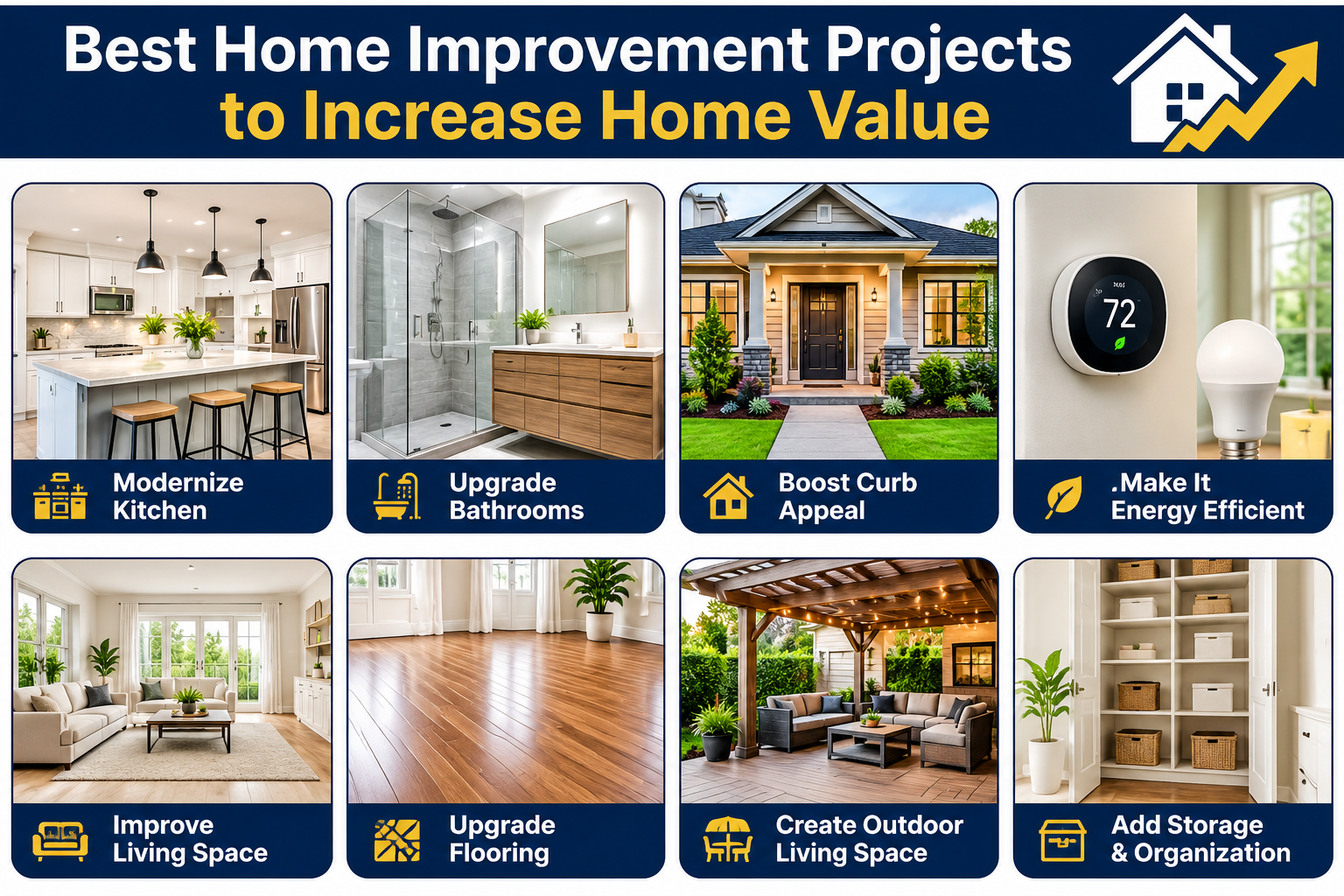
Best Home Improvement Projects to Increase Home Value

Introduction
Not every home improvement provides the same return. Some projects genuinely improve buyer appeal and make a home easier to sell. Others cost more than they return, reflect personal preferences that most buyers would not share, or simply do not match what buyers in a particular market are actually looking for.
Understanding the difference before starting a project matters enormously. A homeowner who spends heavily on a luxury kitchen renovation in a neighborhood where comparable homes sell with standard kitchens may not recover that investment at resale. One who spends a fraction of that on fresh paint, updated lighting, and well-maintained landscaping may find the home sells faster and at a stronger price relative to its condition.
The best home improvement projects to increase home value are usually those that solve visible problems, bring a home up to the standard buyers expect in that market, and present the property as clean, functional, and move-in ready. The specific projects worth prioritizing depend on the current condition of the home, the local market, how long the owner plans to stay, and how much is realistic to spend.
This guide covers the improvements that most broadly affect buyer appeal, explains why each one can make a difference, and provides a realistic framework for deciding where to focus.
1. Improve the Kitchen
Kitchens carry more weight in buyer perception than almost any other room. They are evaluated on how functional, clean, and well-maintained they appear, and buyers typically spend considerable time assessing them during viewings. A kitchen that feels dated, cramped, or poorly maintained raises questions about the rest of the home’s upkeep.
The good news is that making a kitchen more appealing does not necessarily require a full renovation. Many of the improvements that influence buyer perception most directly are targeted and relatively affordable.
Updating cabinet hardware throughout the kitchen is one of the highest-value-per-dollar changes available. Simple, contemporary pulls and knobs in a consistent finish replace dated ornate hardware and immediately shift the kitchen’s overall appearance. Repainting cabinets in a neutral tone, when the cabinet boxes are in good structural condition, can make a kitchen feel close to renovated at a fraction of replacement cost.
Lighting deserves attention in every kitchen. Replacing a dated fluorescent ceiling panel with a cleaner modern fixture, adding under-cabinet lighting to illuminate work surfaces, or improving the light quality throughout the kitchen makes it feel brighter, larger, and more functional.
Countertop condition matters to buyers. Damaged, heavily stained, or worn countertops signal neglect. In many cases, replacing a damaged countertop section, or the full countertops if they are heavily worn, is worth the cost in buyer perception. The material does not need to be premium. Clean, intact, and appropriate for the kitchen’s overall level is what matters.
Organization and clear counter surfaces also improve how a kitchen is perceived. A kitchen with organized storage and minimal counter clutter reads as more functional and spacious than an identical kitchen covered with appliances and accumulated objects.
A full kitchen renovation is not always necessary and not always a wise investment before selling. The decision depends on the current condition, the neighborhood’s buyer expectations, and the remaining budget after addressing the rest of the property.
2. Upgrade the Bathroom
Bathrooms are evaluated closely by buyers because they are expensive to renovate and their condition is highly visible. A bathroom that appears outdated, poorly maintained, or functionally inadequate creates a meaningful objection in a buyer’s assessment of the property.
As with the kitchen, the goal is not necessarily a complete renovation. Targeted improvements to lighting, fixtures, storage, and overall cleanliness often produce the most effective result for a reasonable investment.
Replacing a dated light fixture with something cleaner and more modern, updating the mirror to a larger or better-framed option, and replacing an obviously worn faucet all shift the bathroom’s appearance without touching the tile or plumbing infrastructure. These are relatively affordable changes that collectively make a bathroom feel more current and well-maintained.
Grout condition is one of the most common bathroom problems that buyers notice. Dirty, stained, or crumbling grout makes an otherwise functional bathroom look neglected. Professional grout cleaning or regrouting is a modest investment that has an outsized impact on how the bathroom is perceived.
Storage organization matters in bathrooms. Buyers evaluating a home think about whether the spaces they will use daily are practical. A bathroom with clear, organized surfaces and adequate storage reads as functional and liveable.
Where bathroom fixtures are visibly outdated, broken, or in poor condition, replacement is worth considering. Buyers factor visible repair needs into their mental budget for what the property will cost them after purchase, and a bathroom that appears to need significant work creates downward pressure on what they are willing to offer.
3. Improve Energy Efficiency
Energy efficiency improvements are among the few categories where the benefits extend beyond resale appeal. They can reduce ongoing energy costs while the current owner is living in the home, and they can become a genuine selling point when the property eventually goes to market.
Insulation is one of the most consistently cost-effective energy improvements available. A home that is under-insulated loses heat in winter and gains heat in summer, which translates directly to higher energy bills. Improving attic insulation in particular is often relatively affordable and can have a meaningful impact on the home’s energy performance.
Windows are a more complex investment. Energy-efficient windows can improve thermal performance, reduce condensation, and eliminate the drafts that older single-pane windows create. However, full window replacement is expensive, and the return in resale value depends heavily on the market and what buyers in the area expect. Where existing windows are visibly failing, drafty, or in poor condition, replacement makes sense. Where they are functional, the investment may not prioritize well against other projects.
Modern heating and cooling systems, properly maintained or replaced when they are reaching the end of their useful life, reduce buyer concerns about expensive system failures in the near term. A home with an aging HVAC system approaching the end of its expected service life creates a known future cost that buyers will factor into their offer. Replacing it before selling, or at least having a recent service record demonstrating maintenance, reduces that concern.
LED lighting throughout the home is a low-cost efficiency improvement that also improves light quality. It is a minor detail individually but contributes to the overall impression of a well-maintained, current property.
4. Improve Curb Appeal
A buyer’s first impression of a property forms before they step inside. The exterior, the garden or landscaping, the front door, the driveway or pathway, and the overall visible condition of the home all contribute to that initial assessment. Research from real estate professionals consistently suggests that poor curb appeal can discourage buyers before they have seen the interior, regardless of how well the inside of the property presents.
Landscaping improvements do not need to be extensive to be effective. Trimming overgrown hedges and trees, clearing weeds from garden beds, adding fresh mulch, and keeping lawn areas mowed and edged all contribute to an exterior that looks cared for. The goal is a property that appears maintained and welcoming, not one that requires an immediate and significant landscaping investment from the buyer.
The front door is the focal point of a home’s exterior and receives more visual attention than any other single exterior element. A front door in good condition, well-painted or finished, with clean and functional hardware, makes a strong positive impression. A worn, faded, or visibly deteriorating front door does the opposite.
Exterior lighting near the entrance, updated house numbers that are clean and legible, and a clear, well-maintained pathway to the front door complete the picture of a property that has been actively and consistently maintained.
Power washing the driveway, pathways, and exterior surfaces removes years of accumulated grime and makes everything look meaningfully fresher. It is a modest investment relative to the visual improvement it creates.
5. Refresh Interior Paint
Fresh interior paint is consistently one of the most cost-effective improvements before a sale. It makes rooms look cleaner, brighter, and better maintained, and it allows buyers to enter the home without immediately identifying a project they need to do.
The color selection matters. Neutral tones, warm whites, soft off-whites, warm grays, and gentle earth tones, allow buyers to envision their own furniture and belongings in the space rather than having to mentally undo someone else’s bold color choices. Very personalized or unusually saturated colors can make buyers feel the home needs repainting before they move in, which creates a cost they factor into their assessment.
Condition matters as much as color. Walls with visible marks, scuffs, uneven patches from previous repairs, or paint that has started to peel or yellow need fresh paint regardless of the color. A freshly painted home in a simple neutral feels move-in ready. One with visibly worn or marked paint does not.
For homeowners preparing to sell, repainting is typically worth prioritizing across most rooms, particularly high-traffic areas like the entry, living room, kitchen, and main bathroom. The investment in paint and labor is modest compared to almost any other improvement, and the improvement in overall presentation is considerable.
If you are new to painting or want to ensure a professional result, our guide on how to paint a room covers the full preparation and application process clearly.
6. Improve Flooring
Flooring condition is visible throughout the home and forms a significant part of the overall impression a property makes. Buyers walk across the floors in every room they visit. Flooring that is damaged, heavily worn, mismatched between rooms, or in obvious need of replacement signals a cost they will need to absorb after purchase.
Where hardwood floors are in good condition but have surface wear, professional refinishing can restore them to a state that presents very well. This is typically significantly less expensive than replacement and produces a strong result when the floor beneath the surface finish is sound.
Damaged flooring sections, whether that is cracked tiles, buckled laminate, or deeply stained carpet, are worth addressing before listing. A single damaged section in an otherwise acceptable floor draws attention and creates an impression of neglect that extends beyond the specific damage.
Carpet in bathrooms and kitchens is broadly unpopular with contemporary buyers. Replacing it with tile, LVT, or another hard floor material in those rooms is usually a worthwhile investment because carpet in those locations is widely seen as an outdated choice that the buyer would want to address.
Flooring continuity between connected rooms improves the sense of flow and space. A home where different flooring materials change frequently between adjacent rooms can feel disjointed. Where a transition makes sense architecturally, a clean transition piece manages the change. Where it does not, making the flooring consistent across connected spaces can improve the overall impression of the property.
Not every home needs new flooring before a sale. The question is whether the existing flooring is in a condition that will create buyer objections or factor significantly into the price they are willing to offer.
7. Improve Lighting
Lighting affects how a home photographs, how it presents during viewings, and how functional it appears to buyers. A home that is well-lit throughout feels cared for, comfortable, and move-in ready. One that relies on inadequate or dated fixtures in multiple rooms creates an impression of neglect and raises practical questions about the home’s functionality.
Replacing dated light fixtures with cleaner, more current options is a relatively affordable improvement that has a noticeable impact on how rooms present. Modern fixtures in consistent finishes throughout the home create a more cohesive, updated overall impression.
Ensuring all light fixtures have working bulbs of appropriate wattage is a basic but commonly overlooked step before any viewing. A burned-out bulb in a ceiling fixture or a table lamp during a property showing is a small detail that contributes to an overall impression of poor maintenance.
Natural light is worth emphasizing during showings and in listing photographs. Pulling window coverings fully back, trimming exterior plantings that block light from entering windows, and cleaning windows all help the property present as brighter and more welcoming.
Exterior lighting is worth reviewing from a security and curb appeal perspective. Well-lit entrances, pathways, and garage areas improve both the safety and attractiveness of the property’s exterior, particularly in properties that may be viewed during evening hours.
8. Add Practical Storage
Storage is consistently among the things buyers assess when evaluating a property. A home that appears to have adequate, well-organized storage for everyday living is easier for buyers to picture themselves in than one where storage limitations are immediately apparent.
Closet organization is worth addressing before a sale. Overstuffed, disorganized closets suggest that the home has inadequate storage capacity even when the actual space is reasonable. Simple closet organization systems, appropriately sized to the closet, present the available space clearly and make it feel generous rather than limited.
Kitchen pantry organization, bathroom cabinet organization, and garage storage all contribute to the overall impression of practical, liveable storage throughout the home. Buyers who can open a cabinet and find it organized rather than overflowing come away with a more positive impression of the property.
Built-in storage where it does not currently exist, whether that is a built-in wardrobe, laundry storage, or hallway storage, can improve functionality in ways that buyers notice, particularly in markets where storage is genuinely limited in comparable properties. The investment needs to be weighed against what buyers in the specific market expect and what comparable homes provide.
For practical wall-mounted storage solutions, our guide on how to install floating shelves covers the installation process in detail and is worth reviewing for anyone adding organized display or storage space before a sale.
9. Improve Outdoor Living Areas
Outdoor living areas have become increasingly valued by buyers, particularly following the broader cultural shift toward spending more time at home. A usable, well-maintained outdoor space extends the effective living area of a property and can be a meaningful differentiator in some markets.
The value of outdoor improvements depends heavily on climate, location, property type, and local buyer expectations. A well-designed deck or patio in a climate where outdoor living is practical year-round can be genuinely impactful. The same investment in a climate with limited outdoor living months may produce a weaker return.
For existing outdoor areas that are in poor condition, addressing the maintenance issues before adding improvements is the logical starting point. A deck with damaged boards, failing stain, or structural concerns needs repair before it presents as an asset. A patio with cracked or uneven paving creates a safety concern as much as an aesthetic one.
Simple improvements such as cleaning, staining or painting where appropriate, adding appropriate outdoor lighting, and ensuring the space is organized and presentable can significantly improve how an outdoor area presents without requiring a major investment.
Where outdoor areas do not currently exist and the property has space that could accommodate one, the decision to create a new outdoor living area before selling should be evaluated against the cost, the local market expectations, and the other competing priorities in the property.
10. Improve Doors and Entryways
The entryway is the first interior space a buyer experiences, and its condition influences how they approach everything that follows. An entryway that is well-maintained, adequately lit, organized, and in good repair signals that the rest of the home is cared for. One that feels neglected or dysfunctional does the opposite.
The front door deserves particular attention. It should open and close smoothly, latch properly, and be in good cosmetic condition. Worn paint, a stiff latch, a damaged threshold, or a doorbell that does not work are all small details that buyers notice at the very start of a viewing.
Door hardware throughout the home is worth reviewing. Tarnished, mismatched, or visibly worn handles, hinges, and locks contribute to an impression of deferred maintenance. Replacing door hardware in a consistent finish throughout the home is relatively affordable and produces a more cohesive overall presentation.
Interior doors that do not operate properly, that stick, have damaged surfaces, or have outdated louvered or hollow-core designs in visible locations, may be worth addressing depending on the overall presentation level of the property.
The entryway as a whole benefits from clear organization, adequate lighting, and a clean, welcoming appearance. Our guide on how to make a DIY entryway organizer covers practical storage solutions for compact entry spaces that can help an entryway present well during a sale.
11. Maintain or Upgrade Major Home Systems
Major system condition is one of the most significant factors in buyer confidence about a property, even though it is one of the least visually dramatic categories of improvement. Buyers and their inspectors evaluate the condition of roofing, plumbing, electrical, heating, and cooling systems carefully, and known problems in these areas create either price negotiations or deal obstacles.
A roof near the end of its expected service life, a heating system that is aging out, plumbing that has known problems, or an electrical panel that has not been updated in decades all represent future costs that buyers factor into their assessment. Addressing these issues before listing, or at minimum having documentation of recent professional maintenance and current system condition, reduces buyer concern.
Where major systems have been recently replaced or significantly maintained, making that information available to buyers, service records, warranty documentation, installation dates, demonstrates transparency and removes uncertainty.
For homeowners on a limited pre-sale budget, prioritizing major system condition over cosmetic improvements is generally sound advice. A buyer who discovers a roofing or HVAC issue during inspection has significant leverage to negotiate a price reduction or request repairs. A buyer who finds the home in documented good working order throughout has less basis for those negotiations.
Regular maintenance tracking helps identify system issues before they become urgent. A structured home maintenance checklist helps ensure major systems receive appropriate attention throughout the ownership period, not just immediately before a sale.
12. Create a More Functional Floor Plan
Not every floor plan needs changing, but poorly utilized space, rooms that serve no clear purpose, or layouts that create obvious functional problems can reduce a property’s appeal to buyers who are evaluating whether the home will work for their actual daily life.
In many cases, improving functionality does not require structural changes. Better furniture arrangement, clearer circulation paths, and more organized use of available space can make a floor plan read as more functional without moving a single wall.
Where a room is currently used for storage or as a catch-all space, staging it or organizing it to read as a functional room, a bedroom, a home office, a sitting room, makes the property feel more complete and increases the apparent usable space.
Where structural changes would genuinely improve a floor plan that is significantly below market expectation, the decision requires careful evaluation of the cost against likely benefit in the specific market. Structural work is expensive, involves permits and professional involvement, and may or may not produce a return that justifies the investment.
13. Make the Home More Modern Without Over-Renovating
An older home does not need to look as though it was built yesterday to appeal to buyers. What buyers typically want is a home that feels well-maintained, functional, and current enough that they do not face an immediate list of updates upon moving in.
Smaller updates that modernize an older home without removing its character tend to be more effective than large renovations that attempt to erase the home’s original qualities. Updating light fixtures, replacing cabinet hardware, repainting in a current neutral palette, improving the bathroom accessories, and refreshing window treatments all move a home toward a more current presentation without requiring significant structural intervention.
Where original architectural features, well-maintained original hardwood floors, original molding and millwork, original brick or masonry, are in good condition, preserving them and building the updated design around them is usually a better approach than removing them. These features often represent genuine quality and character that buyers may value.
The risk of over-renovating is real. Renovating beyond what the market expects or beyond what comparable properties in the area provide can result in money spent that does not translate to a corresponding improvement in sale price.
14. Improvements That May Not Pay Off
Some home improvement projects are frequently undertaken in the expectation of improving resale value but consistently cost more than they return. Understanding which improvements fall into this category can prevent significant wasted investment.
Highly personalized improvements, a home gym with specialized flooring and equipment, a custom home theater with built-in components, or a swimming pool in a climate and market where pools are not broadly expected, reflect the current owner’s preferences but may not align with what the buyer pool for that property actually wants. In some cases, these improvements make the property more difficult to sell rather than easier.
Luxury finishes in a non-luxury market create a similar problem. Installing premium materials in a home where the surrounding neighborhood and comparable sales do not support a premium price means the investment will not be reflected in the final sale price.
Major additions, an extra room, an extended garage, a significant structural expansion, need to be evaluated against what the market will actually support. An addition that takes the home significantly above the price ceiling for its street or neighborhood is unlikely to return its full cost.
Before undertaking any expensive improvement specifically for resale, understanding what comparable properties in the area have, what they are selling for, and what buyers in that specific market expect, provides the necessary context for making a sound decision.
15. How to Prioritize Home Improvements
Making good improvement decisions requires a framework rather than simply following generic advice. The same project can be the right choice for one homeowner and completely wrong for another.
Start with the current condition of the home. Addressing genuine problems, systems that are failing, structural issues, significant damage, deferred maintenance, almost always takes priority over cosmetic improvements. Buyers and their inspectors will identify real problems, and the cost of those problems gets negotiated back into the final sale price one way or another.
Consider the local housing market. What do comparable properties in the area have? What condition are they in? What do they sell for? Improvements that bring the property up to local market standard tend to support the asking price. Improvements that exceed local market standard tend to produce diminishing returns.
Weigh the cost against the likely impact. A relatively low-cost improvement that significantly affects buyer perception, fresh paint, updated hardware, improved landscaping, often produces stronger practical results than a high-cost improvement with a narrower appeal.
Factor in how long the owner plans to stay. Improvements made years before a sale have the benefit of being enjoyed during the ownership period and can be spread over time rather than all undertaken immediately before selling. Improvements made purely in the months before a sale need to prioritize buyer appeal over personal preference.
Consult professionals for specialized assessments. A real estate agent familiar with the local market can advise on what buyers in that specific area are looking for. Contractors can provide realistic cost estimates. A home inspector can identify issues that buyers will also identify. These professional perspectives, obtained before committing to expensive improvements, are worth the time and modest cost involved.
16. Best Improvements for Different Budgets
Low Budget
The most cost-effective pre-sale improvements tend to be those that address cleanliness, organization, and visual freshness without requiring significant financial investment.
Deep cleaning the entire home thoroughly, including windows, grout, appliances, and every surface, costs very little and produces a meaningful improvement in how the property presents. Decluttering and organizing, removing excess furniture, clearing closets to half capacity, and eliminating accumulated objects from surfaces, makes rooms feel larger and more functional.
Fresh paint in a neutral palette is the highest-impact low-cost improvement available. Updated cabinet hardware throughout the kitchen and bathrooms costs a modest amount and shifts the appearance of these rooms noticeably. Improving landscaping through cleaning up, trimming, and mulching requires primarily time rather than significant spending.
Moderate Budget
At a moderate budget level, improvements can extend to lighting fixtures, bathroom accessory updates, minor plumbing fixture replacement, flooring repairs, and targeted surface refreshes in the most visible rooms.
Installing modern light fixtures throughout the main living areas, replacing a dated bathroom mirror and vanity lighting, addressing any visible floor damage, and improving outdoor lighting and entrance presentation all fall within a moderate budget and collectively create a strong overall improvement in how the property presents.
Larger Budget
Larger budget improvements are most appropriate when the property has significant issues that genuinely require addressing, when the market justifies the investment, or when the owner will benefit from the improvements over an extended remaining ownership period.
Kitchen updates including cabinet repainting, countertop replacement, and improved fixtures, bathroom improvements beyond minor updates, major system replacement where needed, and significant landscaping or outdoor living improvements all fall into this category. These investments require careful cost-benefit analysis relative to the local market before proceeding.
Frequently Asked Questions
What home improvements add the most value?
The improvements that most consistently support buyer appeal and asking price tend to be those that make a home feel clean, well-maintained, functional, and move-in ready. Kitchen presentation, bathroom condition, fresh paint, updated flooring, good lighting, and strong curb appeal are broadly relevant across most markets. The specific improvements that are most valuable in any particular case depend on the current condition of the property and what buyers in the local market expect.
Is a kitchen remodel worth it before selling?
A full kitchen remodel before selling is not always necessary and not always the best use of available budget. A kitchen that is fundamentally functional but feels dated can often be significantly improved through targeted updates, cabinet repainting, new hardware, updated lighting, countertop replacement where worn, without the cost and disruption of a full remodel. Where a kitchen is genuinely dysfunctional or far below market standard for the area, more significant investment may be appropriate. The decision should be informed by comparable properties in the local market and the realistic cost versus likely impact.
Does bathroom renovation increase home value?
Bathroom condition influences buyer perception meaningfully, particularly in higher-price markets. A bathroom that is visibly outdated, poorly maintained, or functionally inadequate creates buyer objections and can affect what buyers are willing to offer. Improving bathroom presentation through lighting, fixtures, grout, organization, and accessories tends to be a sound investment. A complete bathroom renovation is more complex to evaluate. The cost needs to be weighed against local buyer expectations and comparable property standards rather than assumed to produce a direct financial return.
Does painting increase home value?
Fresh, neutral interior paint in good condition improves how a property presents to buyers by making rooms look cleaner, brighter, and more move-in ready. It removes an immediate buyer project and reduces objections. Whether it directly increases the appraised value of a property depends on broader market factors, but it consistently improves buyer perception and can affect how quickly a property sells and at what relative price. It is one of the most consistently cost-effective pre-sale improvements available.
What improvements should I make before selling my house?
The most broadly applicable advice is to start with condition rather than appearance. Address any known system problems, structural issues, or significant damage first. Then focus on cleanliness, fresh paint, updated hardware, improved curb appeal, and organized presentation. Beyond that, the specific improvements worth making depend on the current state of the property and what the local market expects. A pre-listing consultation with a local real estate agent and a professional home inspection can both provide useful guidance on what to prioritize.
Are energy-efficient upgrades worth the investment?
Energy efficiency improvements have the advantage of providing benefits beyond resale appeal. Insulation, efficient heating and cooling systems, and energy-efficient lighting all reduce ongoing operating costs while the current owner is in the home. They can also become a selling point in markets where buyers consider running costs alongside purchase price. The strength of the resale return depends on the specific improvement, the local market, and the age and condition of the existing systems. Improvements that address genuine energy performance problems tend to be sounder investments than incremental upgrades to already adequate systems.
Does curb appeal really matter when selling a home?
Yes, in a practical and demonstrable way. The exterior of a property is the first thing buyers see, whether in listing photographs or arriving at the property. A property that presents poorly from the outside gives buyers a negative first impression that they carry into the viewing. A property that presents well creates a positive starting point. Buyers who are already favorably disposed before they step inside are more likely to see the interior generously. Curb appeal improvements are also frequently among the most cost-effective relative to the impact they create.
Which home improvements are usually not worth the cost?
Improvements that are highly personalized, luxury finishes in non-luxury markets, and major additions that take the property significantly above the price ceiling for its location tend to produce weak financial returns. Improvements made to match personal preferences that do not align with broad buyer expectations can actually make a property more difficult to sell rather than less. The question to ask before any expensive improvement is whether it brings the property to market standard, or simply reflects what the current owner would like in the home.
Final Thoughts
The best home improvement projects to increase home value are not always the most expensive ones. A clean, well-maintained, functional home that is presented honestly and appropriately for its market is more competitive than one with a single spectacular renovation surrounded by deferred maintenance and visible neglect.
Before deciding which improvements to make, homeowners are well-served by understanding the condition of their property in full, what comparable properties in the area look like and sell for, and what the realistic cost of each improvement is relative to its likely impact.
The projects that consistently make practical sense before a sale are those that address genuine problems, bring the property to market standard, improve its visual presentation, and reduce the objections a buyer and their inspector might raise. Paint, lighting, hardware, landscaping, flooring condition, major system maintenance, and organized, clean presentation address all of these goals across most property types and market conditions.
Work with a local real estate professional who knows the specific market before making significant pre-sale investments. Their knowledge of what buyers in the area are actually looking for, and what comparable properties provide, is more valuable than any generic advice about which improvements are theoretically best.
Spend thoughtfully, prioritize what genuinely needs addressing, and focus on presenting the property as well-maintained, functional, and ready for its next owner.