Home Maintenance Checklist by Month: A Complete Year-Round Guide

Introduction
Owning a home is one of the most rewarding things you can do. It is also one of the most demanding.
Between the roof above your head and the foundation beneath your feet, your home contains dozens of systems and components that need regular attention. Miss a few key tasks and small problems quietly grow into expensive repairs. Skip maintenance long enough and you are no longer maintaining a home. You are managing a series of crises.
The good news is that home maintenance does not have to feel overwhelming. It just needs to be organized.
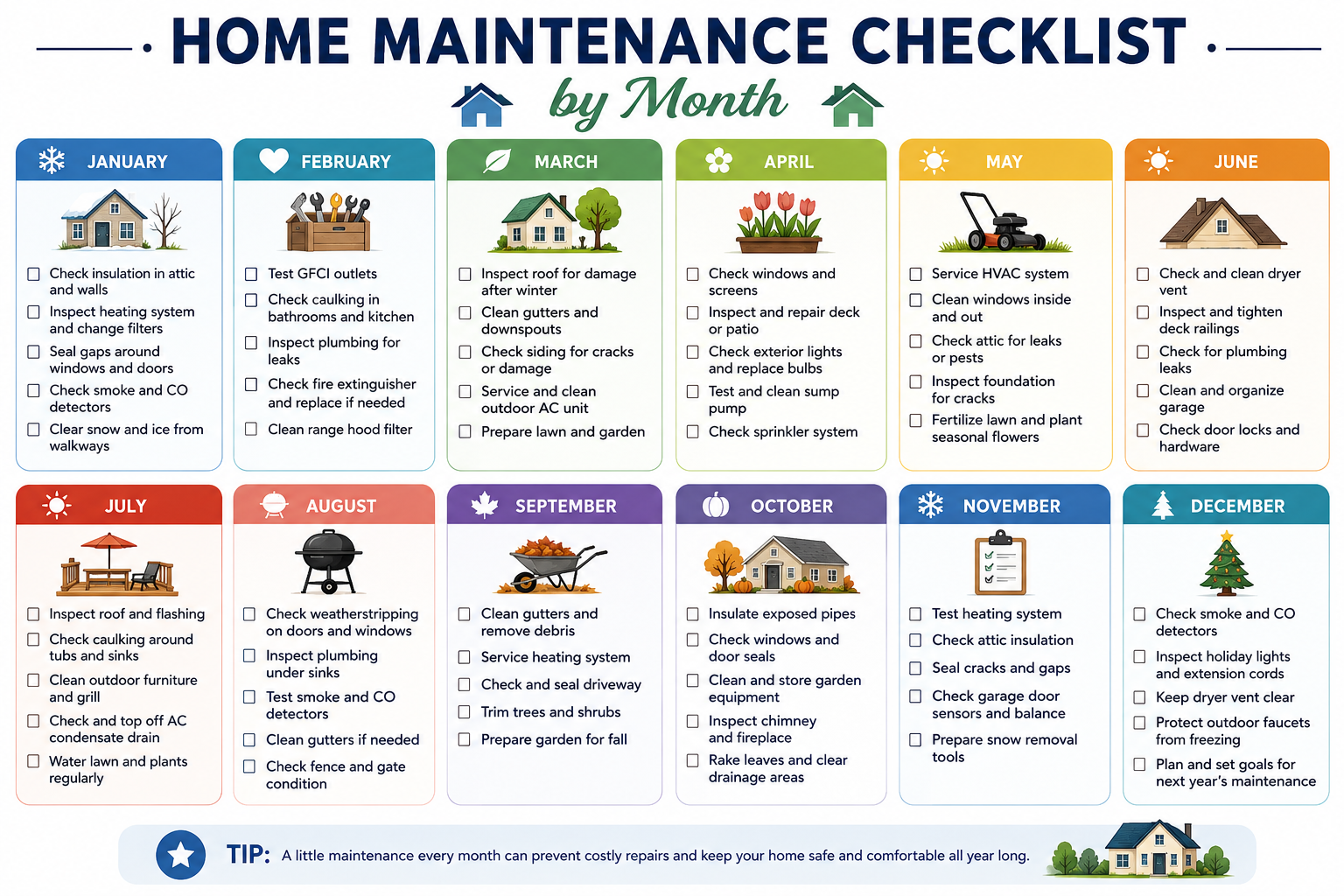
A home maintenance checklist by month breaks the full year of tasks into manageable monthly priorities. Instead of trying to remember everything at once, you know exactly what to focus on each month. You stay ahead of seasonal changes, catch small problems before they escalate, and protect both the safety and the value of your home throughout the year.
Homeowners who follow a consistent maintenance schedule spend significantly less on emergency repairs than those who react to problems as they appear. Prevention is always cheaper than repair. Organization is what makes prevention possible.
This guide walks you through every month of the year with practical, specific tasks. It also covers seasonal strategies, tool recommendations, cost estimates, and expert advice to help you build a maintenance routine that actually works.
What Is a Home Maintenance Checklist by Month?
A home maintenance checklist by month is a structured, calendar-based plan that organizes all the maintenance tasks your home needs throughout the year into monthly priorities.
Rather than one overwhelming annual list, it breaks responsibilities into smaller, focused groups tied to the specific demands of each season and month. January tasks look completely different from June tasks. What your roof needs in fall differs from what your plumbing needs in winter.
This approach accounts for weather cycles, seasonal wear patterns, and the logical sequence in which home systems need attention. It is the most practical framework for any homeowner who wants to stay proactive rather than reactive.
Why Monthly Home Maintenance Matters
Homes are not static structures. Every season brings different stresses: heat expansion in summer, freeze-thaw cycles in winter, moisture from spring rains, and heavy debris loads in fall. Each of these forces affects your home’s systems differently, and each requires different preventive responses.
Monthly maintenance matters because timing is everything. Cleaning gutters in November instead of September can mean the difference between clear drainage and ice dam formation. Flushing your water heater in spring instead of leaving it for three years can double the unit’s lifespan.
Routine home maintenance also creates an inspection habit. When you are regularly checking your home, you notice changes early. That awareness is what separates homeowners who spend a few hundred dollars on maintenance each year from those who face multi-thousand-dollar repair bills.
According to FEMA, proper and timely home maintenance significantly reduces the risk of damage from weather events and extends the structural integrity of residential buildings. Staying on a monthly schedule is one of the simplest ways to apply that principle consistently.
Benefits of Following a Monthly Maintenance Schedule
Following a structured home maintenance schedule delivers real, measurable value that compounds over time.
- Prevents small problems from becoming expensive emergencies
- Extends the lifespan of major home systems and appliances
- Keeps your home safe for your family through regular system testing
- Preserves and potentially increases your property value
- Reduces energy costs through efficient system operation
- Gives you a documented maintenance history valuable for insurance and resale
- Reduces stress by replacing reactive problem-solving with proactive planning
- Builds genuine knowledge of your home’s unique systems and condition
Every task you complete on schedule is an investment that pays dividends in avoided repairs, lower utility bills, and long-term peace of mind.
January Home Maintenance Checklist
January is the coldest month in most climates, which makes protecting your home from freezing temperatures the top priority.
Indoor Tasks:
- Check all exposed pipes in unheated spaces for signs of freezing
- Confirm cabinet doors under sinks on exterior walls are left open during extreme cold to allow warm air circulation
- Test smoke detectors and carbon monoxide detectors and replace batteries if needed
- Check your heating system filter and replace if dirty
- Inspect weatherstripping on exterior doors and windows for gaps allowing cold air infiltration
- Check that attic insulation is adequate to prevent heat loss and ice dam formation
Outdoor Tasks:
- Clear snow and ice from walkways and driveways promptly to prevent falls
- Check roof for heavy snow accumulation that can stress the structure
- Inspect visible gutters for ice dam formation
- Keep an eye on foundation areas for ice buildup that could direct water toward the home
January is also a smart time to review your home maintenance budget for the coming year and plan any major projects.
February Home Maintenance Checklist
February is still deep winter in most regions, but it is an excellent month to begin planning spring projects and addressing any indoor tasks that fell behind in January.
Indoor Tasks:
- Inspect your water heater for corrosion, moisture at connections, or unusual sounds
- Check all bathroom exhaust fans for proper operation and clean fan covers if needed
- Test GFCI outlets in bathrooms, kitchen, and garage using the test and reset buttons
- Inspect the attic for signs of ice dams or condensation building on the underside of the roof deck
- Check your home’s humidity levels. Winter air is often too dry, causing wood floors and trim to crack
Outdoor Tasks:
- Inspect garage door operation and lubricate rollers, hinges, and tracks
- Check driveway and walkway surfaces for freeze-thaw cracking that will need repair in spring
- Inspect fencing for frost heave or wind damage from winter storms
- Review emergency preparedness supplies in case of late-season winter storms
February is also a good time to research contractors for spring projects while scheduling is still open.
March Home Maintenance Checklist
March marks the beginning of the seasonal transition. As temperatures start to rise, your focus shifts toward assessing winter damage and preparing for spring.
Indoor Tasks:
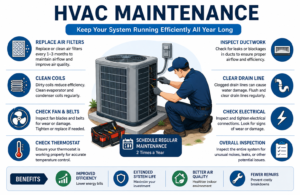
- Change HVAC filters and schedule annual air conditioning service before warm weather arrives
- Test smoke detectors and carbon monoxide detectors if not done in January
- Inspect basement walls and floors for moisture, staining, or new cracks that appeared over winter
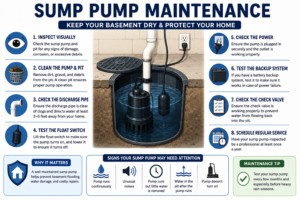
- Check sump pump operation and confirm the float switch activates properly before spring rain season
Outdoor Tasks:
- Walk the full perimeter of your home looking for foundation cracks or settling that occurred over winter
- Inspect the roof with binoculars from the ground for missing shingles, lifted flashing, or damaged soffits
- Check gutters and downspouts for winter damage and clear any debris
- Inspect exterior caulking around windows and doors and reseal any cracked or missing sections
- Look at your driveway for significant cracking or heaving that needs repair before moisture worsens it
March sets the foundation for an effective spring maintenance season.
April Home Maintenance Checklist
April is prime spring maintenance season. Warmer weather makes outdoor work comfortable, and there is still time to address winter damage before it causes further problems.
Indoor Tasks:
- Deep clean kitchen appliances including behind and under the refrigerator and stove
- Inspect and clean dryer exhaust vent from the exterior to prevent fire hazard from lint buildup
- Check all window screens for tears or damage and repair or replace as needed
- Test ceiling fans and reverse their direction for summer operation (counterclockwise for cooling)
- Inspect all door locks, deadbolts, and window hardware for proper operation
Outdoor Tasks:
- Clean gutters thoroughly after spring debris accumulation.
- Inspect deck and porch boards, posts, and railings for winter damage and loose fasteners
- Power wash exterior siding, walkways, and driveway surfaces
- Service lawn care equipment and fertilize lawn as appropriate for your region
- Inspect exterior paint for peeling, cracking, or blistering and plan repainting as needed
- Check sprinkler system operation and adjust heads after winter dormancy
May Home Maintenance Checklist
May is one of the most productive maintenance months of the year. The weather cooperates, and there is a clear window to complete major outdoor projects before summer heat arrives.
Indoor Tasks:
- Replace HVAC filter and confirm air conditioning is fully operational before the first heat wave
- Check attic ventilation to confirm proper airflow that prevents summer heat buildup
- Inspect window seals and caulking for gaps that allow conditioned air to escape
- Clean refrigerator coils at the back or bottom of the unit for improved efficiency
Outdoor Tasks:
- Inspect and clean the outdoor air conditioning condenser unit, removing debris from fins and coils
- Check all exterior lighting and replace burned-out bulbs
- Inspect wooden fences, gates, and retaining walls for rot, loose boards, or structural concerns
- Examine trees and large shrubs for dead branches that could fall on the home or power lines during summer storms
- Apply sealant to wood deck surfaces if the previous coat is worn
- Confirm window wells around basement windows are clear of debris
The U.S. Department of Energy recommends sealing air leaks and improving insulation as among the most cost-effective ways to reduce home energy costs. May is an ideal time to address these issues before summer cooling bills arrive.
June Home Maintenance Checklist
June signals the official arrival of summer. Your maintenance focus shifts toward cooling system efficiency, storm preparation, and outdoor living space readiness.
Indoor Tasks:
- Check and adjust ceiling fans to counterclockwise rotation if not done in April
- Inspect window air conditioning units for proper installation and clean filters before regular use
- Test the garage door auto-reverse safety function by placing a block of wood flat on the floor in the door’s path
- Check all plumbing connections under sinks and behind appliances for slow drips
Outdoor Tasks:
- Inspect the roof after any spring storms for hail damage, displaced shingles, or damaged flashing
- Check downspouts to confirm they direct water at least four to six feet from the foundation
- Confirm all outdoor GFCI outlets are functioning before outdoor gatherings and activities
- Inspect patio furniture, outdoor structures, and storage sheds for winter and spring damage
- Service the lawnmower, edge trimmer, and other seasonal equipment
- Check hoses, spigots, and irrigation systems for leaks
For broader summer home protection strategies, Summer Home Maintenance Tips to Protect Your Home covers everything from storm prep to cooling efficiency in detail.
July Home Maintenance Checklist
July brings peak summer heat in most regions. This month focuses on managing heat stress on your home’s systems and maintaining outdoor spaces.
Indoor Tasks:
- Check air conditioning performance and confirm the system is maintaining the set temperature efficiently
- Replace HVAC filter if on a monthly replacement schedule
- Inspect refrigerator and freezer door seals for a tight close by testing with a dollar bill
- Check water heater temperature setting. It should be at 120 degrees Fahrenheit for safety and efficiency
- Inspect all bathroom and kitchen exhaust fans for proper airflow
Outdoor Tasks:
- Water deeply and less frequently to encourage deep root growth in lawn and landscaping
- Check for signs of pest activity including wood-boring insects at deck posts and structural members
- Inspect window caulking on the sunny south and west exposures where summer UV causes the fastest deterioration
- Walk the perimeter and confirm drainage slopes away from the foundation
- Check the condition of roof vents and ridge vents for blockage that restricts attic airflow
August Home Maintenance Checklist
August is the time to begin transitioning your maintenance focus toward fall preparation. Summer is winding down, and the most productive fall projects require early planning.
Indoor Tasks:
- Schedule professional HVAC service for the heating system before fall demand peaks
- Inspect the furnace or heat pump and replace the filter before turning the heat on for the first time
- Check humidifier connected to the HVAC system, clean it, and prepare it for winter operation
- Test smoke detectors and carbon monoxide detectors and replace batteries. For proper testing procedures, see How to Test Smoke Detectors
- Inspect and clean the dryer vent if not done since April
Outdoor Tasks:
- Inspect roof from the ground for any storm damage accumulated over summer
- Begin clearing garden beds and preparing landscaping for fall
- Inspect window and door weatherstripping condition before fall temperatures drop
- Check exterior wood surfaces including deck, fence, and trim for any mid-summer damage or wear
- Confirm gutter sections are still properly attached after summer storms
September Home Maintenance Checklist
September is arguably the most critical maintenance month of the year. It is the bridge between summer and fall, and the decisions you make now directly determine how well your home handles the cold months ahead.
Indoor Tasks:
- Switch your HVAC system to heating mode and run a test cycle to confirm proper operation before you actually need it
- Inspect and clean the chimney and fireplace before the heating season begins
- Check all door draft excluders and replace any that are compressed or damaged
- Inspect attic insulation and ventilation before cold weather makes these issues visible
- Review your emergency kit and ensure adequate supplies for potential winter power outages
Outdoor Tasks:
- Clean gutters thoroughly after early fall leaf drop and before heavy leaf season. Detail on proper technique is covered in How to Clean Gutters Safely
- Inspect and seal any gaps in exterior walls around pipes, cables, and utility penetrations
- Service lawn equipment before the end of the mowing season
- Drain and winterize irrigation systems in colder climates before the first freeze
- Check driveway and walkway surfaces for cracks that will worsen under winter freeze-thaw cycles
The Fall Home Maintenance Checklist provides a complete breakdown of everything your home needs as temperatures drop through the season.
October Home Maintenance Checklist
October is full fall mode. Leaf drop is at its peak, temperatures are dropping, and the window for outdoor maintenance tasks is narrowing.
Indoor Tasks:
- Replace HVAC filter before the heating season gets fully underway
- Test heating system on all zones and confirm every area of the home reaches the set temperature
- Check carbon monoxide detector placement and function. All detectors should be near sleeping areas
- Inspect the water heater for rust, corrosion, or sediment noise indicating the need for flushing
- Check the condition of all interior door seals on exterior-facing doors
Outdoor Tasks:
- Complete final gutter cleaning after the majority of leaves have fallen
- Disconnect and drain garden hoses and shut off exterior hose bibs before freezing temperatures arrive
- Winterize outdoor faucets in climates where freezing is a risk
- Apply fall fertilizer to the lawn and overseed bare patches before ground freezes
- Inspect the deck for any loose boards or hardware that need securing before winter
- Clear leaves from the roof and valley areas where they can trap moisture
November Home Maintenance Checklist
November means winter is arriving or already here in many regions. This month closes out the outdoor maintenance window and shifts focus to winter preparation.
Indoor Tasks:
- Inspect all exposed pipes in unheated areas including the garage, crawl space, and under cabinets on exterior walls
- Confirm all pipe insulation is intact and replace any sections that are cracked or missing
- Check the attic for adequate insulation before heating season peaks
- Test smoke detectors and carbon monoxide detectors
- Inspect the furnace heat exchanger for cracks if accessible (have a professional evaluate if uncertain)
Outdoor Tasks:
- Store patio furniture, cushions, and outdoor decor before freezing temperatures can cause damage
- Inspect the roof one final time before winter weather makes access difficult
- Confirm gutters are completely clear before freeze season
- Check that all foundation vents are properly adjusted for winter based on your home’s design
- Inspect the garage door weatherstripping at the bottom of the door for proper sealing against cold and moisture
The Winter Home Maintenance Checklist is an essential companion for anyone wanting to fully prepare their home before the coldest months arrive.
December Home Maintenance Checklist
December is the season for indoor focus. Outdoor conditions limit most exterior work, but there are important tasks that keep your home safe and efficient during the coldest weeks.
Indoor Tasks:
- Replace HVAC filter if on a monthly or every-two-month schedule
- Check all holiday lighting for damaged cords before decorating
- Inspect the fireplace and confirm the damper seals properly when the fireplace is not in use
- Check that all plumbing in unheated areas is properly protected before the deepest cold arrives
- Review your home maintenance log and schedule for the coming year
Outdoor Tasks:
- Keep entry paths clear of ice and snow promptly after each storm
- Check roof for heavy snow accumulation after major storms and use a roof rake from the ground to remove excessive weight
- Monitor exterior for ice dam formation at the roofline
- Inspect outdoor lighting for burned-out bulbs affecting safety and security
- Check that the garage is properly insulated and that the garage door seals completely at the bottom
December is also an ideal month to review your Annual Home Maintenance Checklist and assess what you accomplished during the year and what to prioritize in January.
Monthly Home Maintenance Calendar
| Month | Priority Indoor Tasks | Priority Outdoor Tasks | Key Systems |
|---|---|---|---|
| January | Pipe freeze protection, smoke detectors, HVAC filter | Snow removal, ice dam monitoring, gutters | Heating, plumbing, safety |
| February | Water heater check, attic moisture, GFCI test | Garage door, driveway crack inspection | Plumbing, electrical, garage |
| March | HVAC filter, basement moisture, sump pump | Roof inspection, foundation check, gutters | Foundation, HVAC, plumbing |
| April | Appliance cleaning, dryer vent, screens | Gutter cleaning, deck inspection, power washing | Gutters, exterior, deck |
| May | AC tune-up, attic ventilation, window seals | AC condenser, lighting, trees, deck sealing | HVAC, exterior, deck |
| June | Ceiling fans, plumbing connections | Roof check, downspouts, outdoor outlets | Roof, plumbing, electrical |
| July | AC performance, refrigerator seals, exhaust fans | Pest check, caulking, drainage inspection | HVAC, plumbing, pest control |
| August | Heating service schedule, smoke detectors | Roof inspection, weatherstripping, gutters | Safety, HVAC, exterior |
| September | Heating test, chimney, attic insulation | Gutter cleaning, irrigation winterize, exterior sealing | HVAC, chimney, exterior |
| October | HVAC filter, heating zones, water heater | Final gutter cleaning, hose bibs, deck check | Heating, plumbing, exterior |
| November | Pipe insulation, attic, furnace check | Roof final check, store furniture, foundation vents | Heating, plumbing, roof |
| December | HVAC filter, fireplace, holiday lights | Snow removal, ice dams, garage door seal | Safety, heating, plumbing |
Seasonal Home Maintenance Overview
Monthly tasks fit within four natural seasonal frameworks, each defined by weather patterns and the specific demands they place on your home.
Winter (December, January, February) focuses on freeze protection, heating system performance, snow and ice management, and indoor safety. The priority is keeping systems running reliably under peak thermal stress.
Spring (March, April, May) is about assessment and repair. Winter leaves its mark on roofs, foundations, siding, and drainage systems. Spring is when you find and fix that damage while preparing outdoor systems for active use.
Summer (June, July, August) shifts priority to cooling efficiency, storm preparedness, outdoor structure maintenance, and moisture management during the peak humidity season.
Fall (September, October, November) is preparation and prevention. Everything you do in fall directly determines how much stress your home experiences over winter. This is the most consequential maintenance season for long-term home protection.
Indoor Home Maintenance Tasks Throughout the Year
Certain indoor tasks should remain consistent throughout all twelve months regardless of season.
- Test smoke and carbon monoxide detectors monthly
- Check and replace HVAC filters every one to three months based on your filter type and home conditions
- Run water through infrequently used drains monthly to prevent trap evaporation
- Check under sinks for slow drips and moisture monthly
- Inspect the water heater seasonally for signs of corrosion or leaking
- Keep a maintenance log recording every completed task and any issues noted
Maintaining a detailed home maintenance log creates a valuable record that helps with insurance claims, resale documentation, and contractor communication.
For a comprehensive framework covering every indoor system, the DIY Home Inspection Checklist is an excellent companion resource.
Outdoor Home Maintenance Tasks Throughout the Year
Outdoor maintenance follows seasonal rhythms more closely than indoor tasks, but certain responsibilities remain consistent throughout the year.
- Inspect gutters after every major storm and clean them at least twice yearly
- Monitor the roof visually from the ground after significant weather events
- Keep walkways and entry areas clear and in good repair for safety
- Check exterior lighting regularly and replace bulbs promptly for security
- Monitor drainage patterns around the foundation during and after rain
- Inspect deck and porch hardware and surfaces seasonally for early detection of rot and structural movement
Essential Home Maintenance Tools
| Tool | Purpose | Recommended Use | Estimated Cost |
|---|---|---|---|
| Extension Ladder | Gutter access, exterior inspection | Spring and fall | $80 – $300+ |
| Flashlight or Headlamp | Attic, crawl space, basement inspection | Year-round | $15 – $60 |
| Moisture Meter | Detect hidden water damage | Year-round | $20 – $80 |
| Caulking Gun and Sealant | Seal gaps around windows, doors, and penetrations | Spring and fall | $10 – $30 |
| Outlet Tester | Check electrical outlet wiring and GFCI function | Year-round | $10 – $20 |
| Cordless Drill | Tighten hardware, install fasteners | Year-round | $50 – $200 |
| Plumber’s Snake | Clear clogged drains and downspouts | As needed | $20 – $80 |
| Level | Check for floor, wall, or structure movement | Seasonally | $15 – $60 |
| Garden Hose with Nozzle | Flush gutters and test drainage | Spring through fall | $20 – $60 |
| Binoculars | Safe roof and upper exterior inspection | Seasonally | $20 – $100 |
| Pressure Washer | Clean siding, driveway, and deck surfaces | Spring and summer | $100 – $400 |
| Leaf Blower | Clear gutters, walkways, and roof valleys | Fall | $30 – $200 |
| Pipe Insulation | Protect exposed pipes from freezing | Fall and winter | $5 – $30 |
| Weatherstripping Kit | Seal gaps in doors and windows | Fall and spring | $10 – $40 |
For a deeper guide on building your complete home maintenance toolkit, Home Maintenance Tools Every Homeowner Needs covers everything from essential basics to advanced diagnostic tools.
DIY vs Professional Home Maintenance
| Task Category | DIY Appropriate | Professional Recommended | Reason |
|---|---|---|---|
| HVAC filter replacement | Yes | No | Simple, safe, no license needed |
| Annual HVAC tune-up | No | Yes | Requires refrigerant handling, electrical testing |
| Gutter cleaning (single story) | Yes | Optional | Accessible with proper ladder safety |
| Gutter cleaning (two story) | Optional | Recommended | Fall risk significantly higher |
| Roof inspection | Visual only from ground | Yes | Walking on roof carries fall risk |
| Chimney sweep and inspection | No | Yes | Requires specialized tools and safety knowledge |
| Electrical panel inspection | Visual only | Yes | Serious shock and fire risk |
| Smoke detector testing | Yes | No | Simple monthly task |
| Water heater flushing | Yes (with guidance) | Optional | Straightforward with proper steps |
| Foundation crack evaluation | Visual assessment | Yes for significant cracks | Structural judgment requires expertise |
| Plumbing leak repair | Minor (supply lines, faucets) | Yes for major leaks | Risk of water damage from improper repair |
| Caulking and weatherstripping | Yes | No | No specialized tools or license required |
| Pest control (minor) | Yes | Yes for infestations | Professional treatment more effective for serious issues |
| Exterior painting | Yes | Optional | Time-intensive but within DIY capability |
| Deck board replacement | Yes | Optional | Straightforward carpentry within most DIY skill levels |
Common Monthly Home Maintenance Mistakes
Even motivated homeowners fall into patterns that undermine their best maintenance intentions.
Skipping the HVAC filter. This is the single most neglected monthly task. A clogged filter reduces efficiency, increases energy costs, and accelerates system wear. It takes less than five minutes to check and replace. For complete guidance, see How to Replace an HVAC Filter.
Only cleaning gutters once a year. Many homeowners clean in fall and call it done. But spring debris from tree seeds, pollen, and winter remnants also clogs gutters and needs clearing before the rainy season.
Ignoring drainage after storms. Water pooling against the foundation after rain is a warning sign most homeowners walk past without registering. Monitoring drainage patterns actively after rainfall is a habit that prevents serious foundation problems.
Forgetting the smoke and CO detectors. Monthly testing takes thirty seconds per detector. Annual battery replacement is equally simple. Yet detector neglect remains common and the consequences can be catastrophic.
Deferring small repairs. A small drip under the kitchen sink seems insignificant. Three months of slow dripping warps the cabinet floor, creates mold, and damages the subfloor below. Small repairs done promptly cost a fraction of what deferred repairs eventually demand.
Not keeping a maintenance log. Without records, it is easy to lose track of when filters were last replaced, when the water heater was last flushed, and when the deck was last sealed. A simple log prevents duplicate efforts and ensures nothing slips through for years at a time.
Estimated Annual Home Maintenance Cost Table
| Category | DIY Annual Cost | Professional Annual Cost | Notes |
|---|---|---|---|
| HVAC filters and service | $50 – $150 | $150 – $400 | Professional annual tune-up recommended |
| Gutter cleaning | $0 – $50 (tools) | $150 – $400 | Twice yearly professional service |
| Roof inspection | $0 (binoculars) | $150 – $350 | Professional every 3 – 5 years |
| Chimney sweep and inspection | N/A | $150 – $350 | Annual professional service |
| Plumbing maintenance | $20 – $100 | $150 – $500 | Professional for repairs |
| Electrical inspection | $10 – $20 (outlet tester) | $100 – $300 | Professional every 5 – 10 years |
| Pest control | $30 – $80 | $200 – $600 | Professional for active infestations |
| Lawn and landscape care | $200 – $600 | $800 – $2,500 | Highly variable by property size |
| Caulking and weatherstripping | $20 – $60 | $100 – $300 | DIY accessible for most homeowners |
| Exterior painting touch-up | $30 – $100 | $300 – $1,500 | Full paint every 5 – 10 years |
| Deck maintenance | $50 – $200 | $300 – $800 | Sealing, staining, hardware |
| Miscellaneous repairs | $100 – $300 | $500 – $2,000 | Budget 1% of home value annually |
| Total Annual Estimate | $510 – $1,660 | $2,800 – $9,500 | Combined DIY plus professional |
Financial planning experts consistently recommend budgeting between one and three percent of your home’s current value annually for maintenance and repairs. A home valued at $350,000 warrants a maintenance budget of $3,500 to $10,500 per year.
Money-Saving Home Maintenance Tips
Maintaining a home does not have to break the budget. Smart habits and good timing save significant money over time.
- Buy HVAC filters in multi-packs to reduce per-unit cost and always have replacements on hand
- Learn to perform minor plumbing repairs like replacing washers, aerators, and supply lines yourself
- Seal air leaks in fall before heating costs peak. The energy savings quickly cover material costs
- Address deck surface issues with cleaning and resealing rather than waiting for board replacement
- Schedule professional services during off-peak periods when contractors offer better rates
- Use a moisture meter to catch water problems before they become visible and expensive
- Replace failing caulking immediately rather than waiting for the full inspection cycle
- Keep a small inventory of common replacement parts: faucet washers, outlet covers, light switch plates, and door hardware
The Consumer Product Safety Commission consistently emphasizes that maintaining smoke detectors and CO detectors properly is among the most important and least expensive safety investments any homeowner can make.
Expert Recommendations
After years of working with homeowners across a wide range of property types and climates, certain recommendations consistently make the biggest difference.
Build the habit before you need it. The homeowners who struggle most with maintenance are those who only think about it when something breaks. Building a monthly maintenance habit during the first year in a home creates a foundation that makes every subsequent year easier and less expensive.
Use a simple system you will actually follow. A printed monthly checklist on the refrigerator works just as well as a sophisticated app. The best system is the one you use consistently.
Pay closest attention during seasonal transitions. The weeks between summer and fall, and between winter and spring, are when your home is most vulnerable. Inspecting and addressing issues at these transition points prevents the majority of weather-related damage.
Never skip the fall gutter cleaning. Of all monthly and seasonal tasks, gutters blocked with fall leaves cause more cascading damage than almost any other single oversight. Clear gutters before the first freeze every single year without exception.
Connect your monthly tasks to a broader annual plan. Monthly checklists work best when they are part of a larger maintenance strategy. The Ultimate Home Maintenance Checklist for Every Season provides the comprehensive framework that connects monthly habits to seasonal priorities and long-term home care goals.
Document your home’s baseline condition. Spend one Saturday photographing every major system and area of your home. Roof, gutters, foundation, attic, basement, HVAC, water heater, electrical panel, and every exterior surface. This baseline makes it dramatically easier to spot changes during future inspections and provides valuable documentation if you ever need to file an insurance claim.
Frequently Asked Questions
How much time does monthly home maintenance actually take?
Most monthly home maintenance tasks, when done consistently, take between one and two hours per month for an average-sized home. The tasks that take the most time, like gutter cleaning and deck maintenance, only occur two to four times per year. Monthly recurring tasks like checking HVAC filters, testing detectors, and inspecting under sinks take very little time individually. The key is doing them on a consistent schedule rather than letting them accumulate. Homeowners who perform maintenance regularly find that the process becomes faster each time as they build familiarity with their home’s systems.
What home maintenance tasks should never be skipped?
Certain tasks carry consequences severe enough that they should never be delayed regardless of schedule disruptions. Testing smoke and carbon monoxide detectors monthly protects lives. Replacing HVAC filters on schedule prevents system failure and maintains air quality. Cleaning gutters twice yearly prevents water damage to the roof, siding, and foundation. Checking for plumbing leaks regularly prevents hidden water damage and mold. Inspecting the roof after major storms catches damage before it worsens. These tasks are non-negotiable because their consequences, ranging from house fires to structural damage, are among the most serious and costly a homeowner can face.
When is the best time of year to start a home maintenance routine?
The best time to start is immediately, regardless of the month. However, if you are establishing a new routine, spring is a particularly strong starting point because it combines the natural urge to address winter damage with the most productive outdoor work conditions of the year. Starting in spring lets you establish habits during the busy season and carry them forward into summer, fall, and winter. If you are starting in another month, simply begin with that month’s checklist and work forward from there. Consistency over time matters far more than the specific month you start.
How do I know when to call a professional instead of doing it myself?
The general rule is straightforward: if a task involves electrical panel work, gas line inspection, structural evaluation, roof walking, or chimney internal inspection, hire a licensed professional. These areas carry injury risk or require specialized knowledge that goes beyond typical homeowner capability. For everything else, assess your skill level honestly. Caulking, filter replacement, gutter cleaning on a single-story home, minor plumbing work, and most exterior tasks are well within the DIY range for most homeowners. When in doubt, get a professional opinion first. The cost of a consultation is almost always less than the cost of an improperly executed repair.
How do I maintain a home in an extreme climate?
Extreme climates demand that certain tasks receive more frequent attention than standard recommendations suggest. In very cold climates, pipe freeze protection, heating system maintenance, and ice dam prevention become critical winter priorities rather than optional considerations. In hot and humid climates, mold prevention, cooling system efficiency, and moisture management require more consistent attention throughout the summer months. In areas prone to high winds, hurricanes, or wildfires, structural preparation and defensible space maintenance become essential seasonal tasks. Adjust the standard monthly framework to weight the tasks most relevant to your specific climate conditions more heavily.
How do I keep track of all my home maintenance tasks?
The most effective tracking methods are ones you will actually use consistently. A simple printed monthly checklist posted in a visible location works well for many homeowners. A dedicated notebook or home maintenance binder allows you to record completion dates and notes for every task. Digital options include smartphone calendar reminders, dedicated home maintenance apps, or a spreadsheet. The critical element in any system is recording not just completion, but also any observations made during the task. Noting that a certain area showed early signs of moisture, or that a particular door was sticking, creates the running record that makes future maintenance more informed and more effective.
Should I hire a home inspector for annual inspections or do them myself?
Both approaches have a place in a complete home maintenance strategy. A DIY inspection, done seasonally as part of your monthly maintenance routine, is excellent for ongoing monitoring of familiar systems and catching early warning signs you have learned to recognize. A professional home inspector brings specialized tools, training, and an objective perspective that a homeowner simply cannot replicate. Hiring a professional inspector every three to five years, or after any significant weather event or suspected structural issue, is a smart investment that complements rather than replaces your own ongoing inspections. Think of DIY inspection as continuous monitoring and professional inspection as a periodic comprehensive review.
What is the most overlooked area of home maintenance?
In my experience, crawl spaces and attics are the most consistently neglected areas in residential homes. Most homeowners rarely if ever look into these spaces, yet they contain some of the most important structural and mechanical elements of the home. Attics harbor ice dam damage, inadequate insulation, pest infestations, and roof deck deterioration. Crawl spaces frequently develop moisture problems, vapor barrier failures, pest damage to floor joists, and disconnected ductwork. Both areas should be inspected at least annually. Adding an attic and crawl space check to your spring and fall inspection routine catches problems in two of the areas most likely to harbor hidden, expensive damage.
How does monthly maintenance affect my home’s resale value?
Consistent maintenance has a direct and meaningful impact on resale value. Homes with documented maintenance histories command higher sale prices and pass inspections with fewer complications than homes with deferred maintenance. Buyers pay a premium for confidence. When you can show a prospective buyer a complete maintenance log demonstrating regular filter changes, gutter cleaning, deck maintenance, and system inspections, you remove the uncertainty that drives lowball offers and repair credit requests. Real estate professionals consistently note that well-maintained homes sell faster and for higher prices than comparable homes where deferred maintenance is visible to buyers and inspectors.
How do I prioritize maintenance tasks when I have a limited budget?
Focus first on tasks that protect against catastrophic loss and safety hazards. Smoke and CO detector maintenance, heating system function in winter, pipe freeze protection, and addressing active water leaks all come before cosmetic or aesthetic improvements. After safety-critical tasks, prioritize items that will worsen significantly if left unaddressed: a single missing shingle becomes roof damage; minor foundation cracks become major structural issues; small gutter separations become fascia rot. Plan major elective improvements, such as repainting or deck resurfacing, during months when budget allows. A home maintenance savings account, funded monthly with a small fixed amount, creates the financial buffer that makes proactive maintenance possible regardless of budget constraints.
Conclusion
A home does not maintain itself. But it does give you signals when something needs attention. A drip, a draft, a creak, a stain. The homeowners who hear those signals early and respond to them consistently spend less money, live in safer homes, and protect their investment far more effectively than those who wait for problems to announce themselves dramatically.
A home maintenance checklist by month is simply the most practical way to stay organized and proactive. It turns an overwhelming collection of responsibilities into a manageable monthly routine. It replaces reactive stress with proactive confidence.
You do not need to be a contractor or a professional inspector to maintain your home effectively. You need a system, the right tools, and the habit of showing up for your home consistently throughout the year.
Start with this month’s checklist. Work through it systematically. Document what you find. Address what needs attention. Then do it again next month.
That consistency, practiced over years, is what separates a well-maintained home from one that surprises its owner with expensive emergencies. It is also what builds the knowledge, the confidence, and the financial resilience that makes homeownership genuinely rewarding.