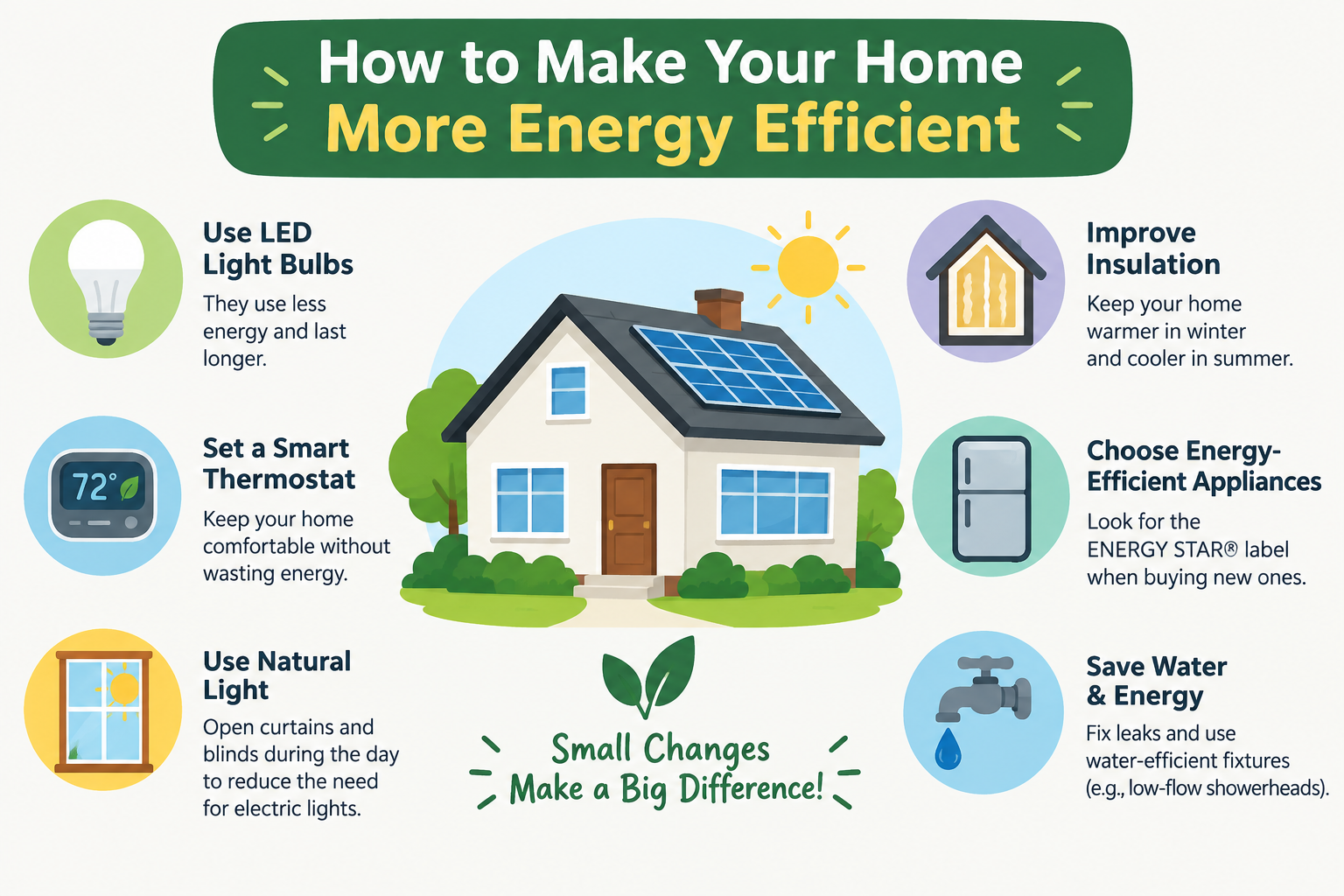
How to Make Your Home More Energy Efficient

Introduction: Why Your Home Might Be Wasting Energy Right Now
Imagine paying for something every single month — and throwing 30% of it straight into the trash.
That’s exactly what millions of homeowners do with their energy bills.
According to the U.S. Department of Energy (DOE), the average American household spends over $2,200 per year on energy costs — and a significant chunk of that is completely wasted through poor insulation, outdated appliances, air leaks, and inefficient habits.
The good news?
Making your home more energy efficient doesn’t have to mean a complete renovation or spending tens of thousands of dollars. In fact, some of the most effective energy-saving changes cost little to nothing — and the ones that do cost money often pay for themselves within 1–3 years.
In this guide, I’ll walk you through 10 proven, practical strategies to reduce your home’s energy consumption — from simple weekend DIY projects to bigger investments that deliver serious long-term savings.
Whether you’re a first-time homeowner or you’ve lived in your house for decades, there’s something here for every budget and every skill level.
Let’s dive in.
1. 🔍 Start With a Home Energy Audit (The Most Important First Step)
Before you spend a single dollar, you need to know where your home is losing energy.
A home energy audit is essentially a health check for your house. It identifies exactly where energy is being wasted — whether that’s through drafty windows, poor insulation, an inefficient furnace, or something else entirely.
Types of Energy Audits:
✅ DIY Audit (Free)
Walk through your home and check for:
- Drafts around windows, doors, and outlets
- Insulation levels in the attic and walls
- Age and condition of appliances and HVAC systems
- Your energy bill history (look for seasonal spikes)
✅ Professional Audit ($200–$600)
A certified energy auditor will use:
- Blower door tests to measure air leakage
- Thermal imaging cameras to find heat loss
- Combustion safety tests for gas appliances
- A full written report with prioritized recommendations
💡 Hassan’s Tip: Many utility companies offer free or discounted energy audits to their customers. Call your energy provider before paying out of pocket — you might be surprised what’s available.
📊 Potential Savings: Knowing where to focus your efforts can guide improvements that save 5%–30% on annual energy costs.
2. 🧱 Insulate and Seal Your Home (The #1 Energy Waster)
If there’s one upgrade that delivers the biggest return on investment, it’s proper insulation and air sealing.
The Department of Energy estimates that air leaks and poor insulation account for up to 30% of a home’s heating and cooling costs. That’s money leaving your home through tiny gaps, cracks, and under-insulated walls every single day.
Where to Insulate First:
| Location | Priority Level | Typical Cost |
|---|---|---|
| Attic | 🔴 Highest | $1,500–$3,500 |
| Exterior Walls | 🔴 High | $2,000–$5,000 |
| Basement/Crawlspace | 🟡 Medium | $1,000–$2,500 |
| Floors Over Garages | 🟡 Medium | $500–$1,500 |
Common Air Leak Locations to Seal:
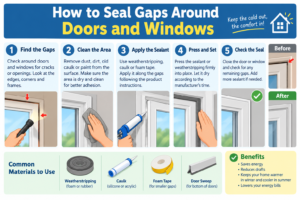
- Around window and door frames
- Electrical outlets on exterior walls
- Pipe and wire penetrations through walls
- Attic hatch openings
- Fireplace dampers
- Recessed lighting fixtures
What to Use:
- Weatherstripping — for doors and operable windows (DIY, $10–$50)
- Caulk — for stationary cracks and gaps (DIY, $5–$15)
- Spray foam — for larger gaps around pipes and wires (DIY, $10–$30)
- Blown-in insulation — for attics and walls (Professional recommended)
⚠️ Safety Note: If your home was built before 1980, have it tested for asbestos or lead paint before disturbing insulation or walls. Always hire a certified professional for this assessment.
📊 Potential Savings: Proper air sealing and insulation can reduce heating and cooling costs by 10%–20% annually according to ENERGY STAR.
3. 🪟 Upgrade Your Windows and Doors
Old, single-pane windows are basically holes in your wall when it comes to energy efficiency. They allow heat to escape in winter and let it pour in during summer — forcing your HVAC system to work overtime.
Window Upgrade Options:
Option 1: Full Window Replacement
- Replace single-pane with double or triple-pane windows
- Look for ENERGY STAR certified windows
- Cost: $300–$800 per window (installed)
- Best for: Windows older than 20 years or visibly damaged
Option 2: Window Film (Budget-Friendly)
- Apply low-E window film to existing glass
- Reduces solar heat gain by up to 70%
- Cost: $50–$100 per window (DIY)
- Best for: Newer windows that are still structurally sound
Option 3: Storm Windows
- Add a second layer of protection to existing windows
- Cost: $100–$300 per window
- Best for: Historic homes where you want to preserve original windows
Door Efficiency Tips:
- Install a door sweep at the bottom of exterior doors (DIY, $10–$30)
- Add weatherstripping around the door frame
- Consider an insulated steel or fiberglass door if yours is old and drafty
- Check your garage door — it’s often overlooked but a major source of heat loss
💡 Hassan’s Tip: Hold a lit candle near window and door edges on a windy day. If the flame flickers, you’ve found an air leak that needs sealing — a quick and free diagnostic trick!
📊 Potential Savings: ENERGY STAR certified windows can lower household energy bills by an average of 12% and up to $465 per year in some climates.
4. 🌡️ Install a Smart Thermostat
This is one of the easiest, most affordable, and highest-impact upgrades you can make — and most homeowners can install it themselves in under 30 minutes.
A smart thermostat learns your schedule, adjusts automatically, and lets you control your home’s temperature from your smartphone. It eliminates the single biggest cause of energy waste: forgetting to adjust your thermostat.
Top Smart Thermostat Options:
| Model | Price | Best For |
|---|---|---|
| Google Nest Learning Thermostat | ~$130 | Full automation |
| Ecobee SmartThermostat | ~$150 | Room sensors + Alexa |
| Honeywell Home T9 | ~$120 | Budget-friendly smart option |
| Emerson Sensi | ~$70 | Simple, easy setup |
How Much Can You Save?
- Google reports Nest users save an average of 10%–12% on heating and 15% on cooling
- Ecobee claims average savings of 23% on HVAC energy costs
- Average payback period: Less than 2 years
Simple Thermostat Settings to Save Money:
- Winter: Set to 68°F when home, 60°F when away or sleeping
- Summer: Set to 78°F when home, 85°F when away
- Every 1°F adjustment for 8 hours saves approximately 1% on your energy bill
💡 Hassan’s Tip: Many utility companies offer rebates of $25–$100 for purchasing a smart thermostat. Check the ENERGY STAR rebate finder at energystar.gov before buying.
📊 Potential Savings: Smart thermostats can save $50–$180 per year depending on your climate and usage habits.
5. ⚡ Switch to Energy-Efficient Appliances
Your appliances are running every single day — and older models are quietly draining your wallet without you even realizing it.
The ENERGY STAR program, run by the U.S. Environmental Protection Agency (EPA), certifies appliances that meet strict energy efficiency standards. Replacing old appliances with ENERGY STAR models is one of the most straightforward ways to cut your energy use.
Biggest Offenders to Replace First:
🧊 Refrigerator
- Fridges run 24/7 — efficiency matters enormously
- A refrigerator from the 1990s uses 3x more energy than a modern ENERGY STAR model
- Savings: $150–$300 over the appliance’s lifetime
🫧 Washing Machine
- ENERGY STAR washers use 25% less energy and 33% less water
- Front-loading models are generally more efficient than top-loaders
- Bonus tip: Wash clothes in cold water — it works just as well and saves significant energy
🍽️ Dishwasher
- Modern ENERGY STAR dishwashers use 3.5 gallons per cycle vs. the 27 gallons used when hand-washing
- Run only full loads and use the air-dry setting
🌀 Clothes Dryer
- Consider a heat pump dryer — uses 28% less energy than conventional models
- Always clean the lint trap before every load (improves airflow and efficiency)
- Use dryer balls to reduce drying time naturally
⚠️ Important: Don’t replace appliances just because they’re old if they’re still working well. Focus replacements on appliances that are 10+ years old, frequently breaking down, or noticeably inefficient.
📊 Potential Savings: Replacing major appliances with ENERGY STAR models can save $100–$500 per year depending on what you replace.
6. 💡 Switch to LED Lighting Throughout Your Home
This is the fastest, cheapest, and easiest energy efficiency upgrade on this entire list — and there’s genuinely no good reason not to do it today.
The Numbers Don’t Lie:
| Bulb Type | Watts Used | Lifespan | Annual Cost* |
|---|---|---|---|
| Incandescent | 60W | 1,000 hrs | ~$7.23 |
| CFL | 14W | 8,000 hrs | ~$1.68 |
| LED | 9W | 25,000 hrs | ~$1.08 |
Based on 3 hours of daily use at average U.S. electricity rates
LED Benefits at a Glance:
- ✅ Use 75% less energy than incandescent bulbs
- ✅ Last 25 times longer
- ✅ Produce less heat (reducing cooling costs in summer)
- ✅ Available in warm, cool, and daylight color temperatures
- ✅ Cost as little as $2–$5 per bulb
Beyond Basic Bulbs:
- Smart LED bulbs — Control via app, set schedules, dim automatically (Philips Hue, LIFX)
- Motion-sensor lights — For hallways, garages, and outdoor areas
- Dimmer switches — Even a 25% dim saves 20% energy on that circuit
💡 Tip: Start by replacing the 5 bulbs you use most in your home. According to ENERGY STAR, just replacing your 5 most-used light fixtures or bulbs with ENERGY STAR products can save $75 per year.
📊 Potential Savings: Full LED conversion can save $200–$300 per year for an average home.
7. 🚿 Improve Your Water Heating Efficiency
Water heating accounts for approximately 18% of your home’s total energy use — making it the second largest energy expense after heating and cooling.
Smart Water Heater Upgrades:
Option 1: Insulate Your Water Heater Tank
- Wrap your tank with an insulating blanket
- Cost: $20–$30 (DIY)
- Reduces standby heat loss by 25%–45%
Option 2: Lower the Temperature
- Most water heaters are set to 140°F at the factory
- Lower it to 120°F — still safe and comfortable
- Saves 3%–5% per 10°F reduction
Option 3: Fix Leaky Hot Water Faucets
- A faucet dripping at one drip per second wastes 3,000+ gallons per year
- Replace worn washers and cartridges immediately
Option 4: Install a Tankless Water Heater
- Heats water on demand — no standby energy loss
- Cost: $800–$2,000 (installed)
- Energy savings: 24%–34% more efficient for homes using under 41 gallons daily
Option 5: Heat Pump Water Heater
- The most efficient electric water heating option available
- Uses heat from the air rather than generating heat directly
- 2–3x more efficient than standard electric water heaters
- Cost: $1,000–$2,500 (eligible for 30% federal tax credit)
💡 Hassan’s Tip: Install low-flow showerheads ($15–$40) to reduce hot water consumption by 25%–60% without sacrificing water pressure. This is one of the best value-for-money upgrades in this entire list.
📊 Potential Savings: Combined water heating improvements can save $100–$300 per year.
8. ♻️ Optimize Your HVAC System
Your heating and cooling system is the single largest energy consumer in your home — responsible for approximately 43% of your total energy bill. Keeping it running efficiently is non-negotiable.
HVAC Efficiency Checklist:
✅ Change Your Air Filter Regularly
- Replace every 1–3 months depending on usage
- A clogged filter makes your system work 15%–20% harder
- Cost: $5–$20 per filter — one of the best ROI home maintenance tasks
✅ Schedule Annual Professional Maintenance
- Have an HVAC technician inspect and tune up your system every year
- Clean coils, check refrigerant levels, inspect ductwork
- Cost: $80–$150 per visit
- Extends equipment life and maintains peak efficiency
✅ Seal and Insulate Your Ductwork
- Leaky ducts can cause 20%–30% of conditioned air to escape before it reaches living spaces
- Seal connections with mastic sealant or metal tape (not regular duct tape)
- Insulate ducts running through unconditioned spaces like attics and crawlspaces
✅ Use Ceiling Fans Strategically
- In summer: Set fans to run counterclockwise (creates a cooling downdraft)
- In winter: Set fans to run clockwise on low (pushes warm air down from ceiling)
- Fans allow you to raise the thermostat by 4°F in summer with no comfort difference
✅ Consider System Replacement
- If your HVAC system is 15+ years old, replacement is likely more cost-effective than repairs
- Look for systems with high SEER ratings (Seasonal Energy Efficiency Ratio)
- Heat pumps are now the most energy-efficient heating and cooling solution in moderate climates
⚠️ Professional Advice: HVAC repair, refrigerant handling, and major duct work must be performed by licensed HVAC technicians. Never attempt to service refrigerant lines yourself — it’s illegal and dangerous.
📊 Potential Savings: HVAC optimization can save $150–$400 per year depending on your system’s age and condition.
9. ☀️ Consider Renewable Energy Options
Once you’ve tackled the fundamentals above, renewable energy options become worth serious consideration — especially given current incentives.
Solar Panels:
The Investment:
- Average residential solar system: $15,000–$25,000 before incentives
- 30% Federal Investment Tax Credit (ITC) reduces this significantly
- Many states offer additional rebates and incentives
- Effective cost after incentives: Often $10,000–$17,500
The Return:
- Average payback period: 6–12 years
- System lifespan: 25–30 years
- Can eliminate 50%–100% of your electricity bill
- Increases home value by an average of 4.1% (Zillow Research)
Is Solar Right for You?
Solar works best when you:
- ✅ Own your home
- ✅ Have a roof with good sun exposure (south-facing, minimal shade)
- ✅ Have high electricity bills ($100+/month)
- ✅ Plan to stay in your home for 7+ years
💡Tip: Get quotes from at least 3 solar installers and compare carefully. Use the EnergySage Marketplace (energysage.com) to get competitive quotes and unbiased comparisons.
Other Renewable Options:
- Solar water heaters — Cost $1,000–$4,000, save $100–$300/year
- Small wind turbines — For rural properties with consistent wind
- Geothermal heat pumps — Extremely efficient but high upfront cost ($10,000–$25,000)
10. 💰 Take Advantage of Tax Credits and Rebates
This is the section most homeowners completely miss — and it can save you thousands of dollars.
Federal Tax Credits (2024–2025):
Under the Inflation Reduction Act, homeowners can claim:
| Improvement | Tax Credit |
|---|---|
| Heat pumps (air source) | 30% up to $2,000 |
| Heat pump water heaters | 30% up to $2,000 |
| Insulation & air sealing | 30% up to $1,200 |
| Energy-efficient windows | 30% up to $600 |
| Energy-efficient doors | 30% up to $500 |
| Home energy audits | 30% up to $150 |
| Solar panels | 30% (no cap) |
| Solar water heaters | 30% (no cap) |
How to Find Additional Rebates:
- Visit dsireusa.org — Database of State Incentives for Renewables & Efficiency
- Check your utility company’s website for rebate programs
- Ask your contractor — they often know about current promotions
- Check ENERGY STAR’s rebate finder at energystar.gov/rebate-finder
💡Tip: Always save your receipts and product certifications for any energy efficiency purchases. You’ll need them when filing for tax credits. Consult a tax professional to ensure you’re claiming everything correctly.
Frequently Asked Questions (FAQ)
❓ What is the cheapest way to make my home more energy efficient?
The cheapest improvements include: switching to LED bulbs ($2–$5 each), adding weatherstripping to doors and windows ($10–$50), lowering your water heater temperature (free), and using a programmable thermostat schedule. These cost almost nothing but deliver immediate savings.
❓ How much can I realistically save by making my home energy efficient?
According to the DOE and ENERGY STAR, a comprehensive approach to home energy efficiency can reduce your energy bills by 20%–30% — potentially $400–$700+ per year for the average American household.
❓ Should I do these upgrades myself or hire a professional?
DIY-friendly: LED bulbs, weatherstripping, caulking, thermostat installation, air filter replacement, low-flow fixtures.
Hire a professional: HVAC servicing, electrical work, solar installation, insulation (especially attic blown-in), and anything involving gas lines.
❓ Which energy efficiency upgrade has the best ROI?
For most homes, air sealing and insulation combined with a smart thermostat offer the best return on investment. LED lighting has the fastest payback (often under 1 year). Solar panels have the highest total dollar return over time.
❓ Does energy efficiency improve home value?
Yes. Studies from Zillow, the DOE, and the National Association of Realtors consistently show that energy-efficient homes sell for 3%–5% more than comparable non-efficient homes, and they typically sell faster.
❓ What is the ENERGY STAR program?
ENERGY STAR is a voluntary program run by the U.S. Environmental Protection Agency (EPA) that certifies products, homes, and buildings meeting strict energy efficiency standards. When you see the ENERGY STAR label, it means the product uses significantly less energy than standard alternatives without sacrificing performance.
❓ Are there income-based programs to help pay for energy efficiency upgrades?
Yes. The Weatherization Assistance Program (WAP) provides free energy efficiency services to low-income households. Contact your state energy office or visit energy.gov/wap to see if you qualify. Many utility companies also offer income-qualified programs with free or subsidized upgrades.
Conclusion: Your Energy-Efficient Home Starts Today
Making your home more energy efficient isn’t about doing everything at once. It’s about making smart, strategic decisions — starting with the highest-impact, lowest-cost changes and working your way up to bigger investments over time.
Here’s your simple action plan:
This Week (Free–$50):
- Switch remaining bulbs to LED
- Add weatherstripping to drafty doors
- Lower water heater to 120°F
- Change your HVAC air filter
This Month ($50–$300):
- Install a smart thermostat
- Caulk around windows and outlets
- Add a water heater insulating blanket
- Install low-flow showerheads
This Year ($300–$3,000+):
- Schedule a professional energy audit
- Upgrade attic insulation
- Replace oldest/least efficient appliances
- Research solar and available incentives
Every step you take not only reduces your energy bills — it reduces your environmental footprint, increases your home’s comfort, and adds to its value.
The best time to start was years ago. The second best time is right now.
Have questions about making your home more energy efficient? Drop them in the comments below — Hassan reads every one and responds personally.
📚 Sources & References
- U.S. Department of Energy — energy.gov
- ENERGY STAR Program — energystar.gov
- U.S. Environmental Protection Agency — epa.gov
- Database of State Incentives for Renewables & Efficiency — dsireusa.org
- Building Performance Institute — bpi.org
- EnergySage Solar Marketplace — energysage.com
👤 Meet Hassan
Home Improvement & DIY Writer
Hassan is a home improvement and DIY writer sharing practical tips, ideas, and helpful guides for improving, maintaining, and upgrading your home. With years of hands-on experience and deep research into energy-saving solutions, Hassan helps everyday homeowners make smarter, more cost-effective decisions for their living spaces.
DISCLAIMER
Last Updated: June 2025
The information provided in this article is for general informational and educational purposes only. Results vary based on your home’s size, age, location, and local climate. Always consult a licensed contractor or energy professional before making major improvements. Cost estimates are approximate and vary by region. Some projects require permits and certified professionals — especially electrical, HVAC, and gas-related work. This post may contain affiliate links — we only recommend products we genuinely trust. [Your Website Name] is not liable for damages resulting from use of this information.