
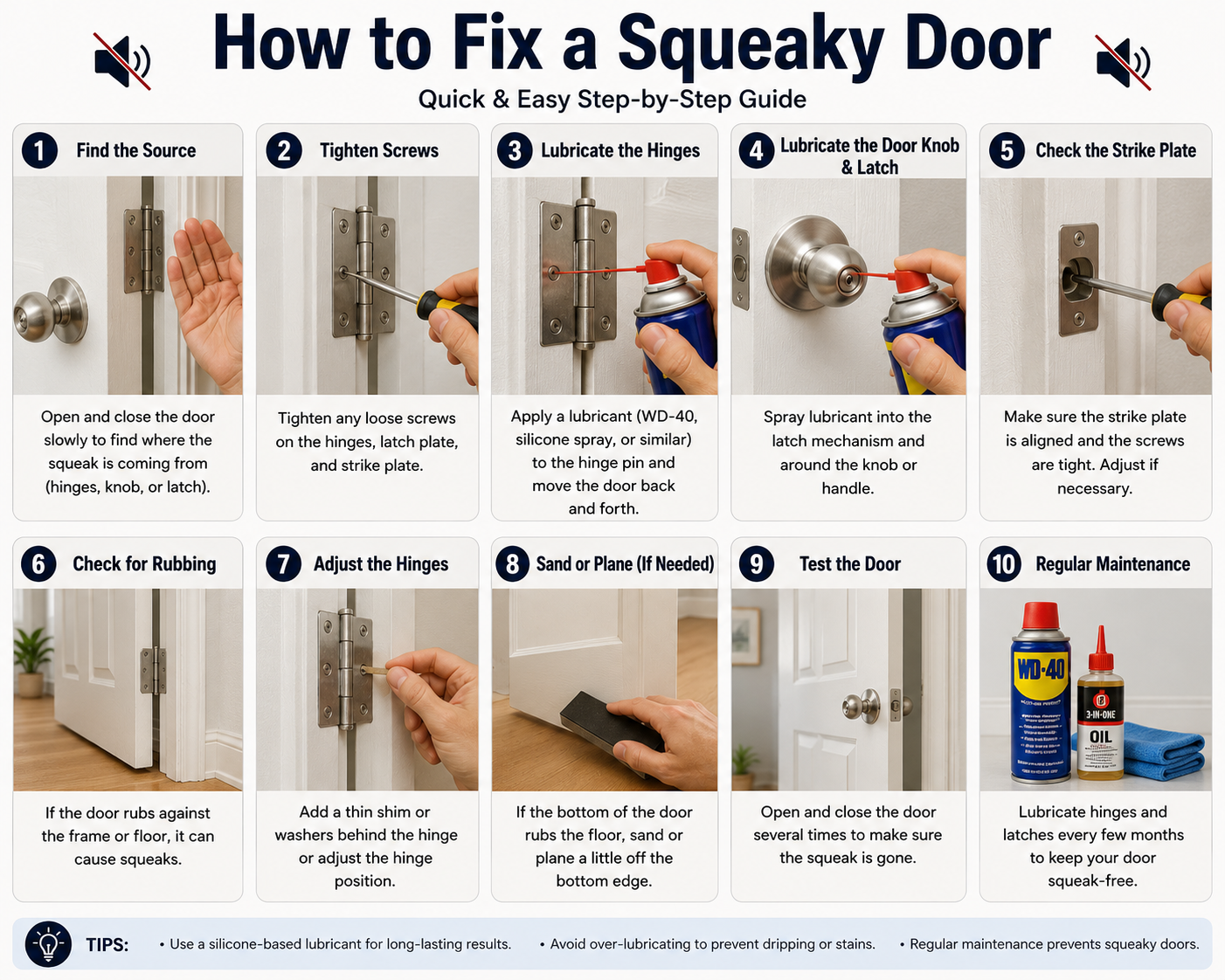
How to Fix a Squeaky Door: A Complete Beginner’s Guide

Introduction
A squeaky door is one of those household problems that starts as a minor annoyance and gradually becomes impossible to ignore. What begins as a faint creak when you open the bedroom door at night turns into a noise that wakes everyone in the house.
The good news is that fixing a squeaky door is almost always a straightforward DIY repair. In most cases, the problem comes down to dry hinges, accumulated dirt, loose screws, or minor alignment issues, none of which require replacing the door or calling a professional.
Most people grab a can of lubricant and spray it somewhere near the hinge. That works sometimes. But understanding exactly why a door squeaks, and knowing which specific fix applies to your situation, is what separates a repair that lasts from one that fixes the noise for a week before it comes right back.
This guide walks you through everything you need to know to diagnose and fix a squeaky door properly the first time, using tools you probably already have at home.
Why Do Doors Squeak?
A squeak happens when two surfaces rub against each other with friction and insufficient lubrication. In a door, this almost always involves the hinges. But the specific cause matters because it determines the right solution.
Dry Door Hinges
This is the most common cause. Over time, the lubrication on a hinge’s moving surfaces dries out, wears away, or gets displaced by dust and debris. When the hinge pin rotates inside a dry barrel without any lubricating film, the metal-on-metal contact creates the characteristic creaking sound.
Dirt and Dust
Dust, lint, and environmental debris accumulate in hinge barrels over months and years. This buildup acts as an abrasive rather than a lubricant. Even if some oil remains on the hinge surfaces, grit mixed into it accelerates friction and wear while contributing to noise.
Rust or Corrosion
Hinges on exterior doors, bathroom doors, or any door in a high-humidity environment are particularly vulnerable to rust. Corrosion roughens the metal surfaces inside the hinge barrel, creating irregular friction that produces noise during every movement of the door.
Loose Hinge Screws
When hinge screws work loose from the door or frame, the hinge shifts slightly under the door’s weight. This movement means the hinge pin no longer sits cleanly in alignment. The resulting irregular movement creates friction and noise that no amount of lubrication will fully resolve until the screws are tightened.
Door Alignment Problems
If the door has settled, swelled from humidity, or the frame has shifted slightly, the door may rub against the frame at the top, sides, or strike plate. This rubbing creates a scraping or creaking sound that originates at the contact point rather than the hinge itself.
Worn Door Hardware
Hinges that have been in service for many years may have physically worn hinge barrels or pins. The worn metal develops excess play and produces noise during door movement that lubrication alone cannot fully eliminate.
Can You Fix a Squeaky Door Yourself?
Yes, in the vast majority of cases. Squeaky door repair is one of the most beginner-friendly home maintenance tasks because it requires minimal tools, no specialized knowledge, and produces visible results quickly.
The most common fixes, cleaning and lubricating hinges and tightening loose screws, take under thirty minutes from start to finish and cost very little. Even removing and lubricating a hinge pin is a task most homeowners can handle confidently after reading through the process once.
Professional help becomes appropriate when the squeak is caused by structural movement affecting the door frame, when a door hinge is severely damaged and needs replacement, when a door has significant alignment problems that cannot be resolved with screw adjustments, or when an exterior security door shows damage affecting its function.
Tools and Materials You Need
| Tool or Material | Purpose | Recommended Use | Estimated Cost |
|---|---|---|---|
| Lubricant (silicone spray, white lithium grease, or suitable alternative) | Lubricating hinge pins and barrels | Main squeak solution | $5 – $15 |
| Flathead screwdriver | Tightening hinge screws, removing hinge pins | All repairs | $5 – $15 |
| Phillips screwdriver | Tightening standard hinge screws | All repairs | $5 – $15 |
| Cordless drill with driver bits | Driving replacement screws or longer screws | Loose hinge repairs | $40 – $150 |
| Replacement screws (longer gauge) | Replacing stripped or loose screws | Loose hinge repairs | $3 – $10 per pack |
| Clean cloths | Wiping excess lubricant and cleaning hinges | Every repair session | $2 – $5 |
| Small stiff brush | Cleaning debris from hinge barrels | Dirty hinge repairs | $3 – $8 |
| Pliers | Holding hinge pins during removal | Pin removal | $8 – $20 |
| Hinge pin removal tool or nail and hammer | Tapping hinge pins up for removal | Pin removal | $0 – $10 |
| Penetrating oil | Loosening severely rusted or seized hinges | Rusty hinges | $5 – $15 |
How to Fix a Squeaky Door Step by Step
Step 1: Identify the Source of the Squeak
Before applying any lubricant, locate exactly where the noise is coming from. Open and close the door slowly several times while listening carefully. Have someone else move the door while you watch the hinges closely.
Most doors have two or three hinges. The squeak may come from only one of them. Touching the hinge lightly with your fingertip while the door moves can help you feel which hinge is vibrating. Fixing the right hinge immediately is more effective than lubricating all three indiscriminately.
Step 2: Check the Door Hinges
Visually inspect all hinges on the door. Look for rust, discoloration, accumulated grime, visible gap between the hinge leaves and the wood, and whether the hinge pin sits evenly in the barrel or appears tilted.
A hinge that is visibly pulling away from the door or frame tells you that the screws are loose before you even touch them. A hinge that is red or orange with corrosion needs more than light lubrication.
Step 3: Clean the Hinges
Wipe each hinge with a clean dry cloth to remove surface dust and grime. For accumulated debris inside the hinge barrel, use a small stiff brush to clear out any compacted dirt.
If the hinges are significantly dirty or have light surface rust, apply a small amount of penetrating oil to help loosen the debris before cleaning. Allow it to sit for a few minutes, then wipe thoroughly. The goal is a clean metal surface that lubricant can actually reach and coat rather than sitting on top of contamination.
Step 4: Apply Lubricant
Apply a small, controlled amount of your chosen lubricant to the hinge. For spray lubricants, apply directly to the gap between the hinge barrel and the hinge pin, working the lubricant into the joint by moving the door slowly during application.
The key word here is small. A thin film of lubricant is all that is needed to eliminate metal-to-metal friction. Excess lubricant drips onto flooring, stains carpet, and collects dust and dirt that accelerates wear rather than reducing it. Follow the manufacturer’s instructions on any lubricant product you use regarding application method and amount.
Step 5: Move the Door Back and Forth
After applying lubricant, open and close the door several times to work the lubricant into the hinge barrel and distribute it evenly across the moving surfaces. This is the step that actually makes the repair effective.
Move the door through its full range of motion, not just a few inches. Work the lubricant into contact with all surfaces inside the barrel by using slow, complete open-and-close cycles.
Step 6: Check and Tighten Hinge Screws
While the door is at rest, check every hinge screw on both the door side and the frame side by pressing a screwdriver firmly into each one. Any screw that turns at all needs tightening.
Tighten screws firmly but do not over-tighten them. Over-tightening in softened or slightly worn wood strips the hole and makes the problem worse. If a screw turns freely without gripping, the hole has stripped and needs a different solution, described in the loose hinge section below.
Step 7: Inspect the Hinge Pins
With the door stationary, look at the hinge pins from the side. They should sit completely within the barrel with the head flush against the top of the knuckle. A pin that has ridden up partially out of the barrel is a common cause of hinge noise and should be tapped back into position with a hammer and a block of wood against the pin head.
Step 8: Remove and Lubricate a Hinge Pin if Necessary
For persistent squeaking after surface lubrication, removing the hinge pin and lubricating it directly is the most thorough solution.
Tap a nail or hinge pin tool against the base of the pin from the bottom of the hinge barrel to push the pin upward. Grip the pin head with pliers and pull it completely free. Wipe the pin clean with a cloth. Apply a thin coat of lubricant directly to the pin shaft. Re-insert the pin from the top of the hinge barrel and tap it gently back into position.
Remove and replace one pin at a time. Do not remove all hinge pins simultaneously while the door is hung, as this removes the door’s support completely and creates a safety hazard.
Step 9: Check Door Alignment
Open the door to various positions and observe whether it stays where you leave it. A properly hung door should remain stationary when released at any open position. A door that swings open or falls closed on its own is misaligned, and that misalignment contributes to the hinge wear and noise you are trying to resolve.
If the door rubs against the frame at any point in its travel, note the location. Visible paint wear or scuff marks on the frame identify exactly where contact is occurring.
Step 10: Test the Door
Open and close the door repeatedly through its full range of motion and listen. The squeak should be significantly reduced or completely gone. Wipe any excess lubricant from the hinge surfaces, surrounding frame, and floor.
If the squeak is reduced but not eliminated, identify which hinge still produces noise and repeat the lubrication process with pin removal on that specific hinge.
Best Lubricants for a Squeaky Door
Several products work effectively on door hinges, each with different properties.
Silicone-based lubricant spray works well on hinges because it resists moisture, does not collect dust as readily as oil-based products, and provides a durable lubricating film. It is a good general-purpose choice for interior hinges.
White lithium grease is a thicker lubricant that provides lasting coverage and is particularly useful for hinges under heavier load, such as those on solid wood exterior doors. It stays in place better than thinner spray lubricants.
Petroleum jelly is a common household alternative that many homeowners already have on hand. Applied directly to the hinge pin, it provides adequate lubrication for interior hinges with light to moderate use.
Penetrating oil is most useful for freeing seized or rusted hinges rather than as a long-term lubricant. It has low viscosity and may need to be followed up with a more durable product after the rust and seized material is loosened.
Always follow the manufacturer’s instructions for any lubricant product, check compatibility with your specific hinge material, and wipe away excess after application to prevent dripping and dirt accumulation.
How to Fix a Squeaky Door Without Removing It
For homeowners who want to address minor squeaking without removing the hinge pins or taking the door off, surface lubrication applied directly to the gap between the hinge pin and barrel is often sufficient for light cases.
Apply the lubricant directly to the hinge gap while the door is in its normal hung position. Open and close the door slowly to work the product into contact with the pin shaft. This method works well for light squeaks caused by simple dryness rather than dirt accumulation or significant wear.
For the hinge screws, tighten them without removing any hardware at all. This quick sequence takes under ten minutes and resolves a surprising percentage of common door squeaks without any disassembly.
How to Fix a Squeaky Door Hinge
A squeaking hinge is almost always the result of dry metal surfaces, accumulated dirt, or light corrosion. The direct solution is to clean and lubricate the hinge as described in the step-by-step section above.
For hinges with more significant corrosion, apply penetrating oil and allow it to work for several minutes before attempting to move the hinge. Once the corrosion is loosened, clean the hinge thoroughly, remove and clean the pin, apply fresh lubricant, and reassemble.
If the hinge barrel is visibly damaged, bent, or the pin no longer fits cleanly due to wear, hinge replacement is the most reliable solution. Standard interior door hinges are widely available at hardware stores and replacing a single hinge is a manageable task for most homeowners.
How to Fix a Squeaky Door Hinge Without WD-40
WD-40 is a penetrating oil and moisture displacer rather than a long-term lubricant. It can temporarily reduce squeaking but evaporates relatively quickly and does not provide lasting lubrication on its own. Many experienced DIYers prefer other options for sustained results.
Suitable alternatives include:
- White lithium grease applied directly to the pin
- Petroleum jelly rubbed onto the pin shaft
- Silicone spray applied to the hinge gap
- Beeswax rubbed along the pin surface
- Bar soap rubbed along the pin as a simple household option
Each of these alternatives provides some degree of lubrication with different durability and application characteristics. None is universally best for every situation. The right choice depends on the hinge type, the severity of the squeak, and what you have available. Always check product compatibility with your specific hardware and follow any manufacturer guidance.
How to Fix a Squeaky Door With Loose Hinges
Loose hinges allow the door to shift slightly out of alignment during movement. This movement creates hinge noise that lubrication will not fully solve because the problem is physical instability rather than friction alone.
Tighten all hinge screws on both the door and frame sides. If screws turn without gripping, the screw holes in the wood have stripped.
The most effective fix for a stripped hinge screw hole is to use longer screws that reach deeper into fresh wood. For frame-side hinges, a screw that reaches into the wall stud behind the frame provides exceptional holding strength.
Another reliable method is to fill the stripped hole with wooden toothpicks and wood glue, allow it to cure fully, then drive the original screws back in. The cured wood fills the worn hole and gives the screw threads new material to grip.
How to Fix a Squeaky Interior Door
Interior doors, including bedroom, bathroom, hallway, and closet doors, are the most frequent source of household door squeaks. They are typically lighter than exterior doors and their hinges receive less exposure to moisture and corrosion.
For most interior doors, cleaning and lubricating the hinge pins resolves the squeak permanently. Tightening any loose hinge screws is the second most important step.
Closet doors deserve special mention because they often go long periods without attention. Bifold and sliding closet doors have their own hardware systems including rollers, tracks, and pivot pins that each benefit from occasional lubrication with an appropriate product for that specific hardware type.
How to Fix a Squeaky Exterior Door
Exterior doors face conditions that interior doors do not. Moisture, temperature fluctuations, and direct weather exposure accelerate rust and corrosion on hinges and create swelling in wooden door frames that affects alignment.
For exterior door hinges showing corrosion, apply penetrating oil first to loosen rust before cleaning and lubricating. After resolving the hinge, use a product that is more resistant to moisture wash-out than standard indoor lubricants. White lithium grease is a good choice for exterior hinges because it stays in place under varying conditions.
Exterior door frames can swell and shrink with seasonal humidity changes. A door that was perfectly aligned in winter may rub against the frame in summer. If this is a recurring seasonal issue, a small amount of planing on the contact edge may be needed, which is a professional or advanced DIY task. For a comprehensive view of seasonal home care, the Ultimate Home Maintenance Checklist for Every Season covers exterior door and hardware maintenance alongside all other seasonal priorities.
How to Fix a Door That Squeaks When Opening or Closing
The location and timing of the squeak tells you where the problem originates.
| Squeak Timing | Likely Source | Primary Fix |
|---|---|---|
| Throughout movement | Hinge pins | Lubricate or replace pins |
| Only at the start of opening | Top hinge under load | Lubricate top hinge, check alignment |
| Only at the end of closing | Latch or strike plate contact | Lubricate latch, check alignment |
| Mid-swing scraping | Door rubbing frame | Check alignment, reduce hinge screw protrusion |
| Intermittent creak | Loose hinge screws | Tighten all hinge screws |
Matching your repair to the specific timing of the noise produces better results than treating all squeaks identically.
Common Door Problems That Cause Squeaking
Loose Screws
Hinge screws that have backed out even partially allow the hinge to flex during door movement. This flexing produces noise and accelerates wear on the hinge and surrounding wood.
Rusty Hinges
Surface rust on hinge components roughens the metal-on-metal contact surfaces. Even light corrosion increases friction dramatically compared to clean, smooth metal.
Dirty Hinges
Accumulated grit inside the hinge barrel acts as an abrasive. Dirt mixed with old dried lubricant creates a grinding compound that produces noise and physically wears the hinge surfaces over time.
Misaligned Door
A door that does not hang plumb places uneven load on the hinges. This causes one hinge to bear more of the door’s weight than it was designed to, increasing friction at that specific hinge.
Tight or Binding Hinges
Over-tightened or improperly installed hinges can actually pinch the hinge barrel, restricting smooth pin rotation and causing squeaking even with adequate lubrication.
Worn Hardware
Hinges that have been in service for many decades may have physically worn metal inside the barrel. The resulting play and irregular contact creates noise that persists despite lubrication.
Door Rubbing Against the Frame
Paint buildup over years of repainting, seasonal wood swelling, or minor frame settling can cause the door to make contact with the frame during movement, creating a scraping or creaking sound that has nothing to do with the hinges.
Common Mistakes When Fixing a Squeaky Door
Using Too Much Lubricant
Excess lubricant drips onto floors, stains carpet, and attracts dust that quickly turns into an abrasive paste inside the hinge. Apply sparingly and wipe away all excess immediately.
Ignoring Loose Screws
Lubricating a hinge without addressing loose screws treats only part of the problem. The door will continue to move irregularly because of the physical instability, and the squeak returns quickly.
Spraying Lubricant Without Finding the Source
Spraying lubricant at all hinges without identifying the specific squeaking hinge is imprecise and wastes product. Take a minute to identify exactly which hinge is the source before starting.
Using the Wrong Product
Some lubricants damage painted surfaces, plastics, or specific metal finishes. Check product compatibility before applying anything to finished hardware or painted frames.
Failing to Clean Excess Lubricant
Lubricant left on surfaces around the hinge stains wood finishes, attracts dirt, and can create slip hazards on flooring directly below the hinge.
Ignoring Door Alignment Problems
Lubrication solves friction between clean metal surfaces. It does not correct a door that is hanging unevenly or rubbing against the frame. If the alignment problem is not addressed, squeaking and hinge wear will continue regardless of how well the hinges are lubricated.
How to Prevent a Door From Squeaking Again
- Lubricate door hinges at least once a year as part of your regular home maintenance routine
- Check hinge screw tightness annually and retighten any that have backed out
- Inspect exterior door hinges seasonally for signs of corrosion, particularly before winter
- Wipe hinges with a clean cloth during regular cleaning to prevent dust and grime accumulation
- Address alignment issues when first noticed rather than waiting until the problem worsens
- In humid climates, check for seasonal door swelling that causes frame contact and treat proactively
- Keep the area around hinges clean and free of paint buildup during repainting projects
Building door maintenance into a regular home care schedule ensures these simple tasks get done before squeaking starts. The Home Maintenance Checklist by Month provides a practical monthly and seasonal scheduling framework that includes door and hardware checks alongside all other home maintenance priorities.
DIY vs Professional Door Repair
| Factor | DIY | Professional |
|---|---|---|
| Cost | $5 – $30 (materials) | $75 – $250+ (labor and materials) |
| Time | 15 to 60 minutes | 30 minutes to 2 hours |
| Skill Level | Beginner | Trained professional |
| Best For | Lubrication, screw tightening, pin cleaning | Alignment issues, damaged hinges, structural problems |
| Quality | Excellent for standard squeaks | Required for complex alignment and frame issues |
| Convenience | Work at your own pace | One scheduled appointment |
Estimated Cost to Fix a Squeaky Door
| Item | DIY Cost | Professional Cost |
|---|---|---|
| Lubricant | $5 – $15 | Included in service |
| Replacement screws | $3 – $10 | Included in service |
| Hinge replacement (if needed) | $8 – $30 per hinge | $50 – $150 per hinge installed |
| Basic DIY repair (labor) | $0 | N/A |
| Professional door service | N/A | $75 – $250+ |
| Total DIY estimated cost | $5 – $50 | $75 – $300+ |
All costs are approximate and intended for planning purposes only. Actual costs vary based on your location, the type of door and hardware, the extent of the problem, and professional labor rates in your area.
Door Maintenance Tips for Homeowners
Doors and their hardware are easy to overlook during regular home maintenance because they generally work without drawing attention. But small, consistent maintenance tasks keep doors functioning quietly and smoothly for decades.
| Maintenance Task | Frequency | Notes |
|---|---|---|
| Lubricate all door hinges | Annually | Wipe excess after application |
| Check and tighten hinge screws | Annually | Replace stripped screws promptly |
| Inspect exterior door hardware for rust | Seasonally | Apply protective lubricant before winter |
| Check door alignment | Annually | Look for frame contact or uneven gaps |
| Wipe hinges during regular cleaning | Monthly | Removes surface dust and grime |
| Check weatherstripping condition | Seasonally | Replace if cracked or compressed |
| Inspect door frame for moisture damage | Annually | Particularly at exterior thresholds |
For a broader view of home maintenance tasks that protect the structure and appearance of your home, the DIY Home Inspection Checklist provides a room-by-room framework for assessing door condition alongside all other interior and exterior home systems.
When to Call a Professional
Most squeaky doors respond well to the DIY techniques in this guide. However, certain situations call for professional expertise.
Call a professional when:
- The door has severe alignment problems that do not respond to hinge adjustment
- The door frame is damaged, cracked, or showing signs of structural movement
- A hinge is broken, bent, or torn out of the frame entirely
- The squeaking persists after thorough lubrication and hinge adjustment
- An exterior security door shows damage that compromises its function or security
- The door frame shows signs of water damage, rot, or pest damage behind the hinge area
- Major plane or edge adjustment is needed to resolve rubbing against the frame
Structural issues affecting the door frame or the wall around it are beyond the scope of standard door maintenance and may indicate broader problems with the home’s structure that need professional assessment.
Expert Tips for Quiet and Smooth Doors
These practical tips come from real-world door maintenance experience and consistently produce better results.
- When repainting a door, tape over hinge barrels to prevent paint from entering the barrel and causing a new source of friction after the job is done.
- When installing or reinstalling a door, use longer hinge screws on the frame side that reach into the stud behind the frame. This gives the hinge exceptional holding strength that prevents the loose-screw squeak from developing.
- For doors in bathrooms and kitchens where humidity is consistently higher, inspect hinges more frequently than once a year and apply moisture-resistant lubricant before seasonal humidity increases.
- If you notice a door beginning to stick or rub at the frame, address it immediately rather than forcing the door. A door that requires force to open or close places far more stress on hinges and creates faster wear.
- Take photographs of your hinges and door hardware during maintenance sessions. Comparing current photos to past ones reveals gradual changes in alignment and hardware condition that are otherwise easy to miss.
Maintaining doors is part of the broader work of keeping a home in good condition. If you are refreshing a room alongside this door maintenance project, the How to Paint a Room: Beginner’s Guide covers interior painting from start to finish, including how to handle painted trim and door frames properly. And if your maintenance inspection reveals minor wall damage near hinges or door frames, the How to Repair Small Drywall Holes guide covers those repairs step by step.
Frequently Asked Questions
Why does my door squeak only at night?
Temperature and humidity changes after sunset can cause wood to contract slightly, changing how the door fits in its frame. This thermal movement alters the contact pressure between the hinge pin and barrel or between the door and frame. A door that is quiet during warm daytime conditions may develop slight rubbing as the frame cools and contracts at night. The fix is the same as for any alignment or lubrication issue, but pay attention to whether the squeak is seasonal or temperature-related, as this points toward wood movement as the root cause rather than simply dry hinges.
Can I use cooking oil or olive oil to lubricate a door hinge?
Cooking oils including olive oil, vegetable oil, and similar products can temporarily reduce hinge friction. However, they are not designed as mechanical lubricants and tend to become rancid over time, leave sticky residues, and attract dust more aggressively than purpose-made products. They also have limited durability and will need reapplication much more frequently than an appropriate lubricant. For a quick temporary fix when nothing else is available, cooking oil works in a pinch. For a lasting repair, use a product designed for mechanical lubrication such as silicone spray, white lithium grease, or petroleum jelly as described in this guide.
My door squeaks even after lubrication. What should I do next?
If the squeak persists after lubrication, the cause is likely something other than simple hinge friction. Check all hinge screws on both the door and frame sides for tightness. A loose screw causes movement that lubrication cannot correct. Next, check door alignment by watching where the door contacts the frame during its movement. Look for paint wear, scuff marks, or visible gaps that change as the door swings. If alignment is off, adjusting the hinge position or tightening screws on specific hinges may correct it. If the squeak persists after addressing all of these, the problem may require professional assessment.
How do I fix a squeaky bifold closet door?
Bifold closet doors have different hardware from standard hinged doors. They use pivot pins at the top and bottom and a guide roller along the top track. Clean the top track of dust and debris using a small brush and cloth. Apply a thin coat of appropriate lubricant to the pivot pins at the top and bottom of the door and to the roller guide. Lubricate the top track lightly. Open and close the door several times to work the lubricant into contact with all moving surfaces. Check that the pivot pins are seated correctly in their brackets and the roller is properly positioned in the track.
Is a squeaky door a sign of a structural problem?
In most cases, no. A squeaky door that responds to lubrication and screw tightening is simply a maintenance issue with no structural implications. However, if a door develops a squeak or alignment change suddenly without any obvious cause, or if multiple doors in the home begin sticking or squeaking around the same time, it is worth paying closer attention. Sudden changes in multiple doors can sometimes indicate foundation movement or changes in the structural framing that are causing the frame to shift. If you suspect structural involvement, consult a professional rather than attributing all the symptoms to routine maintenance needs.
How often should I lubricate door hinges?
For most interior doors in normal household use, annual lubrication is a reasonable maintenance interval. Exterior doors benefit from inspection and lubrication before the winter season when moisture and temperature changes place greater demands on the hardware. Doors in high-humidity areas like bathrooms may benefit from lubrication every six months. The most practical approach is to check all door hinges as part of your regular home maintenance routine and lubricate any that show signs of stiffness, noise, or resistance rather than waiting for a set calendar date. Adding this to your annual home maintenance checklist ensures it gets done consistently.
Should I replace hinges or just lubricate them?
Lubrication is the appropriate first step for most squeaky hinges. Try cleaning and lubricating the hinge completely, including removing and lubricating the pin directly, before considering replacement. If the hinge is physically damaged, severely corroded, has a visibly worn barrel, or continues to produce noise despite thorough lubrication and pin cleaning, replacement is the right next step. Standard interior door hinges are inexpensive and straightforward to replace with basic hand tools. Match the new hinge to the existing size, finish, and screw hole pattern to avoid additional work filling or repositioning the mortise in the door and frame.
What causes a door to squeak at the top only?
A squeak that occurs only at the top of the door’s movement typically indicates that the top hinge is the source of the friction. The top hinge bears the most leverage load from the door’s weight, particularly on heavier solid-core doors, and often wears or dries out faster than the lower hinges. Focus your lubrication and inspection efforts on the top hinge first. Also check whether the top hinge screws are fully tight. A loose top hinge allows the door to drop slightly on that side, creating irregular contact at the hinge barrel that produces noise characteristic of the top of the door’s travel.
Can door squeaking be related to the latch or strike plate?
Yes, though this is less common than hinge-related squeaking. If the latch bolt or strike plate are slightly misaligned, the metal contact as the door closes can produce a scraping or clicking noise that sounds similar to a hinge squeak. Open the door slowly while watching the latch and strike plate interaction. If you see the latch bolt catching on the edge of the strike plate opening rather than entering cleanly, this is the source of the noise. Adjusting the strike plate position or filing the edge of the opening slightly resolves this type of noise without any hinge work.
How do I prevent my exterior door from squeaking in winter?
Cold temperatures cause metal to contract, which changes the fit between hinge pins and barrels and can create friction where none exists in warmer conditions. Before winter arrives, clean exterior door hinges thoroughly and apply a lubricant that remains effective at low temperatures, such as white lithium grease or a silicone-based product rated for temperature variation. Also check that the door itself is not swollen from autumn humidity. As the wood dries and contracts in winter, an already-tight door can shift in its frame and create new contact points. Seasonal door inspection as part of fall home maintenance prevents these winter-specific issues from developing.
Conclusion
A squeaky door is almost always a solvable problem, and solving it rarely requires more than a basic set of tools, the right lubricant, and thirty minutes of methodical work.
The process is straightforward. Identify exactly which hinge is producing the noise. Clean it. Lubricate the pin and barrel. Tighten any loose screws. Test the door. In the large majority of cases, the squeak is gone and stays gone with no further action needed.
Where homeowners run into problems is skipping the diagnosis step and applying lubricant everywhere without identifying the specific source, or fixing the friction without addressing the loose screws that are allowing the door to move in ways it should not.
Building door maintenance into your regular home care routine prevents most squeaks from developing in the first place. A few minutes of annual attention to hinges and hardware keeps every door in your home operating quietly and smoothly for years.
For homeowners who want to integrate door maintenance into a broader preventive care system, the Home Maintenance Checklist by Month and Ultimate Home Maintenance Checklist for Every Season both provide structured frameworks that connect door care to every other aspect of home maintenance throughout the year.