
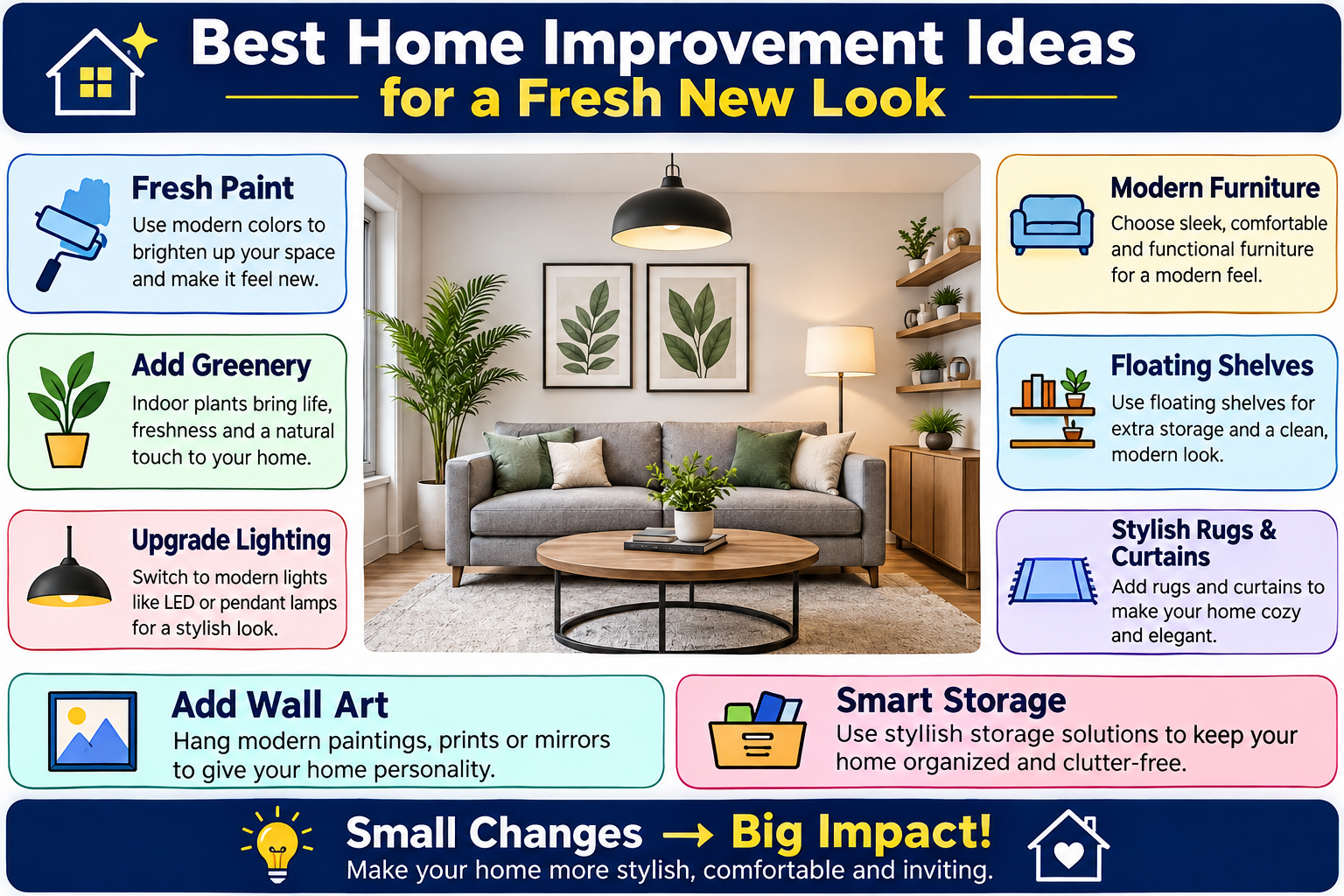
Best Home Improvement Ideas for a Fresh New Look: 20 Easy Upgrades

Introduction
A home can feel tired and heavy long before anything actually breaks. The paint color that felt right five years ago now makes the room feel smaller. The light fixture that came with the house has never quite worked. The hallway feels like a storage problem that never got solved.
None of this requires a full renovation to fix. Some of the most effective home improvements cost very little and take a weekend or less. Others require a bit more planning and budget but still fall well short of a major remodel.
This guide covers the best home improvement ideas for giving your home a fresh, updated look across different budgets and skill levels. Whether you are a first-time homeowner looking for quick wins or someone ready to take on a more involved project, there is something here that fits your situation.
What Makes a Home Feel Fresh and Updated?
Before jumping into specific projects, it helps to understand what actually creates the impression of a fresh, well-maintained home. It is rarely one single change. It is usually the combination of several small improvements working together.
The key elements include:
- Color: Updated, balanced paint colors can transform a room completely
- Lighting: Good lighting flatters everything else in the space
- Cleanliness and organization: A clean, uncluttered room feels larger and more comfortable
- Furniture arrangement: How furniture is positioned affects flow, balance, and perceived space
- Hardware and fixtures: Small details like handles, faucets, and outlet covers signal whether a home feels current
- Textures: Mixing materials like wood, linen, and stone adds visual depth
- Natural elements: Plants and natural finishes add warmth and life
- Curb appeal: The exterior sets expectations before anyone steps inside
- Functionality: A home that works well for daily life always feels better than one that only looks good
A fresh look does not mean following every current trend. It means creating a space that feels clean, balanced, and intentional. Those qualities hold up over time in a way that trend-driven decorating rarely does.
Best Home Improvement Ideas for a Fresh New Look
1. Give the Walls a Fresh Coat of Paint
Paint is the most cost-effective home upgrade available. It can make a room feel larger, brighter, more calming, or more energetic depending entirely on the color chosen.
When selecting a color, consider the natural light in the room, the furniture and flooring tones already present, and the overall feeling you want to create. North-facing rooms with limited natural light often benefit from warm off-whites and warm neutrals rather than cool grays, which can feel flat without sunlight. South-facing rooms have more flexibility.
Neutral does not mean boring. Warm whites, soft creamy tones, warm greige, and muted earthy colors all create a fresh, inviting appearance that works with most furniture styles and does not date quickly.
Proper preparation makes or breaks a paint job. Cleaning walls, filling small holes, and applying primer before the top coat leads to a result that lasts. Our guide on how to paint a room covers the full process from start to finish for anyone approaching painting for the first time.
2. Declutter and Reorganize Each Room
Decluttering is free and often the most impactful thing you can do for your home’s appearance. When every surface is covered and every shelf is packed, rooms feel cramped and chaotic regardless of how good the furniture or paint might be.
Go through each room methodically. Remove items that do not belong, store things that are rarely used, and edit decorative collections down to the pieces that genuinely matter. Clearing just the main horizontal surfaces, countertops, coffee tables, and side tables, can immediately make a room feel larger and more intentional.
Organization is the follow-through. Once the clutter is gone, creating simple systems that keep it away, a designated spot for mail, a hook for bags, a bin for shoes, maintains the improvement without constant effort.
3. Upgrade Outdated Light Fixtures
Light fixtures are one of the most visible features in any room, and outdated ones can date a space more than almost anything else. A generic builder-grade fixture or an old brass chandelier signals immediately that a room has not been updated.
Replacing a fixture with a simpler, more contemporary option changes the feel of the whole room. Drum shades, linear pendants, simple flush-mount fixtures, and geometric designs all work well in modern residential spaces. Choose a finish, matte black, brushed nickel, or warm brass, that coordinates with the other hardware in the room.
Safety note: Light fixture replacement involves electrical work. Always switch off the circuit breaker before touching any wiring, verify power is off with a voltage tester, and follow manufacturer instructions carefully. If you are not comfortable with electrical work, hire a licensed electrician. The U.S. Consumer Product Safety Commission regularly identifies DIY electrical mistakes as a significant cause of preventable home fires and injuries.
4. Improve the Lighting Layers
Beyond replacing fixtures, rethinking how a room is lit makes a meaningful difference. Most rooms rely on a single overhead light, which creates a flat, often unflattering light quality regardless of how good the fixture itself looks.
Layered lighting uses three types of light together. Ambient lighting provides the general illumination for the room. Task lighting focuses on specific work areas like a reading chair, kitchen counter, or bathroom vanity. Accent lighting highlights architectural features, artwork, or decorative elements.
Adding a floor lamp or table lamp to a living room that previously had only an overhead light immediately makes the space feel warmer and more comfortable. Under-cabinet lighting in a kitchen does the same for the work surface below.
The LED lighting options available today are significantly better than they were even a few years ago. The U.S. Department of Energy notes that LED bulbs use at least 75 percent less energy than incandescent bulbs while lasting considerably longer, making the switch worthwhile from both a quality and efficiency standpoint.
5. Update Cabinet Knobs and Handles
Cabinet hardware is one of the best value upgrades in a home. A full set of replacement pulls and knobs for a kitchen or bathroom typically costs far less than any other upgrade in those rooms and creates a disproportionately strong visual improvement.
Simple bar pulls in matte black, brushed nickel, or satin brass read as contemporary and work with a wide range of cabinet styles. Replace ornate, decorative, or mismatched hardware throughout a room at the same time rather than mixing old and new, since consistency is what makes the upgrade look deliberate.
6. Refresh the Front Door
The front door is the focal point of a home’s exterior and the first thing visitors see. A refreshed front door signals that the whole home is well-maintained and cared for.
Paint is the most impactful change. A fresh coat of exterior paint in a color that complements the home’s exterior, whether a classic black, a warm charcoal, a deep navy, or a natural wood stain, can transform the front of a house completely.
Pair a freshly painted door with updated house numbers, a new door handle or knocker, improved exterior lighting beside the door, and a clean entry path. These additions together create curb appeal that starts before anyone steps inside. If the door handle itself is worn or stiff, our guide on how to replace a door handle covers the process clearly for beginners.
7. Add a Large Mirror
Mirrors do more practical work in an interior than most homeowners realize. They reflect both natural and artificial light, making rooms brighter. They create the visual impression of more space, which is especially valuable in smaller rooms, narrow hallways, or windowless areas.
A single large mirror makes more impact than several small decorative mirrors scattered around a room. Choose a simple frame that complements the other finishes in the space, or opt for a frameless design for a completely minimal look.
Position mirrors to reflect a window or a light source for the maximum brightening effect.
8. Update Curtains and Window Treatments
Heavy, ornate window treatments with valances, swags, or dated patterns are a consistent marker of an older decorating style. Replacing them with cleaner, simpler options immediately refreshes the look of a room.
Floor-length curtain panels in a neutral linen or cotton fabric are a versatile, timeless choice that works in most rooms. Hang the curtain rod as close to the ceiling as possible and extend it 4 to 6 inches beyond the window frame on each side. This simple technique makes windows appear larger and ceilings feel taller.
Roller shades, Roman shades, and simple wooden blinds are practical alternatives that suit kitchens, bathrooms, and smaller rooms where full curtain panels may feel excessive.
9. Rearrange Your Furniture
Furniture arrangement affects how a room functions and how large it feels, and getting it wrong is surprisingly common. Many rooms default to pushing all furniture against the walls, which actually makes a room feel smaller and creates an awkward empty space in the middle.
Floating furniture slightly away from walls and grouping pieces to create a defined conversation area usually produces a better result in living rooms. In bedrooms, the bed placement relative to the door and windows affects both the visual balance of the room and how comfortable it feels to be in.
Rearranging costs nothing and can take less than an hour. It is worth trying several configurations before committing to one.
10. Add a Modern Area Rug
An area rug defines a seating or functional area within a room and adds warmth, texture, and color. It also protects flooring and reduces noise.
The most common sizing mistake is choosing a rug that is too small. In a living room, at least the front two legs of every major seating piece should sit on the rug. A rug that only sits under the coffee table looks disconnected and makes the room feel smaller rather than larger.
Choose a pattern and color that work with the existing furniture rather than competing with it. If the furniture already has strong patterns, a solid or subtly textured rug tends to work better. If the furniture is neutral, a rug with some pattern or color can add welcome visual interest.
11. Refresh the Kitchen Without a Full Remodel
A full kitchen renovation is one of the most expensive home improvement projects. But a kitchen that looks dated does not necessarily need one.
Several targeted upgrades can significantly improve a kitchen’s appearance without touching the cabinets or countertops. Start with cabinet hardware, as covered above. Then consider the kitchen faucet. A worn or dated faucet in an otherwise functional kitchen is a visible problem that a new fixture solves relatively easily.
Backsplash updates can transform the look of a kitchen. Simple white subway tile, concrete-look porcelain, or a subtle stone mosaic all read as contemporary and are manageable as intermediate DIY projects. The lighting deserves attention too. Under-cabinet lighting and a better ceiling fixture make the kitchen feel more functional and more attractive simultaneously.
Organize the countertops so only the most-used items remain visible. A clutter-free countertop is the fastest way to make any kitchen look more modern and deliberate.
Replacing a loose or misaligned cabinet door is worth doing before attempting any cosmetic improvements. A cabinet that does not close properly undermines everything else around it, and our guide on how to repair a loose cabinet door makes the fix straightforward.
12. Give the Bathroom a Simple Refresh
Like the kitchen, a bathroom can feel noticeably updated without major renovation work.
Replace the mirror if the existing one is builder-grade, frameless, and dated. Adding a simple framed mirror in a contemporary finish creates an immediate visual improvement. Pair this with a new light fixture above the mirror to replace a standard bare-bulb strip.
Update the faucet and shower hardware if the existing fixtures are visibly worn. Add organized storage where it is missing. A simple floating shelf or a small cabinet keeps toiletries off the counter and surfaces looking clean.
Fresh towels in a coordinated neutral palette, a simple soap dispenser, and a new bath mat complete the refresh for a modest additional cost. For the shelf installation, our detailed guide on how to install floating shelves covers the full process for different wall types. Once the shelf is in place, our guide on how to install a towel bar helps you add coordinating bathroom hardware cleanly.
13. Upgrade Interior Doors and Handles
Interior doors and their hardware are easy to overlook but contribute to the overall impression of a home more than most people realize. Hollow-core doors with builder-grade lever handles that are loose, mismatched, or tarnished make hallways and rooms feel neglected.
Replacing door handles throughout the home with consistent, simple hardware in a matching finish is an afternoon project that noticeably improves how the home feels. Matching the door hardware finish to the cabinet hardware and light fixture finishes creates a visual coherence that makes the whole home feel more considered.
If any doors squeak, stick, or do not latch properly, fixing them before tackling any cosmetic improvements makes both practical and visual sense.
14. Add Built-In or Floating Storage
Visible, functional storage improves how a home both looks and lives. Floating shelves in a living room, home office, bedroom, or bathroom add display and storage space without taking up floor area and create a built-in appearance at a fraction of the cost.
Well-styled floating shelves, with a mix of books, plants, and a few decorative objects, give blank walls purpose and personality. Badly styled ones, overloaded with mismatched items, undermine the room’s appearance. The key is editing: display fewer things and leave enough breathing room between items.
For anyone ready to take on this project, our complete guide on how to install floating shelves covers every wall type and mounting method from start to finish.
15. Improve Your Home’s Entryway
The entryway is the first interior space anyone experiences when they enter your home. It sets the tone for everything that follows. An entryway that is cluttered, dark, or disorganized makes the whole home feel less inviting regardless of how well the rest is maintained.
A few focused improvements make a significant difference. Adequate shoe storage keeps floors clear. Hooks at a comfortable height give coats and bags a home. A small bench or seating option makes putting on shoes easier and adds a furniture-quality presence to the space.
A mirror in the entryway reflects light and makes the space feel larger. Good lighting is essential. A ceiling fixture or sconce that gives warm, even light rather than a harsh overhead glare changes the first impression immediately.
For a complete approach to entryway organization, our guide on how to make a DIY entryway organizer covers practical storage solutions that work in spaces of different sizes.
16. Add Indoor Plants and Natural Materials
Live plants add color, texture, and life to interiors in a way that no decorative object quite replicates. A single large plant in a simple ceramic pot creates more visual impact than a collection of smaller plants scattered around a room.
Snake plants, pothos, fiddle leaf figs, and ZZ plants are among the hardier options that do well in a range of indoor lighting conditions. For a beginner, choosing a species known for resilience reduces the risk of the plant declining before it has a chance to make a difference.
Natural materials used elsewhere in the room complement plants effectively. A wood tray on a coffee table, a woven basket used for storage, or a linen throw over a chair arm all add warmth and texture that contrast well with smoother, harder surfaces.
17. Refresh the Walls With Artwork
Blank walls feel unfinished. Walls covered with too many mismatched pieces feel chaotic. Good artwork placement lands between these two extremes.
A single large piece of artwork or photography above a sofa or bed creates a focal point without requiring multiple pieces to coordinate. A gallery wall works well when the frames share a common element, whether that is the same finish, the same color mat, or a consistent visual theme.
Hang artwork at eye level, typically with the center of the piece at approximately 57 to 60 inches from the floor, rather than too high on the wall, which is a common and easily corrected mistake.
18. Improve Curb Appeal
The exterior of a home creates an impression before anyone walks through the door. Simple exterior improvements can meaningfully change how a home looks from the street.
Start with cleaning. Power washing the driveway, walkway, and exterior walls removes years of accumulated grime and makes everything look significantly fresher. Trim overgrown bushes and trees, clear weeds from the garden beds, and add fresh mulch where needed.
Update the front door as described above. Replace house numbers with clean, legible modern numerals. Add outdoor lighting beside the front door if none currently exists. These changes work together to create a well-maintained, welcoming exterior.
19. Replace Worn or Outdated Fixtures
Small details throughout a home communicate whether it is well-maintained or neglected. Worn faucets, yellowed outlet covers, tarnished switch plates, outdated vent covers, and mismatched hardware are individually minor but collectively create an impression of age and inattention.
Going through a home and replacing these items systematically, ideally in a consistent finish throughout, produces a level of polish that larger individual upgrades cannot achieve on their own. These are among the easiest and most affordable upgrades available and are entirely beginner-friendly.
20. Deep Clean and Repair Small Problems
Before any decorating or upgrading, a thorough deep clean of a home often delivers a surprisingly large improvement. Clean windows let in more light. Cleaned grout lines in a bathroom tile look noticeably fresher. Cleaned light fixtures and ceiling fans brighten a room.
Alongside cleaning, address the small repairs that have been postponed. Touch up scuffed paint. Tighten loose cabinet hinges. Fix the door that sticks in summer. Replace the cracked switch plate. These repairs signal that the home is actively cared for and prevent small problems from becoming larger ones over time.
A structured approach to ongoing home maintenance prevents the accumulation of small problems in the first place. A solid home maintenance checklist gives homeowners a practical framework for staying on top of these tasks month by month.
Home Improvement Ideas by Budget
| Budget Level | Improvement Ideas | Difficulty |
|---|---|---|
| Low Budget | Paint, decluttering, hardware updates, cleaning, rearranging furniture, adding plants and decor | Easy |
| Medium Budget | Lighting fixtures, mirrors, area rugs, window treatments, floating shelves, faucet and fixture replacements | Easy to Moderate |
| Higher Budget | Flooring replacement, kitchen backsplash and countertop updates, bathroom improvements, exterior work, built-in storage | Moderate to Professional |
Costs vary considerably by location, material quality, home size, and whether professional labor is required. Use this table as a framework for sequencing projects rather than a pricing guide.
Best DIY Home Improvement Ideas for Beginners
Many of the most impactful home improvements on this list require no specialized skills. These are genuinely beginner-friendly projects:
- Painting walls, ceilings, and trim
- Replacing cabinet hardware
- Installing curtains and curtain rods
- Rearranging furniture
- Decluttering and reorganizing
- Adding mirrors and artwork
- Swapping outlet covers and switch plates
- Refreshing outdoor spaces with cleaning and planting
- Installing floating shelves with the right preparation
- Updating decor and accessories
Projects involving electrical wiring beyond basic fixture swaps, structural modifications, gas lines, major plumbing changes, roofing, or load-bearing walls should be assessed and handled by qualified professionals. Attempting these without proper knowledge and experience creates real safety risks that outweigh any cost savings.
Home Improvement Ideas That Give the Biggest Visual Impact
Some improvements simply punch above their weight in terms of the visual change they create.
- Paint: Nothing changes a room as completely or affordably as color
- Lighting: Good lighting makes everything else in the room look better
- Decluttering: Removing visual noise immediately makes a space feel larger and cleaner
- Front door improvements: The exterior focal point of the entire home
- Cabinet hardware: Small change, immediate and visible result throughout the room
- Window treatments: Replacing dated curtains modernizes the room without touching anything structural
- Furniture arrangement: A better layout can make the same room feel completely different
- Flooring or rugs: A new area rug defines and anchors a space at a fraction of the cost of new flooring
- Mirrors: Light, space, and visual interest added simultaneously
- Updated fixtures: Faucets, handles, and light fixtures signal whether a home is current or dated
Each of these works because it affects something that is highly visible and that the eye naturally moves toward when entering a room.
Common Home Improvement Mistakes to Avoid
Starting too many projects at once leaves multiple rooms in a state of mid-improvement, which is more disruptive than helpful.
Following trends without considering longevity produces interiors that feel dated almost as quickly as they feel current.
Using too many colors in one space creates visual competition rather than cohesion. Start with two or three and use them consistently.
Buying furniture that is too large makes rooms feel smaller, not more furnished.
Ignoring lighting is the most common oversight. Even the best furniture and paint fall flat in a poorly lit room.
Overdecorating works against a fresh, modern appearance. Editing down is almost always the right direction.
Focusing only on appearance while ignoring functionality leads to homes that look good in photographs but do not work well in daily life.
Choosing materials without considering durability in the specific location, such as MDF in a humid bathroom, creates maintenance problems that outweigh initial savings.
Attempting hazardous work without proper knowledge creates safety risks that are not worth any cost saving.
Spending heavily before identifying the real problem means money goes to visible improvements while the underlying issues that make the home feel tired remain unaddressed.
How to Plan a Home Improvement Project
A simple planning process prevents wasted effort and money.
- Identify the problem or goal clearly. What specifically feels wrong, dated, or uncomfortable about the space?
- Set a realistic budget before looking at materials or products. It is easy to overspend without a defined limit.
- Prioritize high-impact improvements first. Address the changes that will make the most difference before the ones that are more cosmetic.
- Research materials before purchasing anything. Read reviews, compare options, and understand the maintenance requirements of what you choose.
- Measure the space accurately. Furniture, rugs, shelves, and fixtures all need to fit the actual dimensions of the room.
- Decide what you can realistically DIY and where professional help is the better choice.
- Hire professionals for appropriate work. Electrical, structural, gas, and significant plumbing projects are not the place for trial and error.
- Complete one area or project at a time before starting another. This keeps the home livable and allows you to evaluate results clearly.
- Review the result honestly before moving on. Does the change solve the original problem? Does it create new ones?
FAQ
What are the best home improvement ideas for a fresh look?
The most consistently effective starting points are paint, decluttering, lighting, and hardware updates. These four areas address the most common reasons a home feels dated or tired without requiring major renovation. Paint changes the entire feeling of a room. Decluttering makes every other improvement more visible. Better lighting makes the room more flattering and functional. Updated hardware creates a more cohesive, current appearance throughout the kitchen and bathroom. Starting with these four gives you the clearest foundation for everything else.
What home improvements make the biggest difference?
Paint and lighting consistently deliver the largest visual change per dollar spent. Beyond those, decluttering and furniture rearrangement are free and often produce surprisingly significant results. For a slightly higher investment, replacing dated light fixtures, updating cabinet hardware, refreshing window treatments, and adding a well-sized area rug each create noticeable improvements. The changes that make the biggest difference tend to be the ones that affect the most visible elements in a room rather than details that only become apparent on close inspection.
What are the best low-cost home improvement ideas?
Decluttering and reorganizing cost nothing. Painting is low cost relative to the impact it creates. Replacing cabinet hardware throughout a kitchen or bathroom is an affordable afternoon project. Swapping outlet covers and switch plates for clean, modern versions costs very little per piece. Rearranging furniture is free. Adding plants is inexpensive. Updating decor by editing what is displayed rather than adding more costs nothing at all. These low-cost improvements, done together, can transform the feel of a home for a fraction of what most people expect to spend.
How can I improve my home without renovating?
Many of the most effective home improvements do not involve any structural changes at all. Paint, lighting, hardware, window treatments, furniture arrangement, mirrors, rugs, plants, and organized storage all fall into the category of improvements that require no permits, no contractors, and no structural work. Together they address the visual and functional qualities that make a home feel fresh, comfortable, and intentional. Renovation is worth considering when the underlying structure itself is the problem, but in many cases the improvements described above make renovation unnecessary.
What home improvements can beginners do themselves?
Painting is the most beginner-friendly high-impact project. Replacing cabinet hardware, hanging curtains, installing simple shelves, changing outlet covers and switch plates, adding mirrors, rearranging furniture, and refreshing outdoor spaces with cleaning and planting are all well within reach for someone with no prior DIY experience. Following manufacturer instructions carefully, measuring before purchasing, and taking the time to prepare surfaces properly makes the difference between a professional-looking result and a disappointing one.
How can I make an old house look fresh and updated?
Older homes often have accumulated layers of paint, dated fixtures, and decades of small decisions that combine to create an overall impression of age. Start by simplifying. Clear surfaces, update paint colors, replace dated hardware, and remove window treatments that feel heavy or ornate. Preserve and highlight the original architectural features that have genuine character, original hardwood floors, interesting molding, or well-made built-ins, and build a simpler, fresher palette around them rather than covering them.
What should I upgrade first in my home?
Start with the improvement that solves the most visible or most impactful problem. If the walls are a difficult color, paint first. If the home feels impossibly cluttered, declutter before doing anything else. If the lighting makes every room feel flat and uninviting, address that. If the front door is the source of poor curb appeal, start there. There is no universal correct order. The right starting point is the one that addresses the issue most affecting your daily experience of the home.
Are DIY home improvements worth it?
For appropriate projects, yes. DIY home improvements can save meaningful amounts of money on labor and create genuine satisfaction in the process. Painting, hardware updates, shelf installation, furniture arrangement, and similar projects are well-suited to a careful, prepared beginner. The value calculation changes for complex work. Electrical, plumbing, structural, and roofing projects done incorrectly can create safety hazards, code violations, and repair costs that exceed the original professional quote by a significant margin. DIY is worth it when the project matches the skill level and when the consequences of an error are manageable.
Conclusion
A fresh home does not require a complete overhaul. The best home improvement ideas are often the simplest ones applied consistently across the spaces where you spend the most time.
Start with paint and decluttering. These two changes alone, when done well, can make a home feel dramatically different from the day before. From there, improve the lighting, update the hardware, replace dated fixtures, refresh the window treatments, and address the small repairs that have been accumulating.
Each improvement builds on the one before it. A freshly painted room with better lighting and decluttered surfaces looks completely different from the same room with only one of those changes. The cumulative effect is what creates a home that feels genuinely updated.
Choose one high-impact project from this list and complete it fully before starting another. See the result. Then decide what to do next. That approach produces better outcomes than trying to improve everything at once, and it lets you make decisions about future projects based on what you have already learned.
Your home does not need to be perfect. It needs to work well for you and feel like a place you genuinely enjoy being in. Most of the time, that is closer than it seems.