Spring Home Maintenance Checklist: Essential Tasks

Introduction
Winter is tough on homes. Freezing temperatures, ice, wind, and moisture all leave their mark. By the time spring arrives, your home has taken months of punishment, and most of it is not visible at first glance.
That is exactly why spring is the single most important season for home maintenance. It is your opportunity to assess the damage winter left behind, make necessary repairs before problems worsen, and prepare your home for the warmer months ahead.
A thorough spring home maintenance checklist helps you do all of this in a structured, cost-effective way. Instead of discovering a roof leak in the middle of a summer rainstorm, you catch it now. Instead of finding out your air conditioner does not work on the hottest day of the year, you service it early.
Beyond damage control, spring maintenance also improves energy efficiency, boosts curb appeal, and protects your property value. Homes that receive consistent seasonal care last longer and cost significantly less to maintain over time.
This guide covers every task worth doing, from the roofline to the driveway. Whether you are a seasoned homeowner or just getting started, you will find practical, expert-backed advice that makes spring maintenance manageable, affordable, and effective.
What Is a Spring Home Maintenance Checklist?
A spring home maintenance checklist is a structured set of inspection, cleaning, and repair tasks that homeowners complete each spring to address winter damage and prepare for summer.
It covers both interior and exterior areas of the home. Interior tasks focus on mechanical systems, safety devices, and areas that winter conditions affect indirectly. Exterior tasks address surfaces, structures, and systems that face weather directly.
Think of it as your home’s seasonal health assessment. Just as you would check in with a doctor after months of stress, your home needs a thorough evaluation after winter’s wear and tear.
The checklist is most effective when completed systematically, working from the top of the house downward, from interior to exterior, and from critical safety items first. This guide follows that logic so you can move through each task with confidence.
For a year-round perspective, explore our Annual Home Maintenance Checklist, which shows how spring tasks fit into a complete 12-month plan.
Why Spring Home Maintenance Is Important
Winter creates problems that are not always obvious. Ice dams push water under shingles. Frozen ground shifts and settles, stressing your foundation. Temperature swings cause caulking and weatherstripping to crack. Moisture seeps into places it should not reach.
If you wait until these problems show symptoms, the damage is already done. A small crack in siding costs very little to seal. Water that has entered through that crack for three months costs far more to repair.
According to the National Association of Home Builders, routine preventive home maintenance can reduce long-term repair costs by 25% to 50% compared to reactive maintenance approaches. That is a significant difference with real financial impact.
Spring also sets the tone for your air conditioner’s performance all summer. A neglected system works harder, costs more to run, and fails earlier. Addressing HVAC maintenance now means lower energy bills and fewer breakdowns when you need it most.
Benefits of Spring Home Maintenance
Completing a thorough spring maintenance checklist delivers benefits that extend well beyond a clean house. Here is what consistent spring care provides:
- Prevents costly repairs by catching small problems before they escalate
- Improves energy efficiency through proper sealing, insulation checks, and HVAC servicing
- Protects property value by maintaining structural integrity and curb appeal
- Improves home safety by testing detectors, checking electrical systems, and addressing hazards
- Extends the lifespan of roofing, HVAC, decking, siding, and major appliances
- Reduces stress by giving you a clear, organized action plan
- Prepares your home for summer so you are not scrambling when temperatures rise
The U.S. Department of Energy notes that proper home air sealing and weatherstripping can reduce heating and cooling costs by up to 20%. Spring is the ideal time to check and restore those seals.
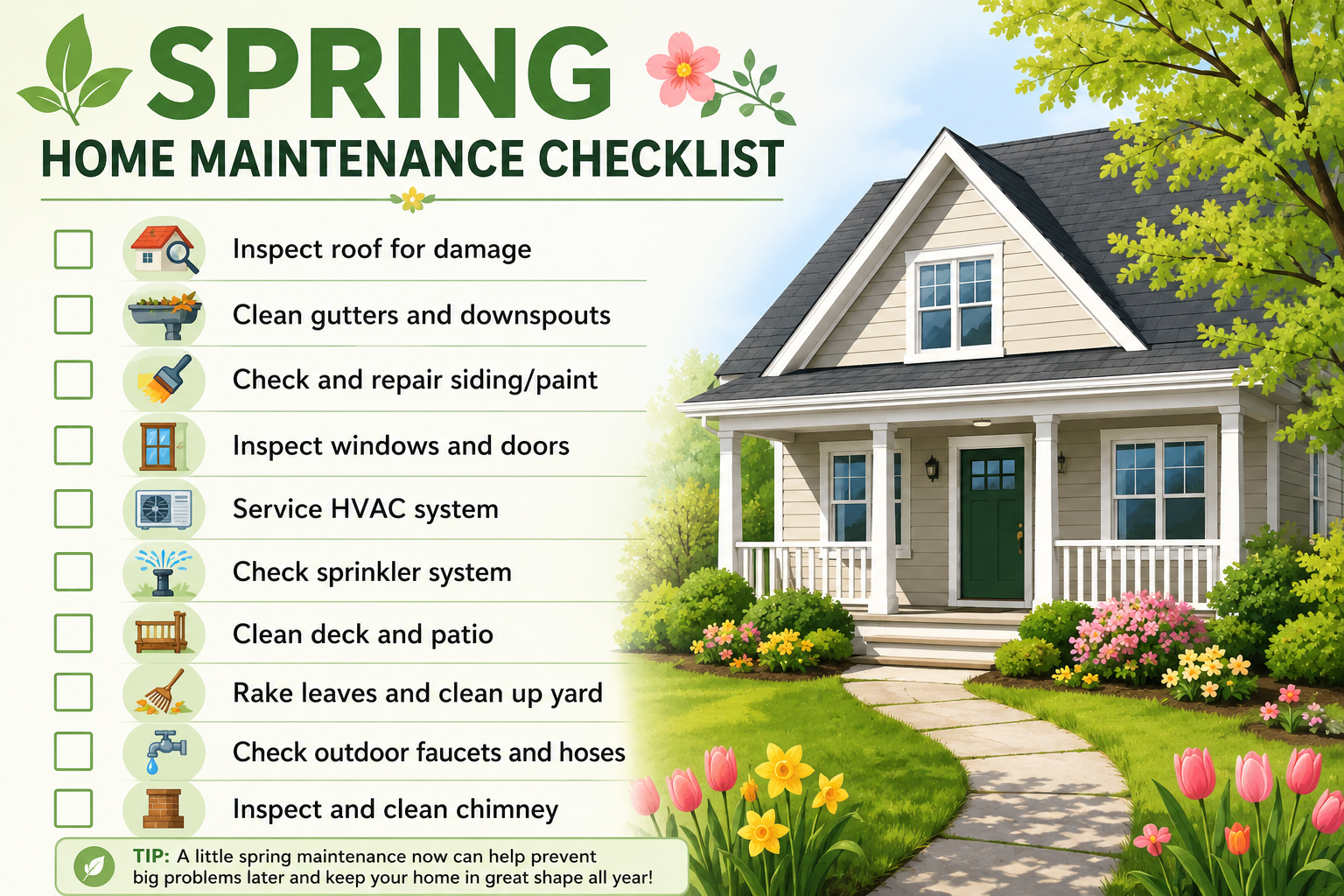
Complete Spring Home Maintenance Checklist
Work through these tasks systematically each spring. Start with critical safety and structural items, then move to mechanical systems, and finish with exterior and cosmetic tasks.
Inspect the Roof for Winter Damage
Your roof takes the most direct hit from winter weather. Start your spring inspection by walking the perimeter of your home and using binoculars to examine the roofline from ground level.
Look for missing, cracked, curled, or lifted shingles. Check the flashing around chimneys, vents, and skylights, which is where leaks most often begin. Look for granule buildup in your gutters, which signals shingle deterioration.
If you spot anything concerning, have a licensed roofer assess the damage before spring rains turn a small problem into a major one.
Clean Gutters and Downspouts
After winter, gutters are often packed with leaves, pine needles, seed pods, and even small pieces of ice dam debris. Clogged gutters cannot channel water away from your home properly, and the consequences reach far beyond a wet driveway.
Standing water in gutters causes fascia board rot, attracts pests, and can back up under shingles during heavy rain. Clear every section by hand or with a gutter scoop, then flush with a garden hose. Confirm downspouts discharge water at least six feet from your foundation.
Our guide on How to Clean Gutters Safely covers the full process, including ladder safety and what to look for during the cleaning.
Inspect the Foundation
Walk around your home’s entire perimeter and examine the foundation carefully. Look for new cracks, areas where the soil has pulled away from the foundation, or sections where the foundation appears to have shifted or settled.
Hairline cracks in poured concrete are generally normal. Horizontal cracks, stair-step cracks in brick or block, or any crack wider than a quarter-inch warrants professional evaluation. Inside, check your basement walls for moisture stains, efflorescence, or new water marks that appeared over winter.
Check Exterior Walls and Siding
Inspect all siding for cracks, gaps, warping, or missing sections. Pay extra attention to spots near the roofline, corners, and areas close to the ground where moisture collects. These locations are most vulnerable to winter damage.
Check painted wood siding for peeling or bubbling, which often signals moisture behind the surface rather than simple paint failure. Repair damaged sections promptly and re-caulk any gaps around wall penetrations like pipes, cables, and outlets.
Inspect Windows and Doors
Winter temperature swings cause weatherstripping to shrink, harden, and crack. Check every exterior door and window for air gaps by running your hand slowly around the frame on a cool morning when you can feel any draft.
Replace deteriorated weatherstripping immediately. Inspect door thresholds for wear and replace them if daylight is visible underneath. Check all window frames for cracked caulking on the exterior and reapply fresh caulk where needed. This step directly improves energy efficiency throughout summer.
Replace or Clean HVAC Filters
This is one of the quickest and most impactful tasks on any spring maintenance checklist. A dirty HVAC filter reduces airflow, strains your system, increases energy costs, and degrades indoor air quality.
Most standard filters need replacement every 30 to 90 days depending on type, household size, and whether pets are present. If you have not changed your filter since fall, it is past due. See our step-by-step guide on How to Replace an HVAC Filter if you are unfamiliar with the process.
Schedule Air Conditioner Maintenance
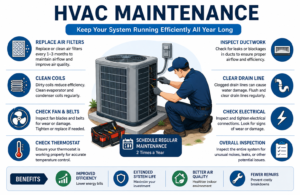
Spring is the right time to service your air conditioning system before it faces its first real demand of the year. A professional technician will clean the condenser coils, check refrigerant levels, inspect electrical connections, test the thermostat, and verify overall performance.
Do not wait until the first hot week to discover your AC is not working. HVAC companies get backed up with emergency calls during heat waves, and service appointments may take days. Scheduling in March or April gives you the best availability and lowest emergency-free pricing.
Inspect Plumbing for Leaks
Winter can stress your plumbing system in ways that are not immediately visible. Check under every sink for drips or water stains on cabinet floors. Inspect exposed pipes in the basement, crawl space, and utility areas for small cracks or joint separation.
Look for signs of slow leaks around toilet bases, behind washing machines, and around the water heater. Even minor drips waste thousands of gallons of water annually and can promote mold growth inside walls and cabinetry.
Test Smoke and Carbon Monoxide Detectors
Test every smoke detector and carbon monoxide detector in your home. Press the test button and confirm the alarm sounds clearly. Replace batteries in any unit that sounds weak or fails to activate. Most detectors should have batteries replaced at least once per year.
According to the U.S. Fire Administration, three out of five home fire deaths occur in homes with no smoke alarms or alarms that did not work. This is a non-negotiable safety task that takes less than ten minutes.
Replace any detector that is more than ten years old. The sensor inside degrades over time, and older units may not respond reliably to real emergencies.
Check the Water Heater
Your water heater worked hard all winter supplying hot water to a tightly sealed home. Inspect it carefully each spring. Look for signs of rust, moisture around the base, or corrosion on fittings and pipes connected to the unit.
Flush the tank to remove sediment buildup. Sediment accumulates at the bottom of the tank, insulates the heating element from the water, and forces the unit to run longer to reach temperature. This increases your energy bill and shortens the heater’s lifespan significantly.
Confirm the temperature setting is at 120 degrees Fahrenheit, which is the U.S. Department of Energy’s recommended setting for efficiency and safety.
Inspect Electrical Outlets and Breakers
Open your electrical panel and look for any breakers that appear tripped, burnt, or warm to the touch. A breaker that trips repeatedly is a warning sign of an overloaded circuit or a failing component and should be evaluated by a licensed electrician.
Test all GFCI outlets in kitchens, bathrooms, garages, and outdoor areas by pressing the test and reset buttons. Confirm each one trips and resets properly. Faulty GFCI outlets in wet areas are both a code violation and a safety hazard.
Seal Cracks Around Windows and Doors
After inspecting window and door seals, do the repair work right away. Use a quality exterior-grade caulk on all exterior gaps. Remove old, cracked caulk completely before applying fresh material. Applying new caulk over old deteriorated caulk will not create a reliable seal.
For interior gaps around window frames or between drywall and window trim, use paintable interior caulk. Proper sealing prevents air leakage, reduces pest entry points, and keeps conditioned air inside where it belongs.
Clean Dryer Vents
Lint accumulates in dryer vent ducts regardless of how often you clean the lint trap inside the machine. The vent duct that runs from your dryer to the exterior of your home collects lint over time and needs annual cleaning.
The U.S. Fire Administration identifies clogged dryer vents as one of the leading causes of home fires. Disconnect the duct from the back of the dryer, use a dryer vent brush to clear buildup from the duct, and confirm the exterior vent flap opens freely during operation.
Inspect the Attic
Spring is an excellent time to get into your attic and assess what winter left behind. Look for signs of moisture or staining on the roof deck, which indicates leaks or condensation from inadequate ventilation. Check for mold growth on wood surfaces.
Verify that attic vents are unobstructed. Proper attic ventilation prevents moisture buildup in winter and heat buildup in summer, both of which damage your roof structure over time. The U.S. Department of Energy recommends a minimum of 1 square foot of ventilation per 150 square feet of attic floor space.
Clean Ceiling Fans and Air Vents
Ceiling fans collect a significant amount of dust on their blades over winter, and running a dusty fan pushes allergens into the air throughout your home. Wipe down every fan blade with a damp cloth and reverse the blade direction for summer operation, which should be counterclockwise to push cool air downward.
Clean every air register and return vent cover by removing them and washing with warm soapy water. Dusty vent covers restrict airflow and reduce the efficiency of your entire HVAC system.
Pressure Wash Exterior Surfaces
Once temperatures are consistently above 50 degrees Fahrenheit, break out the pressure washer. Clean your siding, driveway, walkways, fences, retaining walls, and deck to remove winter grime, mold, mildew, and algae that built up during the wet months.
Use appropriate pressure settings for each surface. High pressure on wood siding or older brick can cause serious damage. A wide-angle nozzle at moderate pressure works well for most residential surfaces. For wood decks, always work in the direction of the grain.
Inspect Decks, Patios, and Railings
Decks take significant abuse from winter freeze-thaw cycles. Inspect every deck board for rot, cracks, splinters, and loose fasteners. Press a screwdriver into any suspicious boards. If it penetrates easily, the wood has rotted and needs replacement.
Check that all railings are structurally secure by applying firm lateral pressure. A railing that moves or wobbles is a safety hazard and must be repaired before the deck is used. Inspect the ledger board where the deck meets the house for secure attachment and any signs of moisture damage.
Clean the deck surface and apply a fresh coat of sealant or stain if water no longer beads on the surface. This step protects the wood from the heavy moisture that spring and summer bring.
Trim Trees and Shrubs
Overgrown branches near your home create multiple problems. They drop leaves and debris into gutters, provide pathways for squirrels and insects to access your roof and attic, and can cause serious structural damage if they fall during a spring storm.
Trim any branch that hangs within 10 feet of your roofline. Cut back shrubs that press against your siding or foundation. Shrubs in contact with exterior walls hold moisture and encourage rot, mold, and pest activity at the soil line.
Lawn and Garden Spring Maintenance
Spring is the right time to aerate your lawn if it has become compacted from winter foot traffic and freeze cycles. Aeration improves water and nutrient absorption and promotes a healthier, thicker lawn throughout summer.
Apply a pre-emergent weed treatment early in spring before soil temperatures reach 55 degrees Fahrenheit. This prevents crabgrass and other common weeds from establishing. Begin fertilizing established lawns as new growth appears, and divide and transplant overgrown perennials while the soil is still cool and workable.
Check Outdoor Faucets and Sprinklers
Turn on each outdoor faucet and check for drips around the handle or at the base of the spigot. Even a small drip wastes hundreds of gallons per season and can indicate a damaged washer or a cracked pipe from winter freezing.
Run your irrigation system through a complete cycle. Check each zone for proper coverage, look for heads that are tilted, blocked, or broken, and repair any damaged lines before regular irrigation begins. Wasted irrigation water is both costly and environmentally irresponsible.
Inspect Fences and Gates
Walk the entire perimeter of your fencing and look for leaning sections, broken boards or rails, missing hardware, and posts that have shifted or heaved from frozen ground. Many fence problems that appear in spring result directly from winter ground movement.
Wood fences may need sanding and a fresh coat of paint or sealant. Confirm that all gate hardware functions smoothly and that self-closing mechanisms on pool gates operate correctly. Pool gate latches that do not function properly are a serious child safety concern.
Clean Outdoor Furniture
Outdoor furniture stored through winter often develops mold, mildew, and surface oxidation. Clean all pieces thoroughly before use. Use a mild soap and water solution on most furniture types, including resin, aluminum, and fabric. For teak or other hardwoods, use a specialized wood cleaner.
Inspect furniture frames for rust, cracked welds, or broken joints. Replace worn cushion covers or deteriorated straps on outdoor chairs and loungers. Clean and treat furniture before the season starts so it is ready when you need it.
Check Driveways and Walkways
Winter freeze-thaw cycles are hard on concrete and asphalt. Inspect your entire driveway and all walkways for new cracks, heaving, or uneven surfaces. Uneven walkway sections are tripping hazards that should be addressed promptly.
Fill concrete cracks with a flexible concrete repair compound. Seal asphalt driveways with a quality driveway sealer if it has been more than two years since the last application. Sealing prevents water from penetrating the surface and causing further cracking during the next winter season.
Organize the Garage and Storage Areas
Winter has a way of turning garages and storage spaces into chaotic collections of seasonal items. Spring is the ideal time to reorganize. Remove all winter gear, sort through what is no longer needed, and donate or discard items that serve no purpose.
Inspect the garage door for proper balance and smooth operation. Disconnect the opener and manually lift the door halfway. It should stay in place without assistance. If it drops or rises on its own, the springs need adjustment by a professional.
Indoor Spring Home Maintenance Checklist
Use this checklist for a quick reference to all interior spring tasks:
- Replace or clean HVAC filters
- Test smoke and carbon monoxide detectors
- Clean dryer vent duct
- Inspect all visible plumbing under sinks and around appliances
- Flush the water heater and check for sediment
- Test all GFCI outlets
- Inspect the electrical panel
- Clean ceiling fan blades and reverse direction
- Clean all air vents and return covers
- Inspect attic for leaks, mold, and ventilation
- Check basement walls for moisture and cracks
- Lubricate door hinges, locks, and sliding door tracks
- Deep clean kitchen hood and exhaust fan filters
Outdoor Spring Home Maintenance Checklist
Use this checklist for all exterior spring tasks:
- Inspect roof shingles and flashing
- Clean gutters and downspouts
- Inspect foundation perimeter
- Check and repair siding and exterior walls
- Seal cracks around windows and doors
- Pressure wash siding, driveway, and deck
- Inspect deck boards, railings, and ledger board
- Trim trees and shrubs away from the structure
- Service outdoor faucets and irrigation system
- Inspect driveways and walkways for cracks
- Inspect fences and gates
- Clean and inspect outdoor furniture
- Organize the garage
- Service lawn equipment
- Perform lawn aeration and early fertilization
Spring Home Maintenance Calendar
| Month | Key Spring Tasks |
|---|---|
| March | Roof inspection, gutter cleaning, foundation check, smoke and CO detector test, HVAC filter replacement |
| April | Schedule AC service, inspect plumbing, seal windows and doors, clean dryer vent, attic inspection, inspect siding |
| May | Pressure wash exterior, inspect deck and railings, trim trees and shrubs, service sprinklers, lawn care, organize garage, check outdoor faucets |
Essential Tools for Spring Home Maintenance
| Tool | Purpose | Recommended Use | Estimated Cost |
|---|---|---|---|
| Extension ladder | Roof, gutter, and siding access | March–April | $80–$300 |
| Pressure washer | Exterior surface cleaning | April–May | $100–$400 |
| Caulking gun | Sealing gaps around windows and doors | March–May | $10–$30 |
| Gutter scoop | Removing debris from gutters | March | $10–$20 |
| Dryer vent brush | Cleaning lint from vent duct | March–April | $15–$40 |
| Garden hose with nozzle | Flushing downspouts and outdoor cleaning | March–May | $25–$60 |
| Screwdriver set | Outlet testing, panel inspection, general repairs | Year-round | $15–$40 |
| Voltage tester | Electrical safety checks | Spring | $15–$40 |
| Moisture meter | Detecting wood rot and water damage | Spring | $20–$80 |
| Cordless drill | Deck repairs, siding fasteners, general use | Year-round | $60–$150 |
DIY vs Professional Spring Maintenance
| Task | DIY Friendly | Professional Recommended | Reason |
|---|---|---|---|
| Gutter cleaning | Yes | Optional | Manageable with ladder safety knowledge |
| HVAC filter replacement | Yes | No | Simple, low-cost task |
| AC system service | No | Yes | Requires refrigerant handling certification |
| Roof inspection | Visual check only | Yes for repairs | Walking a roof requires experience and safety gear |
| Foundation crack assessment | Small cracks only | Large cracks require professional | Structural cracks need engineering evaluation |
| Electrical panel inspection | No | Yes | Risk of shock and code violations |
| Plumbing leak repair | Minor leaks only | Hidden or major leaks | Concealed leaks require specialized detection |
| Dryer vent cleaning | Yes | Optional | Straightforward with correct brush kit |
| Deck board replacement | Yes | Complex structural repairs | Surface boards are DIY-friendly |
| Chimney inspection | No | Yes | Requires certified chimney sweep |
Common Spring Home Maintenance Mistakes
Even motivated homeowners make avoidable errors during spring maintenance. Here are the most common ones.
Starting with cosmetic tasks. Many homeowners jump straight to lawn care or exterior painting while ignoring critical safety and structural checks. Always prioritize roof inspection, gutter cleaning, detector testing, and foundation review first.
Applying caulk over old caulk. Old, deteriorated caulk must be fully removed before new material is applied. Layering caulk produces a weak seal that fails quickly and allows moisture to enter the gap.
Skipping the attic. Most homeowners never go into the attic, yet it reveals critical information about roof leaks, insulation gaps, and moisture problems. Make attic inspection a non-negotiable spring task.
Neglecting the dryer vent. This is one of the most overlooked tasks on any spring maintenance checklist. Lint buildup in the vent duct is a serious fire hazard and one of the simplest annual tasks to complete.
Pressure washing at the wrong settings. Using too much pressure on wood siding, stucco, or older brick causes surface damage that is expensive to repair. Always start with a lower pressure setting and test a small area first.
Waiting too long to book HVAC service. Every homeowner in your area is thinking the same thing. HVAC companies fill up fast in spring. Book your air conditioner service in February or early March for the best availability.
Money-Saving Spring Maintenance Tips
Spring maintenance does not have to drain your budget. These strategies help you protect your home while keeping costs manageable.
- Complete DIY-friendly tasks yourself, including filter replacement, caulking, dryer vent cleaning, and gutter cleaning
- Buy maintenance supplies in bulk at the start of spring when seasonal sales are common
- Bundle professional service appointments where possible, for example scheduling HVAC and plumbing inspections together on the same visit
- Address small repairs immediately rather than delaying, since small problems consistently grow into large ones
- Use energy-efficient upgrades, such as LED outdoor lighting and low-flow faucet aerators, while performing maintenance checks to reduce ongoing utility costs
- Keep receipts and records of all maintenance performed, which supports warranty claims and increases home resale value
- Check with your utility provider for rebates on HVAC servicing, insulation improvements, or smart thermostat installation through their energy efficiency programs
The Environmental Protection Agency’s Energy Star program offers valuable resources on qualifying home improvements that may be eligible for tax credits or utility rebates.
Spring Home Safety Tips
Spring maintenance is an excellent opportunity to review your home’s overall safety posture. These practices protect your family throughout the year.
- Test every smoke detector and carbon monoxide detector and replace any unit older than ten years
- Check that fire extinguishers in the kitchen and garage are fully charged and accessible
- Inspect all stair railings, deck railings, and exterior handrails for stability
- Clear exit paths throughout the home and confirm all exterior doors open freely
- Check that the dryer vent flap opens and closes properly to prevent pest entry
- Inspect outdoor electrical outlets for proper weatherproof covers and GFCI protection
- Examine extension cords that may have been run during winter and replace any with cracked or frayed insulation
- Ensure pool and gate latches function correctly and meet local safety codes
FEMA recommends practicing a home emergency plan with all household members at least twice per year. Spring is a natural time to review your plan and update your emergency supply kit with any items that need restocking.
When You Should Hire a Professional
Spring is a busy time for home improvement contractors. Knowing when to call a professional versus when to handle things yourself saves both money and potential harm.
Call a professional when:
- Roof damage is significant, widespread, or involves flashing failure
- Foundation cracks are horizontal, stair-stepped, or wider than a quarter inch
- Your AC system fails to cool, cycles constantly, or makes unusual noises during startup
- You smell gas near any appliance including your furnace, water heater, or stove
- Electrical breakers trip repeatedly or you notice discoloration or burning odors near your panel
- Hidden water damage is suspected behind walls or under flooring
- Deck structural components, including posts, beams, or the ledger board, show rot or instability
- Plumbing leaks are behind walls, under concrete, or at the main supply line
Attempting repairs beyond your skill level often results in greater damage, code violations, and higher costs than simply calling a professional from the start.
Expert Recommendations
After working with hundreds of homeowners on seasonal maintenance plans, a consistent pattern emerges. The homeowners who stay ahead of problems share a few key habits.
They start early. Beginning your spring checklist in late February or early March, even while temperatures are still cool, gives you time to book contractors, gather supplies, and complete tasks before the busy season peaks.
They work from the top down. Inspect the roof, then clear the gutters, then check the siding, and then move to the foundation. This order ensures that upper-level issues do not negate work done below them.
They keep records. A simple folder or digital document logging inspection dates, findings, repairs completed, and products used is invaluable. It supports insurance claims, satisfies warranty conditions, and demonstrates home care history to future buyers.
They do not ignore small things. A loose shingle, a dripping outdoor faucet, or a slightly sticky exterior door are all warning signs. Small problems rarely resolve themselves and almost always grow into expensive ones.
Frequently Asked Questions
When should I start my spring home maintenance checklist?
The best time to begin spring maintenance is late February to early March in most climates. You do not need warm weather to start indoor tasks like testing detectors, replacing HVAC filters, cleaning dryer vents, and inspecting your electrical panel. Exterior tasks like gutter cleaning, pressure washing, and deck inspection can begin once temperatures are consistently above 40 to 50 degrees Fahrenheit. Starting early gives you time to identify issues, book contractors before they fill up, and complete all tasks before summer heat arrives.
How much does spring home maintenance typically cost?
The cost varies significantly based on your home’s size, age, and condition. DIY spring maintenance typically costs between $100 and $400 in supplies and tools. If you hire professionals for tasks like AC servicing, roof inspection, and plumbing checks, expect to spend between $600 and $2,000 depending on your region and the scope of work needed. Homes that receive consistent annual maintenance tend to have lower spring costs because issues are caught early. Deferred maintenance almost always results in higher costs when repairs can no longer be delayed.
How do I know if my roof survived winter without damage?
From ground level using binoculars, look for missing, cracked, curled, or lifted shingles. Check gutters for large amounts of granules, which indicate shingle wear. Look for staining or water marks on your interior ceiling or in the attic, which are signs of leaks. Inspect flashing around chimneys, vents, and skylights since these areas are most prone to winter damage. If you cannot safely examine the roof yourself or if you spot anything concerning, schedule a professional inspection rather than attempting to access the roof without proper training and equipment.
Is it worth hiring a professional for spring HVAC maintenance?
Yes, for the full system service. A professional technician has the tools and certification to check refrigerant levels, inspect the heat exchanger, clean the evaporator and condenser coils, test electrical components, and verify that the system meets manufacturer performance standards. These are not tasks a homeowner can complete accurately without specialized equipment. The cost of a professional tune-up, typically $80 to $200, is a small fraction of what an early AC failure or emergency replacement costs. Changing the filter yourself and booking the full service professionally is the most cost-effective combination.
What is the most commonly skipped spring maintenance task?
Dryer vent cleaning ranks among the most neglected tasks on any home maintenance checklist. Most homeowners clean the lint trap after every load but never clean the actual vent duct that runs from the dryer to the outside of the house. Lint accumulates in this duct over time and creates a serious fire hazard. The U.S. Fire Administration reports that dryers are responsible for thousands of residential fires each year, with failure to clean the vent as the leading cause. Annual cleaning takes about 30 minutes and requires only a vent brush kit available at any hardware store.
How do I check for foundation problems in spring?
Walk the perimeter of your home after the ground has thawed and dried. Look for new cracks in the foundation wall, areas where soil has pulled away from the foundation, or spots where the structure appears to have shifted. Inside, check the basement walls for water staining, efflorescence, white mineral deposits, or new moisture marks. Doors and windows that suddenly stick or no longer close properly can also indicate foundation movement. Minor hairline cracks are generally cosmetic, but horizontal cracks, stair-step cracks, or any crack wider than a quarter inch should be assessed by a structural engineer.
How do I prepare my sprinkler system for spring?
Begin by turning on the main water supply to the irrigation system slowly to avoid pressure surges that can break fittings. Then run each zone individually and watch for heads that are not popping up, stuck, or spraying incorrectly. Adjust or replace any heads that are tilted, blocked by vegetation, or delivering poor coverage. Check for visible leaks at connection points and around valves. If your system was professionally winterized by blowing out the lines with compressed air, have the same contractor perform a spring startup inspection to ensure everything is functioning correctly before the irrigation season begins.
Should I power wash my house every spring?
In most cases, yes. Spring is the ideal time to remove the mold, mildew, algae, and grime that builds up on exterior surfaces over winter and fall. Power washing helps siding last longer, prevents algae from damaging paint and wood, and improves curb appeal. However, the right pressure setting matters. Vinyl siding, wood, and painted surfaces need lower pressure than concrete or brick. If your home has older siding, stucco, or lead-based paint, consult a professional before power washing, as improper technique can cause significant surface damage or disturb hazardous materials.
What spring tasks improve energy efficiency the most?
Sealing air leaks around windows and doors, replacing weatherstripping, and servicing your air conditioning system have the greatest impact on summer energy costs. The U.S. Department of Energy estimates that air sealing alone can reduce heating and cooling costs by 10% to 20%. Cleaning or replacing your HVAC filter also makes a measurable difference by improving airflow and reducing how hard your system works. Adding or improving attic insulation is a longer-term investment with significant returns. If you want a full picture of your home’s energy performance, schedule a professional energy audit, which many utility companies offer at a reduced cost.
How long does a full spring home maintenance checklist take to complete?
A comprehensive spring checklist for an average-sized home takes most homeowners between four and eight hours spread over several weekends. Interior tasks like detector testing, dryer vent cleaning, and filter replacement can be done in a single afternoon. Exterior tasks including gutter cleaning, pressure washing, deck inspection, and landscaping work are best split across multiple sessions. If professional services are involved, such as AC tune-ups or roof inspections, those appointments will be scheduled separately. Creating a simple weekend schedule in late February helps ensure everything is completed before the summer season begins.
Conclusion
Spring home maintenance is not just a seasonal tradition. It is one of the most financially sound decisions a homeowner can make.
Every task on this checklist serves a purpose. Cleaning the gutters protects your roof and foundation. Testing your detectors protects your family. Servicing your air conditioner protects your budget. Inspecting the deck protects everyone who uses it.
When you approach spring maintenance with a clear plan and a structured checklist, you turn what feels like an overwhelming list of chores into a manageable, rewarding process. Your home becomes safer, more efficient, and better prepared for everything summer brings.
Use this guide as your starting point each year. Work through it systematically, keep records of what you do, and do not put off anything that affects safety or structural integrity. Small efforts made consistently in spring pay dividends all year long.
A well-maintained home is not the result of one big effort. It is the result of consistent, seasonal attention. Start this spring, and your home will show the difference for years to come.