Home Plumbing Maintenance: Complete Guide for Homeowners

Introduction
Water is one of the most destructive forces your home will ever face. A slow drip under a sink, a hairline crack in a supply line, or a malfunctioning shut-off valve can go unnoticed for months. By the time the damage surfaces, the cost to repair it is far greater than any routine maintenance would have been.
Home plumbing maintenance is one of the most valuable habits a homeowner can develop. It keeps your pipes, fixtures, drains, and appliances working correctly, prevents unexpected failures, and protects your home from the water damage that ranks among the most expensive insurance claims filed each year.
According to the Insurance Information Institute, water damage and freezing account for nearly 24% of all homeowner insurance claims in the United States, with average claim costs exceeding $11,000. Most of those incidents could have been prevented or significantly reduced through consistent preventive plumbing maintenance.
This complete guide covers every aspect of residential plumbing care. You will find detailed inspection checklists, seasonal tips, expert recommendations, cost comparisons, and answers to the most common homeowner plumbing questions. Whether you are new to homeownership or simply want to build a more thorough maintenance routine, this guide gives you everything you need to protect your home’s plumbing system year-round.
What Is Home Plumbing Maintenance?
Home plumbing maintenance is the regular practice of inspecting, cleaning, testing, and servicing every component of your home’s water supply and drainage systems to keep them functioning properly and prevent failures before they occur.
It covers everything from faucets and toilets to water heaters, outdoor hose bibs, sewer lines, and the pipes running through your walls and floors. A complete plumbing maintenance plan addresses both the visible components you can inspect yourself and the less accessible areas that may require occasional professional evaluation.
Plumbing maintenance is divided into two primary categories. Preventive maintenance involves regular inspections and cleaning to avoid future problems. Corrective maintenance addresses issues that have already appeared, such as a dripping faucet or a slow drain, before they escalate into larger failures.
Both are important. The homeowners who experience the fewest plumbing emergencies are typically those who practice consistent preventive maintenance and respond to minor issues quickly rather than deferring them.
For a broader view of how plumbing maintenance fits into a complete home care routine, see our Annual Home Maintenance Checklist, which covers all major home systems throughout the year.
Why Plumbing Maintenance Is Important
Most homeowners interact with their plumbing dozens of times each day without thinking about it. The invisibility of the system is part of what makes maintenance so easy to overlook. Pipes run inside walls. Drains disappear under sinks. The water heater sits quietly in a utility room until the day it does not.
That invisibility is also why plumbing failures are so often severe when they finally occur. A supply line that fails behind a wall can flood a room in minutes. A slow drain that goes untreated develops into a complete blockage or, in worse cases, a backed-up sewer line.
The financial consequences are real. The U.S. Environmental Protection Agency estimates that the average American household loses nearly 10,000 gallons of water annually to leaks, and approximately 10% of homes have leaks that waste 90 gallons or more per day. That wasted water adds up on your utility bill every single month.
Regular plumbing inspections also extend the lifespan of expensive components. A water heater that receives annual flushing and anode rod checks lasts significantly longer than one that is never serviced. Faucets with properly maintained washers do not deteriorate into full replacements prematurely.
Benefits of Preventive Plumbing Maintenance
Following a consistent home plumbing maintenance routine delivers measurable, lasting benefits.
- Prevents water damage by catching leaks before they saturate walls, floors, and structural components
- Reduces utility costs by eliminating water waste from dripping faucets, running toilets, and inefficient fixtures
- Extends the lifespan of pipes, fixtures, water heaters, and appliances connected to the plumbing system
- Improves water quality by maintaining clean drains and a properly functioning water heater
- Reduces emergency repair costs by addressing problems while they are minor and inexpensive to fix
- Protects property value by preventing the hidden damage that erodes a home’s structural integrity and market appeal
- Provides peace of mind by replacing reactive anxiety with a calm, organized maintenance schedule
Signs Your Plumbing System Needs Maintenance
Recognizing early warning signs helps you address plumbing problems before they become emergencies. Watch for the following:
- Unexplained increases in your monthly water bill without a change in usage habits
- Slow-draining sinks, showers, or tubs that were previously draining normally
- Discolored water, especially rust-colored or brown water from hot water taps
- Reduced water pressure at faucets or showerheads that was not present before
- Water stains on ceilings, walls, or under-sink cabinet floors
- Musty odors coming from drains, under sinks, or in utility areas
- Gurgling sounds from drains or toilets when adjacent fixtures are used
- Visible moisture, corrosion, or mineral buildup on exposed pipes
- Toilets that run continuously or require multiple flushes to clear
- Dripping faucets or showerheads that persist after the handle is fully closed
Any of these signs indicates that maintenance or repair is overdue. Addressing them promptly prevents more serious and costly consequences.
Complete Home Plumbing Maintenance Checklist
Work through these tasks systematically. Start with high-use areas like kitchens and bathrooms, then move to utility areas, and finish with outdoor components.
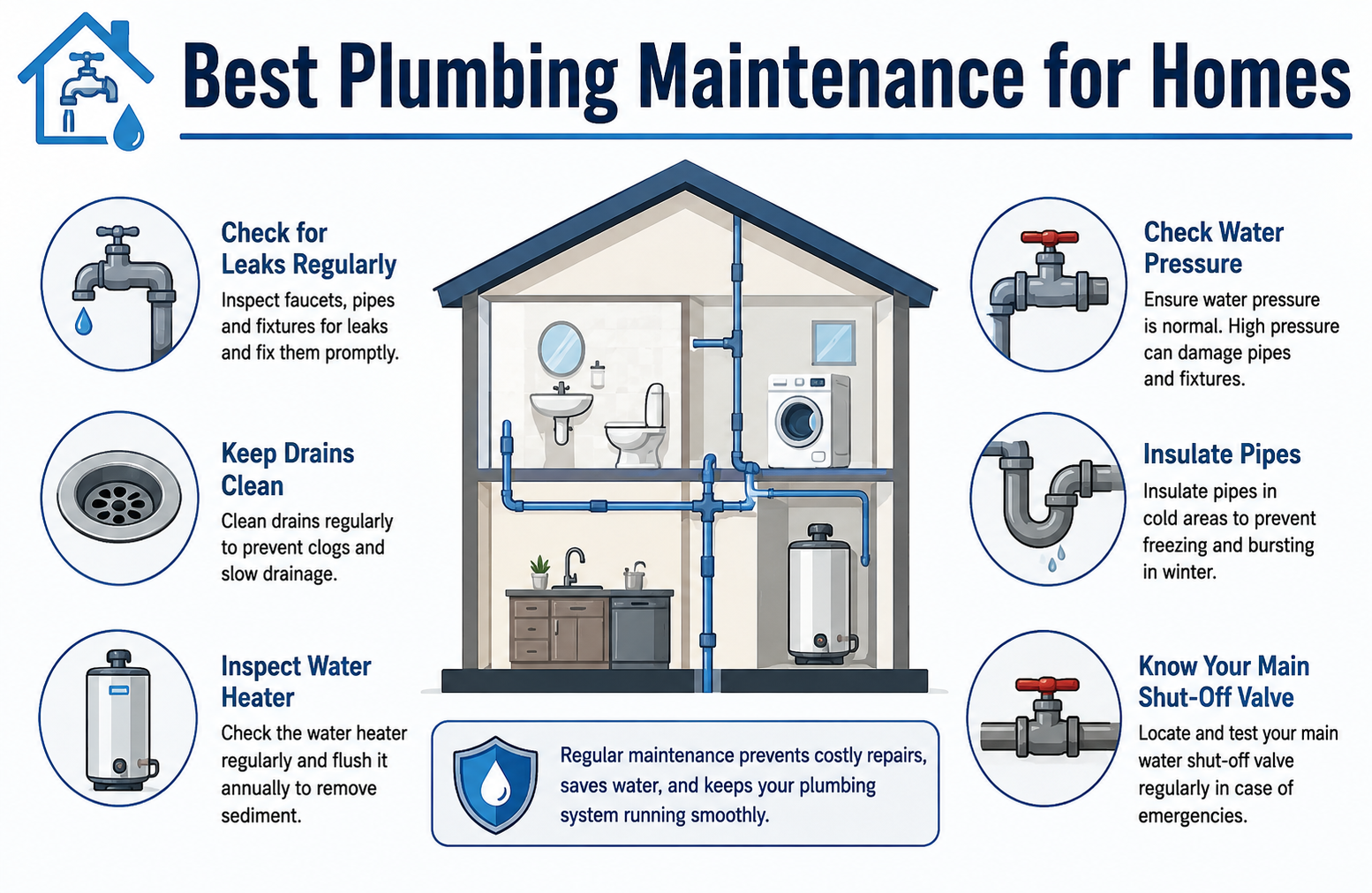
Inspect Faucets for Leaks
A dripping faucet is the most common and most underestimated plumbing issue in any home. A faucet dripping one drop per second wastes approximately 3,000 gallons of water per year, according to the EPA. Multiply that across two or three dripping faucets and the waste becomes significant.
Check every faucet in the home by turning it fully off and watching for continued dripping. Inspect the base of each faucet for moisture or mineral deposits, which indicate a slow leak around the fixture itself. In most cases, a dripping faucet is caused by a worn washer or O-ring that can be replaced inexpensively as a straightforward DIY repair.
Check Toilets for Hidden Leaks
Toilets account for a large portion of household water waste, and the leaks are often invisible. The flapper valve inside the tank is the most common failure point. When it does not seat properly, water flows continuously from the tank into the bowl without triggering a refill cycle, wasting hundreds of gallons per day silently.
Test for a running toilet by adding several drops of food coloring to the tank. Wait 15 minutes without flushing. If color appears in the bowl, the flapper is leaking and needs replacement. Flapper replacement is one of the simplest DIY plumbing repairs a homeowner can complete, typically costing under $10 in parts.
Inspect Water Supply Lines
The supply lines connected to toilets, sinks, washing machines, refrigerators, and dishwashers are under constant water pressure. Over time, braided steel or rubber supply lines develop cracks, bulges, and deterioration that often goes unnoticed until they fail suddenly.
Open every cabinet under sinks and check the supply lines running from the wall valve to the faucet. Look for bulging, kinking, corrosion at the fittings, or any visible moisture on the line surface. Replace any supply line that shows signs of wear without waiting for failure. Braided stainless steel supply lines are the most durable replacement option and are widely available at any hardware store.
Clean Sink and Shower Drains
Drain maintenance is one of the most overlooked aspects of residential plumbing care, yet it is one of the simplest. Hair, soap residue, grease, and food particles accumulate inside drain pipes gradually, reducing flow and creating conditions for complete blockages.
Remove drain covers and clean out accessible buildup manually using a zip-it drain cleaning tool or a bent wire hook. Follow with a flush of hot water. For kitchen drains, pour boiling water down the drain monthly to dissolve grease buildup. Avoid using chemical drain cleaners regularly, as they contain caustic compounds that gradually damage pipe interiors, particularly older plastic or metal pipes.
Prevent Drain Clogs
Prevention is always more effective than clearing an established clog. Install mesh drain screens in every shower and tub to capture hair before it enters the drain. Use sink strainers in kitchen sinks to catch food debris.
Never pour cooking grease, coffee grounds, or starchy foods down kitchen drains. These materials accumulate inside drain pipes and combine with soap residue to form dense blockages. Dispose of cooking grease in a sealed container in your trash. Run cold water through your garbage disposal before, during, and after each use to keep the drain line clear.
Check Water Pressure
Normal residential water pressure falls between 40 and 80 PSI. Pressure above 80 PSI places excessive stress on supply lines, faucet washers, toilet fill valves, and appliance connections, accelerating wear and increasing the likelihood of failure.
Purchase an inexpensive water pressure gauge from any hardware store and attach it to an outdoor hose bib. Turn the faucet fully on and read the gauge. If your pressure consistently exceeds 80 PSI, install a pressure-reducing valve on your main supply line. A licensed plumber can assess your current PRV and adjust or replace it if needed.
Inspect Exposed Pipes
Any pipes visible in your basement, crawl space, utility room, or under sinks should be inspected at least twice per year. Look for green or white mineral deposits at joints, which indicate slow leaking at fittings. Check for rust or corrosion on metal pipes. Look for moisture on pipe surfaces that is not consistent with normal condensation.
In older homes with galvanized steel pipes, interior corrosion eventually reduces water flow significantly and produces rust-colored water. If your home still has original galvanized plumbing, consult a plumber about replacement timelines. Modern copper or cross-linked polyethylene tubing is dramatically more durable and long-lasting.
Maintain the Water Heater
Your water heater is one of the most expensive plumbing components in your home and one of the most commonly neglected. Annual water heater maintenance includes several straightforward tasks that significantly extend the unit’s service life.
Flush the tank once per year to remove sediment that accumulates at the bottom. Sediment insulates the heating element from the water above it, reducing efficiency and forcing longer heating cycles. Connect a garden hose to the drain valve at the tank base, turn off the cold water supply, and drain until the water runs clear.
Set the thermostat to 120 degrees Fahrenheit as recommended by the U.S. Department of Energy. This temperature is hot enough to prevent bacterial growth while minimizing scalding risk and energy consumption. Inspect the anode rod every two to three years and replace it when it shows heavy corrosion. The anode rod is what prevents the steel tank interior from rusting, and replacing it is far less expensive than replacing the entire unit.
Test Shut-Off Valves
Every fixture and appliance connected to your plumbing system has an individual shut-off valve. These valves are critical during emergencies. A toilet supply valve that has been fully open for five years without being turned may seize when you actually need to close it quickly.
Test every shut-off valve under sinks, behind toilets, at washing machine connections, and at your water heater at least once per year. Turn each valve clockwise to close, then counterclockwise to fully reopen. Also locate and test your main water shut-off valve, which controls the entire home’s water supply. Confirm that all household members know where it is located and how to operate it.
Inspect Garbage Disposal
Your garbage disposal handles food waste daily but requires regular cleaning and maintenance to function properly and avoid odors. Run the disposal with cold water for 30 seconds after each use to flush waste completely through the drain line.
To clean the unit, fill it with ice cubes and a cup of rock salt, then run it with cold water. The ice and salt scour the grinding chamber without damaging the impellers. To address odors, grind citrus peel with cold water. Inspect the rubber splash guard at the drain opening regularly and replace it if it has deteriorated or is retaining food particles in its folds.
Check Outdoor Faucets
Outdoor hose bibs experience significant seasonal stress from temperature changes and heavy use during warmer months. Check each outdoor faucet for drips at the spout and moisture around the valve body when the faucet is turned on.
In climates with freezing winters, outdoor faucets should be frost-free models. Verify that the interior shut-off valve for each hose bib is functioning properly. Before winter, disconnect all garden hoses from outdoor faucets. A hose left connected during a freeze traps water inside the faucet body, which can crack the valve even on frost-free models.
Inspect Washing Machine Hoses
Washing machine supply hoses are one of the most common causes of significant household water damage. Standard rubber hoses can deteriorate and fail without warning, releasing the full water pressure of your supply line directly onto your laundry room floor.
Inspect both the hot and cold supply hoses monthly for bulging, cracking, kinking, or corrosion at the connection fittings. Replace hoses every three to five years as a preventive measure, or immediately if any damage is visible. Stainless steel braided hoses are the superior replacement option. Also confirm that the washing machine itself sits level, which prevents vibration damage to hose connections during spin cycles.
Prevent Frozen Pipes
Frozen pipes are a leading cause of water damage in cold climates. When water inside a pipe freezes, it expands with enough force to split copper, crack plastic, and rupture fittings. The resulting leak is not discovered until the pipe thaws, often releasing large volumes of water before anyone notices.
Insulate all pipes in unheated areas including crawl spaces, garages, exterior walls, and attic spaces using foam pipe insulation. Set your thermostat no lower than 55 degrees Fahrenheit when leaving the home during cold periods. On extremely cold nights, allow faucets on exterior walls to drip slowly. Open cabinet doors under sinks on exterior walls to allow warm air to circulate around the pipes.
Look for Mold and Water Damage
Mold growth is a reliable indicator of hidden moisture from plumbing leaks. Inspect the inside of all under-sink cabinets, the walls and ceilings around showers and tubs, and utility areas near your water heater and washing machine for dark spots, discoloration, peeling paint, or musty odors.
Pay particular attention to walls adjacent to shower enclosures where grout or caulking has deteriorated. Water that seeps through failed grout or caulking reaches the wall framing behind the tile and creates mold conditions that are expensive to remediate. Maintaining shower caulking and tile grout is genuine plumbing maintenance, not just cosmetic care.
Inspect Sewer Line Warning Signs
Your sewer line is the most consequential plumbing component most homeowners never think about. A blocked or damaged sewer line affects every drain in the home simultaneously and can result in sewage backing up through floor drains, toilets, and tub drains.
Warning signs of sewer line problems include multiple slow drains occurring simultaneously, gurgling sounds from toilets or drains when other fixtures are used, sewage odors in the yard near the main sewer cleanout, or patches of unusually lush or soggy grass over the sewer line path. If you notice any combination of these signs, contact a licensed plumber for a camera inspection before the problem escalates.
Indoor Plumbing Maintenance Checklist
Use this checklist as a quick reference for all interior plumbing tasks:
- Inspect all faucets for dripping and base leaks
- Test toilets for silent leaks using the dye test
- Check supply lines under sinks, behind toilets, and at appliances
- Clean drain covers and remove hair and debris from traps
- Flush kitchen drain with boiling water monthly
- Test water pressure at an outdoor hose bib
- Inspect exposed pipes in basement and utility areas
- Flush water heater and check temperature setting
- Test all individual shut-off valves for proper operation
- Clean garbage disposal with ice, salt, and citrus
- Inspect washing machine hoses for wear and replace every 3 to 5 years
- Check caulking around showers, tubs, and bathroom fixtures
- Look for mold, staining, or moisture under sinks and near appliances
- Test main water shut-off valve and confirm all household members know its location
Outdoor Plumbing Maintenance Checklist
Use this checklist for all exterior plumbing tasks:
- Test all outdoor hose bibs for drips and valve body leaks
- Disconnect and drain garden hoses before winter
- Confirm frost-free hose bibs are installed in freeze climates
- Verify interior shut-off valves for outdoor faucets function correctly
- Inspect crawl space pipes for moisture, corrosion, and insulation gaps
- Check sump pump operation by pouring water into the pit
- Inspect the area around the sewer cleanout for moisture or odors
- Check downspout drainage to confirm it diverts water away from the foundation
- Look for soggy ground or unusually lush patches over the sewer line path
- Inspect irrigation system connections and shut-off valves
Seasonal Plumbing Maintenance Tips
Plumbing maintenance needs shift with the seasons. Here is what to prioritize throughout the year.
Spring: Test outdoor faucets after winter shut-off. Inspect exposed pipes for cracks that developed during freeze cycles. Check washing machine hoses before heavy laundry use resumes. Inspect sump pump operation before spring rain season.
Summer: Test irrigation system connections for leaks. Check water heater performance under increased household demand. Clean drains that have accumulated buildup from spring cleaning activities.
Fall: Disconnect and store garden hoses before the first frost. Shut off interior valves to outdoor faucets. Insulate crawl space and basement pipes before cold weather arrives. Schedule a professional water heater inspection before winter demand peaks.
Winter: Monitor water pressure for drops that indicate frozen pipe sections. Keep cabinet doors open under exterior wall sinks during extreme cold. Set the thermostat no lower than 55 degrees Fahrenheit even when traveling. Know the location of your main shut-off valve and keep it accessible.
For a complete seasonal home maintenance framework that includes plumbing alongside all other home systems, see our Ultimate Home Maintenance Checklist for Every Season.
Monthly Plumbing Maintenance Checklist
Some plumbing tasks benefit from monthly attention rather than seasonal scheduling. Incorporate these into your regular home care routine.
- Check all faucets for dripping and address any that have developed a drip since last month
- Run water through infrequently used sinks, showers, and floor drains to prevent P-trap evaporation
- Flush kitchen drain with boiling water to address grease buildup
- Clean shower and tub drains by removing and clearing the cover
- Check under sinks for any new moisture or staining
- Verify that the garbage disposal operates smoothly with no unusual sounds
- Confirm that toilet tank fill cycles are completing properly without continuous running
- Check washing machine hose connections for tightness
Our Monthly Home Maintenance Checklist provides a comprehensive month-by-month schedule that places these plumbing tasks within a broader home maintenance context.
Annual Plumbing Inspection Checklist
| Component | Annual Task | Importance | DIY or Professional |
|---|---|---|---|
| Water heater | Flush tank, check anode rod, test pressure relief valve | Critical | DIY or Professional |
| Main shut-off valve | Test operation and confirm household awareness | Critical | DIY |
| All individual shut-off valves | Test open and close function | High | DIY |
| Water pressure | Test with gauge and adjust PRV if above 80 PSI | High | DIY or Professional |
| Supply lines at appliances | Inspect for wear, bulging, and corrosion | High | DIY |
| Exposed pipes | Inspect for corrosion, leaks, and insulation | High | DIY |
| Drains throughout home | Clean and test flow rate | High | DIY |
| Toilet flapper and fill valve | Test for silent leaks and proper operation | High | DIY |
| Washing machine hoses | Inspect for wear, replace every 3 to 5 years | High | DIY |
| Outdoor hose bibs | Test for leaks and confirm frost-free function | Medium | DIY |
| Sewer line | Professional camera inspection for older homes | High | Professional |
| Water heater anode rod | Inspect and replace if corroded | High | DIY or Professional |
| Garbage disposal | Clean and inspect rubber splash guard | Medium | DIY |
| Sump pump | Test operation and check discharge line | High | DIY |
Essential Plumbing Maintenance Tools
| Tool | Purpose | Recommended Use | Estimated Cost |
|---|---|---|---|
| Water pressure gauge | Testing supply pressure at hose bib | Annually or as needed | $10–$25 |
| Drain cleaning zip tool | Removing hair and debris from drains | Monthly | $5–$15 |
| Pipe wrench set | Tightening and removing threaded fittings | As needed | $20–$60 |
| Adjustable pliers | Gripping and tightening supply line connections | As needed | $15–$40 |
| Plumber’s snake or auger | Clearing drain clogs beyond the P-trap | As needed | $25–$100 |
| Pipe insulation foam | Insulating exposed pipes in cold areas | Annually before winter | $5–$20 |
| Moisture meter | Detecting hidden moisture in walls and floors | Seasonally | $20–$80 |
| Teflon tape | Sealing threaded pipe connections | As needed | $2–$8 |
| Garden hose with shutoff | Flushing water heater and irrigation testing | Annually | $20–$60 |
| Flashlight or headlamp | Inspecting pipes in dark utility areas | Seasonally | $10–$40 |
| Bucket and towels | Managing water during fixture repairs | As needed | $5–$20 |
| Leak detection dye tablets | Testing toilet flappers for silent leaks | Annually | $5–$10 |
DIY vs Professional Plumbing Maintenance
| Task | DIY Friendly | Professional Recommended | Primary Reason |
|---|---|---|---|
| Faucet drip repair | Yes | No | Simple washer or cartridge replacement |
| Toilet flapper replacement | Yes | No | Inexpensive and straightforward repair |
| Drain cleaning | Yes for minor clogs | Yes for recurring clogs | Deep blockages may indicate larger issues |
| Water heater flush | Yes | Optional | Manageable with basic instructions |
| Anode rod inspection and replacement | Yes | Optional | Requires emptying portion of tank and specific socket |
| Water pressure testing | Yes | No | Simple gauge attachment |
| PRV adjustment or replacement | No | Yes | Incorrect setting can damage entire plumbing system |
| Supply line replacement | Yes | No | Straightforward connection swap |
| Pipe leak repair | Minor surface repairs only | Yes for pipe bursts or hidden leaks | Hidden leaks require detection equipment and access |
| Sewer line inspection | No | Yes | Requires camera equipment and professional interpretation |
| Frozen pipe repair | No | Yes | Risk of pipe burst during thawing without proper technique |
| Washing machine hose replacement | Yes | No | Simple connection replacement |
| Sump pump testing | Yes | No | Basic function test requires only a bucket of water |
| Water heater replacement | No | Yes | Requires permits, code compliance, and proper venting |
Estimated Plumbing Maintenance Costs
| Service | DIY Cost Estimate | Professional Cost Estimate | Notes |
|---|---|---|---|
| Faucet drip repair | $5–$20 (parts) | $75–$150 | Washer or cartridge replacement |
| Toilet flapper replacement | $5–$15 (parts) | $75–$125 | Simple DIY repair |
| Drain cleaning | $5–$30 (tools) | $100–$350 | Cost depends on clog severity and location |
| Water heater flush | $0–$20 | $75–$150 | Annual maintenance task |
| Supply line replacement | $10–$30 (parts) | $75–$150 | All fixtures combined |
| PRV replacement | Not recommended DIY | $200–$600 | Includes parts and labor |
| Sewer line camera inspection | N/A | $150–$500 | Recommended for homes over 20 years old |
| Frozen pipe repair | Minimal if caught early | $200–$1,000+ | Severity determines cost |
| Water heater replacement | N/A | $800–$2,500 | Tank type, size, and labor vary by region |
| Annual inspection total | $20–$80 DIY | $200–$500 professional | Routine check covering all major components |
Common Plumbing Maintenance Mistakes
Even attentive homeowners make preventable errors when it comes to plumbing care. These are the most consequential ones to avoid.
Ignoring slow drains. A drain that runs slightly slower than it used to is not a minor inconvenience. It is a partial blockage that will become a complete blockage. Address slow drains immediately when you notice them.
Using chemical drain cleaners regularly. Chemical drain cleaners dissolve clogs but also degrade pipe interiors over repeated use. Use mechanical methods like drain snakes and zip tools first. Reserve chemical cleaners for occasional use only.
Leaving garden hoses connected in winter. Even frost-free hose bibs fail when a hose is left attached during a freeze. The hose traps water inside the valve body, which freezes and can crack the fitting inside the wall.
Ignoring the water heater. The most common plumbing maintenance failure is simply never servicing the water heater. Flushing it annually costs nothing and extends the unit’s life significantly. Skipping this task guarantees early replacement.
Not knowing where the main shut-off is. In a plumbing emergency, seconds matter. Every household member should know the location of the main water shut-off and how to operate it before an emergency occurs.
Putting the wrong things down the garbage disposal. Fibrous vegetables like celery, starchy foods like potato peels, grease, and coffee grounds all damage disposals and create drain line blockages over time. Dispose of these materials in the trash.
Deferring supply line replacement. Supply lines do not announce their failure in advance. A washing machine supply line that bursts overnight can flood an entire floor before morning. Replace rubber lines on schedule regardless of how they appear.
Money-Saving Plumbing Maintenance Tips
Keeping your plumbing in excellent condition does not require a large budget. These strategies reduce costs while maintaining thorough care.
- Address dripping faucets immediately. A single dripping faucet wasting 3,000 gallons per year adds measurable cost to your annual water bill every year it goes unrepaired
- Install low-flow showerheads and faucet aerators to reduce water consumption without affecting performance
- Test toilets for silent leaks annually using dye tablets. A running toilet can waste 200 or more gallons per day without any visible or audible sign
- Replace rubber washing machine hoses with braided stainless steel versions once. The upfront cost is modest and eliminates one of the most common causes of catastrophic home water damage
- Learn to replace faucet washers, toilet flappers, and supply lines yourself. These are genuinely simple repairs that save the cost of a service call every time
- Insulate your water heater with an insulation blanket if your unit is in an unheated space. This reduces standby heat loss and lowers energy consumption
- Schedule annual plumbing inspections to bundle multiple checks into a single service visit rather than paying individual service call fees for each issue
Home Plumbing Safety Tips
Plumbing maintenance involves working with water, pressure, and occasionally electrical components near water. These safety practices protect you and your home throughout the process.
- Always turn off the water supply to a fixture before beginning any repair. Confirm the supply is off by opening the faucet and verifying no water flows before proceeding
- Know the location of your main water shut-off valve and test it annually to confirm it operates correctly
- Never use an open flame near plastic pipes or pipe insulation. Use a heat gun designed for plumbing when heat is required to work with fittings
- Do not mix chemical drain cleaners with other cleaning products or use them immediately after plunging, as dangerous chemical reactions can occur
- If you smell sewage gas inside the home, open windows, evacuate, and contact your gas utility and a plumber before re-entering. Sewage gas contains methane, which is both flammable and toxic
- Keep a fire extinguisher accessible in utility areas where soldering or heat tools are used
- Hire a licensed plumber for any work involving gas lines connected to water heaters or boilers. Gas and water plumbing should never be approached as interchangeable DIY projects
When You Should Call a Professional Plumber
Knowing when to handle a plumbing task yourself and when to call a professional protects both your home and your safety. These situations always require a licensed plumber.
Call a licensed plumber when:
- A pipe has burst or is actively releasing water that cannot be stopped by a shut-off valve
- Multiple drains are slow or backed up simultaneously, which indicates a main sewer line problem
- Your water has turned brown, yellow, or rust-colored from hot taps, suggesting tank corrosion
- Water pressure has dropped significantly and suddenly throughout the entire home
- You smell sewage gas inside the home or in the yard near the sewer line path
- The water heater is leaking from the tank body rather than from fittings or valves
- A frozen pipe section has not thawed after warming the area, or has cracked during the thaw
- Your home still has original galvanized steel pipes and you are experiencing flow or water quality problems
- A sewer line camera inspection reveals cracked, collapsed, or root-infiltrated pipe sections
- Any permitted plumbing work is required, including water heater replacement, new fixture installation, or pipe rerouting
Attempting complex repairs without proper training frequently results in greater damage, permit violations, and costs that significantly exceed professional fees from the start.
Use our DIY Home Inspection Checklist to help distinguish what you can assess yourself from what requires professional evaluation.
Expert Recommendations
After working with homeowners across a wide range of homes and plumbing systems, a consistent set of habits separates those who rarely face plumbing emergencies from those who deal with them repeatedly.
Know your system before you need to. Locate every shut-off valve in the home, test each one, and create a simple diagram showing their locations. Label each valve clearly and share the information with every adult in the household. This one-time investment saves significant stress and damage during any emergency.
Prioritize the water heater. It is the plumbing component most homeowners know least about and maintain least consistently. Flushing it annually, checking the anode rod every two to three years, and testing the pressure relief valve requires minimal time and extends the unit’s service life by years.
Treat supply lines as consumable parts. Rubber hoses have a service life, and that life ends whether or not the failure is visible. Replace washing machine and toilet supply hoses on a schedule, not in response to failure.
For homes more than 20 to 25 years old, schedule a professional sewer line camera inspection. Root infiltration and pipe deterioration in aging sewer lines develops gradually and silently. A camera inspection identifies problems before they become complete failures requiring emergency excavation.
Build plumbing checks into your seasonal routine.
Our Spring Home Maintenance Checklist includes plumbing inspection as a core component of the spring review, which pairs well with the comprehensive approach outlined in this guide.
Frequently Asked Questions
How often should I have my home plumbing inspected?
A basic self-inspection of visible plumbing components should happen monthly, covering faucets, under-sink supply lines, toilet function, and drain performance. A more thorough seasonal inspection covering exposed pipes, water pressure, shut-off valves, and the water heater should happen at least twice per year, typically in spring and fall. For homes older than 20 years, a professional plumbing inspection every two to three years is advisable to assess pipe conditions, water heater health, and sewer line status that are not visible or accessible during a homeowner self-inspection. Document all inspections with dates and findings for future reference.
What is the most common cause of water damage in homes?
Supply line failures, particularly washing machine supply hoses and toilet supply lines, are among the most frequent causes of significant indoor water damage. These lines are under constant pressure and can fail without warning when rubber deteriorates. Toilet overflow and water heater failures are also common culprits. According to the Insurance Information Institute, water damage claims are among the most frequent and costly types of homeowner insurance claims filed each year. Most of these incidents involve components that are inexpensive to replace proactively, making preventive plumbing maintenance one of the highest-return investments a homeowner can make.
How do I test my water pressure at home?
Purchase an inexpensive water pressure gauge from any hardware store or home center. These gauges thread onto a standard garden hose fitting. Attach the gauge to your outdoor hose bib, turn the faucet fully on, and read the gauge. Normal residential pressure falls between 40 and 80 PSI. If your reading consistently exceeds 80 PSI, contact a licensed plumber to inspect and adjust or replace your pressure-reducing valve. High water pressure accelerates wear on faucets, toilet fill valves, appliance connections, and supply lines throughout the entire home, contributing to leaks and premature fixture failure.
How long do water heaters typically last?
Tank-style water heaters typically last 8 to 12 years with proper annual maintenance. Tankless water heaters last significantly longer, often 20 years or more, when maintained correctly. The primary factors that determine longevity are water quality, maintenance frequency, and temperature settings. Annual flushing to remove sediment, regular anode rod inspection and replacement, and proper temperature settings at 120 degrees Fahrenheit all extend service life significantly. Water heaters in areas with hard water benefit from more frequent anode rod replacement because mineral-rich water depletes the rod faster than soft water conditions.
What should I never put down my drains?
Never pour cooking grease, oils, or fats down any drain. They solidify inside pipes and combine with soap residue to create dense blockages. Coffee grounds, eggshells, rice, pasta, and starchy foods like potato peels all cause problems in kitchen drains and garbage disposals. In bathrooms, the primary culprits are excessive hair, cotton swabs, dental floss, and wipes marketed as flushable. Flushable wipes do not actually break down in sewer systems and are a leading cause of sewer line blockages. Dispose of all these materials in the trash. Drain screens and sink strainers catch the majority of problem materials before they enter your pipes.
How can I tell if my toilet has a silent leak?
The most reliable method is the dye test. Add several drops of food coloring or a leak detection dye tablet to your toilet tank. Wait 15 minutes without flushing the toilet. If color appears in the bowl water during that waiting period, the flapper valve is not sealing properly and water is flowing continuously from the tank into the bowl without triggering a refill. This is called a phantom flush or silent leak. It can waste 200 or more gallons of water per day without any audible or visual sign. Flapper replacement typically costs under $10 and takes about 15 minutes for most homeowners.
Is it safe to use chemical drain cleaners regularly?
Regular use of chemical drain cleaners is not recommended by most plumbing professionals. These products contain caustic compounds including lye, sulfuric acid, or hydrochloric acid that dissolve organic blockages effectively. However, repeated exposure degrades the interior surface of plastic PVC pipes and accelerates corrosion in older metal pipes. They also create dangerous conditions if combined with other household chemicals or used immediately after plunging. For routine drain maintenance, mechanical cleaning with a zip tool or drain snake is safer and more effective. Reserve chemical cleaners for occasional use when mechanical methods have not resolved a blockage.
What causes low water pressure throughout the entire home?
Sudden whole-house water pressure drops can have several causes. The most common include a partially closed main shut-off valve, a malfunctioning pressure-reducing valve, a significant leak somewhere in the main supply line, or municipal supply pressure issues affecting the entire neighborhood. If pressure drops suddenly, first check that your main shut-off valve is fully open. If it is, contact your water utility to rule out a supply issue on their end. If the utility confirms normal supply pressure, the problem is internal and should be diagnosed by a licensed plumber. Gradual pressure reduction over time often indicates mineral buildup inside older galvanized pipes.
How do I prevent frozen pipes during winter?
The most effective prevention strategy combines proper insulation of exposed pipes with maintaining a minimum household temperature. Insulate all pipes in unheated areas such as crawl spaces, garages, attics, and exterior walls using closed-cell foam insulation specifically designed for pipes. Set your thermostat no lower than 55 degrees Fahrenheit even when the home is unoccupied. During extreme cold snaps, allow faucets served by pipes running through exterior walls to drip slowly. Open under-sink cabinet doors to allow warm air to reach pipes inside exterior wall cavities. If you are leaving for an extended period in winter, consider shutting off the main water supply and draining the system.
How do I maintain my garbage disposal properly?
Run cold water through the disposal for 30 seconds before, during, and after each use. Cold water keeps grease in solid form so it travels through the drain line rather than coating the pipe interior. Clean the disposal monthly by processing a combination of ice cubes and rock salt, which scours the grinding chamber. Address odors by processing citrus peels with cold water. Inspect the rubber splash guard at the drain opening and clean underneath its folds regularly, as this is where food residue accumulates and causes persistent odors. Avoid putting fibrous vegetables, starchy foods, grease, or large quantities of any single food type through the disposal at one time.
Conclusion
Your home’s plumbing system works quietly behind the scenes every single day. It delivers clean water to every tap, removes waste from every drain, and keeps your water heater and appliances functioning correctly. When it works well, you barely notice it. When it fails, the consequences are immediate, visible, and expensive.
The good news is that most plumbing failures are preventable. A consistent home plumbing maintenance routine, built around the checklists, schedules, and expert guidance in this article, protects your home from the water damage and unexpected repair costs that catch so many homeowners off guard.
Start with the highest-priority items. Know where your main shut-off valve is. Test your toilet flappers. Inspect your washing machine hoses. Flush your water heater annually. These simple, inexpensive actions prevent the majority of the plumbing failures that homeowners experience.
Build monthly and seasonal plumbing checks into your broader home maintenance routine. Address small problems immediately when you find them. And when a situation exceeds your skill level or comfort zone, hire a licensed plumber without hesitation. The cost of professional expertise is almost always less than the cost of a problem that has been deferred.
A well-maintained plumbing system is not a luxury. It is a fundamental part of owning a safe, efficient, and valuable home.