Monthly Home Maintenance Checklist: The Complete Homeowner’s Guide

Introduction
Most home problems do not appear overnight. They build slowly, week after week, until a small issue becomes a major repair. A leaking pipe under the sink. A clogged dryer vent. An HVAC filter so dirty it can barely move air. These are not freak accidents — they are the predictable result of skipping routine home maintenance.
The good news is that prevention is both simple and inexpensive when you act consistently. Following a monthly home maintenance checklist keeps you ahead of problems instead of reacting to them. It protects your family’s safety, reduces energy costs, and adds long-term value to your property.
Think of it this way. A $12 HVAC filter replaced monthly costs almost nothing. A full HVAC system replacement from neglect can cost $5,000 or more. The math is not complicated.
This guide gives you a complete, room-by-room, month-by-month home maintenance checklist that any homeowner can follow — whether you have owned a home for thirty years or just signed your first mortgage. Every task here is practical, clearly explained, and worth your time.
What Is a Monthly Home Maintenance Checklist?
A monthly home maintenance checklist is a structured list of tasks that homeowners complete every month to keep their property safe, efficient, and in good condition.
Unlike annual inspections or seasonal deep cleans, monthly maintenance focuses on quick, consistent checks. Most tasks take only a few minutes. But done regularly, they prevent the kind of gradual deterioration that leads to costly repairs.
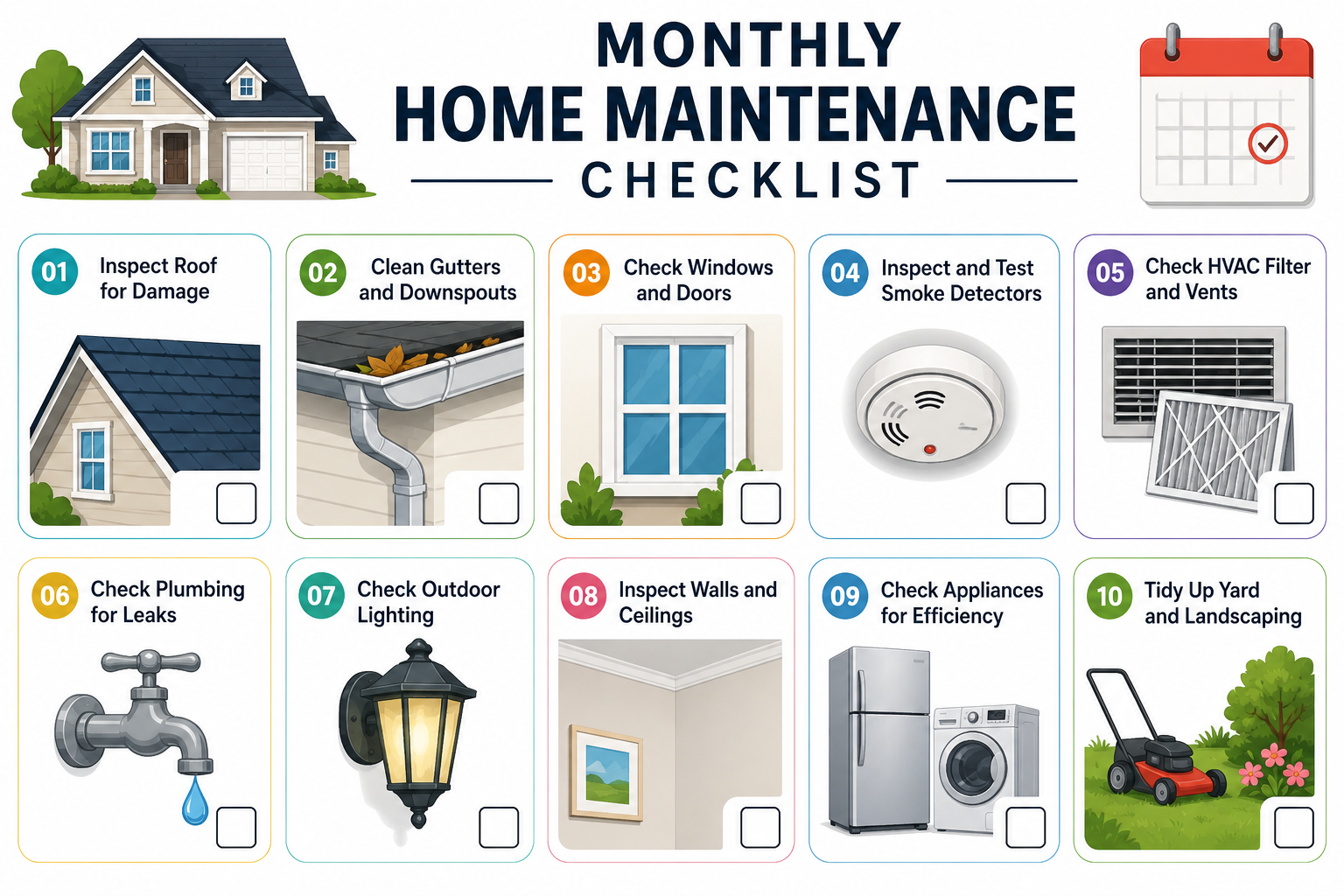
The checklist covers both indoor and outdoor home maintenance. It includes everything from testing smoke detectors and inspecting for plumbing leaks to checking exterior lighting and examining the roof for visible damage.
A good home maintenance schedule is not about spending every weekend doing chores. It is about spending 30 to 60 minutes each month doing the right things in the right order. Over time, that consistency becomes your home’s greatest protection.
Why Monthly Home Maintenance Matters
Homes are complex systems. Your HVAC unit, plumbing lines, electrical wiring, roofing, and structural components all work together. When one element is neglected, it often affects others.
Monthly maintenance matters for several important reasons.
First, it catches problems early. A small roof leak found in March is a $300 repair. That same leak ignored until August could mean $8,000 in water damage and mold remediation.
Second, it keeps your systems running efficiently. The U.S. Department of Energy estimates that proper HVAC maintenance — including regular filter replacement — can improve system efficiency by up to 15%. That translates directly into lower energy bills.
Third, it keeps your family safe. Smoke detectors, carbon monoxide detectors, and electrical systems need regular attention. According to FEMA, three out of five home fire deaths occur in homes with no working smoke alarms or non-functional alarms.
Fourth, it preserves your property value. A home that has been consistently maintained appraises better, sells faster, and attracts stronger offers than one showing obvious signs of deferred care.
Benefits of Following a Monthly Home Maintenance Routine
When homeowners commit to a consistent maintenance routine, the results are measurable and meaningful.
- Lower repair costs: Routine checks catch minor issues before they become expensive emergencies.
- Improved energy efficiency: Clean filters, sealed windows, and well-maintained appliances use less energy.
- Enhanced safety: Regular testing of detectors, inspections of electrical systems, and plumbing checks reduce serious hazards.
- Better indoor air quality: Replacing HVAC filters and cleaning dryer vents keeps the air in your home cleaner.
- Longer appliance lifespan: Regular maintenance extends the life of your water heater, HVAC system, washer, dryer, and other major appliances.
- Less stress: Knowing your home is in good condition gives you genuine peace of mind.
The preventive home maintenance approach is always less expensive than reactive repairs. Every dollar you spend on monthly upkeep typically saves three to five dollars in future repair costs.
Indoor Monthly Home Maintenance Tasks
HVAC System Inspection
Your HVAC system works constantly to keep your home comfortable. Monthly attention keeps it running efficiently and extends its lifespan.
Check your air filter every month without exception. A dirty filter restricts airflow, causes the system to work harder, and drives up energy costs. Replace it every 30 to 90 days depending on filter type and household conditions. Homes with pets or allergy sufferers need more frequent changes.
Listen for unusual sounds from your furnace or air handler — rattling, banging, or high-pitched squealing all warrant a closer look. Check vents and registers to make sure they are open and unobstructed by furniture or rugs.
Smoke and Carbon Monoxide Detector Testing
Testing your smoke detectors and carbon monoxide detectors takes less than two minutes per device. Press the test button on each unit and confirm it produces a loud, consistent alarm.
If any detector fails the test, replace the batteries immediately. If a new battery does not fix the issue, replace the unit entirely.
FEMA recommends placing smoke detectors on every level of the home, inside each bedroom, and outside sleeping areas. Carbon monoxide detectors belong near sleeping areas and within 10 feet of any fuel-burning appliance.
Never assume these devices are working simply because you have not heard them. Test every month without exception.
Plumbing Leak Inspection
Water damage is one of the most expensive and destructive problems a homeowner can face. Monthly plumbing inspections catch leaks before they escalate.
Each month, check under every sink in your kitchen and bathrooms for moisture, water stains, or soft cabinet flooring. Inspect toilet bases for water around the bottom, which can indicate a failing wax seal. Check the water heater, dishwasher, and washing machine connections for drips or corrosion.
Feel exposed pipes in the basement or utility room for dampness or condensation. If you notice a sudden unexplained increase in your water bill, suspect a hidden leak and investigate promptly.
Slow action on plumbing issues often results in mold growth, structural wood rot, and very expensive remediation costs.
Water Heater Check
Your water heater is one of the most hardworking appliances in your home. A few monthly checks keep it reliable and efficient.
Look for any signs of moisture, rust, or corrosion around the base and connection points. Listen for popping or rumbling sounds, which indicate sediment buildup inside the tank. This sediment reduces efficiency and shortens the unit’s life.
Check the temperature setting. The EPA recommends setting your water heater to 120 degrees Fahrenheit for energy efficiency and to prevent scalding.
Once per year — ideally in spring — flush the tank completely to remove sediment. Monthly, simply inspect and listen. Catching corrosion or unusual sounds early can prevent a full tank failure, which typically causes significant water damage.
Electrical Safety Inspection
Monthly electrical checks do not require any technical expertise. They do require attention.
Walk through your home and look for any outlets that are discolored, warm to the touch, or showing scorch marks. These are warning signs of dangerous electrical faults. Check that all GFCI outlets in bathrooms, kitchens, garages, and outdoor areas function correctly — press the test and reset buttons on each one.
Inspect power strips and extension cords for fraying, cracking, or signs of overheating. Never use a damaged cord. Avoid overloading outlets or using extension cords as permanent solutions.
If circuit breakers are tripping frequently, do not simply reset them and move on. Recurring trips indicate an underlying problem that a licensed electrician needs to evaluate.
Cleaning Dryer Vents
Dryer vent cleaning is one of the most overlooked monthly maintenance tasks — and one of the most important.
Every month, clean the lint trap completely before or after each use. But also reach into the vent opening behind the dryer and remove any lint that has accumulated beyond the trap.
The U.S. Fire Administration reports that dryers cause approximately 2,900 residential fires annually. Most of those fires are directly linked to lint buildup in the vent line.
Every six to twelve months, disconnect the dryer and use a vent brush kit to clean the full length of the exhaust duct. If your dryer takes longer than normal to dry clothes, feels unusually hot, or the outside vent flap does not open properly, clean the vent line immediately.
Checking Windows and Doors
Monthly window and door checks take very little time but catch issues that affect both energy efficiency and security.
Check that all windows lock and close fully. Look for condensation forming between double-pane glass, which indicates a failed seal. Inspect the caulking around window frames for cracking or separation. Drafts around windows and doors are among the most common causes of elevated heating and cooling costs.
Examine weatherstripping on all exterior doors. Close each door and check for visible light gaps along the frame. If you can see light, you are losing conditioned air and heating dollars through that gap.
Caulking windows and replacing weatherstripping are simple, inexpensive tasks with a meaningful impact on your energy bills.
For more guidance, visit our Ultimate Home Maintenance Checklist for Every Season.
Kitchen Maintenance
The kitchen contains multiple systems that benefit from monthly attention.
Clean refrigerator door gaskets with warm water to maintain a proper seal. Check the gasket for cracks or tears that let cold air escape. Clean the refrigerator coils if accessible — dirty coils reduce efficiency and increase energy use.
Inspect the dishwasher door seal for mold or mildew and wipe it clean. Run a dishwasher cleaner tablet through an empty cycle to remove mineral deposits and odors.
Check the range hood filter and clean or replace it as needed. A grease-saturated filter is both a fire hazard and an ineffective ventilation device.
Test your kitchen GFCI outlet monthly. Confirm the garbage disposal operates smoothly and flush it with ice and coarse salt to clean the grinding components.
Bathroom Maintenance
Bathrooms handle heavy daily use and moisture, making them particularly prone to maintenance issues.
Each month, inspect caulking around the tub, shower, and toilet base. Re-caulk any areas showing cracks, separation, or mold staining. Failed caulking allows water to penetrate behind tiles and subflooring, which leads to rot and expensive structural repairs.
Clean showerheads by soaking them in white vinegar to dissolve mineral deposits. Check under-sink plumbing for drips. Test the toilet flush mechanism for any running or slow-filling behavior.
Ensure bathroom exhaust fans are functioning properly. Run the fan and hold a piece of tissue near the intake — it should pull firmly toward the fan. Poor ventilation leads to chronic moisture problems, which accelerate mold growth and damage painted and tiled surfaces.
Outdoor Monthly Home Maintenance Tasks
Roof Inspection
You do not need to climb on your roof every month — in fact, regular climbing without proper equipment and training creates unnecessary risk. Instead, use binoculars from the ground to scan your roof each month.
Look for missing, curling, or damaged shingles. Check that flashing around chimneys, skylights, and roof valleys is still intact. After any significant storm, inspect immediately.
Dark streaks on shingles typically indicate algae growth. Moss or lichen presence can trap moisture against the roofing material and accelerate deterioration.
Gutter Inspection
Clean gutters direct rainwater safely away from your home’s foundation, siding, and landscaping. Clogged gutters do the opposite — they overflow and drive water toward the areas you most need to protect.
Each month, visually check your gutters from the ground. Look for visible debris, sagging sections, or pulling away from the fascia board. After heavy rain, watch how water exits the downspouts and ensure it flows away from the foundation.
A full gutter cleaning should happen at least twice per year — spring and fall — but monthly monitoring catches problems between cleanings.
Lawn and Garden Maintenance
Monthly lawn and garden maintenance protects both your landscape and your home’s exterior.
Trim vegetation that has grown against your siding, foundation, or roof line. Overhanging branches can damage roofing shingles and provide a pathway for pests to enter your home. Plant roots growing too close to the foundation can cause cracking and structural pressure over time.
Check irrigation systems for leaks, misaligned heads, or pooling water. Overwatering near the foundation softens the soil and contributes to settling and water intrusion.
Clear debris from window wells if your home has a basement.
Exterior Wall Inspection
Walk the full perimeter of your home each month with your eyes focused on the exterior walls. Look for new cracks in siding, stucco, or brick. Check for peeling or bubbling paint, which often signals moisture beneath the surface.
Pay particular attention to areas where different materials meet — where siding meets the foundation, where trim meets siding, and where the chimney meets the roofline. These transition points are the most common locations for water infiltration.
Small exterior cracks filled promptly with caulk prevent much larger structural repairs down the road.
Driveway and Walkway Inspection
Cracks in concrete or asphalt driveways and walkways grow larger with every freeze-thaw cycle. Filling them promptly is simple and inexpensive.
Each month, walk your driveway and all walkways and look for new cracks, heaving, or settled sections. Check that walkways near the home slope away from the foundation rather than toward it.
Uneven walkways also create a tripping hazard, which is both a safety concern and a liability issue.
Fence and Gate Inspection
Walk along your fencing each month to check for leaning posts, loose boards, rust on metal components, and damaged gate hinges or latches.
Wooden fences are particularly vulnerable to rot at ground level where posts meet the soil. Catching rot early allows you to replace a single post rather than an entire fence section.
Secure fencing also plays a role in home security and contains children and pets safely. A gate that fails to latch properly is a safety risk worth addressing immediately.
Outdoor Lighting Check
Test all exterior light fixtures monthly. Walk the perimeter of your home at night or test manually during the day.
Replace burned-out bulbs promptly. Dark areas around entry points, garages, and side yards create security vulnerabilities. Motion-sensor lights are particularly effective and worth testing monthly to confirm they activate at the correct sensitivity.
Check solar-powered lights to ensure they are receiving adequate sunlight and charging properly.
Room-by-Room Home Maintenance Checklist
| Room | Monthly Task | What to Check |
|---|---|---|
| Kitchen | Refrigerator, dishwasher, GFCI outlet | Gaskets, coils, door seals, drain filter |
| Bathrooms | Plumbing, ventilation, caulking | Leaks, fan operation, grout and caulk condition |
| Utility Room | HVAC filter, dryer vent, water heater | Filter condition, lint buildup, rust or leaks |
| Living Areas | Smoke detectors, CO detectors, outlets | Test function, check for warm outlets |
| Basement | Sump pump, pipes, moisture | Water in pit, pipe leaks, dampness |
| Garage | Electrical, door mechanism, lighting | GFCI outlets, door sensor, bulb function |
| Attic | Ventilation, insulation, pest signs | Airflow, moisture, animal entry |
| Exterior | Roof, gutters, walls, lighting | Visible damage, debris, cracks, bulb function |
Seasonal Adjustments to Your Monthly Routine
Your core monthly tasks stay consistent throughout the year, but certain months require additional attention based on the season.
In spring, add a complete exterior inspection after winter. Check roof damage, test outdoor faucets, and schedule your HVAC tune-up before cooling season.
In summer, monitor your air conditioning system more closely. Check window seals against heat infiltration and inspect the attic for overheating.
In fall, your monthly checks should include preparation for cold weather. Add chimney inspection, outdoor water line draining, and weatherstripping review to your standard routine.
In winter, focus on heating system performance, pipe protection, and safety device testing. Carbon monoxide risk increases with heavier furnace use during cold months.
Monthly Home Maintenance Calendar
| Month | Key Focus Areas | Critical Tasks |
|---|---|---|
| January | Heating, safety | HVAC filter, detector tests, check for ice dams |
| February | Plumbing, weatherproofing | Inspect pipes, check weatherstripping, monitor heating |
| March | Spring prep, exterior | Roof and gutter inspection, test outdoor faucets |
| April | HVAC transition, drainage | Schedule AC service, check downspouts, inspect foundation |
| May | Exterior and lawn | Inspect siding, trim vegetation, test irrigation |
| June | Cooling, windows | AC performance check, caulk windows, GFCI tests |
| July | Attic, electrical | Attic ventilation, outdoor lighting, storm inspection |
| August | Appliances, bathroom | Water heater inspection, bathroom caulking, dryer vent |
| September | Fall preparation | Chimney inspection, drain garden hoses, HVAC filter |
| October | Weatherproofing | Weatherstripping, seal gaps, gutter cleaning |
| November | Heating, safety | Furnace service, smoke detectors, kitchen maintenance |
| December | Emergency prep, heating | Check heating system, test all detectors, stock supplies |
Essential Home Maintenance Tools
| Tool | Purpose | Recommended Use |
|---|---|---|
| Caulking gun | Sealing windows, doors, and gaps | Monthly exterior and interior sealing checks |
| HVAC filter wrench | Easy filter access and removal | Monthly filter replacement |
| Moisture meter | Detecting hidden dampness in walls | Monthly plumbing and basement inspections |
| Multimeter | Testing electrical outlets and circuits | Monthly electrical safety checks |
| Pressure washer | Cleaning exterior surfaces | Seasonal exterior cleaning |
| Flashlight or headlamp | Inspecting dark spaces | Monthly attic, crawlspace, and basement checks |
| Stud finder | Locating framing for secure hanging | As needed for repairs and installations |
| Wet/dry vacuum | Water cleanup and debris removal | Post-storm and basement inspections |
| Binoculars | Ground-level roof inspection | Monthly roof monitoring |
| Vent brush kit | Dryer vent cleaning | Monthly lint trap, semi-annual full duct cleaning |
DIY vs Professional Home Maintenance
Understanding which tasks you can handle yourself and which require a licensed professional is one of the most practical decisions a homeowner makes.
| Task | DIY Appropriate | Professional Recommended | Notes |
|---|---|---|---|
| HVAC filter replacement | Yes | No | Simple monthly task |
| Smoke detector testing | Yes | No | Press and test — no expertise needed |
| Plumbing leak inspection | Yes | For active leaks | DIY for monitoring; call a plumber for repairs |
| Dryer vent cleaning | Yes | Optional | Annual full-duct cleaning may warrant professional |
| GFCI outlet testing | Yes | No | Press test/reset buttons monthly |
| Roof inspection (ground) | Yes | For climbing | Never climb without proper training and equipment |
| Chimney cleaning | No | Yes | Requires certified chimney sweep |
| Electrical panel work | No | Yes | Always hire a licensed electrician |
| Water heater flush | Yes | Optional | DIY-friendly with proper instructions |
| Pest inspection | No | Yes | Professionals have detection tools homeowners lack |
| Foundation crack assessment | Monitor DIY | Repair by professional | Document and report growing cracks immediately |
Common Monthly Home Maintenance Mistakes
Even committed homeowners fall into patterns that undermine their maintenance routine. Here are the most common mistakes worth avoiding.
Replacing the filter but not checking the system. Swapping the HVAC filter is essential, but take an extra minute to listen to the system run. Unusual sounds often signal issues that a filter change alone will not fix.
Testing detectors without checking expiration dates. Smoke detectors and CO detectors have a lifespan of 7 to 10 years. A device that passes the button test may still fail to detect actual smoke if it is past its service life. Check the manufacture date printed on the back of the unit.
Ignoring slow drains. One slow drain might be a minor clog. Multiple slow drains throughout the house suggest a deeper plumbing issue in the main line. Do not dismiss it.
Cleaning only what you can see. Monthly maintenance requires getting under sinks, behind appliances, and into utility spaces. Surface-level cleaning misses most of the issues that lead to major repairs.
Waiting for something to break. This is the fundamental mistake. Preventive home maintenance is built on the idea that consistent action prevents problems — not that you respond after they appear.
Money-Saving Maintenance Tips
Smart monthly maintenance saves money both immediately and over the long term.
- Buy HVAC filters in multi-packs. Purchasing filters in bulk reduces per-unit cost and ensures you always have a replacement on hand.
- Use a programmable thermostat. According to the U.S. Department of Energy, setting your thermostat back 7 to 10 degrees for 8 hours per day can save up to 10% annually on heating and cooling.
- Fix drafts immediately. A can of foam sealant costs $5. Heating an unsealed home through winter costs hundreds in wasted energy.
- Do your own inspections. A thorough monthly DIY walkthrough eliminates many service calls. You will catch issues early enough to handle them yourself or at lower repair cost.
- Schedule professional services in off-peak seasons. HVAC technicians, chimney sweeps, and pest inspectors often charge less during slower demand periods.
- Document everything. Keeping records of repairs and maintenance helps you avoid repeated service calls for the same issues and supports warranty claims.
Home Safety Tips
Monthly home maintenance and home safety are deeply connected. These practices protect everyone who lives in your home.
- Test smoke detectors and carbon monoxide detectors on the first day of every month.
- Keep a fully charged fire extinguisher in the kitchen. Check the pressure gauge monthly to confirm it is in the green zone.
- Know the location of your main water shutoff, gas shutoff valve, and electrical panel. Every adult in the household should know this information.
- Test GFCI outlets in all wet areas monthly.
- Never ignore the smell of gas or burning from an electrical source. Exit the home and call emergency services immediately.
- Check that all stair railings are secure. Loose railings are a significant fall hazard.
- Ensure all exit doors and windows operate properly and open fully.
- Keep pathways to exits, electrical panels, and water shutoffs clear of stored items at all times.
When to Call a Professional
DIY home maintenance has real advantages, but there are clear boundaries. Some situations require professional expertise for safety and legal reasons.
Call a licensed electrician if you experience frequently tripping breakers, warm or discolored outlets, burning smells from electrical sources, or any need to work inside your electrical panel.
Call a licensed plumber for active leaks you cannot stop, water damage from plumbing failures, discolored water, low water pressure throughout the home, or sewer line issues indicated by multiple slow drains and odors.
Call an HVAC technician if your system is not maintaining temperature, producing unusual sounds, cycling on and off too frequently, or if you have not had a professional service in over a year.
Call a structural engineer for foundation cracks wider than one-quarter inch, horizontal foundation cracks, or any visible sagging in floors, ceilings, or roof lines.
When hiring any professional, verify their license, insurance, and reviews. Get at least two to three quotes for significant work.
Estimated Maintenance Cost Comparison
| Task | DIY Monthly Cost | Professional Service Cost | Potential Repair Cost if Neglected |
|---|---|---|---|
| HVAC filter replacement | $8 – $25 | N/A | $500 – $4,000 (system repair or replacement) |
| Smoke detector battery | $3 – $5 | N/A | Incalculable (life safety risk) |
| Dryer vent cleaning | $15 – $30 (tool) | $80 – $150 | $1,500+ (fire damage) |
| Plumbing inspection | Free (DIY check) | $100 – $200 | $2,000 – $15,000 (water damage) |
| Gutter cleaning | $0 – $50 (tools) | $100 – $250 | $1,500 – $5,000 (foundation damage) |
| Caulking windows | $5 – $15 | $100 – $300 | $300 – $1,500 (water intrusion) |
| Water heater flush | $0 – $30 | $80 – $150 | $800 – $1,500 (unit replacement) |
| GFCI outlet testing | Free | N/A | $200 – $2,000+ (electrical damage or injury) |
Expert Recommendations
After years of working with homeowners on maintenance planning, a few habits consistently separate well-maintained homes from ones that drain their owners financially.
Create a dedicated maintenance folder. Whether physical or digital, keep a record of every task you complete — date, what you did, and any observations. This documentation is valuable for warranty claims, insurance purposes, and resale disclosure.
Set a recurring monthly date. Treat your home maintenance walkthrough like a bill payment. Pick the same day each month — the first Saturday, for example — and stick to it. Consistency is the entire foundation of effective preventive home maintenance.
Learn to recognize the early signs of trouble. The difference between a homeowner who rarely faces expensive repairs and one who constantly deals with emergencies is usually pattern recognition. Learn what your home sounds, looks, and smells like when it is running correctly. Deviations from that baseline are your signal to investigate.
Do not skip the unsexy tasks. Testing detectors, checking under sinks, and replacing filters are not exciting. But they are the tasks that most directly protect your family and your wallet. The dramatic renovations get the attention, but the quiet monthly habits deliver the real value.
Frequently Asked Questions
How long does a monthly home maintenance walkthrough take?
For most homes, a thorough monthly maintenance inspection takes between 30 and 60 minutes. The first time you do it may take longer as you familiarize yourself with each system and space. After a few months, the process becomes faster because you know exactly what to look for and where to go. Breaking the walkthrough into indoor and outdoor sections helps manage the time. Many homeowners complete indoor tasks in the morning and outdoor tasks in the afternoon on the same day each month, which makes the routine feel manageable rather than overwhelming.
Is monthly home maintenance really necessary, or is seasonal maintenance enough?
Seasonal maintenance covers large-scale tasks that do not need monthly attention. Monthly maintenance addresses systems and safety devices that can change or fail at any time. Smoke detectors, HVAC filters, plumbing leaks, and dryer vents do not wait for spring cleaning to become problems. Combining both approaches gives you the most comprehensive protection. Seasonal checklists handle the big picture while your monthly routine handles the ongoing details that keep your home safe and efficient every week of the year, not just four times per year.
What is the first thing I should check every month?
Safety devices should always come first. Test your smoke detectors and carbon monoxide detectors at the start of each month before anything else. These devices are your most direct protection against life-threatening emergencies. After confirming all detectors function correctly, move on to the HVAC filter, plumbing inspection, and the rest of your routine. Building the habit of starting with safety systems ensures that no matter how busy life gets, the highest-priority items get done before anything else on your list.
How do I know if my HVAC filter needs to be replaced before the monthly mark?
Hold the filter up to a light source. If you cannot see light passing through the material, it is time to replace it regardless of how long it has been in use. Homes with pets, high dust levels, recent renovation work, or allergy sufferers often need filter replacement every three to four weeks rather than the standard 30 to 90 days. Running the system with a severely clogged filter puts significant strain on the motor and can cause the system to overheat or shut down entirely. When in doubt, replace it — filters are inexpensive compared to repair costs.
Can monthly maintenance actually increase my home’s resale value?
Yes, and the impact is more significant than most homeowners expect. When a home is listed for sale, buyers and their inspectors look closely at evidence of maintenance history. A home with clean systems, well-sealed windows, a maintained roof, and no deferred repairs inspects cleanly and appraises better. Buyers are also more willing to pay full price for a home that clearly has been cared for consistently. Conversely, a home showing signs of neglect invites lower offers and repair credit demands. Documented maintenance records you can share during the sale process add additional credibility and buyer confidence.
What should I do if I find a plumbing leak during my monthly inspection?
Start by identifying the source. Turn off the water supply to the affected fixture using the local shutoff valve beneath the sink or behind the toilet. If the leak is from a supply line, valve, or connection point, many homeowners can replace these components with basic tools and hardware store parts. If the leak is inside a wall, coming from the main supply line, or involves the water heater, call a licensed plumber immediately. Even a slow drip can release significant water volume over days and weeks, saturating subfloor materials and promoting mold growth behind walls.
How often should I test GFCI outlets?
The National Electrical Code requires GFCI protection in bathrooms, kitchens, garages, outdoor areas, and unfinished basements. Testing these outlets monthly ensures they will function correctly in an actual fault situation. Press the test button to trip the outlet and confirm power is cut, then press reset to restore power. If an outlet fails to trip or will not reset, replace it. GFCI outlets protect against electric shock in areas where water is present, making them one of the most important safety features in your home. The test takes seconds and should never be skipped during your monthly routine.
What is the biggest indoor maintenance mistake most homeowners make?
Neglecting the dryer vent is consistently one of the most dangerous and overlooked maintenance failures. Homeowners clean the lint screen regularly but rarely check the full exhaust duct that runs from the dryer to the exterior vent. Lint accumulates inside this duct over time, restricting airflow and creating a serious fire risk. Signs of a blocked vent include longer drying times, a dryer that feels unusually hot, and a vent flap that does not open properly. Use a vent brush kit to clean the full duct at least once every six months and visually check the exterior vent monthly.
Should I keep a record of my monthly maintenance tasks?
Absolutely. Keeping a home maintenance log is one of the most practical things a homeowner can do. Your log does not need to be complicated — a simple notebook or digital document recording the date, task completed, and any observations is sufficient. This record helps you track patterns, identify recurring issues, and confirm that tasks were completed if questions arise later. It also demonstrates to future buyers that the home was consistently maintained, which can meaningfully strengthen your negotiating position during a sale. Some homeowners store receipts, professional service invoices, and product warranties in the same folder.
How do I stay motivated to complete monthly home maintenance consistently?
The most effective approach is making monthly maintenance a scheduled, non-negotiable habit — the same way you schedule bill payments or car oil changes. Link it to a specific date each month so there is no ambiguity about when it happens. Keep your tools organized and accessible so the process is efficient rather than frustrating. Tracking the money you save through early detection of problems is also a powerful motivator. When you catch a small leak before it becomes water damage or replace a filter before the HVAC system overheats, the value of the routine becomes tangible and reinforces the habit naturally over time.
Conclusion
Your home is a living system. It needs consistent attention to stay safe, efficient, and structurally sound. A monthly home maintenance checklist gives you the structure to provide that attention without feeling overwhelmed or reactive.
The tasks covered in this guide are not complicated. Most take only minutes. But completed consistently, month after month, they prevent thousands of dollars in repairs, protect your family from real hazards, and keep your home performing at its best.
Start with what feels most manageable. Test your detectors. Replace the HVAC filter. Walk the perimeter of your home with fresh eyes. Build from there. Within a few months, you will have a routine that feels second nature and a home that reflects the care you have put into it.