
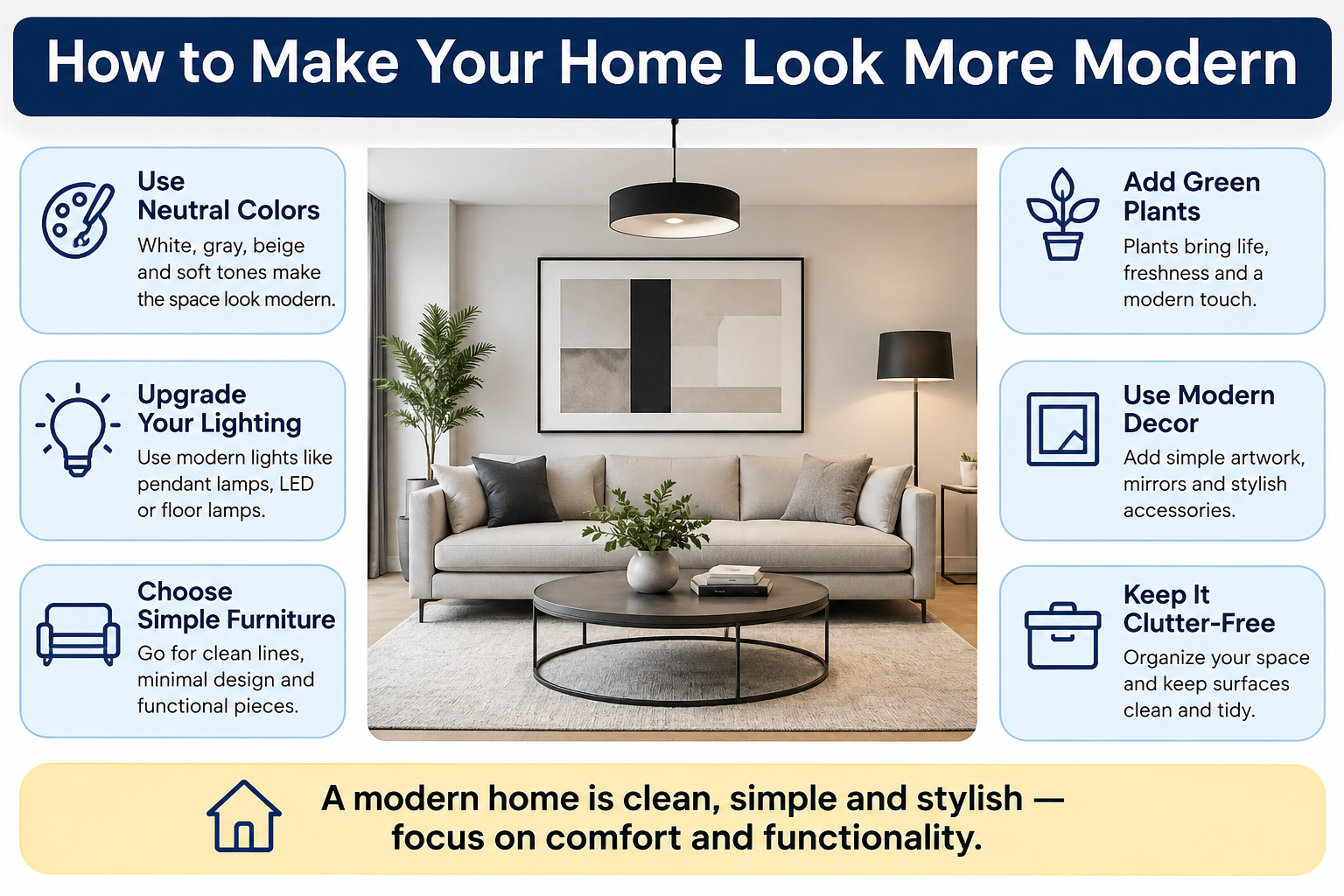
How to Make Your Home Look More Modern: 15 Easy Ideas That Work

Introduction
Most homes do not need a complete gut renovation to feel fresh and current. The structure might be perfectly solid, the rooms a decent size, and everything technically functional. But something still feels off. The fixtures look dated. The colors feel heavy. The layout seems cluttered. The whole space just does not feel like it belongs to this decade.
That feeling is more common than you might think, and the good news is that it is very fixable without spending a fortune.
Knowing how to make your home look more modern is less about chasing design trends and more about understanding the visual principles that make a space feel clean, calm, and intentional. This article breaks down 15 practical ideas that genuinely work, covers which upgrades are beginner-friendly, and helps you figure out where to start based on your budget.
What Makes a Home Look Modern?
Before diving into specific upgrades, it helps to understand what modern interiors actually have in common. The look is not about a single style or a particular color. It is about a set of consistent visual principles.
Modern-looking homes tend to share these characteristics:
- Clean lines in furniture, trim, and architectural details
- Less visual clutter on surfaces, shelves, and walls
- Neutral or balanced color palettes with intentional accent colors
- Better, layered lighting rather than one overhead fixture doing all the work
- Simple, proportional furniture that fits the room without crowding it
- Updated hardware and fixtures that feel cohesive throughout the home
- Natural materials and textures like wood, stone, linen, and plants
- Functional layouts where every piece of furniture has a clear purpose
When a home has most of these qualities, it tends to feel modern regardless of when it was built. When it is missing several of them, the space feels dated even with brand-new furniture.
How to Make Your Home Look More Modern
1. Declutter and Simplify Your Space
This is the single most impactful thing you can do, and it costs nothing.
Modern interiors are defined by breathing room. When every surface is covered and every shelf is packed, the room feels visually busy and overwhelming. Removing unnecessary items immediately creates a cleaner, calmer appearance.
Go through each room and ask honestly whether each item adds something meaningful or just occupies space. Store seasonal items, reduce decorative collections, and clear countertops as much as practically possible. The goal is not to make your home feel sterile. It is to let the good pieces stand out.
2. Use a Neutral Color Palette
Color has an enormous impact on how modern or dated a room feels. Older homes often feature bold accent walls, dark wood stains, or heavily saturated colors that were popular decades ago. Shifting toward a more neutral palette can transform the feel of a room without changing a single piece of furniture.
Whites, warm off-whites, soft beige, warm gray, and earthy tones like taupe and greige work extremely well in modern interiors. These shades reflect light, make rooms feel larger, and provide a flexible backdrop for almost any furniture style.
Accent colors still have a place. A muted olive, dusty blue, or terracotta can add warmth and character. The difference is intentionality. One or two accent colors used consistently throughout a space look considered. Five competing colors in the same room look chaotic.
If you are ready to refresh your walls, our guide on how to paint a room covers everything a beginner needs to know before picking up a brush.
3. Update Your Lighting
Lighting is often the most underestimated element of interior design. A room with good bones and mediocre lighting always feels flat. The same room with thoughtful, layered lighting feels alive and intentional.
Modern lighting design uses multiple light sources at different heights rather than relying on a single overhead fixture. Think ceiling lights for general illumination, pendant lights or task lighting for focused areas, and floor or table lamps for ambient warmth.
Color temperature also matters. Warm white bulbs in the 2700K to 3000K range create a welcoming glow that flatters most interior colors. Cool white or daylight bulbs can feel clinical in living spaces, though they work well in home offices or workshops.
Switching from incandescent to LED bulbs where appropriate also reduces energy consumption. The U.S. Department of Energy notes that LED lighting uses at least 75 percent less energy than incandescent lighting, which adds up meaningfully over time.
4. Replace Outdated Light Fixtures
Old brass chandelier with candelabra-style arms. Polished gold globe fixture from the 1990s. Fluorescent kitchen ceiling panel. These fixtures can date a room more than almost anything else.
Replacing a light fixture is one of the higher-impact changes you can make without touching anything else in the room. Modern fixtures in matte black, brushed nickel, antique brass, or warm bronze read as current and intentional.
Choose fixtures with clean, simple profiles. Drum shades, geometric pendants, linear chandeliers, and flush-mount fixtures with minimal ornamentation all work well in modern interiors.
Safety note: Replacing a light fixture involves electrical work. If you are not comfortable working with electrical wiring, hire a licensed electrician. Never work on electrical fixtures without switching off the circuit breaker first and confirming the power is off with a voltage tester.
5. Upgrade Cabinet Hardware
Cabinet hardware is one of the most affordable and highest-impact upgrades in any kitchen or bathroom. Old hardware with ornate detailing, shiny brass, or decorative shapes dates a room immediately. Replacing it with simple, contemporary pulls and knobs costs relatively little and takes an afternoon.
Popular modern hardware finishes include matte black, brushed nickel, satin brass, and oil-rubbed bronze. Simple bar pulls, cylindrical knobs, and minimal cup pulls all fit contemporary aesthetics well.
When upgrading hardware, match the finish consistently throughout the room. Mixing too many metal finishes in one space creates visual noise. Choosing one or two complementary finishes and using them throughout creates a cohesive, considered look.
6. Give Old Cabinets a Fresh Look
Full cabinet replacement is expensive. But painted or refinished cabinets can look genuinely fresh and modern at a fraction of the cost.
If your cabinet boxes are structurally sound, a quality primer and cabinet-specific paint can transform them completely. White, off-white, sage green, navy, and warm gray are all popular choices that feel current without being aggressively trendy.
In some cases, replacing just the cabinet doors while keeping the existing boxes is a middle-ground option that significantly reduces cost compared to full replacement. New doors with flat or simple shaker profiles combined with updated hardware can make a kitchen look almost completely different.
Proper preparation is essential for painted cabinets. Cleaning, light sanding, and a good primer make the difference between a finish that lasts for years and one that chips within months.
If a cabinet door itself is loose or not closing properly, addressing that before painting makes the job easier. Our guide on how to repair a loose cabinet door covers the most common fixes quickly.
7. Choose Simple, Modern Furniture
Furniture with heavy carved details, high arms, thick rolled edges, and large footprints tends to feel traditional or dated in a modern context. Contemporary furniture generally has lower profiles, cleaner lines, tapered or straight legs, and a less ornamented appearance.
Proportions matter just as much as style. A sofa that is too large for the room dominates the space and makes it feel smaller. A coffee table that is too low or too small looks disconnected from everything around it.
Multifunctional furniture suits modern interiors well. An ottoman with internal storage, a bed frame with built-in drawers, or a bench at the foot of a bed that doubles as seating all reflect the functional, purposeful quality that defines contemporary design.
8. Add Large Mirrors
Mirrors do two things very well. They reflect light and make a room feel significantly larger and brighter. Both of these qualities align directly with the visual principles of modern interiors.
A large, simply framed mirror in a living room, bedroom, or hallway has a much stronger visual impact than several smaller decorative mirrors. Choose a frame that complements your hardware finish or keep it frameless for the most minimal look.
Position mirrors to reflect natural light from a window or to make a narrow hallway feel wider. In a dining room, a large mirror on one wall makes the space feel more expansive during meals.
9. Update Curtains and Window Treatments
Heavy, ornate drapes with swags and valances are a clear marker of an older decorating style. Modern window treatments tend to be simpler, cleaner, and lighter.
Floor-length curtain panels in a solid neutral or subtle texture hang from a simple rod close to the ceiling, which makes ceilings appear taller. Linen, cotton, and other natural fabrics drape well and suit modern interiors.
Roller shades, Roman shades, and wooden blinds also fit contemporary aesthetics and work especially well in kitchens and bathrooms where full curtain panels may not be practical.
Hang curtain rods as close to the ceiling as possible and extend them at least 4 to 6 inches beyond the window frame on each side. This makes windows appear larger and the room feel taller.
10. Add Modern Wall Treatments
Plain painted walls are a perfectly valid modern choice, but simple wall treatments can add depth and interest without making a space feel overdone.
Board and batten, simple picture-frame molding, and horizontal shiplap are all approachable DIY options that add architectural character to a plain wall. Used on a single accent wall, they create a focal point without overwhelming the room.
A word of caution: wall treatments can look dated very quickly if they lean too heavily into a specific trend. Simple geometric paneling in a neutral color tends to age better than highly specific trending styles that were everywhere for one season.
11. Modernize Your Living Room
The living room is often where people spend the most time and notice the most wear. A few focused changes can shift the entire feel of the space.
Start with the sofa. If it is in good condition but the fabric looks tired, a slipcover or new throw pillows can refresh it immediately. New cushion covers in a solid neutral or simple geometric pattern make a significant difference without replacing the sofa entirely.
A simple area rug defines the seating area and adds warmth. Choose a rug large enough that at least the front legs of all major furniture pieces sit on it. A rug that is too small looks disconnected and makes the room feel smaller.
Replace any visually heavy or cluttered coffee table with something simpler. Clear acrylic, light wood, or matte black metal all read as contemporary. Reduce what sits on the coffee table to one or two intentional objects.
12. Make Your Kitchen Look More Modern
A full kitchen renovation is a major investment, but a modern-looking kitchen does not require tearing everything out.
Updated cabinet hardware alone can shift a kitchen from dated to current. Add a new backsplash if the existing one is heavily patterned or visually busy. Simple white subway tile, matte concrete-look tile, or a subtle stone mosaic all read as contemporary and are manageable as DIY projects for experienced beginners.
Improve the lighting. Under-cabinet lighting illuminates the countertop and adds warmth. Replacing a fluorescent ceiling fixture with a recessed light kit or a simple modern pendant changes the feel of the whole room.
Clear the countertops as much as possible. Keep only what you use every day within reach. Store everything else. A clutter-free countertop is the single fastest way to make a kitchen look more modern and intentional.
13. Refresh Your Bathroom
Bathrooms respond very well to small targeted upgrades. A new mirror, updated faucet, and fresh towels can shift the feel of a bathroom noticeably without touching the tile or tub.
Replace a builder-grade frameless mirror with one that has a simple frame in a contemporary finish. Add a new light fixture above the mirror rather than keeping the standard bare-bulb bar that comes in many builder bathrooms.
Update the faucet and shower hardware if the existing fixtures are visibly dated. This is a moderately skilled DIY project for those comfortable with basic plumbing. If you are uncertain, a plumber can complete it quickly.
Add organized storage. A simple floating shelf for towels and a few accessories keeps surfaces clear. Our guide on how to install floating shelves covers the full process for different wall types. Adding a well-chosen towel bar in a matching finish completes the look, and how to install a towel bar walks through that process step by step.
14. Bring in Natural Materials and Greenery
One of the defining qualities of contemporary interior design is the integration of natural materials alongside clean, minimal forms. Wood, stone, woven textures, ceramic, and natural fiber rugs all add warmth and tactile interest that purely synthetic materials cannot replicate.
Live plants are one of the most effective and affordable ways to make any room feel fresher and more current. A single large plant in a simple ceramic pot makes more visual impact than a collection of small plants scattered around the room. Snake plants, pothos, fiddle leaf figs, and olive trees all work well in modern interior settings.
Natural materials do not need to dominate a room. A wood tray on a white coffee table, a woven basket used as storage, or a stone soap dish on a bathroom counter are all small choices that add texture and warmth without cluttering the space.
15. Update Small Details Throughout the Home
Once the larger changes are in place, the small details are what pull everything together into a cohesive whole.
Work through each room and look at:
- Door handles and hinges: Replace ornate or mismatched hardware with simple, consistent finishes
- Switch plates and outlet covers: Switch to screwless flat plates in white or matching wall color
- Baseboards and trim: Clean, repaint, or replace damaged trim for a crisp finished look
- Faucets: Update where fixtures look visibly dated
- House numbers: Simple modern numerals in matte black or brushed metal make an immediate exterior impression
- Decorative accessories: Edit down to fewer, better pieces rather than many small items
These details are inexpensive individually, but updating them consistently across a home creates a level of visual polish that larger renovations alone cannot achieve.
How to Modernize an Older Home on a Budget
The scope and sequence of your upgrades should reflect both your budget and the current condition of your home. Here is a practical framework for thinking about cost levels.
| Upgrade | Cost Level | Visual Impact | DIY Friendly? |
|---|---|---|---|
| Decluttering and reorganizing | Free | High | Yes |
| Repainting walls | Low | Very High | Yes |
| Updating cabinet hardware | Low | High | Yes |
| Replacing switch plates and outlet covers | Low | Medium | Yes |
| Adding mirrors | Low–Medium | High | Yes |
| New curtains and window treatments | Low–Medium | High | Yes |
| Updating light fixtures | Medium | Very High | Partially* |
| Replacing faucets and shower hardware | Medium | High | Partially* |
| Refinishing or painting cabinets | Medium | Very High | Yes, with preparation |
| New flooring | Medium–High | Very High | Partially |
| New countertops | High | Very High | Usually professional |
| Full kitchen or bathroom renovation | High | Very High | Professional recommended |
*Electrical and plumbing work should only be completed DIY by those with relevant experience. Always consult a licensed professional if you are uncertain.
Modern Home Updates You Can DIY
Many of the most impactful modernizing changes are genuinely beginner-friendly. These projects do not require specialized skills or tools.
- Painting walls, ceilings, and trim
- Replacing cabinet hardware
- Hanging curtains and curtain rods
- Installing or replacing mirrors
- Decluttering, reorganizing, and restyling shelves
- Swapping decorative fixtures like switch plates and outlet covers
- Adding plants and natural accessories
- Changing out light bulbs to better color temperatures
Projects involving electrical wiring, structural changes, load-bearing walls, gas lines, or significant plumbing should always be assessed by a qualified professional before you attempt them. The U.S. Consumer Product Safety Commission consistently highlights DIY electrical and structural work as sources of preventable home injuries and hazards.
Common Mistakes to Avoid When Modernizing a Home
Following Every Trend
Trends move quickly. What looks current in a design magazine today may feel dated in three years. Aim for timeless simplicity rather than replicating whatever is most photographed right now.
Using Too Many Colors
Adding several accent colors in an attempt to add interest usually creates visual noise. Start with two or three colors and use them consistently.
Buying Furniture That Is Too Large
Oversized furniture in a small room makes the room feel cramped and unbalanced. Measure carefully before purchasing anything significant.
Overdecorating
More items do not improve a modern space. Editing down to fewer, better-chosen pieces almost always improves the result.
Poor Lighting
One overhead light rarely creates a comfortable, modern ambiance. Layer multiple light sources at different heights.
Mixing Too Many Finishes
Multiple competing metal finishes in one room create a disconnected look. Choose one or two and use them consistently throughout.
Choosing Style Over Function
A beautiful chair that is uncomfortable or a stunning kitchen that does not work practically is not a successful design. Form and function need to work together.
Modern vs. Trendy: What Is the Difference?
This distinction matters more than most homeowners realize when making design decisions.
Trendy design is tied to a specific moment in time. It is what fills social media and home magazines for a season or two, then starts to feel overdone. Shiplap everywhere, barn doors on every opening, and all-gray interiors are examples of trends that peaked and then dated quickly.
Modern design, in the sense used throughout this article, refers to a set of principles rather than a specific look. Clean lines, less clutter, balanced proportions, natural materials, and functional layouts have been valued in interior design for decades. They do not go out of style because they are rooted in how people actually want to live in their homes.
When choosing upgrades, ask whether the change reflects timeless qualities or a specific trend. A matte black faucet in a simple design will still look appropriate in ten years. A highly specific novelty fixture that is everywhere right now may not.
How Much Does It Cost to Make a Home Look Modern?
The honest answer is that it depends entirely on the scope of work, the size of the home, the materials chosen, and whether you hire professionals.
At the low end, decluttering, repainting, replacing hardware, and updating accessories can cost very little while producing a significant visual improvement. Many homeowners make meaningful changes for a few hundred dollars spread across several small upgrades.
At the medium level, updating light fixtures, window treatments, mirrors, and a few key furniture pieces typically falls into a range that requires more planning but remains far below renovation territory.
At the higher end, cabinet refinishing, countertop replacement, flooring, and fixture upgrades across multiple rooms require a realistic budget conversation. Getting several quotes before committing to any significant work is always worth the time.
The key principle is sequencing. Start with free and low-cost changes like decluttering, cleaning, and painting. See how far those take you before spending on larger items. Many homeowners are surprised by how much a fresh coat of paint and cleaner surfaces change their perception of a room.
FAQ
How can I make my house look modern without renovating?
Focus on changes that do not require structural work. Declutter every room thoroughly. Repaint walls in a neutral palette. Replace cabinet hardware with simple modern pulls. Update light fixtures where possible. Add large mirrors, better lighting, and simple window treatments. These changes cost a fraction of a renovation and can shift the feel of a home considerably.
How can I make an old house look more modern?
Older homes often have dated color schemes, heavy window treatments, and ornate hardware. Start by simplifying these elements. A neutral paint color, simple curtains, updated fixtures, and cleaned or refinished surfaces go a long way. Preserve any original architectural character that has genuine charm, such as original wood floors or interesting molding, and build a modern palette around it rather than covering it.
What colors make a home look modern?
Warm whites, soft off-whites, warm gray, beige, greige, and earthy neutrals are consistently used in modern interiors. These shades reflect light, feel calm, and work with most furniture styles. Accent colors like muted olive, dusty blue, warm terracotta, or deep navy can add personality when used intentionally in cushions, artwork, or a single wall.
What is the easiest way to modernize a home?
Decluttering and simplifying is the easiest and most impactful starting point. It costs nothing and can immediately change how a space looks and feels. From there, painting walls a neutral color and replacing dated cabinet hardware are two of the next most effective and beginner-friendly upgrades.
How can I modernize my home on a small budget?
Work in order of impact per dollar spent. Declutter first at no cost. Paint is one of the highest-impact, lowest-cost changes available. Replace hardware throughout the home for a small investment. Update switch plates and outlet covers. Add plants and reorganize existing accessories. None of these require significant spending, and together they create a noticeably fresher, more intentional home.
What makes a house look outdated?
Common markers of a dated interior include bold or heavily saturated paint colors that were trendy decades ago, ornate cabinet hardware, single overhead lighting in every room, heavy window treatments, furniture with carved details and large footprints, cluttered surfaces, and mismatched finishes throughout. Addressing any several of these simultaneously produces a noticeable shift.
Does modern furniture make a house look better?
Furniture with cleaner lines and better proportions generally improves the look of a space compared to heavy, ornate pieces. However, new furniture is only one element. The same modern sofa in a cluttered room with poor lighting and outdated colors will still feel disappointing. Furniture works best when the surrounding space, color palette, lighting, and accessories support it.
How can I make my living room look more modern?
Start by removing anything that is not serving a clear purpose. Simplify what is on shelves and surfaces. Consider repainting in a neutral tone. Replace or recover cushions in solid or simple textured fabrics. Add a floor lamp or table lamp for layered lighting. Choose a coffee table with a clean, simple profile. A well-sized area rug that grounds the seating area makes the whole arrangement feel more intentional.
Final Thoughts
Making a home look more modern is not about spending a lot of money or following every trend you see online. It is about applying a consistent set of visual principles: simplifying, cleaning up clutter, balancing color, improving lighting, updating the details, and choosing furniture that fits the space rather than fighting it.
The best place to start is always with the changes that cost the least and deliver the most. Declutter every room. Paint the walls if they need it. Replace old hardware. Update the lighting. Add a few plants. Stand back and see how far those changes take you before reaching for a renovation budget.
Small, thoughtful changes made consistently throughout a home add up to a result that feels considered and genuinely current. Most homeowners find that getting these fundamentals right brings them most of the way to the modern home they had in mind.
For ongoing home maintenance that supports the quality of your improvements, a solid home maintenance checklist helps ensure that the work you put into modernizing your home stays in good condition for years to come.