
Introduction
A comfortable bathroom does not need to be large, luxurious, or newly renovated. Some of the most pleasant bathrooms are in modest homes where genuine thought has gone into the lighting, the organization, the material choices, and the small details that make daily routines feel easier and more comfortable. A bathroom that functions well, feels clean and settled, and supports the household’s everyday use is a better bathroom than one that simply looks impressive in photographs.
The improvements that make the biggest difference to how a bathroom feels are often not the most expensive ones. Lighting that flatters rather than harshes. Storage that keeps everyday items accessible and surfaces clear. Ventilation that keeps the room fresh and dry. Colors and materials that feel calm and considered. Comfortable textiles that make the difference between a functional bathroom and one that genuinely feels good to spend time in.
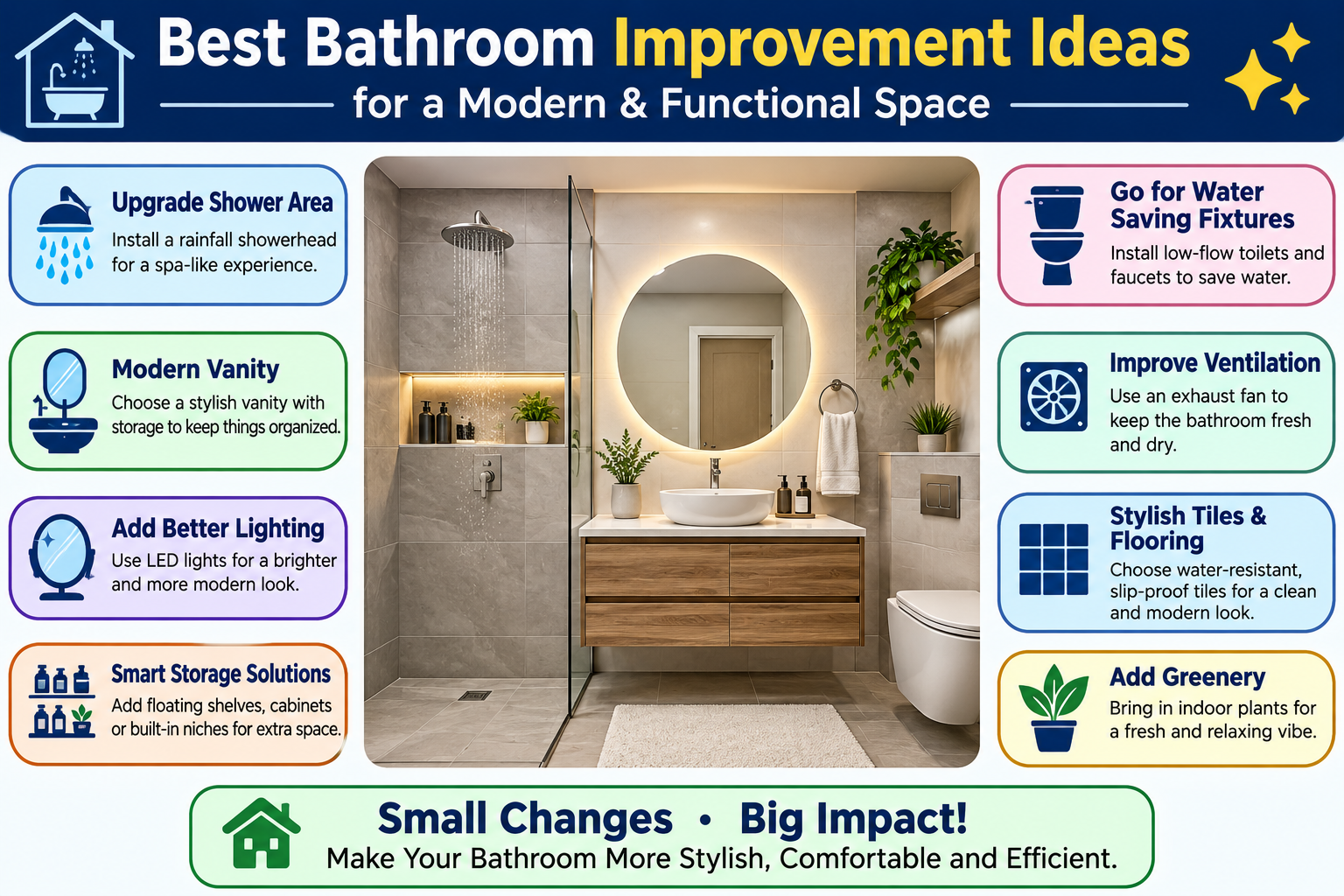
This guide covers the bathroom improvement ideas that have the most consistent impact on comfort, functionality, and overall atmosphere, organized around the areas where everyday bathrooms most commonly fall short. The advice applies to bathrooms of different sizes and budgets, with the consistent principle of addressing real problems before making cosmetic changes.
1. Start by Evaluating Your Current Bathroom
Before spending on any improvement, spend some honest time identifying where the bathroom’s real problems are. The most useful improvements are those that solve specific daily frustrations rather than changes made because something seems like it should be updated.
Work through the bathroom’s main elements with practical questions. Is the lighting adequate for everyday tasks like shaving, applying makeup, or reading product labels? Where it is not, what specifically is the problem, and where does the shadow fall? Is the storage sufficient for the household’s actual bathroom belongings, or do things end up on the counter because there is nowhere else logical for them to go?
Does the ventilation keep the bathroom dry after showering, or does condensation persist on surfaces and windows for extended periods after use? Is the room comfortable in terms of temperature, or is it consistently cold in winter in a way that makes using the bathroom unpleasant? Are the existing finishes, tile, fixtures, and surfaces, in reasonable condition but visually dated, or is there actual damage or deterioration that needs addressing?
Is movement through the bathroom easy and natural, or does the current layout create awkward moments, a door that swings into the vanity, a toilet that is too close to the shower, or a towel rail in an inconvenient position? Is privacy adequate for the household’s needs?
This assessment produces a prioritized list of genuine problems worth solving, which is a much more reliable guide to where improvement spending will have real impact than a general sense that the bathroom feels old or uninspiring.
2. Improve Bathroom Lighting
Lighting in a bathroom affects both the practical usability of the space and its overall atmosphere, and these two requirements are sometimes in tension. The brightness and direction of light needed for precise grooming tasks is different from the softer, more atmospheric quality that makes a bathroom feel relaxing.
The most consistent lighting problem in residential bathrooms is a single ceiling fixture providing all the illumination. This positions the light source directly above the mirror user’s head, creating shadows that fall on the face and make grooming tasks genuinely more difficult. The solution is vanity lighting at face level, positioned beside or above the mirror rather than overhead only.
Wall-mounted sconces on either side of the mirror eliminate face shadows almost completely because they light from both sides rather than from above. A single fixture or light bar positioned closely above the mirror at the right height achieves a similar result less expensively. The color temperature of vanity lighting is worth choosing deliberately. Warm white light, in the range of 2700K to 3000K, is more flattering and creates a warmer overall atmosphere. Slightly cooler light, around 3000K to 3500K, can improve the accuracy of color perception for makeup application.
Separating the bathroom lighting into at least two circuits, allowing the main ceiling light and the vanity light to be switched independently, adds flexibility across different uses and times of day. A well-lit vanity can be used while the main room light is dimmed for a bath, for example.
Natural light improves the bathroom’s daytime character significantly. Where a window is present, maximizing the natural light it provides through appropriate window treatments that can be cleared fully during the day makes the bathroom feel more pleasant. Where privacy is needed, frosted glass, privacy film, or window treatments that allow light while limiting visibility balance these requirements.
Any new electrical installations in a bathroom should be carried out by a qualified electrician who can ensure compliance with the regulations that apply to electrical work in wet areas.
3. Improve Ventilation and Air Quality
Adequate ventilation is one of the most practically important aspects of a comfortable bathroom and one of the most commonly inadequate. A bathroom that does not ventilate effectively after showering accumulates moisture on surfaces, in grout, and in concealed spaces that creates a persistently damp quality and can contribute to mold and mildew over time.
An extractor fan that operates adequately for the size of the bathroom and the level of use it receives is the most effective mechanical solution. Where an existing fan is present but does not clear the room effectively, its performance is worth evaluating. Common causes include a fan that is undersized for the room, one that has become clogged with dust and debris over time, or ductwork that does not allow adequate airflow. Each of these has a different solution, and a professional assessment is appropriate where the cause is not obvious.
A bathroom window that can be opened provides natural ventilation that works well in mild weather and supplements mechanical ventilation year-round. Opening the window after showering, where the outside conditions allow, is a simple habit that makes a meaningful difference to how quickly the bathroom dries.
Daily habits around moisture management matter alongside the mechanical ventilation. Leaving the shower door or curtain open after use allows surfaces to dry more quickly. Using a squeegee on shower tiles and glass after each use removes most of the water from those surfaces before it can evaporate slowly. Hanging towels to dry fully between uses rather than leaving them bundled prevents residual moisture from remaining in the bathroom.
Where there are persistent signs of moisture-related problems, including staining on walls or ceilings, deteriorating grout, or persistent mold, a professional assessment of the ventilation system is worth seeking before investing in cosmetic improvements.
4. Create Better Bathroom Storage
Storage quality has a direct and significant effect on how comfortable and organized a bathroom feels. A bathroom with adequate, well-organized storage, where everyday items have a logical home and are within easy reach, functions better and feels calmer than one where items accumulate on surfaces because storage is inadequate or poorly organized.
The vanity cabinet beneath the sink is typically the bathroom’s primary storage location, and its organization often has room for improvement. Drawer inserts that organize smaller items, containers that keep similar products together, and regular editing of what is actually kept in the bathroom rather than accumulated over time all improve the usable storage significantly.
Wall cabinets, where the bathroom’s layout and wall space allow them, add meaningful storage capacity without occupying floor space. A medicine cabinet behind the mirror is an efficient combination of mirror and storage that works particularly well in smaller bathrooms where floor and wall space is limited.
Open shelving adds storage and visual interest when the items stored are either attractive or organized into containers that are. A shelf with coordinated baskets for toiletries, a plant, and a few carefully chosen accessories looks considered and welcoming. The same shelf with a random collection of products and accumulated items looks cluttered and creates visual noise.
Towel storage is worth planning specifically rather than treating as an afterthought. A towel rail that holds freshly washed towels in a position where they can dry properly between uses, and that is positioned where it does not obstruct natural movement through the bathroom, serves both a storage and a practical drying function. Additional hook or rail capacity for bathrobes or everyday towels is worth including where the household’s size requires it.
Placing frequently used items at the most accessible positions, and less frequently used items at less convenient locations, applies in bathrooms exactly as it does in kitchens. The products used every day should be within reach without opening multiple doors or moving other items.
5. Choose Comfortable and Practical Colors
Color in a bathroom affects how the space feels in ways that are amplified by the room’s typically small size and the intimate nature of its use. Colors that feel comfortable and settled in a bathroom contribute to it being a genuinely pleasant room to spend time in.
Warm neutrals, soft creams, warm whites, earthy putty shades, and muted tones that lean toward warmth rather than coolness tend to create a more welcoming bathroom than cool, blue-inflected whites and grays. In a room that is often used in the early morning and late evening under artificial light, the color temperature of both the paint and the lighting interact, and warm tones on the walls are more flattering under warm artificial light than cool tones.
That said, the colors that work best in any specific bathroom depend heavily on the existing fixed elements that are not being changed. The tile color and pattern, the fixture colors, and the countertop material all set conditions that the wall color needs to work within. A bathroom with cool gray tile and white fixtures can accommodate a soft warm gray or a dusty sage wall color that coordinates with rather than competes with the fixed palette.
Natural light, where it exists in a bathroom, affects how colors read throughout the day. A bathroom with a window in a south-facing position receives generous warm light that gives most colors more flexibility. A north-facing or windowless bathroom is more dependent on artificial light quality, and warm tones on the walls help compensate for the cooler character of indirect or artificial light.
Our article on how to choose the right colors for your home covers the practical principles of color selection in detail, including how to evaluate colors against existing finishes and how lighting conditions affect how any color reads in a specific room.
6. Upgrade the Vanity Area
The vanity area, the combination of sink, countertop, mirror, lighting, and storage around them, is the functional heart of most bathrooms and receives more daily use than any other part of the room. When the vanity works well, the bathroom works well. When it does not, daily routines become frustrating regardless of how good the rest of the bathroom is.
Counter space at the vanity is often limited, and the practical solution is a combination of better organization and improved storage immediately around the vanity. A wall cabinet or open shelves beside or above the mirror keep everyday items accessible without taking up countertop space. A small tray or organizer on the counter gives frequently used items a defined area that keeps the surface looking organized rather than accumulated.
Mirror selection is one of the most impactful changes available in a bathroom because a larger or better-positioned mirror visually expands the space, improves the quality of the vanity for everyday grooming tasks, and contributes to the overall character of the room. A mirror that covers more of the wall above the vanity than the standard builder-grade mirror typical of many bathrooms makes an immediate and noticeable difference.
Hardware on vanity drawers and doors, sink taps, and towel rails all benefit from being consistent in finish and style. Mismatched hardware that has been updated at different times, or that reflects the choices of previous occupants, creates a disconnected quality that better-coordinated hardware resolves. Replacing all visible hardware with a consistent finish, matte black, brushed brass, brushed nickel, in one deliberate update produces a more cohesive and intentional result.
The right vanity configuration depends on the bathroom’s size and the household’s needs. A wide vanity with double sinks suits a busy household bathroom used by multiple people simultaneously. A narrower vanity with well-organized storage beneath suits a small bathroom where floor space is limited. The proportion of the vanity to the overall bathroom should feel appropriate rather than dominant.
7. Choose a Better Bathroom Mirror
The bathroom mirror is used every day and has a disproportionate effect on how the bathroom looks and functions relative to its cost. Many bathrooms have mirrors that are too small for the vanity they serve, positioned at the wrong height for the household’s users, or in a style that does not suit the rest of the bathroom’s character.
A larger mirror covering most or all of the wall above the vanity does several things simultaneously. It makes the room feel larger and more open by creating the impression of additional depth. It reflects natural and artificial light further into the room. And it provides a better vanity experience for grooming because more of the face and upper body is visible.
Framed mirrors add a design element that frameless or barely edged mirrors do not. A simple frame in a consistent material, a thin metal frame in the same finish as the other bathroom hardware, a clean wooden frame that introduces a natural material element, or a bold statement frame that becomes a deliberate focal point, each communicates a different character that should suit the overall bathroom aesthetic.
Rounded mirrors have become more prominent in contemporary bathroom design as part of the broader move toward softer forms in residential interiors. A circular mirror above a vanity creates a visual contrast with the rectangular forms of the vanity and tiles that can be particularly effective in a contemporary bathroom.
Medicine cabinets combine mirror and storage in a way that is particularly practical in smaller bathrooms where wall space for separate storage is limited. Modern medicine cabinet designs are significantly more attractive than the purely utilitarian versions common in older homes, and a well-chosen medicine cabinet can make a small bathroom more functional and more visually appealing simultaneously.
8. Improve the Shower or Bathing Area
The shower or bathing area is the most intensive daily use zone of the bathroom, and its comfort, organization, and condition have a significant impact on how pleasant the bathroom is to use overall.
Shower storage is worth organizing thoughtfully rather than improvised with accumulated products on a ledge. The products actually used in the shower should be accessible without having to move other items, and the storage should keep bottles from falling or creating a cluttered appearance. A simple shower caddy that can be removed for cleaning, built-in recessed shelves where the shower was designed with them, or a corner shelf unit all provide storage that keeps the shower organized.
The shower’s lighting is worth considering separately from the main bathroom lighting. A shower area that is adequately lit is more practical and comfortable to use than one that relies on ambient light from the main room. Any lighting installed in or immediately adjacent to a wet shower area must comply with appropriate standards for wet-area electrical installations and should be carried out or assessed by a qualified electrician.
Glass shower enclosures or frameless shower screens make a noticeable visual contribution to the bathroom because they allow the eye to move through the full depth of the room without interruption. A shower curtain, particularly a dark or heavily patterned one, visually closes off a portion of the room. Where a shower curtain is preferred or necessary, a clear liner allows the tile behind it to remain visible, which has a similar, if less dramatic, visual opening effect.
Where a shower seat or fold-down seating can be accommodated, it adds both a comfort and an accessibility element that benefits household members of different abilities and ages.
9. Make the Bathroom Feel Warmer and More Comfortable
The physical comfort of a bathroom, how warm it is, how the surfaces feel underfoot, how the textiles feel, is part of what makes it a room people genuinely enjoy using rather than simply a functional facility.
Towel quality is a simple, affordable improvement with a clear daily impact. A thick, well-absorbent towel in a coordinated color feels notably different from a thin or worn towel, and the difference is experienced every day. Keeping towels in a condition that still performs well and looks good, replacing them when they become threadbare or no longer absorbent, is a maintenance habit rather than a major purchase.
A bath mat in a material that feels comfortable underfoot, a cotton bathmat with a decent pile, a natural fiber mat, or a memory foam option for maximum underfoot comfort, improves the experience of stepping out of the shower or bath in a simple but consistent way. Bath mats should be changed and washed regularly for hygiene and should be replaced when they no longer feel fresh or absorbent.
The bathroom floor temperature is one of the most consistent comfort complaints in bathrooms, particularly in colder climates and during winter months. Underfloor heating in a bathroom, where it can be installed appropriately, addresses this directly and makes the bathroom significantly more comfortable to use in cold conditions. Any underfloor heating installation requires qualified professional installation to ensure it is appropriate for the flooring material and bathroom conditions.
Window treatments in a bathroom need to balance privacy with light and the need to ventilate after bathing. A treatment that can allow natural light and ventilation when privacy is not needed, and can provide privacy when it is, serves both functions. Moisture-resistant blinds or frosted glass are practical solutions for bathroom windows where conventional fabric curtains would deteriorate quickly.
10. Improve the Flooring
Bathroom flooring has specific requirements that distinguish it from flooring in other rooms. Moisture resistance is the most critical practical quality because bathroom floors are exposed to water from showering, bathing, and general use consistently. A flooring material that does not tolerate moisture well deteriorates over time in a bathroom environment regardless of its other qualities.
Slip resistance is particularly important in bathroom flooring because wet feet on a slippery surface create a genuine safety risk. Flooring that provides adequate grip when wet, either through its surface texture or through a finish that reduces slip risk, should be a primary consideration rather than an afterthought.
The visual contribution of the flooring to the overall bathroom is significant because it is a large uninterrupted surface that is visible from the moment the bathroom is entered. Flooring that coordinates with the tile, the walls, and the overall palette contributes to a cohesive bathroom character. Flooring that clashes or is in a clearly different style from the surrounding surfaces creates a disjointed impression.
Ceramic and porcelain tile are the most commonly used bathroom flooring materials and suit most bathroom conditions well when chosen with appropriate slip resistance. Stone tiles have a natural quality and visual warmth that is appealing but require sealing and careful maintenance. Vinyl and luxury vinyl tile have improved considerably and offer practical moisture resistance, durability, and a range of visual options including realistic stone and wood looks. Each material has specific installation, maintenance, and longevity characteristics that should be understood before selection.
11. Add Natural Materials and Textures
A bathroom composed entirely of hard, smooth, reflective surfaces can feel clinical and slightly cold regardless of how carefully the colors and fixtures have been chosen. Natural materials and varied textures introduce warmth and character that soften the bathroom environment and make it feel more comfortable.
Wood and wood-look elements are among the most effective ways to introduce natural warmth into a bathroom. A wooden framed mirror, a teak bath caddy, a bamboo ladder towel rail, or a wood-look tile or vinyl floor all contribute the visual warmth of natural wood without necessarily exposing real timber to the sustained moisture levels that would damage it. Where real wood is used in a bathroom, it should be appropriately sealed and positioned where it will not be directly exposed to standing water or constant moisture.
Stone, in countertops, tile, or smaller accessories, brings a natural variation and tactile quality that manufactured surfaces cannot fully replicate. A small stone tray on the vanity, a marble soap dish, or stone tiles in the shower area all introduce this quality in accessible ways.
Woven materials used for storage, a rattan or woven seagrass basket for towels or toilet paper, add texture and warmth that the bathroom’s predominantly hard surfaces do not. Plants that tolerate bathroom humidity levels, such as pothos, peace lilies, spider plants, or aloe vera, add life and organic color that changes the quality of the room’s atmosphere in a way that no decorative object quite replicates.
Natural fabrics, cotton and linen in towels and bathmats, are both more comfortable to use and more visually appropriate to a warm, comfortable bathroom aesthetic than synthetic alternatives.
12. Make a Small Bathroom Feel More Spacious
Small bathrooms present specific design challenges, but many of the factors that make them feel more cramped than they need to be are addressable without structural changes.
Color is the most accessible starting point. Light tones that reflect rather than absorb the available light create a more open visual impression than darker tones that add visual weight to the walls. This does not mean every small bathroom needs to be white. Soft warm neutrals, pale sage, light warm gray, or soft cream all work effectively in small bathrooms while providing more character than a stark white.
A large mirror, or mirrors covering most of the wall above the vanity, visually extends the depth of the room and reflects both natural and artificial light further into the space. The effect of a well-positioned large mirror on the perceived size of a small bathroom is genuinely significant and is one of the most cost-effective improvements available.
Keeping the floor as visible as possible, avoiding low storage furniture that reduces the visible floor area, and choosing a compact vanity configuration that provides adequate storage without dominating the room all contribute to the sense of available space.
A glass shower enclosure or screen allows the eye to read the full depth of the shower area as part of the room’s space rather than cutting off a section behind an opaque curtain. In a small bathroom, this can make a notable difference to how the room reads.
Visual clutter on surfaces amplifies the sense of limited space in a small bathroom more than in a larger one. Better storage that keeps everyday items off the countertop and surfaces clear is particularly important in a small bathroom where every inch of visible surface area matters to the overall impression.
13. Create a More Relaxing Bathroom Atmosphere
A bathroom used well can provide a genuine opportunity for daily rest and recovery, and the design of the space either supports or undermines this potential. Creating a more relaxing bathroom atmosphere does not require a spa renovation. It requires attention to the specific elements that distinguish a room that feels calm from one that feels functional but unpleasant.
Lighting is the most powerful single tool for creating a relaxing bathroom atmosphere. Warm, lower-level lighting that can replace or supplement the main bathroom light during bathing creates an immediately different quality in the room. A dimmer switch on the main bathroom light adds significant flexibility. Candles, where safely positioned away from anything flammable and supervised during use, create a quality of light that no artificial fixture fully replicates.
Coordinated colors that feel calm and settled rather than stimulating contribute to the overall atmosphere. Warm neutrals, muted earthy tones, and soft colors with warm undertones consistently create a more relaxing bathroom character than cool, sharp, or strongly contrasting palettes.
Minimal visible clutter is important for creating a calm atmosphere because visual complexity makes a room feel busy and slightly stressful. Better storage that keeps everything not currently in use out of sight allows the bathroom to feel organized and peaceful rather than accumulated.
Comfortable textiles, genuinely soft towels, a substantial bathmat, and a bathrobe hung within reach, make the physical experience of using the bathroom more pleasant in a simple and direct way.
For broader ideas on creating a comfortable and relaxing home environment across all rooms, our article on best home improvement ideas for a cozy home covers the principles of comfort, warmth, and atmosphere that apply in bathrooms as well as the rest of the home.
14. Improve Bathroom Accessibility and Everyday Usability
A bathroom that is comfortable to use for everyone in the household, across different ages, abilities, and physical conditions, is a better bathroom than one designed around a single user type. Accessibility improvements often benefit the whole household rather than only those with specific needs.
Adequate lighting throughout the bathroom, including in the shower area and at the vanity, benefits every user but is particularly important for older adults or household members with visual challenges. Lighting that is adequate at night without being harsh or disorienting supports safe bathroom use at all hours.
Grab bars in the shower and beside the toilet provide support that benefits users recovering from injury, older adults, and anyone who experiences a moment of instability on a wet surface. Modern grab bars are available in finishes that coordinate with the rest of the bathroom hardware and need not look institutional. Their installation requires anchoring into structural elements behind the wall, and professional installation is appropriate to ensure they are properly secured.
Slip-resistant flooring and a non-slip bathmat at the shower or tub exit address one of the most consistent safety concerns in residential bathrooms. These are basic practical choices rather than specialized accessibility features.
Storage at appropriate heights for the household’s users, so that daily-use items are accessible without reaching uncomfortably high or low, benefits users of different heights and physical abilities. A vanity height appropriate for the primary users is worth considering when any vanity replacement is being planned.
15. Modernize an Older Bathroom Without a Full Renovation
Many older bathrooms have structural elements, tile, bathtubs, and floor materials, that are in reasonable condition but look dated because the surrounding fixtures, hardware, accessories, and finishes have not been updated. In these cases, targeted improvements that address the visible markers of age can shift the bathroom’s overall character considerably without the cost and disruption of full renovation.
Hardware replacement is among the most accessible changes. Tap handles, towel rails, toilet roll holders, and cabinet hardware in dated styles or finishes can all be replaced with contemporary alternatives. Coordinating these across the bathroom in a single consistent finish creates a more unified and current overall impression.
The mirror is often the single most dated element in an older bathroom, and replacing it with something more contemporary, larger, better framed, or better positioned makes an immediate difference to the room’s character. As discussed earlier, a larger mirror also improves both the room’s functionality and its visual spaciousness.
Painting the walls where the existing tile and waterproofing allow it, updating the color scheme with more contemporary tones, refreshes the bathroom without touching the tile or fixtures. The choice of color needs to coordinate with the existing fixed elements that are not being changed.
Accessories, soap dispensers, storage containers, baskets, and similar items, when updated and coordinated, create a more finished and intentional appearance. This is a very low-cost change individually but contributes to the overall impression of a bathroom that has been recently attended to.
For broader guidance on modernizing a home across multiple areas without complete renovation, our article on how to make your home look more modern covers practical approaches to updating the appearance of different rooms through targeted, accessible changes.
16. Bathroom Improvements for Different Budgets
Low Budget
At a low budget, the highest-impact changes are those that address organization, comfort, and the condition of what already exists without requiring significant purchases.
Replacing towels and bathmats with better quality, coordinated versions is affordable and immediately improves both the experience and the appearance of the bathroom. Improving storage organization within existing cabinets and drawers, editing out what is no longer needed, and organizing what remains makes the bathroom feel more ordered and functional. Updating small accessories, soap dispensers, storage containers, and similar items, in a coordinated style creates a more finished overall impression for modest cost.
Moderate Budget
At a moderate budget, improvements can extend to a new or improved mirror that better suits the vanity in size and style, updated lighting including sconces or a vanity bar above the mirror in place of an inadequate fixture, new coordinated hardware throughout the bathroom, and improved storage through wall cabinets or shelving additions.
Where flooring or surface condition is the primary problem, selected tile replacement in a high-impact area, the shower surrounds or the floor, may be accessible at a moderate budget depending on the size of the bathroom and the materials chosen. A professional should carry out tiling work in wet areas to ensure appropriate waterproofing.
Larger Budget
At a larger budget, full bathroom redesign, layout changes that require plumbing repositioning, new bathing areas, and comprehensive storage improvements all become options. These investments make the most sense when the existing bathroom has fundamental problems that cannot be resolved through surface-level improvements, or when the household’s needs have genuinely changed in ways the existing bathroom cannot accommodate.
Any significant bathroom renovation involving plumbing, electrical work in wet areas, structural changes, or waterproofing should involve appropriately qualified professionals. The quality of waterproofing in a bathroom is particularly important because failures in this area can cause serious damage to the building fabric that is expensive to remediate.
17. Common Bathroom Improvement Mistakes to Avoid
Poor ventilation is the most consequential practical oversight in bathroom improvement. Investing in cosmetic improvements without addressing inadequate ventilation creates a room that looks better temporarily but deteriorates more quickly through moisture damage.
Insufficient lighting consistently makes bathrooms less comfortable and less functional. A single overhead fixture that creates shadows at the vanity is one of the most common and most resolvable bathroom lighting problems.
Too little storage means everyday items accumulate on surfaces, which makes the bathroom feel cluttered and smaller than it is. Storage needs should be addressed honestly rather than optimistically.
Overcrowding a small bathroom with too much furniture, too many accessories, or oversized fixtures makes it harder to use and less comfortable, regardless of how good any individual element might be.
Choosing materials based only on appearance without considering maintenance requirements, slip resistance, and moisture suitability leads to practical problems that are expensive to resolve. Bathroom materials have specific performance requirements that must be met for the room to function safely and durably.
Ignoring maintenance when selecting finishes is a common mistake. A grout color that shows staining quickly, a tap finish that shows water marks obviously, or a tile surface that requires frequent sealing creates maintenance burdens that affect how the bathroom looks on a daily basis.
Using too many competing finishes in a small room creates visual noise that makes the space feel unsettled. A single consistent hardware and fixture finish throughout the bathroom produces a more cohesive and calm result.
Blocking natural light with window treatments or storage additions that obscure the window removes one of the most valuable qualities a bathroom can have. Natural light should be protected where it exists.
Following trends without considering long-term use in a room that is expensive to renovate creates the risk of a bathroom that feels current for a season and dated shortly afterward. Timeless material and color choices that suit the household’s actual preferences and the home’s architectural character outlast trend-driven decisions considerably.
Frequently Asked Questions
What makes a bathroom more comfortable?
A comfortable bathroom combines several qualities rather than any single feature. Adequate lighting that suits both practical tasks and relaxed use. Good ventilation that keeps the room fresh and dry after showering. Storage that keeps everyday items accessible and surfaces clear. Comfortable textiles in good condition. A color palette that feels settled and calm. Appropriate temperature comfort for the climate. Each of these contributes to a bathroom that feels genuinely good to use every day, and addressing the weakest of these in the specific bathroom typically produces the most noticeable improvement.
How can I improve my bathroom without renovating?
Several meaningful improvements are accessible without renovation. Replacing towels, bathmats, and accessories with coordinated, quality alternatives immediately improves the bathroom’s appearance and experience. Updating hardware, taps, towel rails, cabinet handles, creates a more cohesive and contemporary overall impression. Replacing a dated or undersized mirror with something larger and better suited to the vanity transforms the room’s character and functionality. Improving lighting by adding a vanity sconce or replacing an inadequate fixture makes a daily practical difference. Improving storage organization reduces surface clutter. Any of these individually improves the bathroom. Several applied together can make a significant overall difference.
What type of lighting is best for a bathroom?
A bathroom benefits from layered lighting rather than a single source. A ceiling fixture provides general ambient illumination. Vanity lighting positioned at face level, through sconces on either side of the mirror or a well-positioned light bar above it, provides even, shadow-free light for grooming tasks. Warm white light, around 2700K to 3000K, creates a more flattering and welcoming atmosphere than cool or daylight-temperature light. Where possible, having the ability to control these independently through separate switches or dimmers adds flexibility for different uses and times of day.
How can I make a small bathroom feel bigger?
Light colors that reflect more of the available light reduce visual weight on walls and ceilings. A large mirror above the vanity extends the room’s apparent depth and reflects light further into the space. Clear glass shower screens or enclosures allow the full depth of the shower area to read as part of the room rather than being closed off. Keeping surfaces and floors as clear as possible removes the visual complexity that amplifies the sense of limited space. Adequate lighting that reaches every corner of the room prevents the dark areas that make a small bathroom feel more enclosed than it needs to.
What bathroom upgrades are worth the money?
Improvements that solve genuine daily frustrations and benefit the household consistently tend to be worth the investment regardless of cost level. Better vanity lighting that genuinely improves the grooming experience is used every day. Improved storage that keeps surfaces clear has a daily visual and practical benefit. A better mirror that suits the vanity properly improves both the room’s functionality and appearance consistently. For larger investments, the question is whether the existing bathroom has a genuine functional or comfort limitation that cannot be resolved through more modest improvements.
How can I improve bathroom storage?
The most impactful storage improvements are those that place everyday items within easy reach and keep surfaces clear. Improving the organization of existing vanity storage, using drawer inserts and removing what is no longer needed, often reveals more usable capacity than appeared to exist. Adding a wall cabinet beside or above the mirror adds meaningful storage without reducing floor space. Open shelving with baskets or coordinated containers provides accessible storage with visual organization. Towel storage that allows towels to dry properly between uses, rather than remaining damp folded over a rail, improves both hygiene and the bathroom’s overall tidiness.
What colors make a bathroom feel more relaxing?
Colors with warm undertones, soft creams, warm whites, muted earthy tones, and settled greens and blues with warm qualities tend to create a more relaxing bathroom atmosphere than cool, sharp, or strongly contrasting palettes. The specific colors that work best depend on the fixed elements already in the bathroom, the tile, fixtures, and flooring, and the quality of natural and artificial light available. Evaluating color samples in the actual bathroom under the actual lighting conditions, rather than from a paint chip in a store, produces more reliable results and prevents the common disappointment of a color that looks right in one context and wrong in another.
How can I make an older bathroom look more modern?
The elements that most clearly communicate a bathroom’s age are typically the hardware, the mirror, the accessories, and the color palette rather than the structural tile or fixtures. Updating these specifically, replacing dated hardware with contemporary alternatives in a consistent finish, replacing an old mirror with something more suitable in size and style, updating accessories to a coordinated modern selection, and refreshing the wall color where tile and waterproofing allow, can shift an older bathroom’s character noticeably without touching the most expensive elements. Where the tile itself is dated, painting over ceramic tile with appropriate preparation and the right product can be a temporary solution while longer-term planning takes place.
Final Thoughts
The best bathroom improvement ideas for a more comfortable home consistently share the same foundation: addressing the real practical and comfort problems in the specific bathroom rather than making changes for their own sake.
A comfortable bathroom should balance function, lighting, storage, ventilation, safety, appearance, and personal comfort in a way that suits the household using it every day. Getting any one of these elements meaningfully wrong, lighting that creates shadows at the mirror, storage that forces clutter onto surfaces, ventilation that leaves the room persistently damp, undermines the overall comfort of the room regardless of how good everything else is.
Homeowners can often make a noticeable difference through targeted improvements rather than full renovation. Updating the lighting, improving storage organization, replacing the mirror, coordinating hardware, and introducing quality textiles and natural materials can collectively transform the character of a bathroom without touching its structural elements.
Start with the assessment of what genuinely needs to improve. Prioritize the changes that address the biggest daily frustrations. Make targeted improvements that solve real problems and improve the household’s actual daily experience. And resist the impulse to renovate more than necessary when thoughtful, specific improvements can achieve most of what a full renovation would provide at a fraction of the cost and disruption.