Home Improvement Trends to Watch in 2026

Introduction
The way people think about their homes has changed considerably over the past several years. Where home improvement was once largely about appearance and resale value, it is increasingly about how a home actually feels to live in every day. Comfort, flexibility, personal character, energy awareness, and long-term functionality are all shaping what homeowners are choosing to prioritize.
The home improvement trends to watch in 2026 reflect this shift clearly. Warmer interiors, natural materials, more expressive color, wellness-oriented spaces, and homes designed to work across different life stages are all gaining momentum. So are practical improvements like better storage, more layered lighting, and outdoor spaces that genuinely extend daily living rather than just adding square footage on paper.
Not every trend covered here will suit every home, every budget, or every homeowner. The most useful way to approach any trend is to ask whether it genuinely improves comfort, function, durability, or enjoyment rather than whether it is fashionable. That question tends to filter the useful from the transient remarkably effectively.
This guide covers the major directions shaping residential design and improvement in 2026, explains why each one matters, and helps you decide what is worth considering for your own home.
1. Warmer and More Personal Interiors
One of the clearest broad shifts visible across residential design in 2026 is a move away from the cool, stark minimalism that dominated much of the previous decade. All-white interiors with gray accents, perfectly uniform surfaces, and carefully curated emptiness feel less relevant to how most homeowners actually want to live.
What is replacing it is warmer, more layered, and more personal. More color on walls and in furniture. More natural materials. More visible personality and lived-in character. Rooms that feel comfortable and genuine rather than designed for photography.
This does not mean abandoning a clean, considered approach to interior design. It means that the definition of what counts as a well-designed home has expanded beyond the previously narrow aesthetic to include spaces that are visibly inhabited, authentically personal, and physically comfortable in ways that purely visual design cannot always achieve.
For homeowners who want to move in this direction, the changes are accessible. Introducing warmer bulb temperatures, swapping cooler gray accessories for earthy tones, adding a rug with some texture, or introducing a plant or two are all small changes that contribute to a warmer overall atmosphere without requiring any structural work.
2. Richer Colors and More Confident Color Choices
The shift away from all-gray and all-white interiors has been building for several years and is now firmly established as a clear trend direction rather than a niche preference. In 2026, deeper, richer, and more expressive color is appearing on walls, cabinetry, ceilings, and furniture across a wide range of home styles.
Earthy ochre and terracotta, warm forest green, deep teal, dusty rose, and rich warm brown are all prominent in current interior design. These are colors with depth and warmth rather than brightness and saturation. They create atmosphere without the high-energy quality of a more vivid palette.
The approach most commonly seen in well-executed examples is using a richer color as a considered choice in one room or on one surface, such as a deeply colored kitchen island, a bedroom ceiling painted in a warm earthy tone, or a living room wall in a specific green, rather than throughout the entire home simultaneously.
Homeowners who want to explore this direction without committing to a full repaint can test the approach through furniture, cushions, curtains, or a single accent wall. If the result feels right, extending the color more broadly becomes a much better-informed decision than simply painting based on a trend without testing it first.
Our guide on how to choose the right colors for your home covers the practical principles of color selection in detail, including how to test colors against your existing finishes and how natural light affects how any color reads in your specific space.
3. Natural and Rich Wood Tones
Warmer, richer wood tones are having a significant moment in residential design. Walnut, darker oak, warm ash, and similar species are appearing in flooring, cabinetry, wall paneling, furniture, and smaller decorative elements across kitchen, living room, and bedroom applications.
The appeal is practical as well as aesthetic. Darker wood tones age gracefully, show less of the wear that lighter wood finishes can accumulate over time, and pair easily with the warmer color palettes becoming more prominent in 2026 interiors. They also bring an organic richness that no manufactured material quite replicates.
Wood paneling in particular is enjoying renewed relevance. Applied to a feature wall in a living room or bedroom, or used throughout a home office or study, wood paneling adds texture, warmth, and architectural character without the expense or disruption of structural work. This is distinct from the heavy, dark paneling of earlier decades. Contemporary applications tend to use thinner, cleaner panels in natural finishes that sit comfortably alongside modern furniture.
For homeowners with existing light or cool-toned wood throughout the home, introducing warmer wood in smaller quantities, a walnut coffee table, a solid wood shelf, a wood-framed mirror, creates a shift in the overall warmth of the interior without requiring any large investment.
4. Curved Furniture and Softer Forms
Curved and rounded forms in furniture, architecture, and accessories have been building in visibility for the past few years and remain a strong feature of residential design in 2026. Rounded sofas, curved armchairs, arched doorway details, scalloped edges in tile and joinery, and circular or oval dining tables all reflect a broader move toward softer, more human forms.
The practical appeal of rounded furniture in a domestic setting is genuine. Sharp corners in high-traffic areas, around children or in frequently navigated spaces, are a legitimate comfort and safety consideration. Beyond that, softer forms in furniture tend to create a more visually relaxed quality that suits the broader shift toward warmer, more comfortable interiors.
Homeowners who want to incorporate this direction can do so without structural changes. A curved sofa or an oval coffee table makes the most immediate impact in a living room. A round dining table typically works well in a dining area that does not have strictly rectangular proportions. Accessories with softer profiles, curved lampshades, rounded vases, circular mirrors, can introduce the aesthetic quality without requiring any furniture replacement.
Where homeowners are undertaking kitchen or bathroom renovation, arched recesses, rounded island corners, and softer cabinetry profiles are all relatively accessible architectural details that can incorporate this direction into a structural project.
5. Layered and More Decorative Lighting
Lighting is increasingly being treated as a design element rather than a functional utility in residential interiors, and 2026 represents a continuation of this direction with growing sophistication and ambition.
The shift is away from single overhead fixtures providing all the illumination in a room toward layered lighting that combines ambient light, task light, and accent light from multiple sources at different heights and with different visual characters. A ceiling fixture for general illumination, wall sconces for warmth and architectural detail, table lamps and floor lamps for approachable, comfortable light at eye level and below.
Statement lighting, pendant lights with presence and character, sculptural floor lamps, artisan-made ceramic table lamps, is increasingly valued as a decorative element in its own right rather than purely as a functional fitting. A well-chosen pendant above a dining table or an interesting lamp in a bedroom corner contributes to the room’s personality in a way that a standard ceiling light never can.
The practical case for layered lighting is strong regardless of aesthetics. A room lit from multiple sources at different heights feels more comfortable, more welcoming, and more visually interesting than the same room lit only from a single overhead fixture. The difference is particularly noticeable in the evening, when the overhead-only room feels flat and institutional while the layered room feels settled and genuinely comfortable.
Dimmer switches on ceiling fixtures extend their usefulness by allowing the overhead light to become ambient background illumination when lower-level light sources are in use. This is a relatively modest investment that significantly improves the flexibility of any room’s lighting.
6. Wellness-Focused Home Spaces
The interest in homes that actively support physical and mental well-being has moved well beyond a niche concern to become a broadly recognized direction in residential design and improvement. In 2026, this is visible across a range of scales, from small, thoughtful adjustments to dedicated wellness spaces.
At the practical end, wellness-focused design means attention to natural light quality and quantity, ventilation that brings fresh air into living spaces, quiet areas within the home that support rest and recovery, and temperature comfort throughout the year. These are not luxury considerations. They directly affect the quality of daily life for everyone who lives in the home.
Spa-inspired bathrooms are a consistent expression of this trend, with improved soaking baths, better shower experiences, natural materials like stone and wood in bathroom fittings, and lighting that can be adjusted between bright and functional and soft and relaxing. The scale and budget of these improvements varies enormously, from a full bathroom renovation to the addition of a rainfall shower head, better towels, and warmer lighting.
Home exercise areas are increasingly appearing in residences of all sizes, from a dedicated room with proper flooring and equipment to a cleared corner of a bedroom with a yoga mat and minimal equipment. The common thread is intentional space allocation for physical activity rather than treating it as an afterthought.
Reading corners, quiet rooms, garden spaces designed for sitting and genuinely resting, and rooms organized to minimize visual stress are all expressions of the same direction. The underlying principle is that a home should actively support recovery and well-being rather than simply shelter daily activity.
7. Homes Designed for Long-Term Living
One of the more meaningful shifts visible in 2026 home improvement thinking is increased attention to how homes will work for their occupants not just right now but over many years. This is partly driven by demographic realities, as aging populations reconsider whether their homes will work for them as needs change, and partly by a broader recalibration away from constant renovation cycles toward investing in spaces that work well and last well.
Accessible and adaptable layouts are a practical expression of this. Wider doorways, step-free circulation where possible, lever-style handles rather than knobs, and bathroom configurations that could accommodate grab rails without looking institutional are all examples of features that improve usability for a broader range of physical abilities without compromising the home’s appearance.
Multigenerational living is increasingly relevant in many regions, driven by housing costs, caregiving needs, and cultural preferences. Homes that can accommodate multiple generations, whether through a self-contained annexe, a ground-floor bedroom and bathroom suitable for an older family member, or flexible rooms that can shift function over time, are being valued more deliberately than before.
Flexible rooms that can shift function as life changes, a nursery that becomes a study, a home office that becomes a guest room, a formal dining room that becomes a family space, reflect an investment in adaptability rather than a fixed layout assumed to serve the same household in the same way indefinitely.
8. Multi-Functional Rooms
Space pressure in urban and suburban housing markets has been building for years, and in 2026 the response in residential design is increasingly sophisticated. Rooms designed to serve multiple functions simultaneously or sequentially are a practical necessity for many homeowners and an efficiency preference for others.
The guest room that doubles as a home office, the dining area that functions as a workspace during the day, the basement that serves as both a storage area and a recreation room, and the spare bedroom organized as both a fitness area and an occasional guest space are all expressions of the same underlying need: getting more value from every room in the home.
Flexible furniture is central to making multi-functional rooms work practically. A sofa bed that guests can actually sleep comfortably on. A desk that folds away when not needed. A dining table that extends for family gatherings and contracts to a more modest size for everyday use. Storage integrated into room dividers so that the dividing element is functional rather than purely spatial.
The design challenge in multi-functional rooms is preventing the room from feeling permanently torn between its purposes. Clear storage for the items associated with each function, and some visual logic to the organization of the space, prevents it from feeling perpetually unfinished.
9. Personalized and Collected Interiors
One of the most consistent threads visible across 2026 residential design coverage is a renewed emphasis on homes that feel authentically personal rather than assembled from a consistent showroom aesthetic. This is partly a response to years of social media-driven interiors that prioritized visual consistency over genuine inhabitability, and partly a broader cultural reappraisal of what makes a home genuinely comfortable.
Meaningful artwork chosen because it is genuinely loved rather than because it fits a neutral backdrop. Vintage pieces with history and provenance. Objects brought back from travel or received from family. Handmade items from craftspeople whose work resonates. Mixed furniture styles that have been accumulated rather than selected as a set.
The distinction between a personalized interior and a cluttered one is worth understanding clearly. Personalization is about choosing objects with intention and displaying them thoughtfully. A shelf with a few meaningful objects arranged with some care looks warm and genuine. The same shelf with every available object accumulated without arrangement looks chaotic. The editing is as important as the collecting.
Homeowners interested in this direction do not need to buy anything new. Reviewing what is already in the home, identifying the objects that genuinely mean something, displaying those more prominently, and storing or removing what accumulated without intention is often a more useful starting point than shopping for new personality.
10. Tactile Materials and Layered Textures
The tactile quality of a home, how surfaces feel to the touch and how they read visually when light moves across them, is receiving more deliberate attention in 2026 residential design than in the smoother, more uniform aesthetic that preceded it.
Natural stone with visible grain and variation, handmade tiles with slight surface irregularity, textured plaster walls with depth and movement, woven linen and wool upholstery, rough-sawn timber, and similar materials all share the quality of being visually interesting at close range in a way that smooth, uniform surfaces are not.
Mixing different textures in a room adds depth and warmth that a single uniform material cannot provide. The contrast between a smooth stone countertop and a rough linen curtain, between a polished ceramic vessel and a woven basket, between a matte painted wall and a glossy glazed tile, gives the eye movement and interest that makes a room feel richer.
The practical implication for homeowners who are not undertaking major renovation is that textured accessories and soft furnishings, a woven rug, a linen cushion cover, a textured ceramic lamp base, a basket used for storage, can introduce this quality at modest cost. The effect is cumulative. None of these changes alone transforms a room, but several working together meaningfully shift its texture and warmth.
11. More Character in Kitchens
Kitchen design has been moving away from the perfectly uniform, glossy, and laboratory-like aesthetic that dominated for much of the previous two decades. In 2026, kitchens with more character, more material variety, and a stronger connection to the rest of the home are a clearly visible direction.
This shows up in several practical ways. Cabinetry in warmer tones, navy, forest green, warm off-white, earthy terracotta, rather than cool white or high-gloss gray. Mixed materials within the kitchen itself, a different material for the island versus the perimeter units, open shelving alongside closed cabinetry, or a combination of painted and natural wood finishes. Decorative pendant lighting rather than purely functional overhead illumination.
Freestanding furniture elements, a butcher block table used alongside fitted units, a standalone dresser used for kitchen storage, vintage or near-vintage finds incorporated into an otherwise contemporary kitchen, are all expressions of the same move away from the uniform fitted kitchen aesthetic.
Decorative touches, a display of ceramics, a collection of plants on a window shelf, artwork in a kitchen where none was considered before, reflect the broader personalization trend applied specifically to the kitchen, which has for a long time been treated as purely functional territory.
Homeowners who are not in a position to refit a kitchen entirely can incorporate the direction through lighter interventions. Changing cabinet hardware, adding open shelving where storage allows, introducing warmer lighting, and bringing in natural materials through accessories and textiles can shift a kitchen meaningfully without major expenditure.
12. Smarter and More Functional Storage
Storage quality remains one of the most consistent priorities in residential improvement, and in 2026 the emphasis is on storage that is genuinely functional rather than simply concealed. The goal is not hiding everything from view but creating storage systems that make everyday living easier and more organized.
Built-in storage continues to grow in appeal where the budget and space allow. A wardrobe designed for the specific clothing and belongings of the household, a pantry organized for the way the kitchen is actually used, an entryway system that accommodates the daily reality of coats, bags, shoes, keys, and mail without becoming chaotic. These are improvements that benefit daily life directly and consistently.
Hidden storage, where practical, reduces visual complexity without sacrificing accessibility. Storage integrated into stairs, under beds, within window seats, beneath kitchen benches, or inside ottomans makes use of space that would otherwise be wasted.
The entryway deserves particular attention as a storage location because its functional success or failure has an outsized effect on the rest of the home. A well-organized entry that accommodates everything that enters and exits the home daily, and keeps it organized, prevents that material from migrating into the living spaces.
For practical entryway organization, our guide on how to make a DIY entryway organizer covers wall-mounted and freestanding storage solutions that work in compact entry spaces without requiring major construction.
13. Nature-Inspired and Biophilic Design
Biophilic design, the principle of connecting interior spaces to the natural world through materials, light, views, and organic forms, has moved from a relatively specialist design concept to a broadly understood and widely practiced residential direction. In 2026, it is present in everything from how windows are positioned and treated to the materials chosen for flooring and furniture.
The practical expressions of biophilic design in residential settings are accessible at any budget. Indoor plants, properly selected for the light conditions available in each room, are the most immediate and affordable expression. A room with a healthy, well-placed plant simply feels different from the same room without one.
Natural light, maximized through appropriate window treatments, clean glass, and furniture placement that does not block light from moving through the room, is the most powerful biophilic element in any home. Natural light quality changes throughout the day in ways that artificial light cannot replicate, and the connection to that changing quality is something that most people find genuinely settling.
Natural materials, as discussed throughout this article, contribute to biophilic qualities through their visible grain, variation, and organic character. A stone countertop, a wood floor, a linen curtain, a ceramic tile with variation in its glaze all bring something of the natural world into an interior in a way that manufactured alternatives do not.
Views of garden spaces, where available, and the visual connection between interior and exterior are increasingly prioritized in new construction and renovation thinking. Where windows face a garden or green space, furniture arrangement that preserves and emphasizes that view rather than obscuring it is a genuinely worthwhile consideration.
14. Sustainable and Long-Lasting Choices
The interest in sustainable home improvement has matured considerably from its earlier form, which was primarily about products labeled as eco-friendly. In 2026, the most practically relevant expression of sustainability in residential design is the preference for durability, repairability, timeless design, and thoughtful purchasing over fast turnover and trend-driven replacement cycles.
Choosing solid wood over particleboard for furniture that will live in the home for decades. Selecting a kitchen surface material that will age gracefully and can be repaired rather than one that needs full replacement when damaged. Repairing and refinishing rather than replacing wherever the existing material has structural integrity. Choosing paint, flooring, and fixtures with longevity in mind rather than immediate visual trend alignment.
This direction has the practical benefit of costing less over time even when the initial investment is higher. A well-made piece of furniture that lasts twenty years at double the price of a piece that needs replacement every five years is clearly the more economical choice when the full cost is calculated.
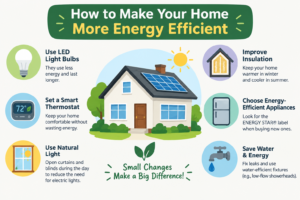
Energy efficiency improvements remain a significant and practically motivated part of the sustainable home direction. Insulation, efficient heating and cooling, LED lighting, and thoughtful window management all reduce the ongoing cost of running a home while also reducing its environmental impact. These improvements are worth considering on their practical merits regardless of environmental motivation.
15. Better Use of Outdoor Spaces
The period of extended time spent at home in recent years significantly raised the value that homeowners placed on usable outdoor space, and that revaluation has not reversed. In 2026, investment in patios, balconies, porches, and garden areas continues to reflect the understanding that well-used outdoor space meaningfully extends the functional area of a home.
The direction in outdoor living improvements is toward spaces that feel like genuine extensions of the interior rather than separate utilitarian areas. Comfortable, weather-appropriate seating that is actually used regularly. Outdoor lighting that extends usability into the evening. Shade structures, pergolas, awnings, or well-placed planting, that make outdoor spaces usable during more of the day in warm climates.
Planting in outdoor spaces contributes to both the biophilic quality of the home and the practical usability of the garden or patio. A garden with some structure and greenery feels more comfortable to sit in than a purely paved or concrete area.
The climate and available space of a specific home significantly affect which outdoor improvements are worth making. A well-designed balcony with appropriate furniture and planting can provide meaningful outdoor living space in an apartment. A large suburban garden has different options and priorities. Climate appropriateness, choosing materials and planting that suit the local weather conditions, is a practical necessity for outdoor improvements to perform well over time.
16. Technology That Blends Into the Home
Home technology in 2026 is increasingly characterized by integration and discretion rather than visibility and novelty. The direction is toward technology that improves daily convenience, energy management, and comfort without dominating the appearance of the rooms it operates in.
Smart lighting systems that allow whole-home control from a single point, can be programmed around daily routines, and adjust color temperature throughout the day are a practical and accessible example. They can genuinely improve both the quality of light in a home and its energy efficiency without any visible change to the room’s appearance beyond the fitting selected.
Home energy management, monitoring and controlling heating, cooling, and appliance use to reduce waste and manage costs, has become more accessible and more practically useful as both the systems and user interfaces have improved. These are not primarily aesthetic improvements but practical ones that affect the daily cost and comfort of running a home.
Automated window shading, which can adjust based on time of day, sunlight intensity, or user programming, improves both thermal comfort and light quality in a home while reducing energy use. Where windows are a significant factor in temperature management, this can be a meaningful practical improvement.
The consistent theme in technology that integrates well into residential design is that the technology serves the home and its occupants rather than demanding visible presence or frequent user intervention. When technology recedes into the background and simply makes things work better, it has genuinely earned its place.
17. Small Home Improvements Inspired by 2026 Trends
The most practically accessible aspect of any trend discussion is identifying what can be adopted without major renovation or significant expenditure. Most of the directions discussed in this article have entry points that are affordable and achievable over a weekend.
Changing the lighting in a living room or bedroom by adding a floor lamp, a table lamp, or a wall sconce alongside the existing ceiling fixture immediately moves toward the layered lighting direction with minimal cost. Swapping bulbs to a warmer color temperature takes minutes and costs very little.
Introducing warmer colors through a single can of paint on an accent wall, or through new cushions and throws in deeper, earthier tones, requires minimal investment. Adding a large plant in a well-chosen ceramic pot brings the biophilic direction into any room immediately.
Adding one or two pieces with texture, a woven basket, a linen cushion cover, a ceramic lamp, introduces the tactile material direction without requiring any structural change. Reviewing what personal and meaningful objects are already in the home and displaying them more intentionally costs nothing.
Improving storage in a single area, the entryway, the bedroom wardrobe, the kitchen pantry, addresses the functional storage trend practically and improves daily life immediately.
Our guide on how to make a small home feel more spacious covers many of the practical techniques that also align with 2026 design directions, including lighting, storage, natural materials, and furniture scale.
18. Which 2026 Trends Are Worth Following?
The most useful filter for any trend is whether it genuinely improves comfort, functionality, durability, energy efficiency, personal enjoyment, or long-term usability. Trends that pass this test tend to produce improvements that the homeowner continues to value long after the trend itself has moved on. Trends that fail the test tend to produce changes that feel dated relatively quickly and may need to be undone at additional cost.
Warmer interiors, better lighting, natural materials, improved storage, wellness-supporting spaces, and long-term functional design all clearly pass this test. They improve daily life in ways that do not depend on whether the trend continues to appear in design media.
More aesthetic and surface-level trends, specific colors that have been named by paint brands, particular furniture shapes, or specific material combinations, are more genuinely trend-dependent. Some will develop into longer-term directions. Others will peak and recede within a year or two. The homeowner making large, fixed investments based on aesthetic trends takes more risk than the one making functional improvements with aesthetic benefits.
The practical approach is to prioritize functional improvement with aesthetic alignment rather than purely aesthetic change. A new kitchen that functions significantly better than the old one while also incorporating some of the warmer, more characterful direction of 2026 design is a sounder investment than a new kitchen that is primarily a trend statement.
19. Trends to Approach Carefully
Some trends are worth approaching with caution, not because they are inherently wrong but because they carry specific risks that homeowners should understand before committing.
Highly personalized renovations can be valuable when they genuinely improve daily life for the current household. They become problematic when they make the home difficult for future buyers to appreciate. A very specific color choice applied throughout the home, a highly unusual layout modification, or a room conversion that removes a function most buyers expect, all require careful consideration of whether the personalization serves the homeowner’s long-term interests.
Expensive application of a trend material throughout a home, floor-to-ceiling textured plaster, elaborate handmade tile across multiple rooms, or costly natural stone in every bathroom, can feel dated when the trend recedes, particularly when the material was selected primarily for its trend relevance rather than for intrinsic qualities that will continue to appeal over time.
Impractical layout changes undertaken primarily for aesthetic reasons, removing walls that provided useful acoustic separation, eliminating storage space to create an open aesthetic, or choosing a flow that looks good but functions awkwardly for the way the household lives, regularly disappoint when the design novelty wears off and the practical inconvenience remains.
The common thread in trends worth approaching carefully is that the primary driver is appearance rather than genuine improvement. When the appearance trend passes, what remains is a home that has been modified at significant cost without a corresponding improvement in how it works or how comfortable it is.
Frequently Asked Questions
What are the biggest home improvement trends for 2026?
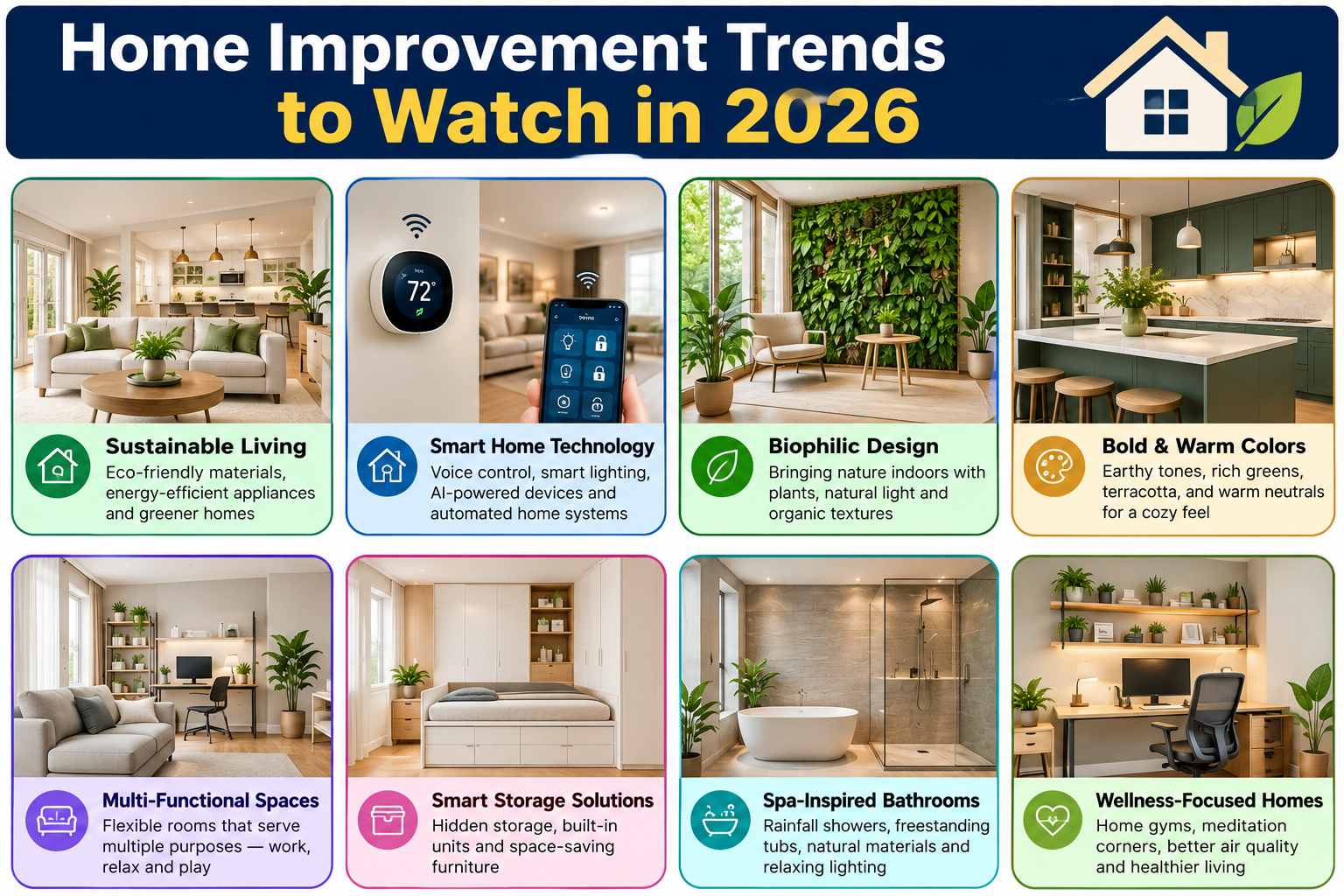
The most significant directions in 2026 are warmer, more personal interiors that have moved away from the cool minimalism of the previous decade. Natural materials including wood, stone, and woven textiles are prominent across most home types and styles. Layered, decorative lighting is replacing reliance on single ceiling fixtures. Wellness-focused spaces, from spa-inspired bathrooms to dedicated quiet areas, reflect a broader interest in homes that actively support well-being. Multi-functional rooms that serve more than one purpose reflect the practical realities of contemporary living. These directions share a common thread of prioritizing genuine comfort and functionality alongside appearance.
What colors are trending for homes in 2026?
Earthy, warm, and deeper tones are the dominant color direction in 2026. Warm terracotta, earthy ochre, forest and sage green, dusty rose, warm chocolate brown, and deep teal are all prominent in current residential design. These are colors with depth and warmth rather than brightness, sitting in the muted and sophisticated rather than the vivid end of the palette. Warmer neutral tones, creams, warm whites, and warm off-whites, are displacing the cooler grays and stark whites that dominated in previous years. The direction is toward color that creates genuine atmosphere rather than purely providing a neutral backdrop.
Are warm wood tones coming back in 2026?
Yes, and the shift is quite clear in current residential design. Walnut, darker oak, warm ash, and similar wood species are appearing in flooring, cabinetry, furniture, and paneling across a wide range of home styles. The very pale, cold, or heavily bleached wood finishes that were prominent in the peak of Nordic-influenced minimalism feel less current in 2026. Richer, warmer wood tones suit the broader palette shift toward warmer interiors and pair naturally with the earthy color direction that is gaining ground. Wood paneling, particularly on feature walls, is also enjoying a renewed presence in living rooms, studies, and bedrooms.
What interior design styles are popular in 2026?
Rather than one dominant style, 2026 residential design is characterized by a set of principles shared across different styles. Warmth, material richness, personal character, layered texture, and functional comfort are qualities that appear across contemporary, organic modern, updated traditional, and eclectic interiors alike. The move away from strict stylistic conformity toward more personally assembled, mixed, and genuinely inhabited aesthetics is perhaps the strongest overall direction. Homes that feel like they belong to specific people rather than like demonstration units from a furniture showroom are more consistent with 2026 residential design values than homes that adhere rigidly to a single named style.
Are curved furniture and architectural features still trending?
Yes. Rounded and curved forms in furniture, accessories, and architectural details remain a clear presence in 2026 residential design. Curved sofas, rounded armchairs, oval and round dining tables, arched doorway details, and scalloped tile edges all continue to appear frequently in new interior design work. The direction has sufficient depth and breadth at this point to have moved beyond a short-term trend into a more sustained preference for softer forms that suit the warmer, more comfortable interior aesthetic gaining ground more broadly. Homeowners can incorporate this direction without structural work by choosing rounded or oval furniture when replacing existing pieces.
How can I update my home for 2026 without renovating?
Several of the most significant 2026 design directions are accessible without any structural work. Changing the lighting by adding floor lamps, table lamps, or wall sconces alongside existing ceiling fixtures introduces the layered lighting trend immediately. Shifting to warmer color temperatures in all bulbs costs very little and changes the evening atmosphere of every room. Introducing warmer colors through paint on a single wall, or through new cushions, throws, and accessories, adopts the color direction accessibly. Adding one or two plants and some natural material accessories, a woven basket, a wooden tray, a ceramic lamp, introduces the biophilic and tactile material directions at minimal cost.
Which 2026 home trends are likely to last?
The trends most likely to have lasting relevance are those with practical foundations beyond aesthetics. Better layered lighting improves comfort and usability regardless of what trend succeeds it. Wellness-focused design addresses genuine human needs that do not go out of fashion. Homes designed for long-term living and flexibility address real demographic and lifestyle realities. Natural materials with genuine durability and timeless appeal age well regardless of trend cycles. Personalized interiors that reflect the specific people who live in them are inherently trend-resistant because they are not built from trend logic in the first place.
Should I follow home improvement trends when renovating?
Trends are most useful as a source of inspiration and a way of understanding what options are available rather than as a blueprint to follow. The improvements most worth making are those that genuinely improve comfort, function, durability, or enjoyment in the specific home for the specific household. When a trend aligns with those goals, following it produces genuinely good results. When a trend requires expensive changes that do not improve how the home works, or that reflect a very specific moment in design culture, approaching it more cautiously is wiser. The most enduring home improvements are those made with the specific home and household in mind rather than with trend conformity as the primary objective.
Final Thoughts
The home improvement trends to watch in 2026 tell a consistent story about what homeowners increasingly want from their living spaces. Comfort over performance. Warmth over clinical precision. Personal character over showroom uniformity. Functionality over temporary fashionability. Natural materials over manufactured surfaces. Homes designed to last and adapt rather than to be renovated again in five years.
None of these priorities are new. What is new is how clearly they are shaping residential design choices across different property types, price points, and lifestyles simultaneously. The period of all-white, all-gray, social-media-optimized interiors has given way to something more varied, more genuinely inhabited, and more honestly focused on how homes feel to live in every day.
The most useful approach to any trend is to assess whether it makes your specific home more comfortable, more functional, more durable, and more genuinely enjoyable for the people who live in it. When the answer is yes, the trend is worth considering. When it requires expensive changes that serve appearance more than experience, the case for following it is significantly weaker.
Use the directions described here as inspiration rather than instruction. The best home is the one that works well for the people who live in it, reflects who they are, and continues to do both as life changes. That description suits almost every home improvement worth making, in 2026 and well beyond it.