The meter keeps spinning with every tap closed, the bill jumped, and nothing inside the house is wet. That usually means the leak is in the yard. This guide shows you how to find a water leak underground on your side of the meter. You’ll use a shutoff test, the pipe’s route and a screwdriver held to your ear.
First you’ll confirm the leak is outside and rule out sprinkler lines. Then you’ll trace the service pipe and read the clues on the surface. Most homeowners can narrow it down in one to three hours for almost nothing. Digging up and repairing the pipe is a different job, and we’ll be honest about when to hand it off.
The angle most guides skip is ownership. Before you dig, you need to know which part of the pipe is yours and which belongs to the water utility. That one call can save you a repair bill that was never yours to pay.
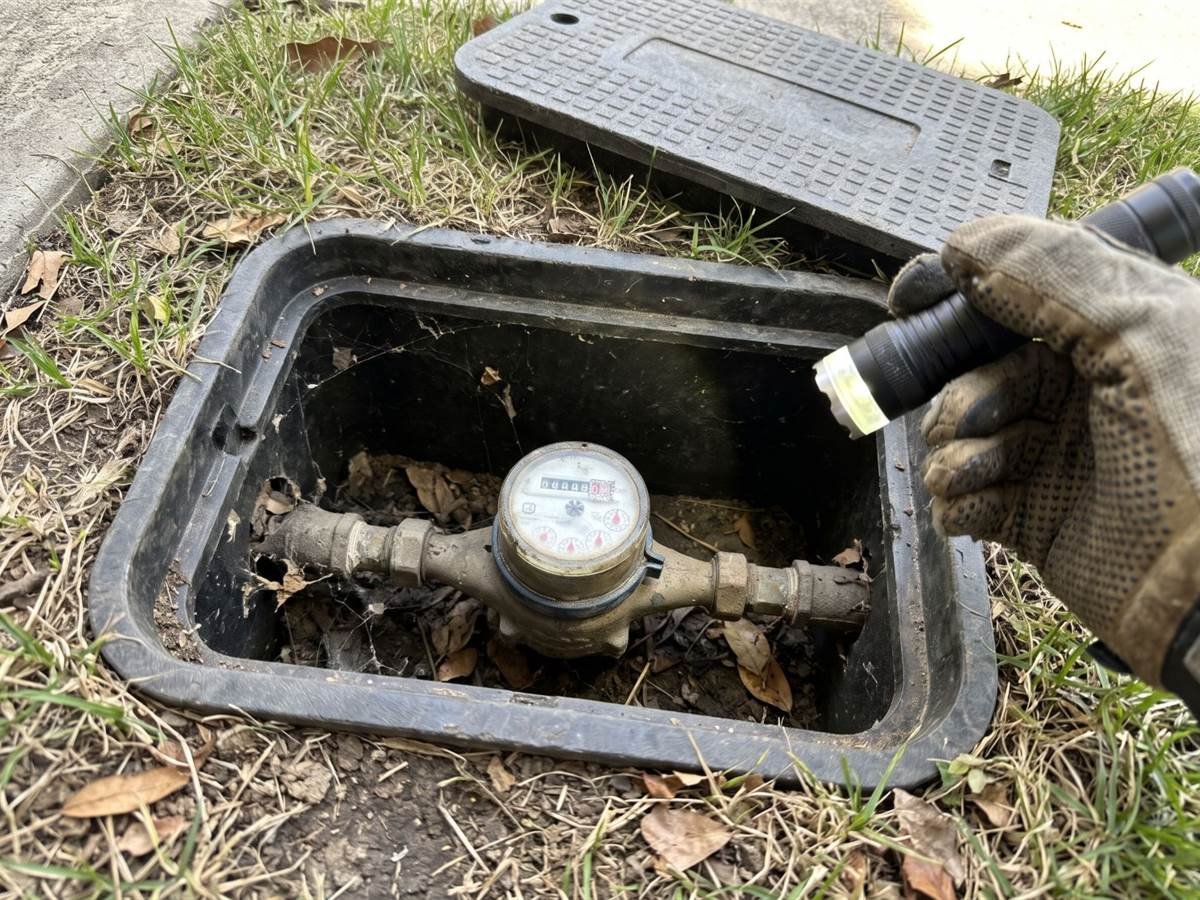
Is the Leak Really Underground?
Start by proving the water is leaving between the meter and the house. Our guide on how to detect a leak at the meter covers the full indoor test, so here’s the short version.
Shut off every faucet, appliance and the irrigation timer. Read the meter, close the main shutoff where the pipe enters your home, and wait 15 minutes. If the small triangle or star dial still turns, the leak is outside the house on the buried line.
Small leaks add up fast. The EPA WaterSense Fix a Leak Week page says the average household’s leaks can waste more than 9,300 gallons a year.
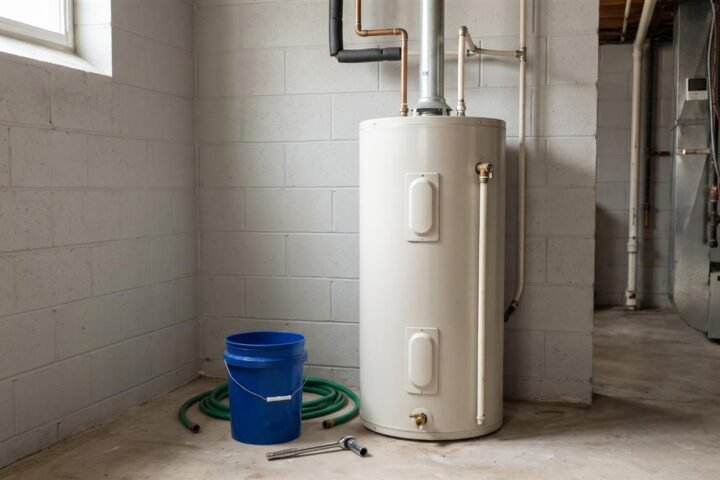
Where most people get this wrong is the meter location. In cold climates, many meters sit in the basement, after the pipe has already crossed the yard. A leak on that buried pipe never passes through the meter, so the meter test looks clean.
If your meter is indoors, look for other signs instead. Low pressure and a damp foundation wall near the pipe entry are common. So are a wet strip of lawn and a letter from the utility about water at the curb.
Who Owns the Pipe You’re About to Dig Up?
In most towns, the buried pipe has two owners. The utility owns the water main in the street and usually the stretch up to a valve called the curb stop. You usually own everything from that valve to the house.
| Section of pipe | Who usually owns it | What to do if it leaks |
|---|---|---|
| Main in the street to the curb stop | Water utility | Call the utility; they fix it |
| Curb stop and meter pit | Varies by town | Ask the utility first |
| Curb stop to the house | Homeowner | Hire a licensed plumber |
Rules differ more than people expect. Denver Water’s homeowner responsibility page puts the service line and the meter pit on the property owner. Some towns make you responsible all the way to the main. Call your water utility, say you suspect a service line leak, and ask where their side ends.
What You’ll Need to Find a Water Leak Underground
You don’t need special gear for the first round of checks. Gather these before you start:
- A flashlight and your phone (for meter photos and timestamps)
- A meter key or a large flathead screwdriver to lift the meter box lid
- A long flathead screwdriver, 12 inches or more, for listening
- Wire marking flags or a ball of string and two stakes
- A notepad for meter readings
- Work gloves and a round-point shovel (only after the 811 call)
How to Find a Water Leak Underground, Step by Step
Step 1: Shut Off the Irrigation and Retest
Sprinkler pipes are buried too, and they leak far more often than the main service line. Find the irrigation shutoff, usually a valve near the backflow device or in the basement where the sprinkler pipe branches off. Close it and run the meter test again.
If the meter stops, your leak is in the sprinkler system, not the service line. That’s cheaper news. Look for a stuck zone valve or a broken head, which often leaves a wet patch.
Do the same for any other branch line: a pool fill, a yard hydrant, or a pipe to a detached garage. Close each one and retest so you know which pipe you’re chasing.
Step 2: Map the Route From Meter to House
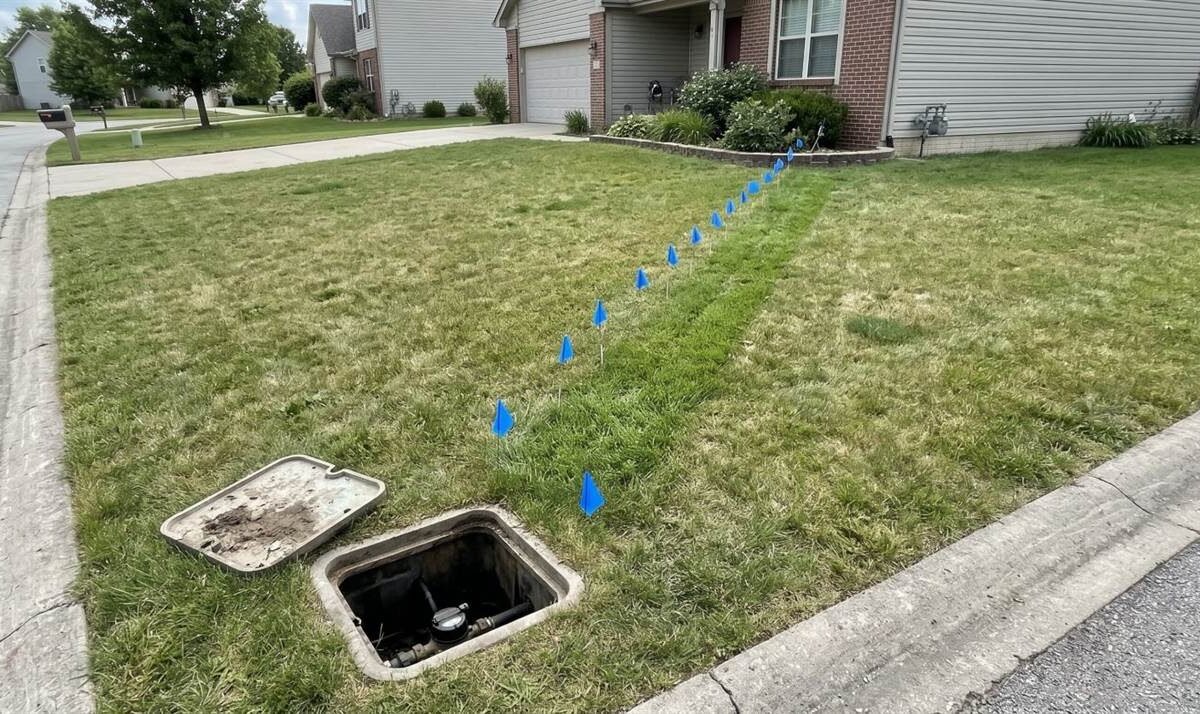
Service lines usually run in a fairly straight line from the meter box to where the pipe enters the foundation. Find the entry point inside, usually right below the main shutoff valve. Then stand outside at that spot and look back at the meter box.
Push a marking flag in every few feet along that line, or run a string between two stakes. Check old survey plans or closing documents too, since some show the service line. If the house had additions, the pipe may bend around them.
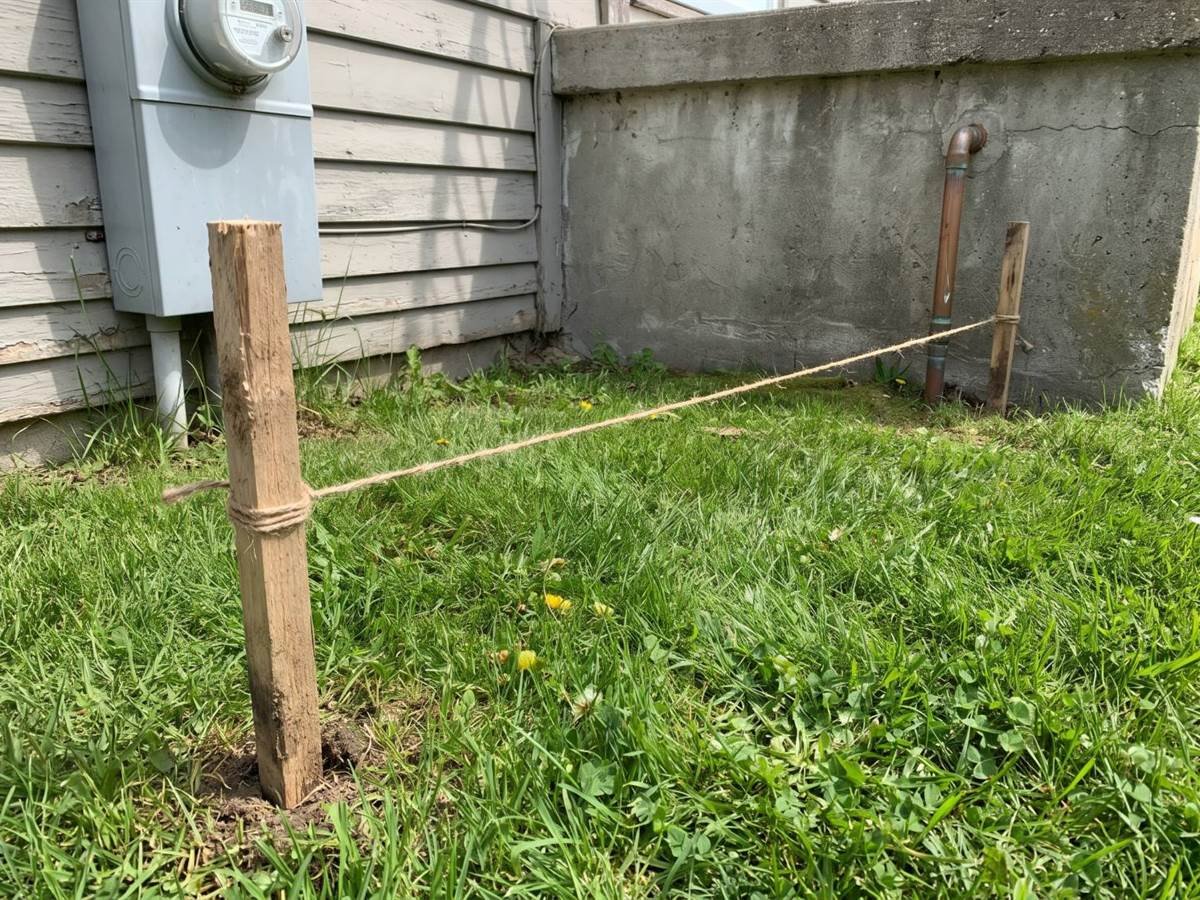
Step 3: Walk the Line for Surface Clues
Go slowly along the flagged route, ideally after two or three dry days. It’s the simplest way to find a water leak underground. Water from a buried leak has to go somewhere, and it usually shows up near the surface.
- A strip of grass greener or faster-growing than the lawn around it
- Soft, spongy or muddy ground when the rest of the yard is dry
- A small sinkhole or a sunken patch over the pipe
- Standing water inside the meter box
- Cracks or lifting in a driveway or walkway that crosses the line
Water follows the pipe trench, because the backfill is looser than the soil around it. So the wet spot can sit a few feet downhill from the actual leak. Treat it as a starting point, not the answer.
Step 4: Listen With a Screwdriver
Turn every fixture off again so the only water moving is the leak. Press the tip of a long screwdriver firmly on the curb stop, the meter, or an outdoor spigot. Put your ear to the end of the handle.
A steady hiss or rushing sound means water is escaping under pressure. Compare the sound at each point you can reach. It’s usually loudest at the access point closest to the leak.
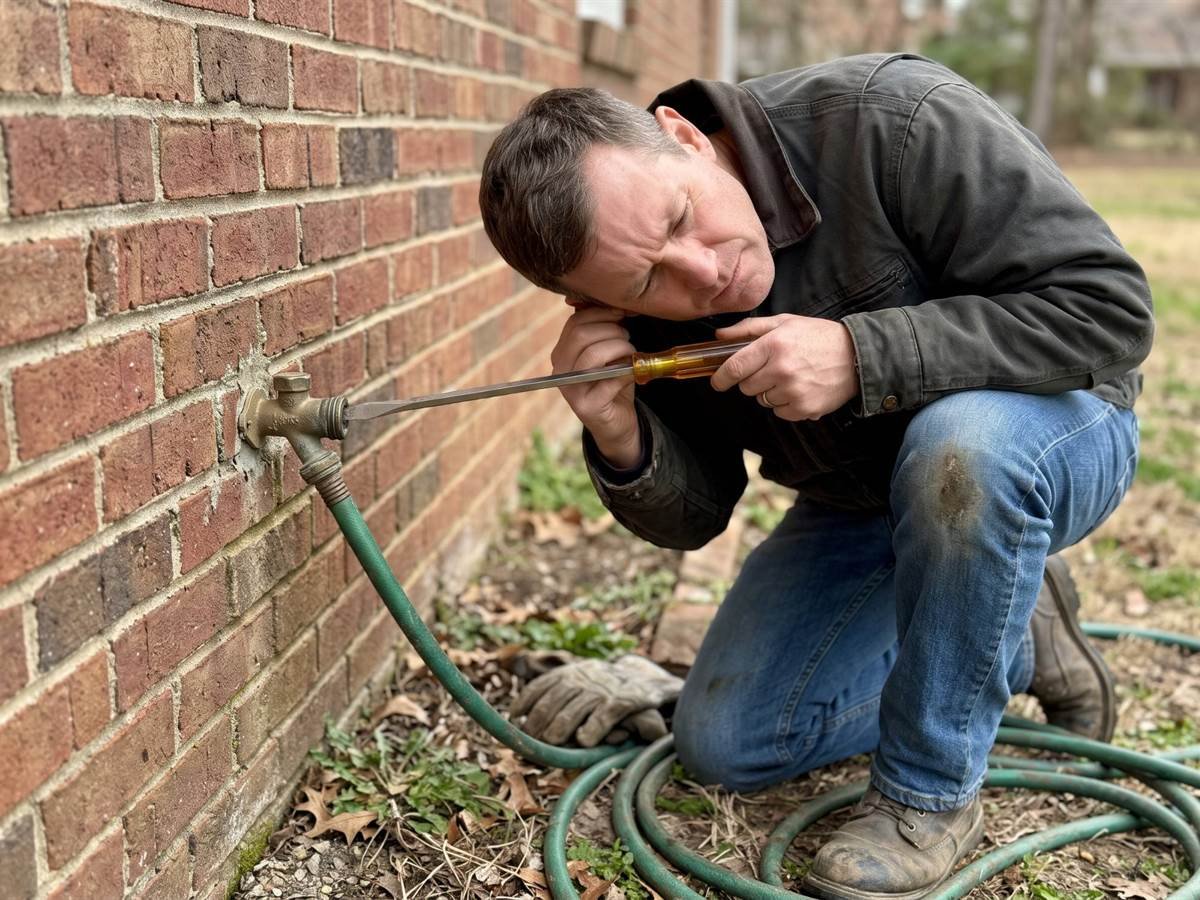
This works best on metal pipe, which carries sound well. Plastic pipe such as PVC or polyethylene muffles the noise, so a quiet result doesn’t prove the line is sound. A mechanic’s stethoscope is easier on the ear and costs very little at an auto parts store.
Step 5: Check the Pressure
If you have an outdoor spigot, a pressure gauge that threads onto it gives you another clue. Take a reading when nothing is running and compare it with a reading from a neighbor or a past check. A big leak on the service line can drop the pressure, especially when someone runs a shower.
Low pressure alone doesn’t prove an underground leak. A failing pressure regulator or a partly closed valve can cause the same thing. Use it alongside the meter test, not instead of it.
Step 6: Call 811 Before Any Digging
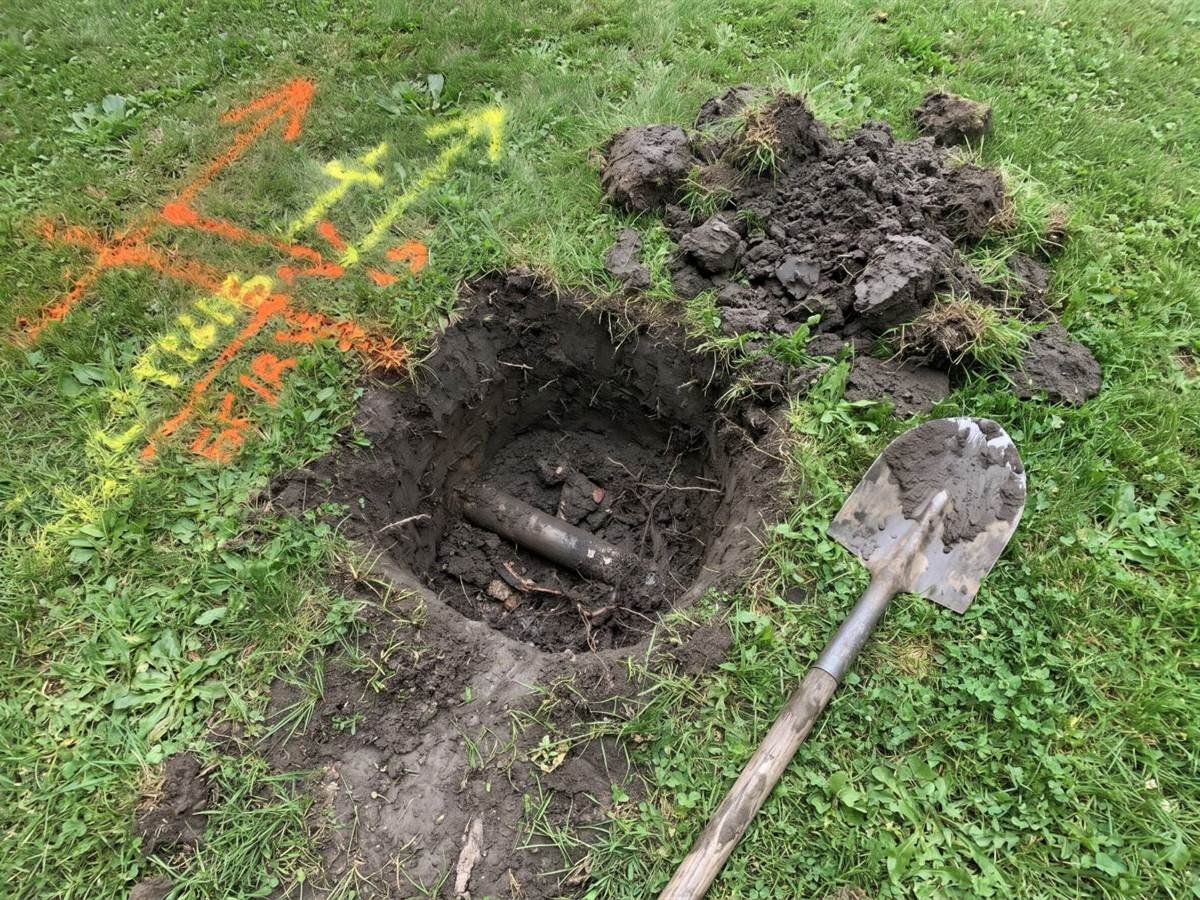
If you’ve found a likely spot, don’t grab the shovel yet. Gas, electric and cable lines are often buried near the water service. 811 is the free before-you-dig service, and you need to contact it a few business days before you start.
Call 811 or file online, then wait for the paint and flags to appear. Utility crews mark their own lines. Your private water service and sprinkler pipes may not be on their map, so ask when you call.
Step 7: Dig a Small Test Hole
Start with a hole about 18 inches across, right over the wettest spot or the loudest point you found. Dig slowly with a round-point shovel and lift the soil out rather than stabbing down. Service lines in mild climates can be shallow, while cold climates bury them deeper to stay below the frost line.
When you reach the pipe, look for water bubbling up or the soil getting wetter as you go. If the soil stays dry at the pipe, the leak is uphill along the trench. Fill the hole back in and move toward the meter or the house.
Water Dripping From a Pipe Outside the House
Sometimes the “underground leak” turns out to be a pipe you can see. Before you dig, check every pipe that pokes out of the house wall.
- Air conditioner condensate line: a small PVC pipe near the outdoor unit that drips in summer. This is normal.
- Hose spigot: drips from the spout mean a worn washer; drips behind the handle mean worn packing.
- Water heater relief pipe: a pipe from the tank’s relief valve running outside. Steady dripping here is a warning sign; call a plumber.
- Furnace or high-efficiency boiler drain: often a small plastic pipe that drips while the system runs.
- Irrigation backflow device: a spray or drip from the relief port usually means a worn internal part.
A spigot that leaks inside the wall can also soak the ground under it. If you see a wet patch right below an outdoor faucet, check that before you suspect the main line.
What It Costs to Have a Pro Find an Underground Water Leak
Professional leak detectors use ground microphones, line tracers and sometimes tracer gas to find the leak within a few feet. That saves you from digging a trench the length of the yard. Prices vary a lot by region and by how deep the line runs.
This Old House puts professional leak detection at about $150 to $600 (2025). The price depends on how hard the leak is to find. HomeAdvisor’s 2025 data shows main water line leak repairs averaging about $1,025, with most jobs between $354 and $1,696. Replacing long runs of pipe costs more, and HomeAdvisor puts repairing broken underground pipe at $100 to $200 per linear foot.
Get a written quote that separates detection, digging, repair and restoring the lawn or concrete. Ask if the detection fee is credited when the same company does the repair.
Mistakes That Make an Underground Water Leak Hard to Find
- Skipping the irrigation check. People dig up the service line when the leak was a sprinkler zone all along.
- Trusting an indoor meter. If the meter is in the basement, it can’t see a leak in the yard.
- Digging at the wet spot. Water travels along the trench, so the leak may be several feet uphill.
- Digging before 811 marks the yard. A cut gas or power line turns a plumbing problem into an emergency.
- Paying for the utility’s leak. If it’s on their side of the curb stop, it’s their repair.
When to Call a Pro to Find an Underground Water Leak
Call a licensed plumber or a leak detection company if the meter shows a leak but the yard shows no clue. Do the same if the line runs under a driveway, a slab or a patio. Stop, too, if the leak softens the ground or washes out soil near a walkway or foundation.
Many towns require a permit and a licensed plumber for repairs on the water service line. Your utility can tell you the local rule. Keep the main shutoff closed between uses while you wait, so the leak can’t keep washing out soil. For other checks that catch problems early, our home plumbing maintenance guide has a full list.
FAQ
How do I know if my water line is leaking underground?
Close the main shutoff inside the house and watch the water meter. If the leak indicator keeps turning with the main closed, the leak is on the buried line outside. Green or soggy strips of lawn, low pressure and a rising bill back that up.
Who is responsible for a water leak underground on my property?
In most towns, the utility owns the pipe to the curb stop and you own the rest. Some utilities put more of the line on the owner. Call your water utility and ask where their side ends.
Can a plumber find an underground water leak without digging?
Yes, in most cases. Leak detection specialists use ground microphones and line locators to pinpoint the leak from the surface. They then dig one small hole at that spot instead of trenching the whole line.
Does homeowners insurance cover an underground water line leak?
Often it doesn’t cover the pipe repair itself, since wear on a buried line is usually treated as maintenance. Some insurers and utilities sell separate service line coverage. Read your policy or call your agent before you hire anyone.
Find the Water Leak Underground First, Then Dig Once
The cheapest way to find a water leak underground is to get it right on the first hole. Prove it’s outside with the meter, rule out the sprinklers, map the line, then listen and look before you dig. Call your utility early, because the leak may be theirs to fix.
Dial 811 every time you dig, even for a small test hole. Before you book a plumber, add our DIY home inspection checklist to your list so the next leak gets caught early.