The water bill jumped and nobody’s been taking longer showers. Maybe you hear a faint hiss at night, or there’s a soft spot on the floor. The fastest way to detect a leak in your home starts at the water meter. Then you shut off parts of the house until it stops.
That order matters. Most people start by crawling under sinks with a flashlight. That finds the obvious drips and misses the ones that cost real money.
The meter method takes two to three hours, mostly waiting. It costs nothing beyond a few drops of food coloring. By the end you’ll know if you have a leak, roughly where it is, and when the job needs a plumber.
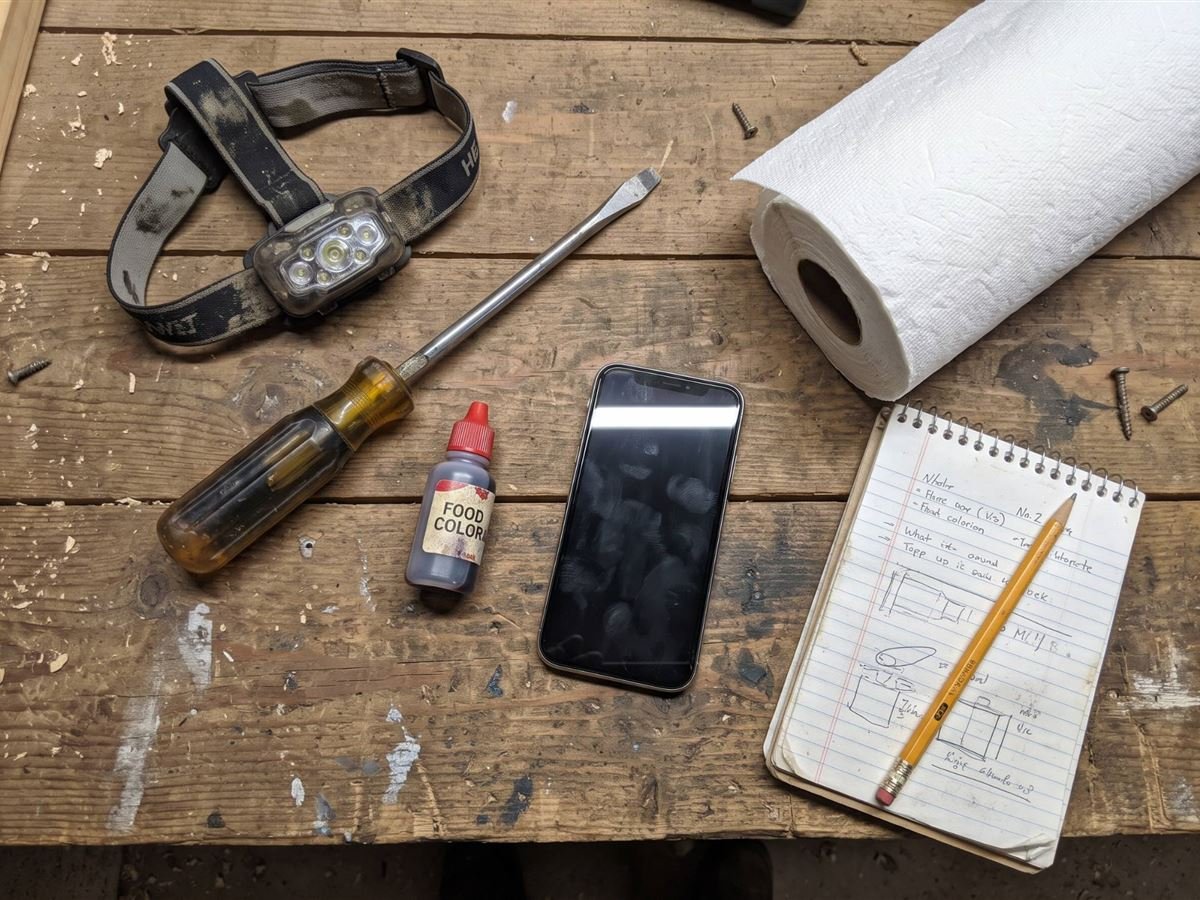
What You’ll Need to Detect a Leak
You don’t need special equipment for this. Leak detection companies use acoustic and thermal gear, but your meter does the first pass for free.
- A flashlight, or a headlamp so both hands stay free
- A large flathead screwdriver or a meter key to lift the meter box lid
- Food coloring or toilet dye tablets (one small bottle covers every toilet)
- Your phone, to photograph the meter dials with a timestamp
- Dry paper towels, for wiping pipe joints and spotting fresh moisture
- A notepad, to log each reading and which valves were closed
How to Detect a Leak, Step by Step
Step 1: Turn Off Everything That Uses Water
You can only detect a leak with the meter if nothing in the house should be using water. Close every faucet. Check that the dishwasher, washing machine and showers are off.
Then hunt down the sneaky ones. Ice makers, water softeners, whole-house humidifiers, evaporative coolers and pool fillers all draw water on their own schedule. Switch irrigation controllers to off, not just “rain delay.”
Where most people get this wrong: a softener regenerating or an ice maker refilling makes the meter move. That looks exactly like a leak. If you can’t stop a device, unplug it for the test.
Step 2: Find and Read Your Water Meter
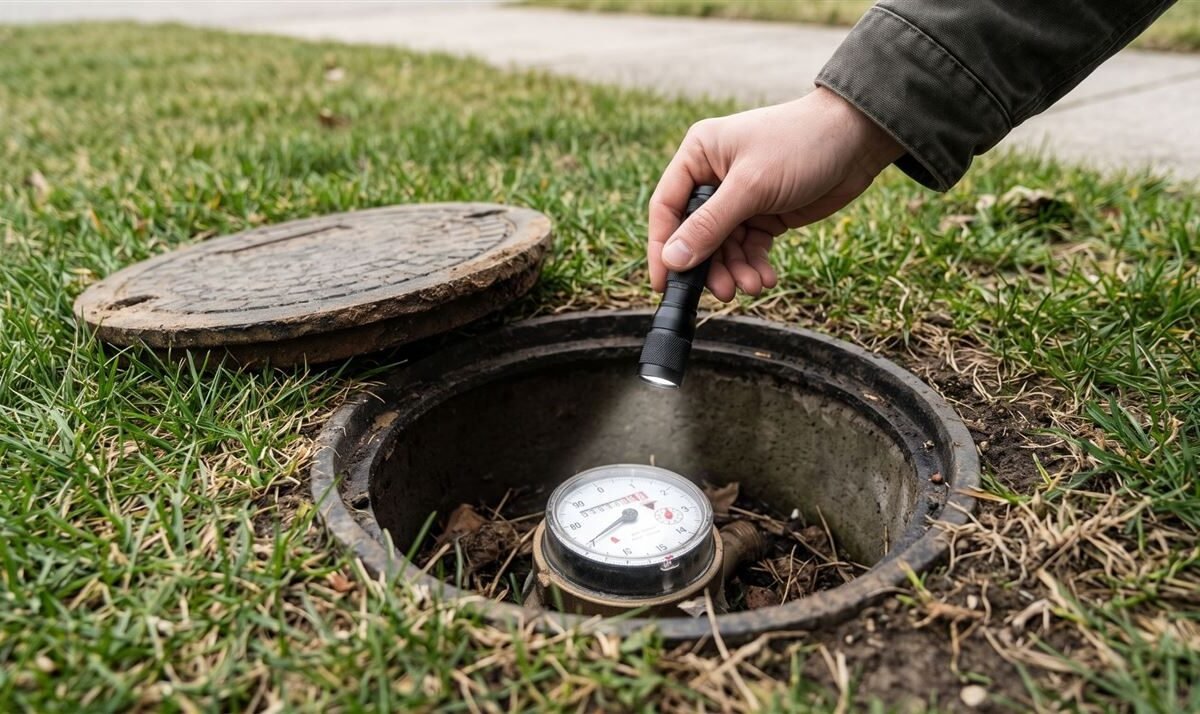
In warm climates the meter usually sits in a concrete or plastic box near the street. In colder regions it’s often in the basement, where the main line comes through the wall.
Lift the lid with the screwdriver and stand back for a second. The City of Chandler, Arizona, notes that critters sometimes hide in meter boxes.
Look for one of these:
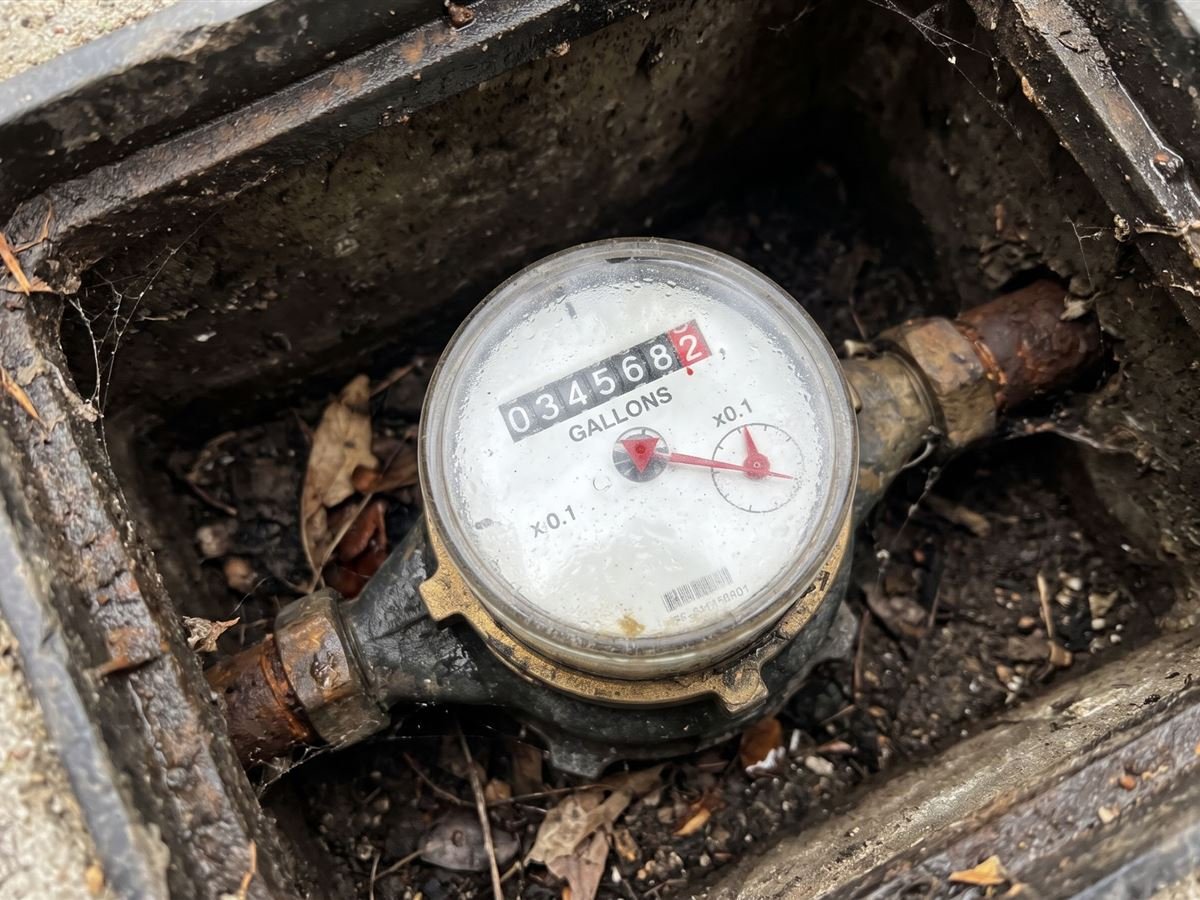
- A leak or flow indicator: a small red triangle, star or tiny wheel near the center of the dial. It spins whenever water flows, even a trickle.
- A sweep hand: the large needle that tracks gallons or cubic feet, like an odometer.
- A digital display: it alternates between the total reading and a flow rate. Some smart meters show a droplet icon after many hours of steady flow.
Is the indicator already turning with everything off? Then water is going somewhere, and you can skip ahead to Step 4.
Step 3: Run the Two-Hour Test to Detect a Leak
This test is how you detect a leak too slow to move the indicator. Photograph the meter so you have the exact reading and time.
Now wait. The EPA WaterSense leak guidance says to compare readings across two hours of no water use. If the number changes at all, you probably have a leak.
Many utilities use a shorter first check. Chandler’s step-by-step meter leak check says to watch a digital flow rate for 10 flashes. On a dial meter, it says to wait 10 minutes and look again.
Run the test early in the morning or while everyone’s out. One forgotten toilet flush ruins two hours of waiting.
Step 4: Close the Main Shutoff to Split the House in Two
This step saves you from tearing into the wrong wall. Close the main shutoff valve where the water line enters your house. Then check the meter again.
| What the meter does | What it means | Next move |
|---|---|---|
| Keeps moving | Leak in the buried line between meter and house | Walk the line, call a plumber |
| Stops | Leak is inside the house | Go to Step 5 |
| Never moved at all | No measurable leak right now | Recheck the bill next cycle |
A service-line leak often shows up outdoors as a strip of greener grass. You might also spot a soggy patch that never dries, or water pooling in the meter box. Who owns that pipe varies by utility, so call your water provider before you dig.
Step 5: Dye-Test Every Toilet
Toilets are a classic silent leak. A worn flapper lets water seep into the bowl with no visible drip. Reopen the main valve before you start.
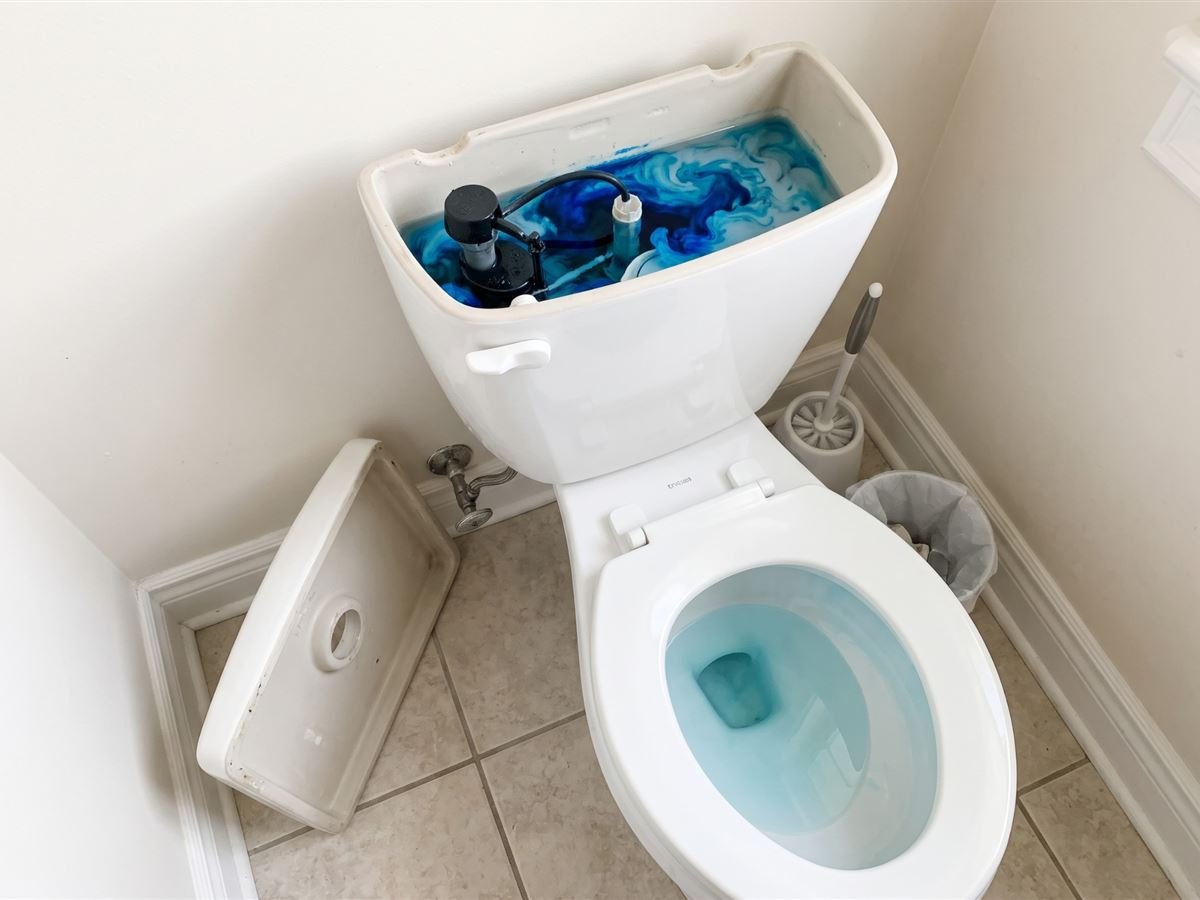
Take off the tank lid and add a few drops of food coloring to the tank water. EPA says to check the bowl after 10 minutes. Chandler suggests 15 to 30 minutes for slower seeps.
Color in the bowl means the flapper or fill valve is leaking. Flush right after the test so the dye doesn’t stain the tank. A new flapper takes about 10 minutes to fit.
Step 6: Close Fixture Valves One at a Time
If every toilet passes and the meter still creeps, start isolating. Close one valve, then watch the leak indicator for a few minutes.
- The small oval-handle supply valves under each toilet and sink
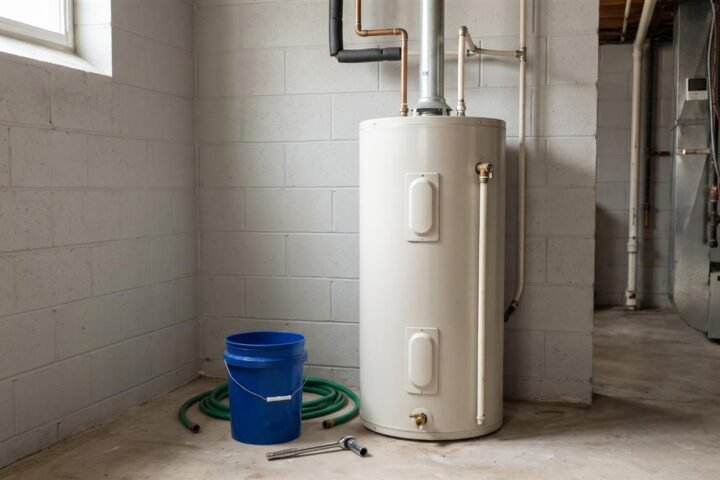
- The cold-water inlet valve on top of the water heater
- The washing machine hot and cold valves
- The refrigerator supply valve, behind the fridge or under the kitchen sink
- Any outdoor hose bib or irrigation valve with its own shutoff
When the indicator stops, the leak is on that fixture or its supply line. Log each result, because it’s easy to lose track by the fifth valve.
Water heaters can also leak from the relief valve or drain valve. Our guide on how to drain a water heater covers both.
Step 7: Look for Hidden Signs in the Zone You Found
Say the meter stops only when the main valve is closed, and no fixture valve stops it. Then the leak is in a pipe inside a wall, floor or slab. Now the flashlight search makes sense.
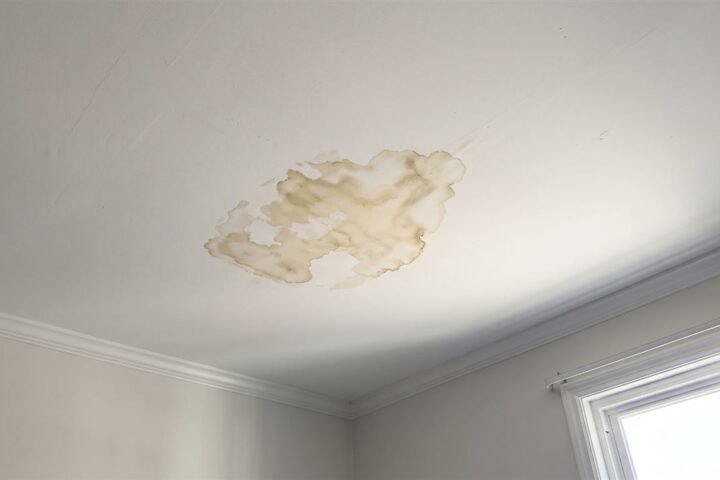
Check ceilings and walls below bathrooms and the kitchen for brown rings, bubbling paint or soft drywall. Sniff for a musty smell in closets and cabinets. Press on flooring near tubs and toilets for spongy or cupped boards.
On a concrete slab, walk barefoot and feel for a warm patch. A leaking hot-water line under the slab can heat the floor above it. At night, listen at walls near the plumbing for hissing or running water.
Common Mistakes When You Try to Detect a Leak
- Checking fixtures before the meter. You fix a dripping faucet and stop, while a bigger leak runs behind the wall.
- Leaving automatic devices on. Softeners, ice makers and pool fillers cause most false alarms.
- Skipping the photo. Memory isn’t precise enough to spot a change of a tenth of a gallon.
- Trusting one short test. A tiny leak may need the full two hours to register on an older dial.
- Ignoring small drips. EPA says a faucet dripping once per second can waste over 3,000 gallons a year.
Small leaks add up fast. EPA estimates the average household’s leaks waste more than 9,300 gallons a year. Fixing the easy ones can trim water bills by about 10 percent.
When to Call a Pro
Your meter test tells you a leak exists and which zone it’s in. Pinpointing it inside a slab or wall takes tools most homeowners don’t own. Plumbers use acoustic listening gear, thermal cameras and line tracers.
Call a licensed plumber if:
- The meter keeps moving with the main shutoff closed
- The leak is inside a wall, ceiling or slab and no fixture valve stops it
- You see a sagging ceiling, water near outlets, or fast-spreading stains
- Your main shutoff valve is stuck, corroded or leaking itself
- You smell mold and can’t find the source
Ask the plumber about non-invasive leak location before anyone cuts drywall. Call your water utility too, since many offer a bill adjustment once a leak is repaired. For upkeep after the fix, see our home plumbing maintenance guide.
FAQ
How do I check my water meter for a leak?
Turn off every water-using fixture and appliance, then look at the meter’s leak indicator or digital flow rate. If it moves with nothing running, you have a leak. For slow leaks, record the reading and check again after two hours of no water use.
How long should I wait during a water meter leak test?
EPA recommends two hours with no water use. Some utilities use a 10-minute check as a first pass, which catches faster leaks. If the short check shows nothing but your bill is still high, run the full two hours.
How do you test a toilet for a leak with food coloring?
Add a few drops of food coloring to the tank, not the bowl, and don’t flush. If color appears in the bowl within 10 to 30 minutes, the flapper or fill valve is leaking. Flush afterward so the dye doesn’t stain the tank.
What does the triangle on my water meter mean?
The small red triangle, star or wheel is the low-flow or leak indicator. It turns whenever water passes through the meter, even a tiny amount. If it spins while everything in the house is off, water is escaping somewhere.
How do I know if the leak is in my house or the service line?
Close the main shutoff valve where water enters your house and watch the meter. If it keeps moving, the leak is in the buried line between the meter and the house. Once it stops, the leak is inside the house.
Detect a Leak at the Meter, Then Narrow It Down
The meter can’t name the leaking pipe. It does tell you a leak exists, and it tells you when you’ve found it. So the order is simple: confirm, split the house, test the toilets, then close valves.
Use this routine to detect a leak any time your bill jumps for no reason. Run it once a year even if it doesn’t. If water reaches wiring or a ceiling sags, shut off water and power and call a pro.
Bookmark this page for the next surprise water bill. Working through the basement next? Our sump pump maintenance checklist is a good place to start.