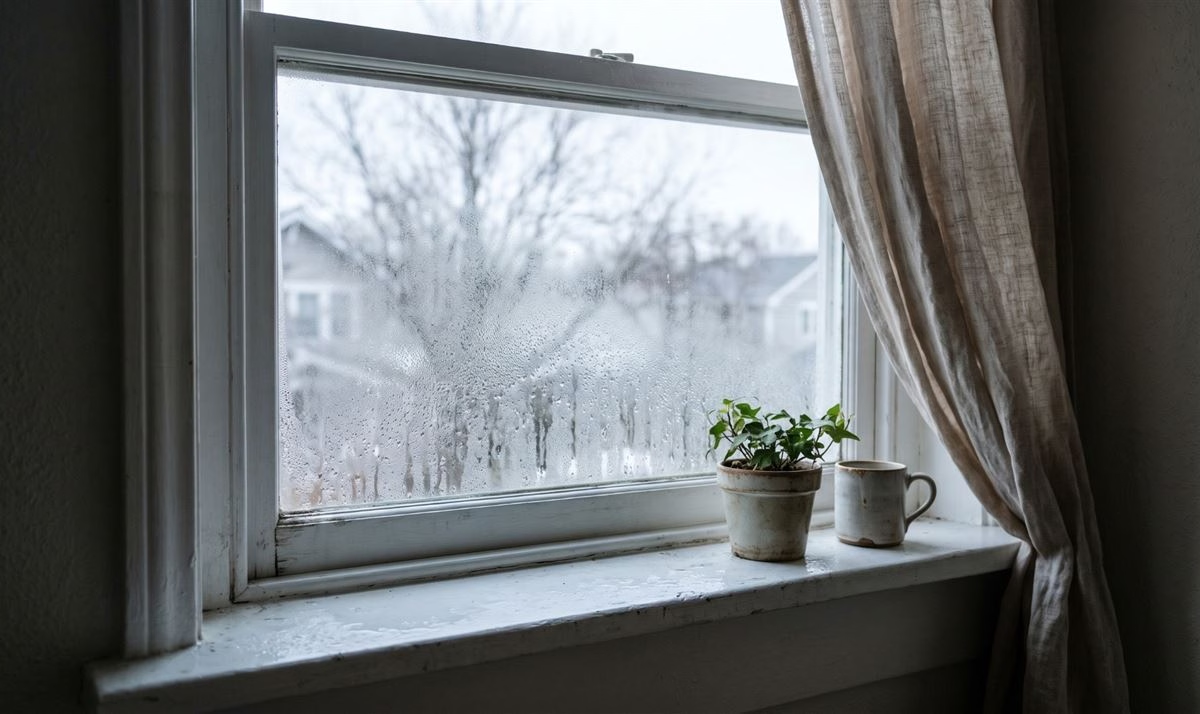
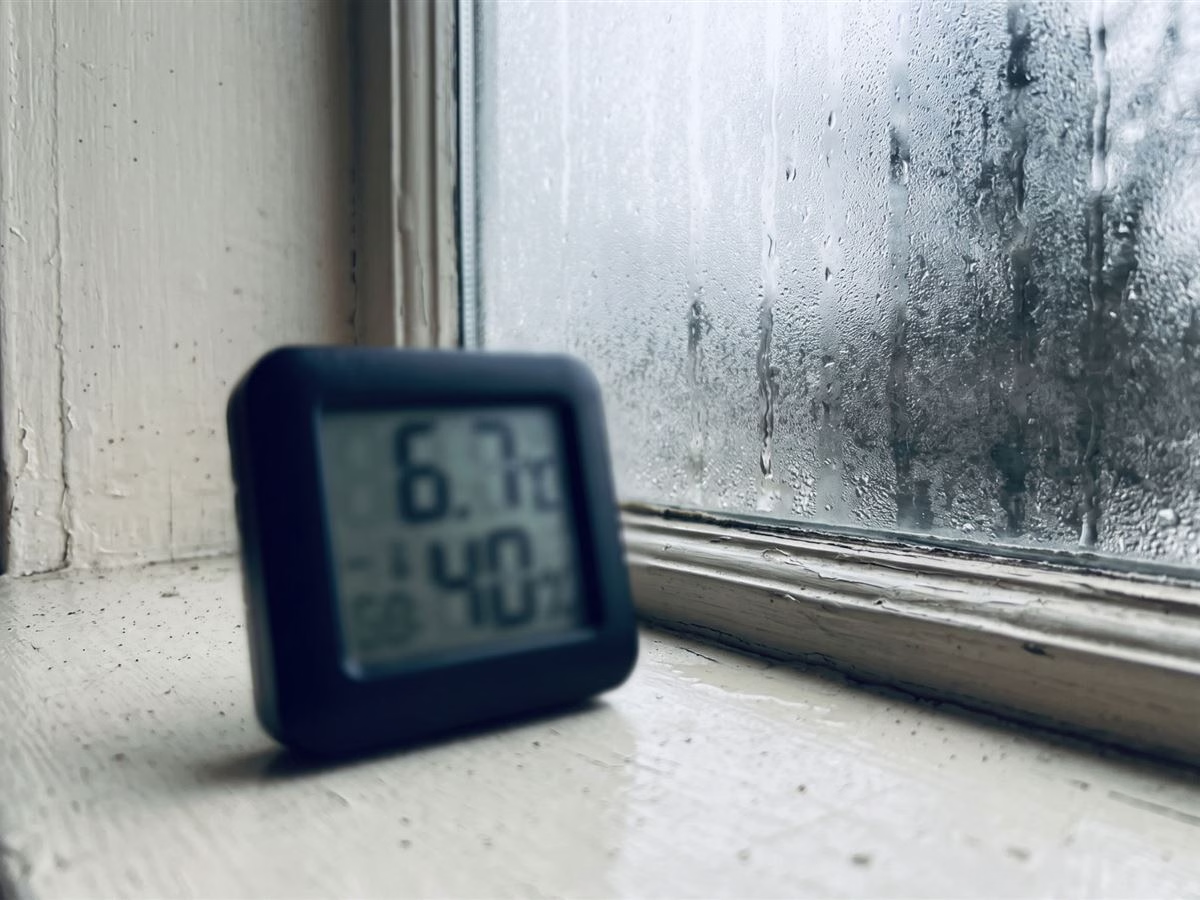
You wake up, open the curtains and the glass is streaming. The sill is damp, the frame is spotted, and you are wondering if the window is broken. Most of the time it isn’t. Learning how to stop condensation on windows comes down to one idea: warm, wet indoor air is hitting cold glass, so you either dry the air, warm the glass, or both.
This guide shows you how to work out which kind of condensation you have, check your humidity with a cheap gauge, and fix the cause in about an hour of setup. Expect results within a few days, not a few minutes. The cost is low, and the only tools you need are a hygrometer, a caulk gun and a hair dryer.
What You’ll Need to Stop Condensation on Windows
Everything here is cheap, and you may own most of it already.
- A digital hygrometer (a small humidity gauge, usually sold with a thermometer)
- A microfiber cloth or squeegee for the glass
- Paintable or silicone caulk and a caulk gun (match it to the frame material)
- Window insulation film kit with double-sided tape (optional, for single-pane or leaky windows)
- A hair dryer, to shrink the film
- A small box fan or your ceiling fan
Renoverra tool
Seasonal Home Maintenance Tracker
Tick off this season's jobs. Your progress stays saved in this browser, and you can print what's left.
How this is calculated
- Tasks follow common manufacturer and insurer guidance for a typical detached house in a four-season climate.
- The current season is picked from today's date (northern hemisphere). Switch tabs to plan ahead.
- Progress is stored only in your browser (localStorage). Nothing is sent to us.
Step 1: Work Out Which Kind of Condensation You Have
Condensation shows up in three places, and each one has a different fix. Spend two minutes on this before you buy anything.
| Where the fog is | What it means | Fix |
|---|---|---|
| Inside surface of the glass | Indoor air is too humid for the cold glass | Lower humidity, warm the glass |
| Outside surface of the glass | Glass is colder than the outdoor air, often on clear, still nights | Usually nothing. It clears by itself |
| Between the panes | The seal in the double-pane unit has failed | Replace the glass unit or the window |
Wipe the fogged area with your finger. If the water comes off on your hand from the room side, it’s inside condensation. If you need to go outside to wipe it, it’s outside condensation. If neither side wipes clear, it’s between the panes.
Between-pane fog is where most people get this wrong. They run a dehumidifier for weeks and nothing changes, because household humidity doesn’t cause it. Window maker Pella says the cause is a failed seal between the panes, and that it tends to show up on older units. You can read their explanation in Pella’s guide to foggy windows.
Step 2: How to Stop Condensation on Windows: Measure First
A guess won’t do here. A hygrometer costs little and tells you if the air or the window is the problem. Put it in the room with the worst fogging, away from the kitchen and bathroom doors, and leave it for a day.
The right number depends on how cold it is outside. The EPA’s moisture guidance gives a table of recommended maximum indoor humidity at each outdoor temperature:
| Outdoor temperature | Indoor humidity (max) |
|---|---|
| 20°F | 35% |
| 10°F | 30% |
| 0°F | 25% |
| -10°F | 20% |
| -20°F | 15% |
Those figures come from the EPA’s guide to controlling moisture at home. They are lower than most people expect. A reading of 45% feels comfortable on a mild day but is too high when it’s 10°F outside.
On a milder winter day, the EPA’s general advice is to keep humidity below 60%, but your windows will tell you the real limit. If the glass fogs at 40%, then 40% is too high for that window on that day. Drop the number until the fogging stops, then stay just under it.
Step 3: Cut the Moisture at the Source
Your house makes water all day. Cooking, showers, laundry, even breathing add up, and a tight, well-sealed house traps all of it. The quickest win is to stop adding more than you need to.
- Turn off the humidifier. The EPA says to switch off humidifiers if moisture shows up on windows. If you need one for health reasons, run it at a lower setting and watch the gauge.
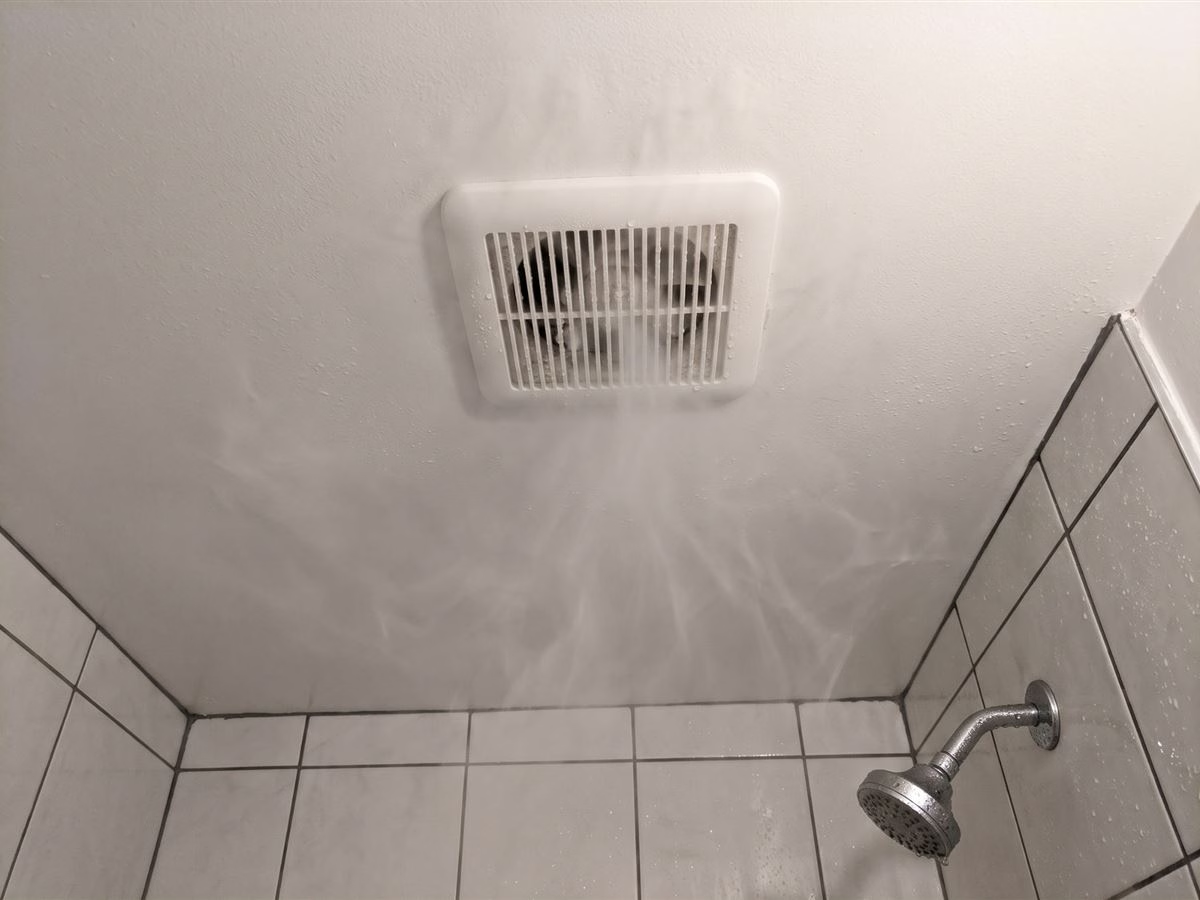
- Run the fans. Use the bathroom fan during showers and for a while afterward, and the kitchen hood while cooking. The EPA says exhaust fans should vent outside, not into the attic.
- Vent the dryer outdoors. A dryer venting into a garage or basement dumps a full load of water into the house.
- Don’t dry laundry on racks in a closed room. If you have to, crack a window in that room and close the door.
- Check for hidden sources. A damp basement or crawl space, or a leak you haven’t found, can push humidity up through the whole house. Our guide to detecting a leak starting at the meter covers the first checks.
Run the exhaust fan for about 20 minutes after a shower. That’s a rule of thumb, not a code figure, so adjust it until the mirror and window stop fogging.
Step 4: Move Air Across the Glass
Still air lets cold glass chill a layer of damp air against it, and that layer is what turns to water. Moving the air breaks that up.
Open your blinds and curtains during the day, especially in bedrooms. Heavy drapes that hang to the sill trap a pocket of cold, damp air against the window. Raise them, or tie them back, so room air reaches the glass.
Aim a ceiling fan on low at the wall, or set a small fan on the floor pointing at the window for an hour in the morning. Check that heating vents and baseboard heaters under the window aren’t blocked by furniture.
Then ventilate on purpose. Open a window a little for about 10 minutes, once or twice a day, while the heating is on. It sounds wasteful, but dry outdoor winter air carries the moisture out with it. A tight house may need a fan or a briefly opened window, as the EPA notes, because it has nowhere else to send the water.
Step 5: Warm the Glass to Stop Condensation on Windows
Condensation forms on the coldest surface in the room. If you can warm the glass even a few degrees, the same air stops dropping its water there.
- Seal the frames. Cold air leaking around the sash chills the glass and the frame from the edges. Run a thin bead of caulk along the gap between the trim and the wall, and replace worn weatherstripping. Our guide to sealing gaps around doors and windows walks through it.
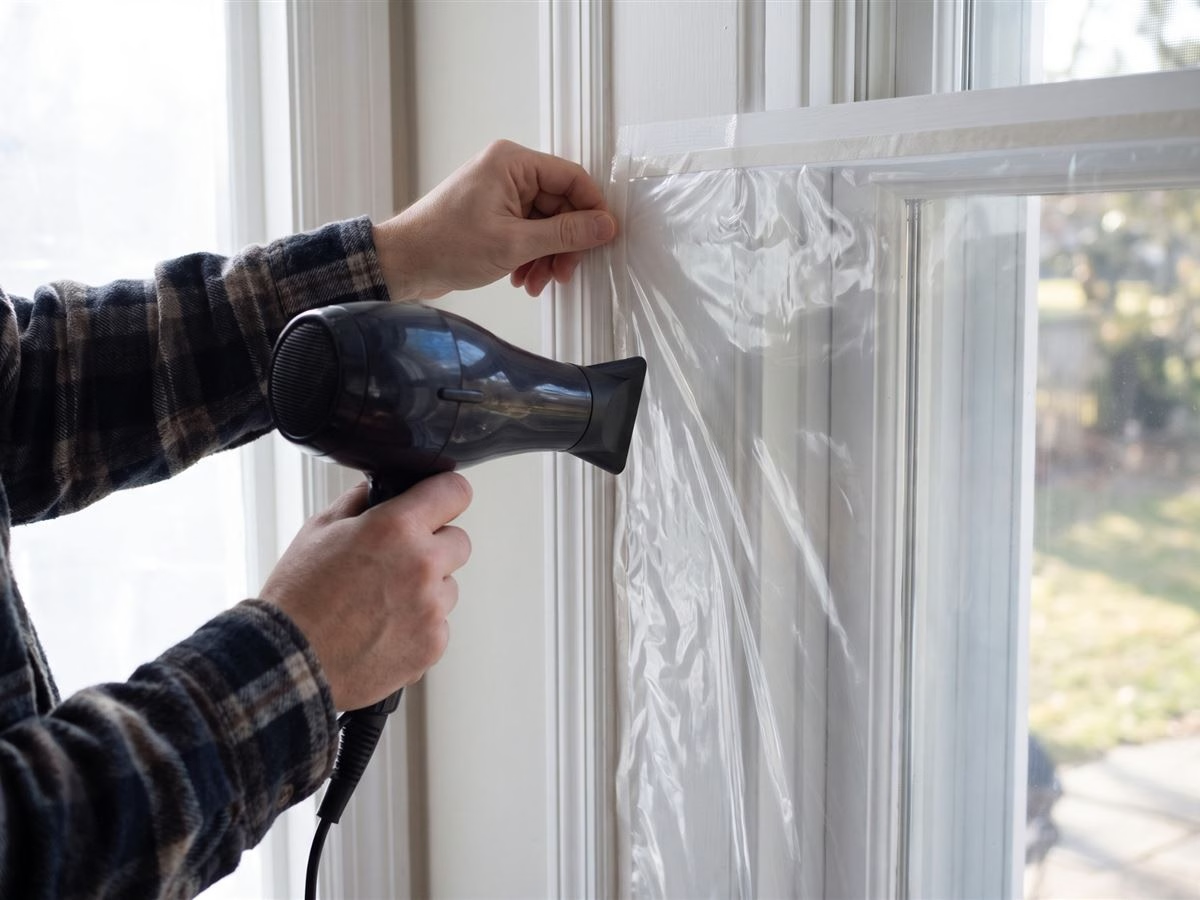
- Add an interior storm layer. The EPA notes that storm windows and caulking keep the interior glass warmer, and that an interior storm window works better than an exterior one. A shrink-film kit is the cheapest way to get one.
- Apply the film. Clean and dry the frame, press the double-sided tape around it, stick the film on, then run a hair dryer over it until the wrinkles disappear. Leave a little air gap, not film pressed against the glass.
Film costs little and comes off at the end of winter. It works best on single-pane and older windows. It won’t fix a failed seal between panes.
Step 6: Wipe It Dry and Check the Frames
Some condensation will still happen on the coldest mornings. That’s normal. What matters is that it doesn’t sit there.
Wipe the glass, sill and frame with a microfiber cloth or a squeegee. Water that soaks into bare wood or lifts paint turns into rot and mold over a season. If you see black spots or the sill feels soft, treat that as a separate repair and clean it before it spreads.
The EPA says to dry wet surfaces and fix the moisture source quickly. Check back after a week with your hygrometer. If the gauge is within the EPA range for your outdoor temperature and the glass is still fogging, the problem is the window, not the air.
Mistakes to Avoid When You Stop Condensation on Windows
- Running a dehumidifier all winter. In dry winter air, a dehumidifier may not do much, and it adds cost. Check the hygrometer first.
- Over-drying the house. Very dry air irritates skin and throats. Aim for just under the fogging point, not as low as possible.
- Wiping and walking away. Cleaning the glass without cutting moisture just resets the clock.
- Caulking over weep holes. Many window frames have small drain slots on the bottom. Keep them open.
- Blaming new windows. New windows reduce condensation on cold glass, but they can’t remove moisture your house is producing.
When to Call a Pro
Call a window company if the fog sits between the panes. The seal has failed, and the fix is a new glass unit or a new window. Check your warranty first. Pella says most of its product warranties cover glass for at least 20 years, and other makers have their own terms.
FAQ: Condensation on Windows
Is condensation on windows bad?
A little on very cold mornings is normal. Daily, heavy fogging that runs onto the sill is a sign that humidity is too high, and over time it can damage paint, wood and drywall and encourage mold.
What humidity should my house be in winter?
It depends on the outdoor temperature. The EPA’s table suggests about 35% at 20°F, 25% at 0°F and 15% at -20°F. In mild weather, under 60% is the general limit.
Why is there condensation on the outside of my windows?
Outside condensation happens when the glass is colder than the outdoor air, often on clear, calm nights. It’s usually harmless and clears as the sun comes up.
Does a dehumidifier stop window condensation?
It can help in damp houses, but it often does little in cold, dry winter air. Measure first. Ventilation, fans and turning off the humidifier usually make a bigger difference.
Can I fix condensation between the panes myself?
Not reliably. The seal has failed, so the insulating space can’t be resealed at home. Replace the glass unit or window, or ask a glazing company about a defogging service.
Keep the Glass Clear All Winter
Start with the gauge. Once you know your humidity, cut the moisture, move the air and warm the glass, in that order. Do those three things and most windows stop fogging within a week.
Add this to your seasonal routine, and check the hygrometer whenever a cold snap hits. For the rest of the cold-weather list, see our winter home maintenance checklist. Bookmark this page for the next cold snap.