You turn on the kitchen tap and get a trickle, or nothing at all. That usually means ice in the line, and knowing how to thaw frozen pipes quickly can save you a flooded cabinet. This guide shows the safe way. Find the frozen spot, warm it gently from the faucet side, and shut off the water if anything leaks.
Here is the part most guides skip. A frozen pipe may already be split, and you only find out as the ice melts. So you locate your main shutoff valve before you pick up the hair dryer. Expect an easy to intermediate job with tools you already own. The time varies with the length of the ice plug and how cold the space stays.
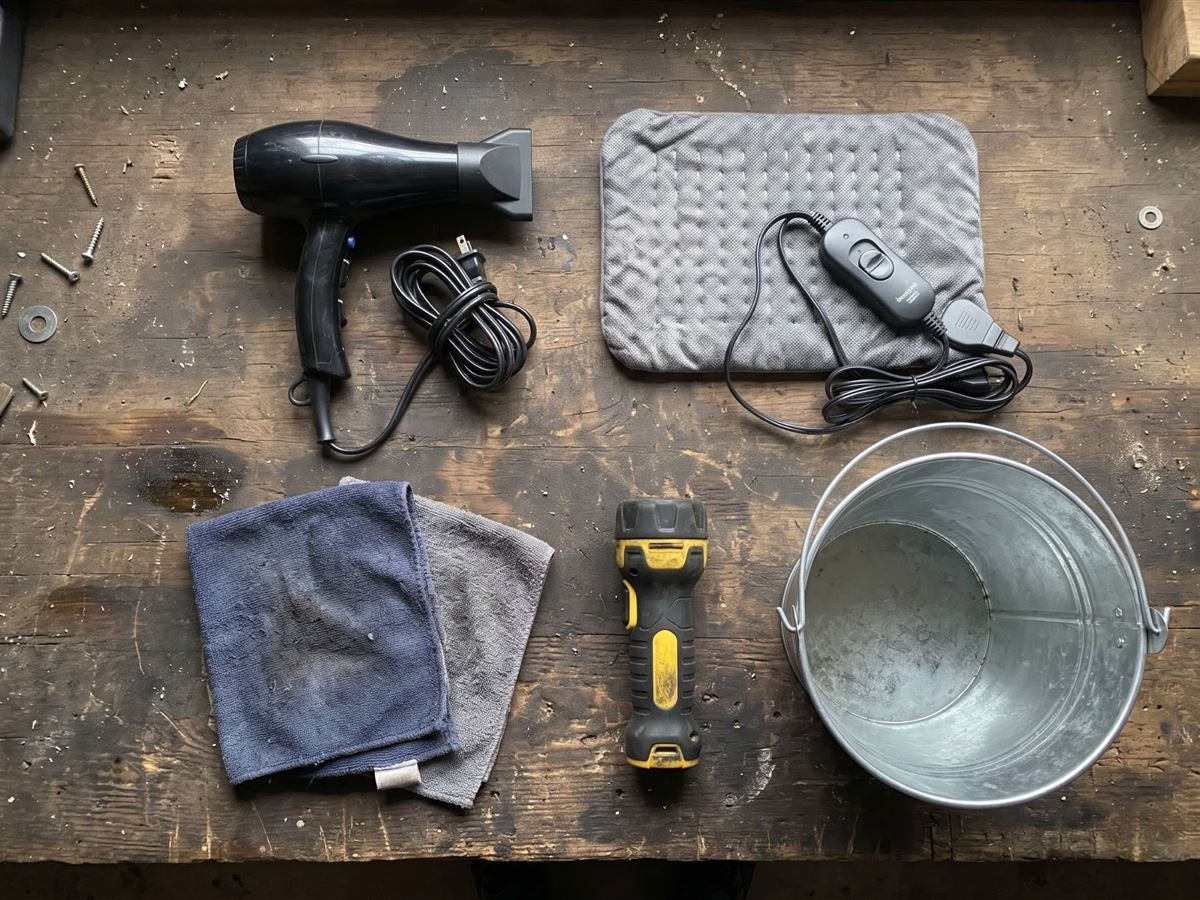
What You’ll Need to Thaw Frozen Pipes
You don’t need anything special. Most of this is already in your house.
- Electric hair dryer on a low or medium setting, plus an extension cord if the outlet is far away
- Electric heating pad you can wrap around the pipe (optional, hands-free)
- Two or three towels and a pot of hot (not boiling) water
- Flashlight to trace the pipe
- Bucket and rags for drips
- Your phone, with a licensed plumber’s number saved
Renoverra tool
Seasonal Home Maintenance Tracker
Tick off this season's jobs. Your progress stays saved in this browser, and you can print what's left.
How this is calculated
- Tasks follow common manufacturer and insurer guidance for a typical detached house in a four-season climate.
- The current season is picked from today's date (northern hemisphere). Switch tabs to plan ahead.
- Progress is stored only in your browser (localStorage). Nothing is sent to us.
How to Tell Your Pipes Are Frozen
The Red Cross says to suspect a frozen pipe when you open a faucet and only a trickle comes out. No water at all is the other giveaway. Check a few taps, since one frozen section often affects only part of the house.
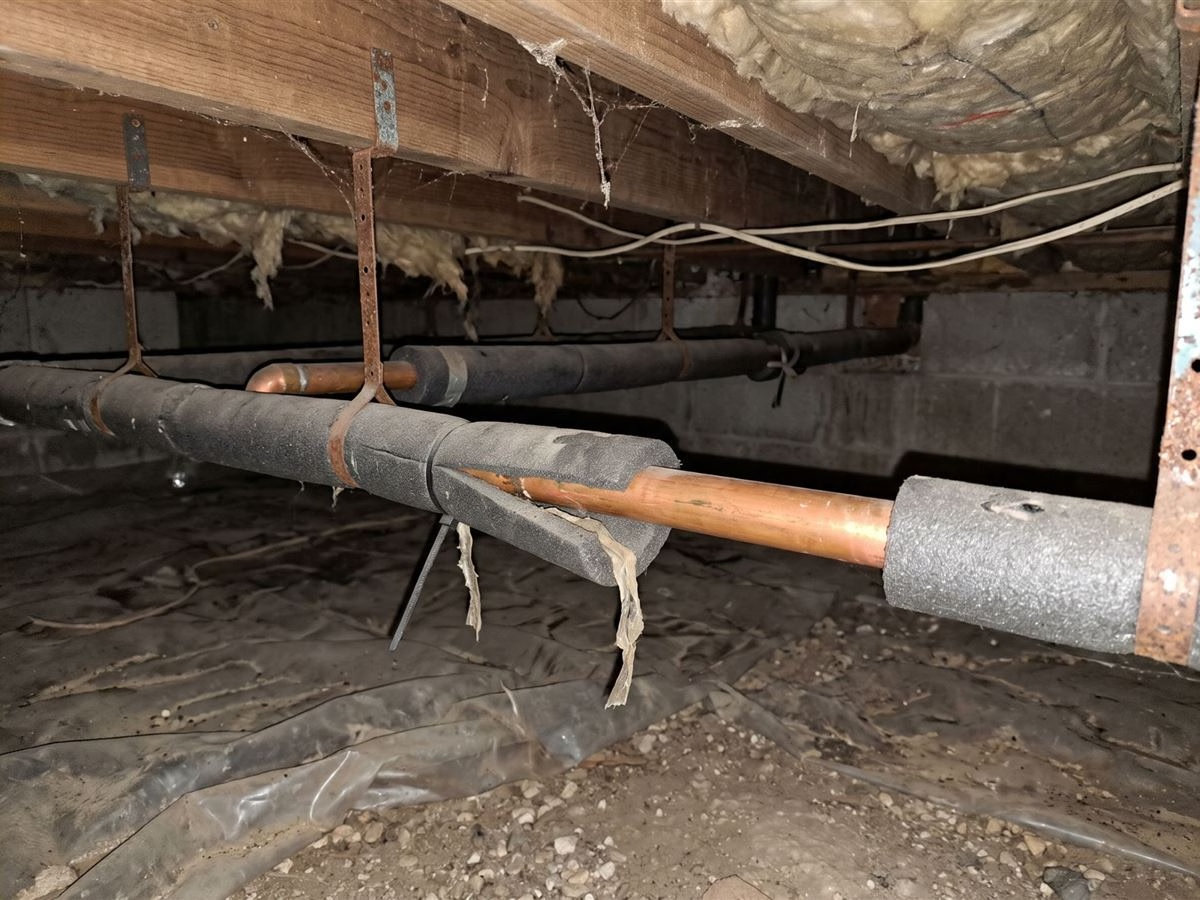
Next, narrow down where the ice is. Likely spots include pipes against exterior walls and the place where your water service enters through the foundation. Look in unheated areas too: basements, crawl spaces, attics, garages and kitchen cabinets on outside walls. Frost on a pipe, or a section that feels much colder than the rest, points to the plug.
How to Thaw Frozen Pipes: Step by Step
Step 1: Open the Faucet and Find the Main Shutoff
Open the tap served by the frozen pipe, hot and cold both if it’s a mixer. As the ice melts, water and pressure need a way out. An open faucet also tells you when flow returns.
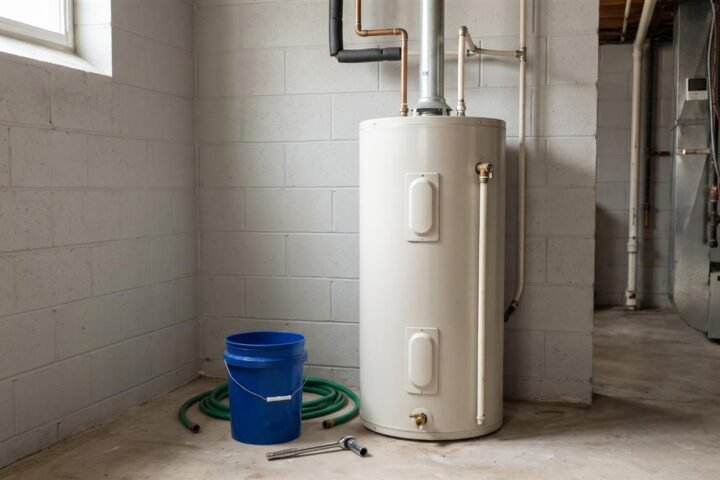
Now go find your main shutoff valve and make sure you can turn it by hand. If a pipe has split, this is the valve that limits the damage. Check this before you start, not after you see water.
Step 2: Locate the Frozen Section
Follow the pipe from the dead faucet back toward where it comes from. Use the flashlight and your hand. Frozen sections feel colder, and you may see frost or a slight bulge.
If the pipe runs inside a wall or under a slab, you can’t heat it directly. Skip to the pro section below. Guessing and blasting heat at drywall is how scorch marks happen.
Step 3: Thaw Frozen Pipes From the Faucet Back
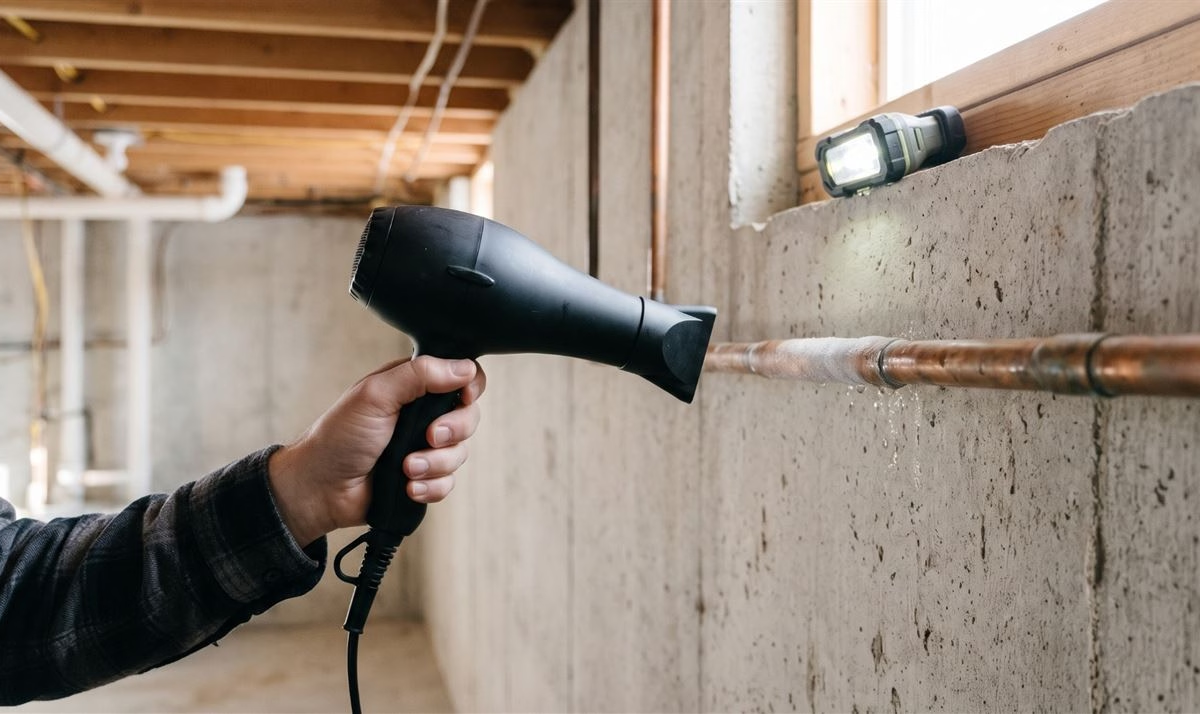
Start heating at the end of the frozen section closest to the faucet. Melt water can then drain out the open tap instead of sitting behind a fresh plug. Work slowly back toward the blockage.
The Red Cross lists four safe heat sources. They are an electric heating pad wrapped around the pipe, an electric hair dryer, a space heater kept away from flammables, and towels soaked in hot water. Pick one and keep it moving. A hair dryer on low or medium swept along the pipe is the easiest for most people.
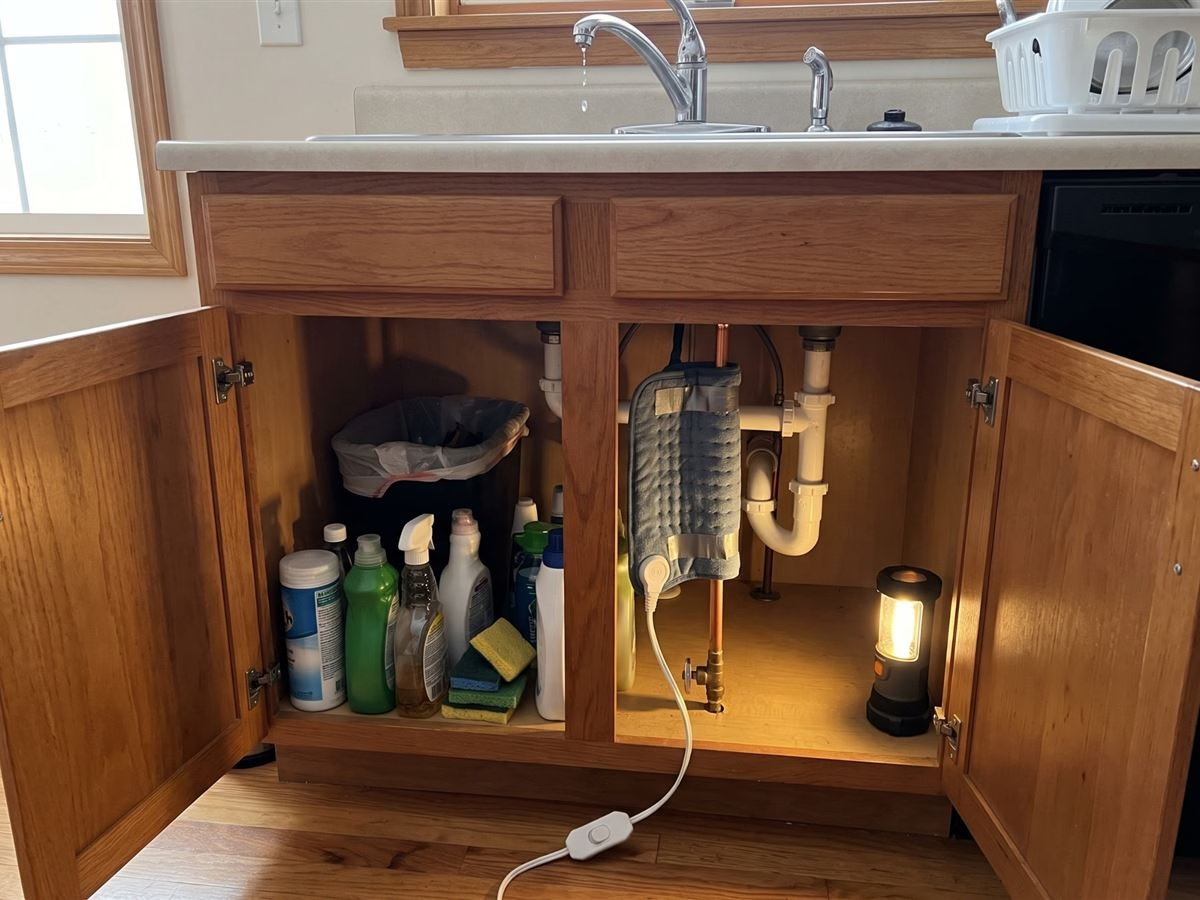
Step 4: Keep Heat On Until Pressure Returns
The Red Cross says to apply heat until full water pressure is restored. A thin trickle means part of the plug is still there. Stay with it.
Keep watching the pipe while you work. Dripping at a joint, a wet patch or a spray means the pipe split. Shut off the main valve, unplug the heat source and call a plumber.
Step 5: Check for Leaks and Other Frozen Pipes
Once water runs normally, open every other faucet in the house. The Red Cross warns that if one pipe froze, others may too. Then look along the thawed section, under the sink and at any visible joints.
If you shut the water off, turn it back on slowly and watch for leaks as pressure builds. Indiana’s utility consumer counselor gives the same advice. Keep the main valve within reach for the first few minutes. If a pinhole or split shows up later, our copper pipe leak repair guide covers temporary and permanent fixes.
Heat Sources to Thaw Frozen Pipes: Use and Skip
| Method | Use it? | Watch for |
|---|---|---|
| Hair dryer | Yes | Keep the cord and dryer out of any standing water |
| Electric heating pad | Yes | Wrap snugly, check often, don’t leave it unattended |
| Towels soaked in hot water | Yes | Re-soak as they cool; keep water off outlets |
| Portable space heater | Yes, with care | Keep it well away from flammable materials |
| Blowtorch, propane or kerosene heater, charcoal stove | Never | Open flame is a fire hazard and can be deadly |
I’d also skip boiling water and heat guns. Neither is on the Red Cross list, and both can heat one spot much faster than a cold pipe can handle. Slow and even is the goal.
Common Mistakes When You Thaw Frozen Pipes
The big one is reaching for a torch. Both the Red Cross and Indiana’s utility consumer counselor say to never use an open flame on a frozen pipe. A torch can set framing or insulation on fire, and you may not see it smolder until you’ve left the room.
Another mistake is thawing without an open faucet. Heating a sealed section can trap pressure between the ice and the closed tap. Leave a tap open so melt water drains.
The third is forgetting the main valve. A split pipe can look fine until the ice is gone, so know where the shutoff is before you start. Last, don’t stop at one pipe. Check every faucet, because freezing rarely hits just one spot.
When to Call a Pro Instead of Thawing Frozen Pipes
Call a licensed plumber if you can’t find the frozen area, can’t reach it, or can’t thaw it. Those are the Red Cross’s three reasons. Add to that any visible leak, a bulge or crack, or a pipe inside a finished wall or under a slab.
Indiana’s utility consumer counselor goes further. It says to talk to a plumber before trying a hair dryer, since plumbing systems differ. That is a fair point if you rent or have older or mixed piping. When in doubt, a quick phone call costs less than a repair.
How to Keep Pipes From Freezing Again
A thawed pipe will usually freeze again if the cold snap continues. These steps come from the Red Cross and Indiana’s utility consumer counselor.
- Let cold water drip from the faucet served by exposed pipes. Running water, even at a trickle, helps prevent freezing.
- When the temperature falls to zero or below, let a pencil-size stream run, ideally from a faucet on an exterior wall.
- Open kitchen and bathroom cabinet doors so warm air reaches the plumbing. Move cleaners and chemicals out of children’s reach first.
- Keep the thermostat at the same setting day and night during a freeze.
- If you’re away, leave the heat on and set it no lower than 55°F.
- Insulate pipes in basements, crawl spaces, attics and garages with pipe sleeves or UL-listed heat tape, following the instructions.
- Disconnect garden hoses and drain outdoor hose bibs before the first hard freeze.
Sealing drafts helps as well. Our guides to sealing gaps around doors and windows and the winter home maintenance checklist cover the rest of the cold-weather list. The federal Ready.gov winter weather page also points to insulation, caulking and weather stripping.
Frozen Pipe Questions
How long does it take to thaw a frozen pipe?
It varies with the length of the ice and how cold the space is. Keep heat on until full water pressure returns, then check the rest of the house.
Will a frozen pipe always burst?
No. Ice expands and puts pressure on the pipe, and some pipes split while others hold. Watch for leaks as the ice melts.
Can I use a hair dryer to thaw frozen pipes?
Yes. The Red Cross lists an electric hair dryer as a safe heat source. Keep the dryer and cord away from standing water.
What if no faucet in the house has water?
The freeze may be where the water line enters through the foundation. Check that spot if you can reach it safely, and call a licensed plumber or your water utility if you can’t.
Should I leave a faucet dripping during a freeze?
Yes. Running water, even a trickle, helps prevent pipes from freezing. At zero or below, a pencil-size stream is the target.
Next Cold Snap: Do This Tonight
Thawing a frozen pipe comes down to three habits. Open the tap, heat gently from the faucet side, and know where your main shutoff is first. Never use a flame, and treat any leak as a reason to stop and call a plumber.
Tonight, find your main valve, open the cabinet doors under exterior-wall sinks, and let one tap drip. Bookmark this page and the Red Cross frozen pipes guide for the next cold snap. The Indiana utility consumer counselor’s tips are worth a read too.