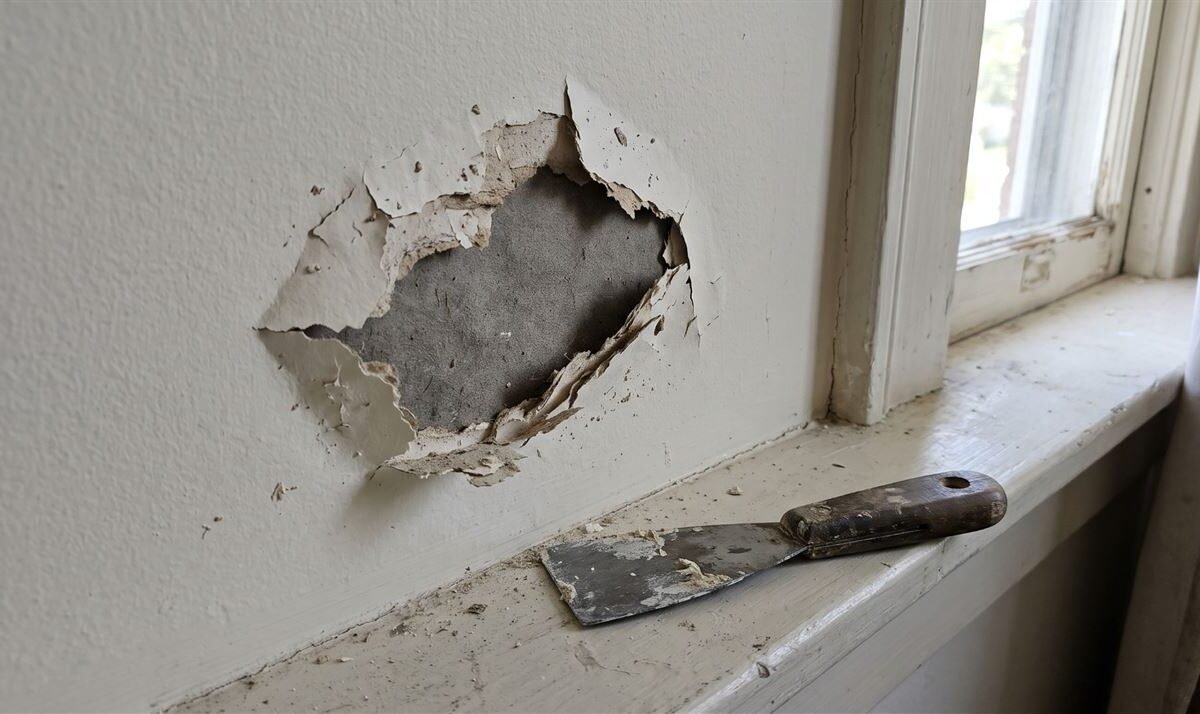
You touch the wall and a flap of something lifts. Peeling drywall is rarely the board’s fault in the way it looks. Sometimes it’s only paint, sometimes the thin paper face has let go, and sometimes a taped seam is curling. Each one needs a different fix, and the wrong fix peels again within a month.
This guide shows you how to tell the three apart with a five-minute check, then repair each one. Plan on one afternoon of work spread over two days, because sealer and compound need drying time. It suits a beginner with a putty knife, and the one step people skip (sealing bare paper before any compound) is the one that matters most.
Peeling Drywall: Check What Is Lifting
Drywall is a gypsum core wrapped in paper. Paint sits on the paper. When something peels, the break happens in one of three places, and you can find which in a couple of minutes.
Press the loose edge back and pull gently with a putty knife. Then look at what you pulled up and what is left behind. The table below covers the common results.
| What you see | What it means | Fix |
|---|---|---|
| Paint lifts alone, brown paper underneath is firm and smooth | Paint failed: poor prep, glossy old paint, or humidity | Scrape, sand, prime, repaint |
| Paper comes off with the paint, leaving fuzzy or chalky gray board | Paper face delaminated | Trim, seal, skim, prime, paint |
| A seam or corner lifts, tape visible or curling | Tape bond failed | Cut out loose tape, retape, skim |
| Board feels soft, stained or damp, paper bubbles | Moisture damage | Stop the water, dry out, cut out soft board |
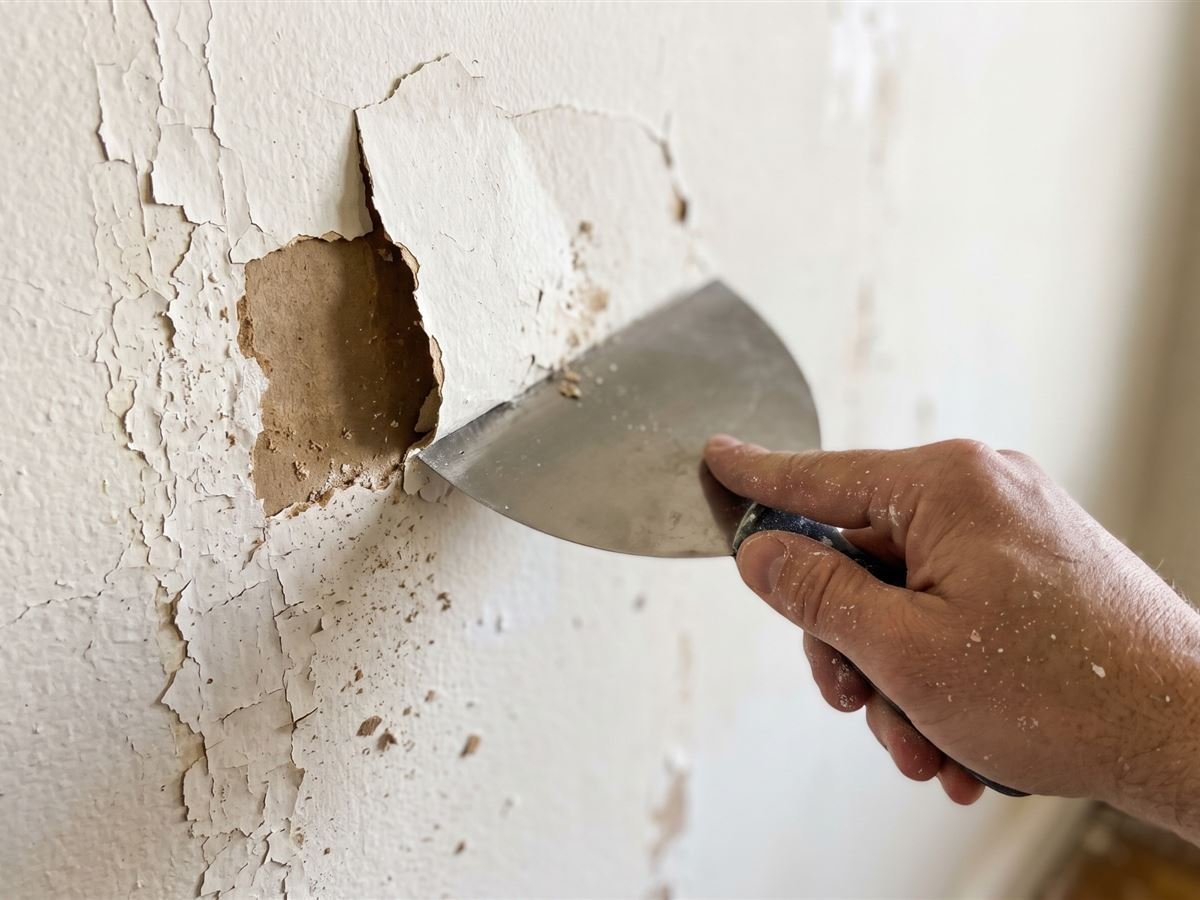
Press a thumbnail into the bare spot as well. Firm board that resists the nail is fine. Board that dents like stale bread has absorbed water, and no surface repair will hold over it.
Where most people get this wrong
The common mistake is scraping the loose paint, slapping on joint compound and painting. Compound is water-based. On bare paper it soaks in, swells the fibers and lifts the next layer of paper off with it. You get a rippled patch that cracks or blisters within weeks.
Find the Cause of Peeling Drywall First
Fix the cause or the repair fails. The usual culprits are moisture, poor prep and a failed earlier patch.
Moisture is the big one. Peeling near a shower, along an exterior wall, or under a bathroom ceiling often means steam or a slow leak. The EPA’s brief guide to mold and moisture says to keep indoor humidity between 30 and 50 percent and to dry wet materials within 24 to 48 hours. Past that window, mold becomes a real risk.
Run the bathroom fan during and for 20 minutes after showers. If a wall peels in a pattern that follows a pipe run, read our guide to finding a leak inside a wall before you repair anything.
Poor prep is the other common cause. Paint over dust, grease or a glossy old finish never grips. Paint applied straight to bare new drywall without primer also peels, because the paper and the joint compound absorb paint at different rates.
Check for lead paint in older homes
What You’ll Need to Fix Peeling Drywall
You don’t need much. Buy small quantities, because the sealer and compound only matter at the patch.
- Utility knife with fresh blades and a 6-inch putty knife
- 10 or 12-inch taping knife for feathering
- Sealer made for damaged drywall paper (check the label says it binds torn paper)
- Pre-mixed all-purpose joint compound, plus setting-type compound if you want faster coats
- Fiberglass mesh tape for lifting seams
- Sanding sponge or pole sander in 120 to 150 grit
- Drywall primer and matching paint
- Respirator rated for dust, damp rag, drop cloth
How to Fix Peeling Drywall Paper and Paint
These steps cover the most common case, where the paper face has torn or paint has taken paper with it. Skip to the seam section if tape is the problem.
Step 1: Scrape back to solid material
Slide the putty knife under every loose edge and keep going until the knife meets resistance. Peeling spreads from the edge, so a flap you leave behind will lift later. Don’t stop at the first firm spot. Work out about an inch past anything that feels loose.
Stay with this step longer than seems necessary. Time here saves a second repair.
Step 2: Cut a clean boundary
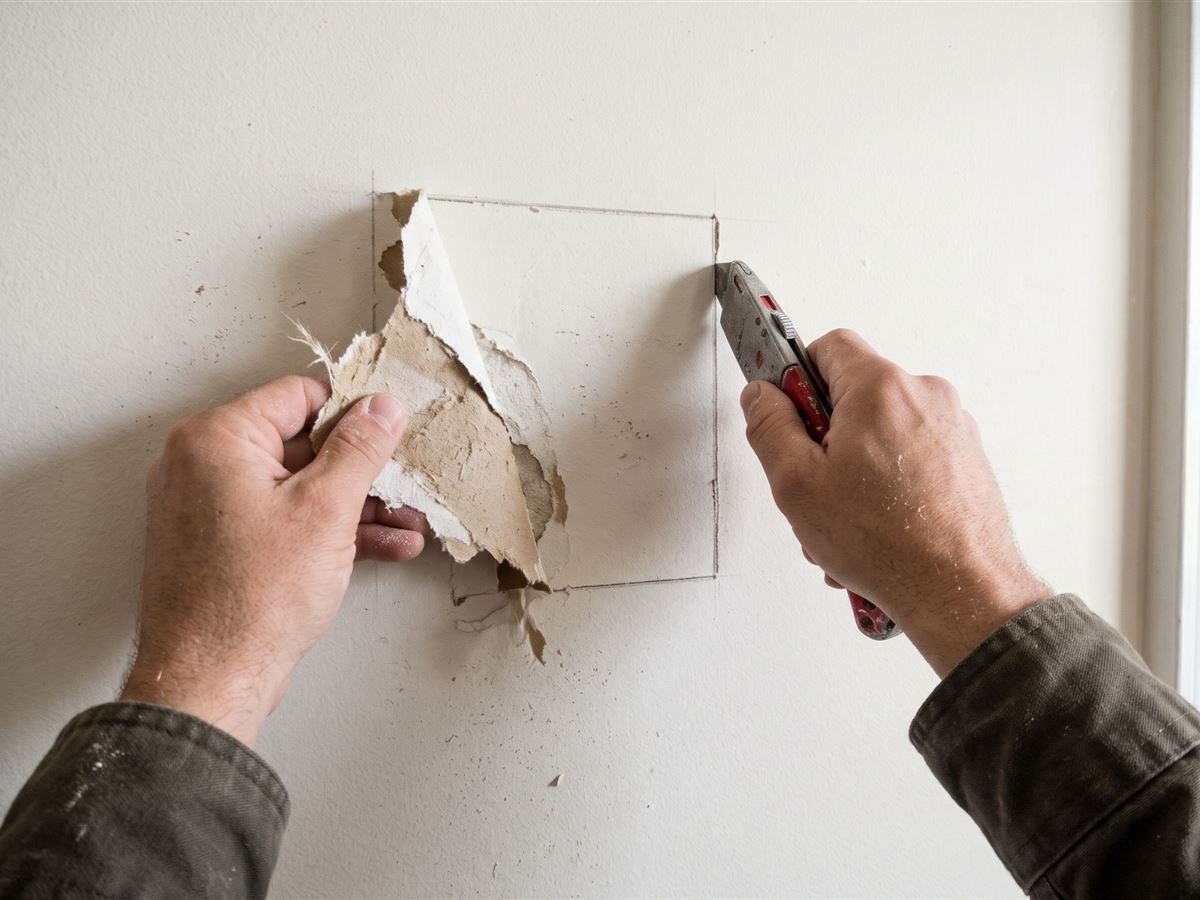
Score around the damaged area with a utility knife and peel away the loose paper in a neat outline. A clean edge gives the compound something to feather against. Torn, fuzzy edges telegraph through the paint.
If the bare gypsum is powdery, brush off the dust with a dry brush or damp rag, then let it dry.
Step 3: Seal the bare area
This is the step that makes the repair last. Brush on a sealer made for damaged drywall paper so it soaks into the exposed fibers and the cut paper edges. Follow the label for coverage and dry time, because products differ. Some DIY guides use a shellac or oil-based primer for the same job, but products vary, so use one whose label says it works on torn drywall paper.
Let it dry fully. A tacky seal under compound gives you the same blisters you were trying to avoid.
Step 4: Skim with thin coats of compound
Spread a thin layer of joint compound over the sealed area, reaching about an inch past the edge. Hold the knife nearly flat and pull light pressure. A thick coat shrinks and cracks as it dries.
Setting-type compound hardens on a timer instead of waiting on the air. National Gypsum suggests mixing small batches so it doesn’t harden in the pan. Premixed all-purpose compound is slower but easier to feather.
Expect two or three coats, each wider than the last. Let each coat dry before the next, usually overnight for premixed.
Step 5: Sand, prime and paint
Sand with 120 to 150 grit using light strokes. Run your palm over the patch with your eyes closed. You will feel a ridge or low spot that you can’t see. Wipe the dust off with a damp rag.
Prime the whole patch, including the sealed area, with drywall primer. Compound and bare paper absorb paint unevenly, which leaves a dull “flashing” patch if you skip primer. Then paint, and extend the second coat to a natural break such as a corner so the repair blends. Our wall prep guide covers the washing and sheen checks that stop paint from peeling again.

How to Fix Peeling Drywall Seams and Tape
A peeling seam looks like a ribbon of paper curling off a joint, often at a corner or ceiling line. It’s usually the tape that failed, not the paint.
Cut away loose tape with a utility knife until you reach tape that stays put. Scrape off any loose compound. Seal bare paper as in Step 3, then press fiberglass mesh tape over the gap and bed it with a thin coat of compound. Add one or two wider coats, sand and prime.
Seams in a bathroom may peel again if humidity stays high. A repair held with a bathroom fan and a dry wall will last. The same repair in a steamy room with no fan will not. For cracks that follow a seam, see how to repair drywall cracks.
Common Mistakes to Avoid
- Applying compound to unsealed, torn paper. It soaks in and lifts the paper again.
- Repairing before the moisture source is fixed. The patch peels in the same place.
- Laying one thick coat. It cracks and shrinks. Three thin coats win.
- Skipping primer over the patch, which causes a dull, shiny-looking spot after painting.
- Dry-sanding old paint in a pre-1978 house without lead precautions.
When to Call a Pro for Peeling Drywall
Soft board can be cut out and replaced. Our guide to fixing water damaged walls shows how to find the dry edge and frame the new piece.
Peeling Drywall FAQ
Why is the paper peeling off my drywall?
Usually moisture, old age or a poorly bonded finish. Steam, a leak or a damp room softens the paper’s glue. A scraped or torn spot, or paint applied to bare board without primer, can also peel.
Can I just paint over peeling drywall?
No. Paint can’t hold flakes together. Loose material keeps lifting and takes the new paint with it. Scrape to solid edges, sand and prime first.
What do I put on torn drywall paper before joint compound?
A sealer made for damaged drywall paper. It binds loose fibers so the water in the compound can’t swell them. Check the product label for torn-paper use and follow its dry time.
How do I tell peeling paint from a moisture problem?
Scrape a loose edge. Firm, dry paper under the paint points to a paint or prep issue. Soft, stained or bubbling board points to moisture.
How long does it take to fix peeling drywall?
About two or three hours of work, usually spread over two days. Sealer, compound and primer each need to dry between steps.