Learning how to find a water leak inside a wall is mostly a process of elimination. The wall hides the pipe, so you work from clues: the meter, the timing, the damp spot and, last, a small hole. Most people reach for a hammer too early and open the wrong section of drywall.
This guide shows the order that finds the leak with the least damage. You will confirm the leak is real and work out which kind it is. Then you will map the wet area and open the wall in one place. Plan on one to two hours to locate it. Fixing the pipe is a separate job, and often a plumber’s.
What You’ll Need
Here is what you need for how to find a water leak inside a wall. None of it is expensive, and a moisture meter is the one tool worth owning. A thermal camera helps but isn’t required.
- A moisture meter (pin type or pinless)
- A stud finder that also detects live wires
- A flashlight and a pencil
- Painter’s tape for marking readings
- A drywall saw or oscillating multi-tool
- Plastic sheeting and towels to catch water
- Optional: a thermal camera or a thermal attachment for your phone
How to Find a Water Leak Inside a Wall: Step by Step
Work through the steps in order. Each step narrows the search, so skipping ahead usually means opening more wall than you need.
Step 1: Confirm Water Is Actually Leaking
Close every tap, stop the dishwasher and washer, and make sure no one flushes. Read your water meter, wait two hours with no water use, and read it again. The EPA says that if the reading changes at all, you probably have a leak.
A moving dial means a pressurized pipe is leaking somewhere, but not necessarily in this wall. Our guide to detecting a leak starting at the meter covers the full test. If the dial stays still, the wet wall is more likely a drain leak, an outside leak or condensation, and the next step still applies.
Step 2: Find a Water Leak Inside a Wall by Its Pattern
When the wall gets wet tells you more than where. Water also travels along pipes and framing, so the stain is rarely right over the leak.
| When the wall is wet | Likely source | Where to look |
|---|---|---|
| Always damp, and it keeps growing | Pressurized supply pipe or fitting | Along the pipe run, above the wettest spot |
| Wet after a shower, laundry or dishwasher cycle | Drain line, trap or tub connection | Behind the tub, sink or washer box |
| Wet only after rain | Window, siding, flashing or roof joint | The outside of that wall, and above it |
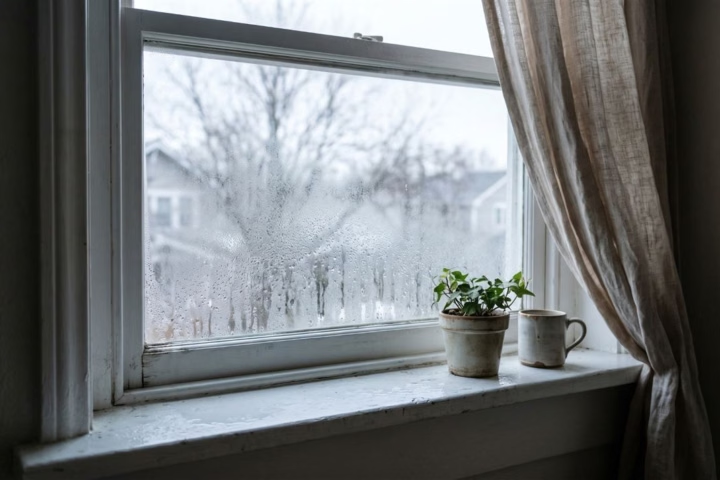
| Wet with no rain and no plumbing nearby | Condensation on a cold pipe or duct | Cold water lines and ducts in the wall |
Write down what you see for a day or two if you can. A log of when the wall gets wet is often enough to name the source.
Step 3: Check the Wall for Early Signs
Look and press before you reach for tools. Walls often tell you more than a meter does.
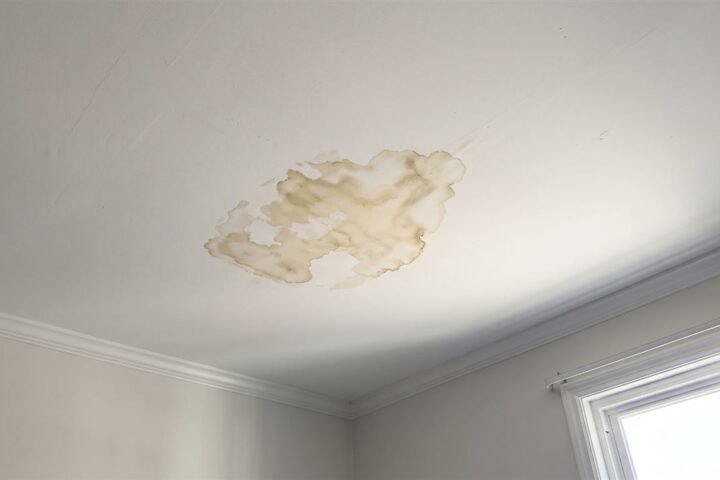
- Paint that bubbles, peels or leaves a brown ring
- Drywall that feels soft or cool when you press it
- Baseboards that swell, gap or lift off the wall
- A musty smell with no visible source
- A water bill that creeps up with no change in habits
The EPA says about 9 percent of homes have a leak that wastes 50 gallons or more a day. A slow wall leak can run for months, so even small signs deserve a look.
Step 4: Map the Wet Area With a Moisture Meter
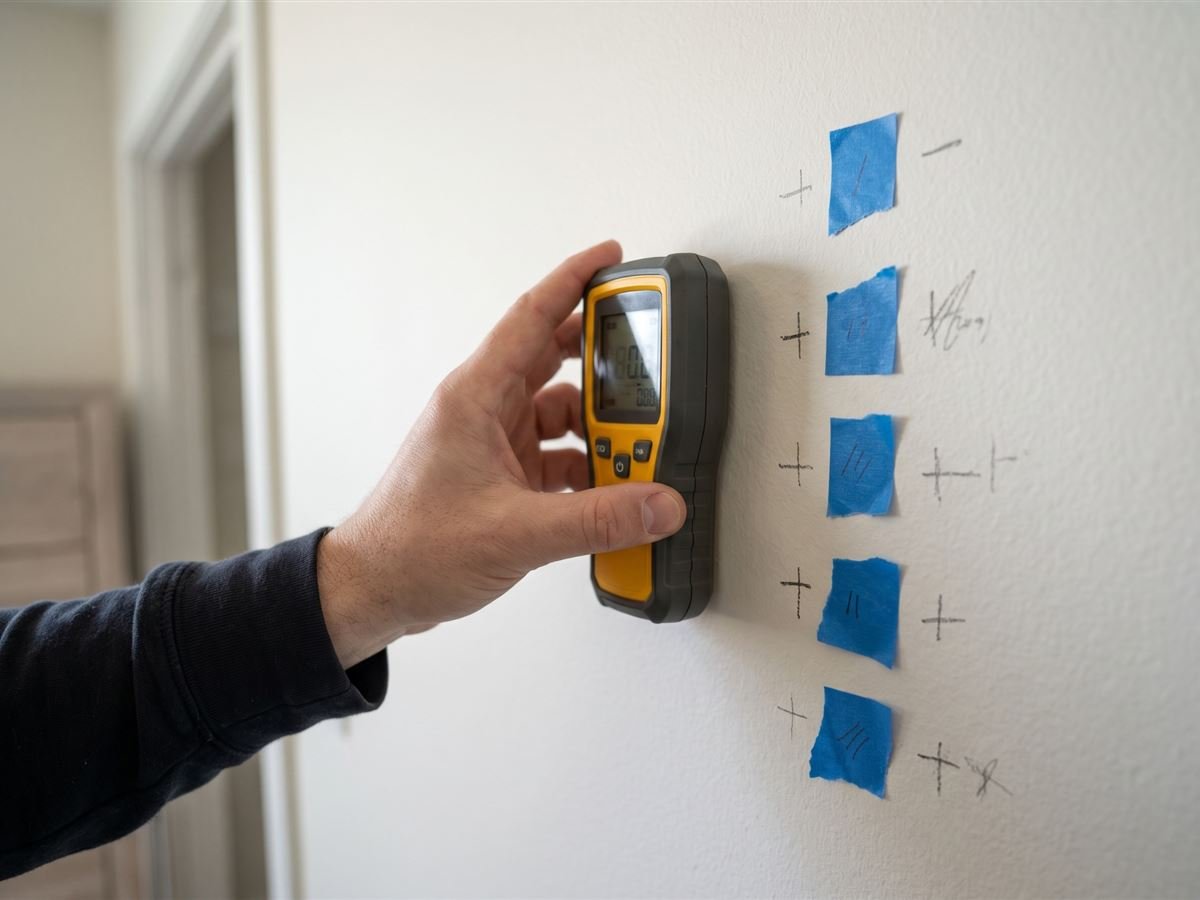
Take a reference reading on a dry wall in the same room. Pick one made of the same material. Then scan the suspect wall in rows, working from the dry area toward the stain. Mark each reading with tape, and keep going until the numbers peak.
The wettest reading is closest to the leak, and the wet area often spreads downward and outward from it. A pin meter reads between its two pins, so it gives a firmer answer on thin walls. A pinless meter scans faster, but it can read falsely high on thin walls or behind tile. In warm, humid air a thin film of condensation can also fool either type.
Step 5: Scan With a Thermal Camera (Optional)
A thermal camera can’t see moisture in a wall. It shows temperature differences that water can cause. FLIR says a wall leak often shows as a triangular pattern spreading downward, and a hot water leak can show as a warm patch.
Many things cause temperature differences, so treat the image as a lead, not proof. Always confirm what you see with the moisture meter.
Step 6: Cut One Small Inspection Opening
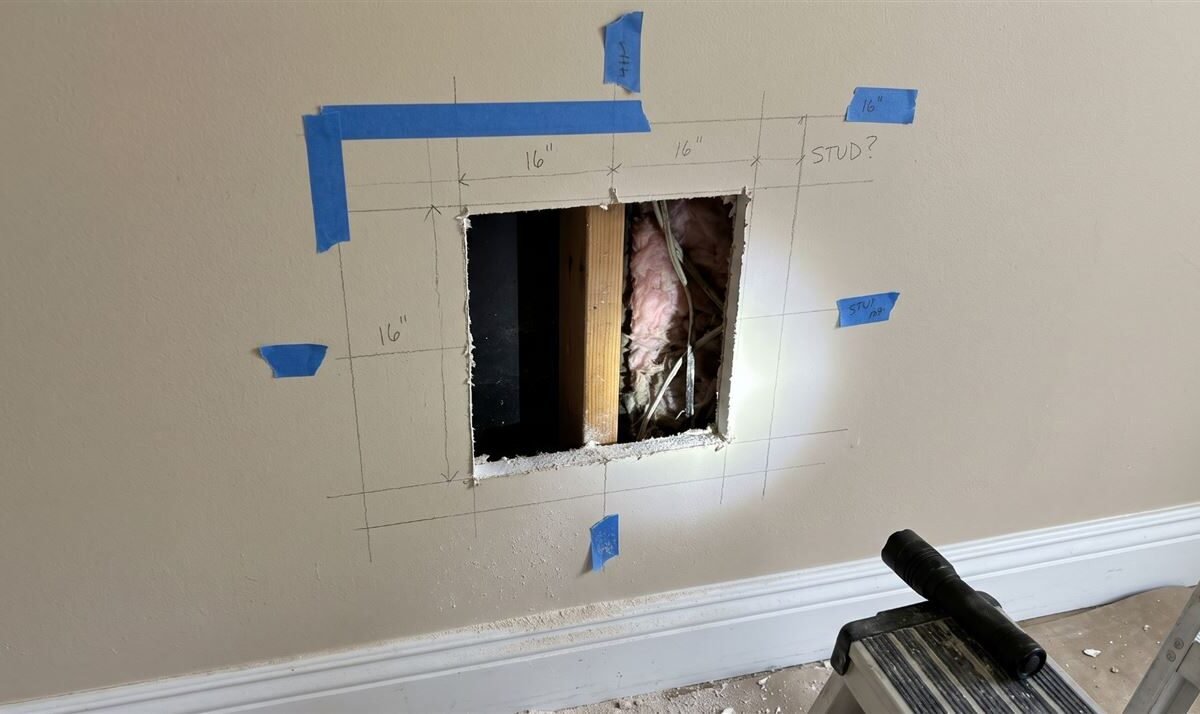
Switch off the breaker for that wall before you cut. Use the stud finder to locate studs and live wires, and mark them. Cut a small opening between two studs at the wettest reading from Step 4.
Shine the flashlight into the cavity. Look for wet insulation, a dripping fitting, a green crust on copper or a pipe that looks damp. If the framing is dry, the leak is higher up, because water runs down the cavity before it shows. Move the opening upward and repeat.
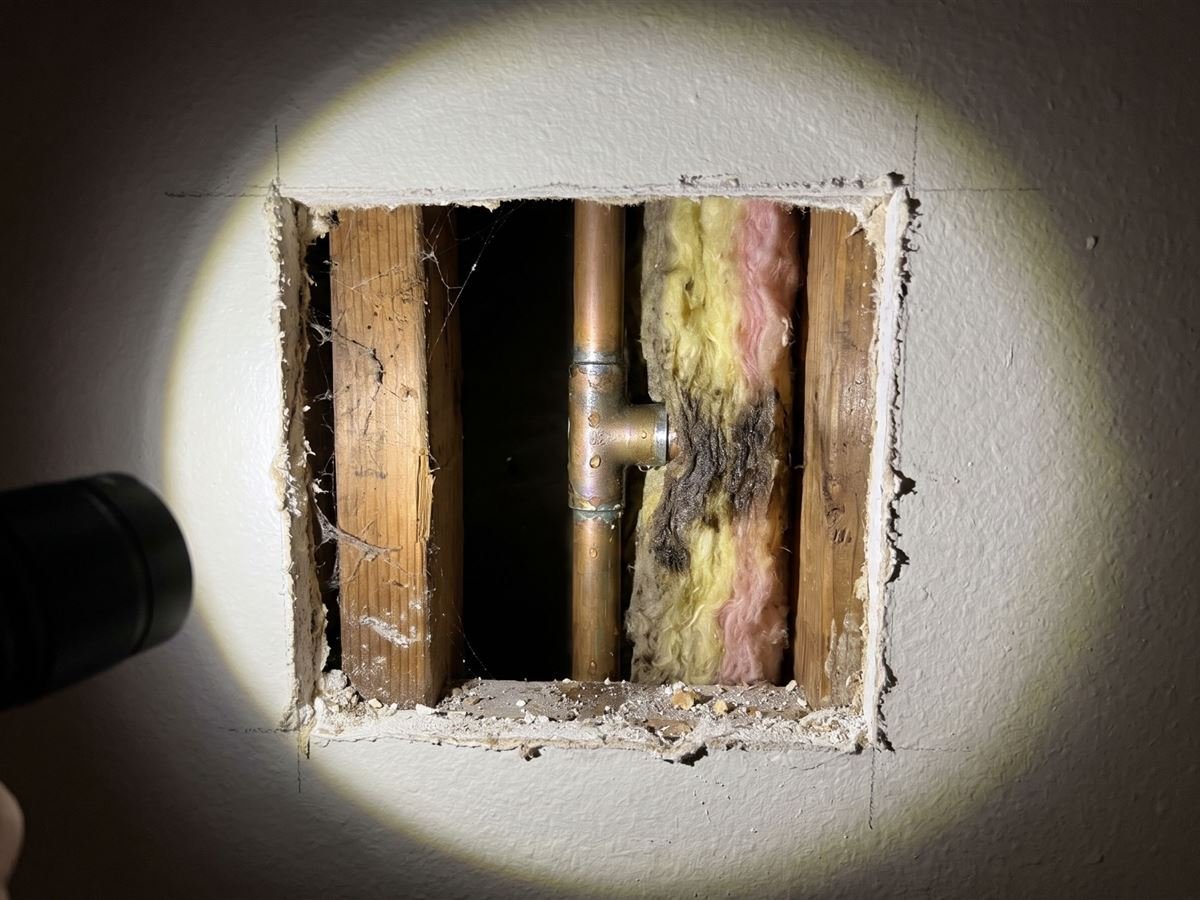
Once you find the leak, shut off the water to that line and leave the opening in place. Our drywall repair cost guide covers patching the hole after the pipe is fixed.
Dry the Wall Before You Close It Up
Drying matters as much as the repair. The EPA says to dry water-damaged areas within 24 to 48 hours to prevent mold growth. Run a fan at the opening and a dehumidifier in the room.
Pull out wet insulation, because it stays wet for a long time. Check the framing with the moisture meter and close the wall only when the readings match your dry reference. If a ceiling below is stained too, our guide to water leaking from the ceiling covers the dry-out and repair.
Find a Water Leak Inside a Wall: Who to Call
You can often find the leak yourself, but the fix may belong to someone else. Match the call to what you know.
A plumber is the right first call for an active leak, since they find the cause and stop it. If the meter keeps moving and you can’t locate the source, a leak detection company uses acoustic and thermal tools to pinpoint it. Many detection firms don’t do repairs, so ask before you book.
A restoration company dries and rebuilds the wall after the leak is fixed. An electrician is the call if water reached wiring or an outlet. Call your insurer early, and take photos before anything is opened or removed. Policies differ on sudden and slow leaks, so ask before you start repairs.
Find a Water Leak Inside a Wall: Common Mistakes
- Cutting directly under the stain. Water runs down the cavity, so the leak is usually higher.
- Trusting one reading. Compare against a dry reference, and confirm a thermal image with a meter.
- Skipping the breaker. Wiring runs through the same cavities as pipes.
- Cutting a big hole first. A small opening shows most leaks, and a big one costs more to patch.
- Patching before drying. A closed wall that is still damp invites mold.
FAQ: Finding a Water Leak Inside a Wall
How do you tell if a water pipe is leaking inside a wall?
Look for stains, bubbling paint, soft drywall and a musty smell, then run the meter test. If the meter moves with everything off, a supply pipe is leaking. A moisture meter then shows the wettest spot on the wall.
Can you find a leak in a wall without opening it?
You can narrow it down without cutting. A moisture meter and a thermal camera show where the wall is wet. You usually still need one small opening to see the pipe and confirm the source.
How long before a wall leak causes mold?
It depends on the materials and the air. The EPA says that if wet materials are dried within 24 to 48 hours, mold usually doesn’t grow. A wall that stays wet for days is a bigger risk.
Does homeowners insurance cover a leak inside a wall?
It depends on your policy. Many cover sudden leaks, such as a burst pipe, and exclude slow leaks that went unfixed. Call your insurer before you start repairs, and keep your photos and receipts.
Find It Small, Fix It Small
The method for how to find a water leak inside a wall matters more than the tools. Confirm the leak with the meter, read the pattern, map the wet area and open the wall in one small place. Each step cuts the guesswork and the drywall you have to repair.
Dry everything before you close the wall, and call a plumber if the source stays hidden. Bookmark this page for the next damp patch. If the meter still moves after you rule out the house, the leak may be outside it.