You found the hole, the crack or the brown water stain, and you want a number before you call anyone. Drywall repair cost runs from about $60 for one small patch to $2,000 or more for a whole house. The hole itself is rarely the expensive part.
What drives the bill is the minimum charge, the drying time between coats and the paint that hides the patch. This guide breaks down 2026 prices by damage type and by square foot. You’ll see where a pro earns the money and where a $20 kit does the same job. You’ll also learn the one habit that turns a $75 fix into a $400 one.
Drywall Repair Cost at a Glance
The ranges below come from two national cost surveys, Fixr (updated January 2025) and This Old House (updated 2026). They include labor and materials. Your local price can sit well above or below these, so use them as a sanity check for quotes.
| Repair | Typical pro cost | DIY-friendly? |
|---|---|---|
| Nail pop or anchor hole | $75 to $140 | Yes |
| Small hole (under 4 in) | $60 to $200 | Yes |
| Hairline to wide crack | $60 to $330 | Usually |
| Torn paper face | $95 to $300 | Usually |
| Loose or bubbled tape | $80 to $190 | Usually |
| Inside corner crack | $220 to $315 | With practice |
| Ceiling hole | $320 to $1,300 | Small ones only |
| Water-damaged section (one room) | $400 to $800 | After the leak is fixed |
Renoverra tool
Paint & Primer Calculator
Measure the room once and get gallons of paint and primer, with doors, windows and coats taken into account.
How this is calculated
- Wall area = room perimeter x wall height, minus about 21 sq ft per door and 15 sq ft per window.
- Coverage is set to 350 sq ft per gallon per coat for paint and 300 for primer. Textured or bare surfaces use more.
- Primer is suggested for bare drywall and for big color changes (dark to light).
- Results round up to the nearest quart so you don't run short mid-wall.
Drywall Repair Cost per Square Foot
Once damage gets bigger than a fist, most contractors price by area. Both surveys put the going rate at roughly $50 to $80 per square foot, labor included. That sounds steep for a material that costs a few dollars a sheet.
You’re really paying for three coats of compound, sanding and two or three trips while it dries. Here’s how the math works out by patch size.
| Damaged area | Fixr range | This Old House range |
|---|---|---|
| 2 sq ft | $120 to $160 | $100 to $160 |
| 4 sq ft | $240 to $320 | $200 to $320 |
| 10 sq ft | $600 to $800 | $500 to $800 |
| 20 sq ft | $1,200 to $1,600 | $1,000 to $1,600 |
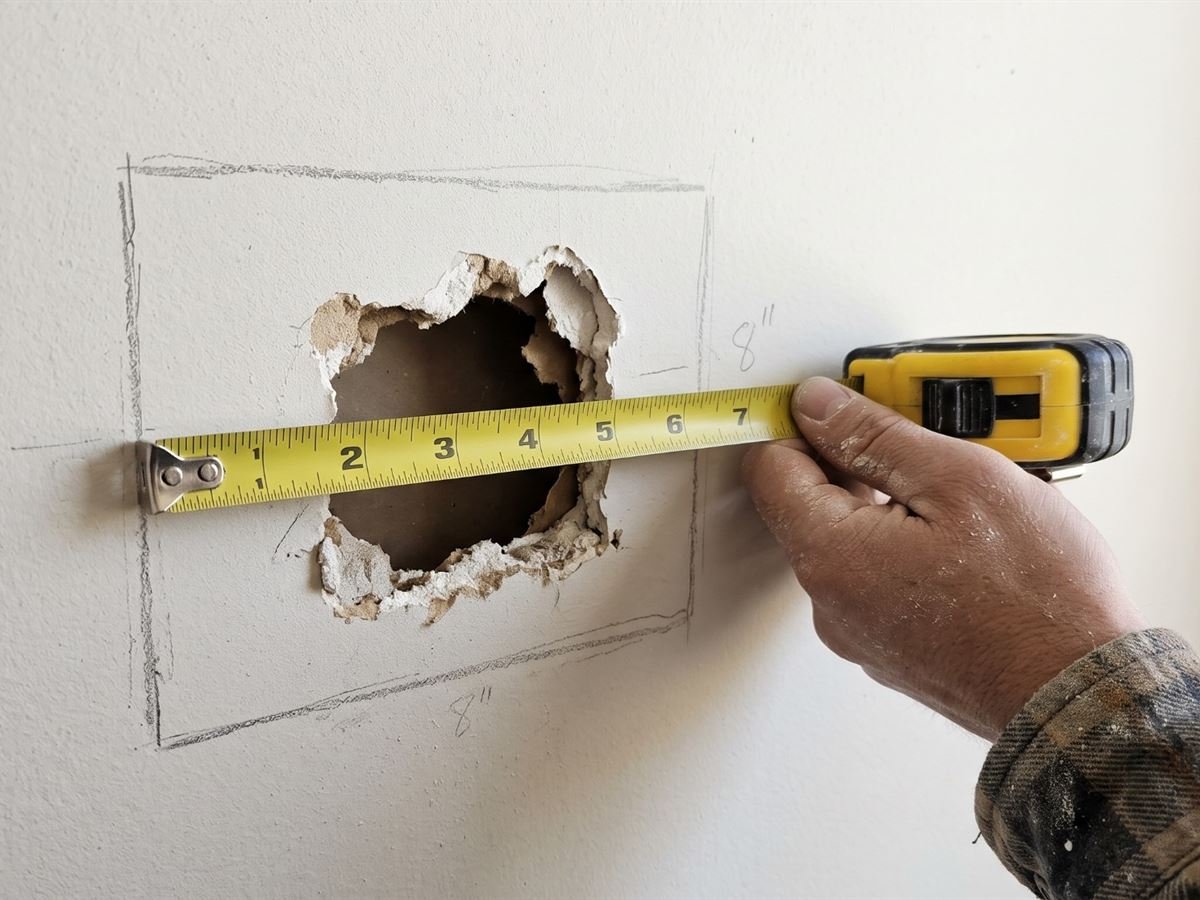
Measure the damage as a rectangle, then add a few inches on each side. A pro cuts back to solid board, so a 6-inch hole often becomes a 10-by-10-inch patch.
Cost by Number of Rooms
Moving out, selling or repainting often means a list of small dings across the house. Both surveys give the same room-based ranges for general touch-up work:
- 1 room: $75 to $300
- 2 rooms: $150 to $600
- 3 rooms: $225 to $900
- 5 rooms: $375 to $1,500
- Entire house: $450 to $2,000
Notice the per-room price barely drops as the job grows. The big savings come from avoiding repeat service calls, not from volume discounts.
Hourly Rates and the Minimum Charge
Handymen and drywall pros usually bill $60 to $100 an hour. A general handyperson sits near $60 to $80, while water damage and mold specialists charge closer to $80 to $100. For context, federal labor data for drywall tapers puts the median wage at $28.74 an hour (May 2025). The gap covers insurance, travel, tools and running the business.
Here’s where most people get drywall repair cost wrong. Fixr notes that small jobs usually carry a one-hour minimum. Call someone out for one doorknob hole and you pay that full hour.
You may also pay for a second visit. Joint compound has to dry before it can be sanded and given its final coat.
What Pushes the Price Up
Two jobs with the same size hole can land hundreds of dollars apart. These factors explain most of the gap:
- Location. Ceilings, stairwells and vaulted walls need ladders or scaffolding. Fixr lists vaulted ceiling repairs at $400 to $1,000.
- Texture. Smooth walls are the cheapest to blend. Knockdown, orange peel and popcorn need spray or hand matching, at $1 to $3 per square foot to retexture.
- Water or mold. Wet board has to be cut out, the cavity dried, and sometimes insulation replaced. A mold-affected section runs $160 to $350 on Fixr’s list.
- Paint. A patch painted on its own almost always shows. Many pros quote painting separately, and Fixr puts a full room at $990 to $1,320.
- House age. Older homes may have plaster, lead paint or asbestos in the joint compound. That changes both the method and the price.
Water-Damaged Drywall: Fix the Source First
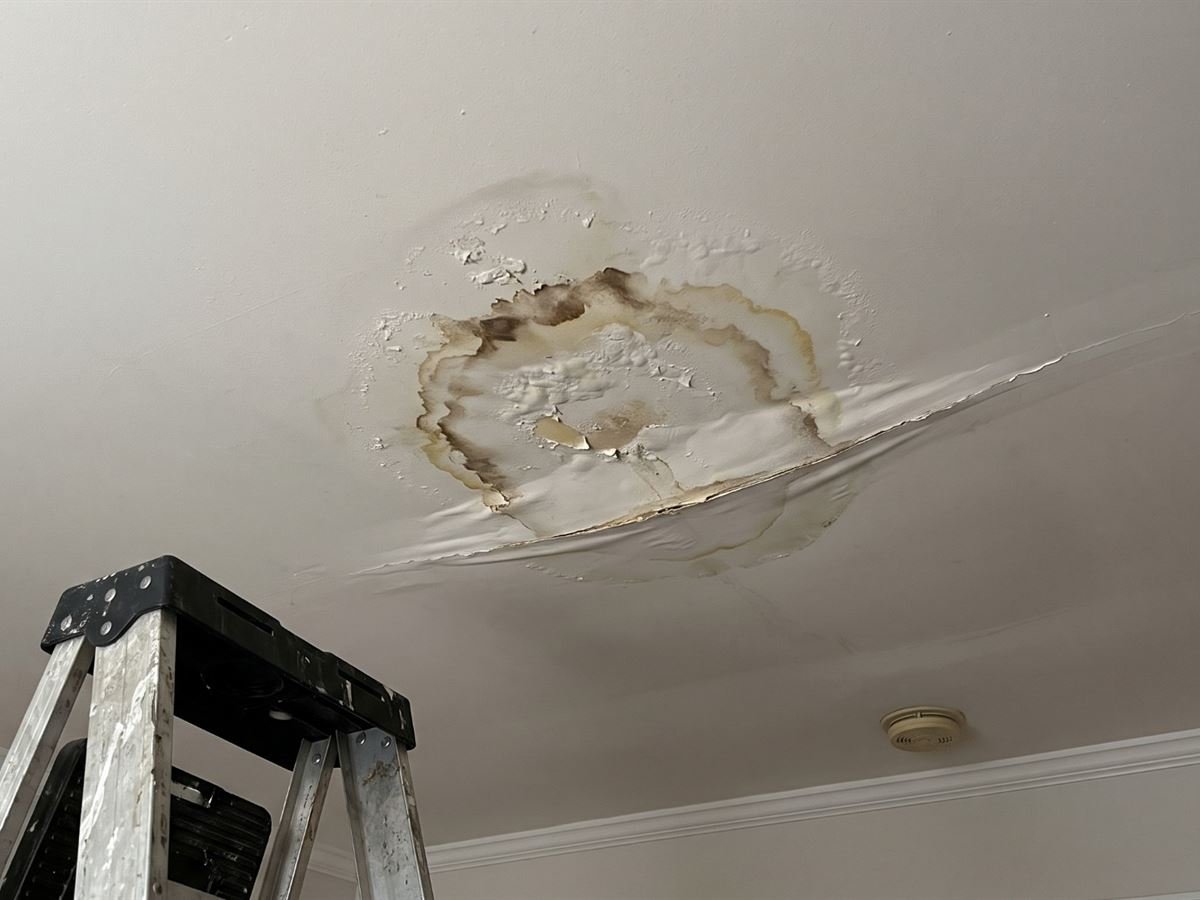
Water damage is the most expensive common drywall repair. It’s also the one people most often do in the wrong order. Patch a ceiling stain before the leak is fixed and the stain comes back, so you pay for the repair twice.
Find the leak first, using a guide like how to detect a leak at home if the source isn’t obvious. Next, dry it fast. The EPA’s guide to mold and moisture says to dry water-damaged areas within 24 to 48 hours to prevent mold.
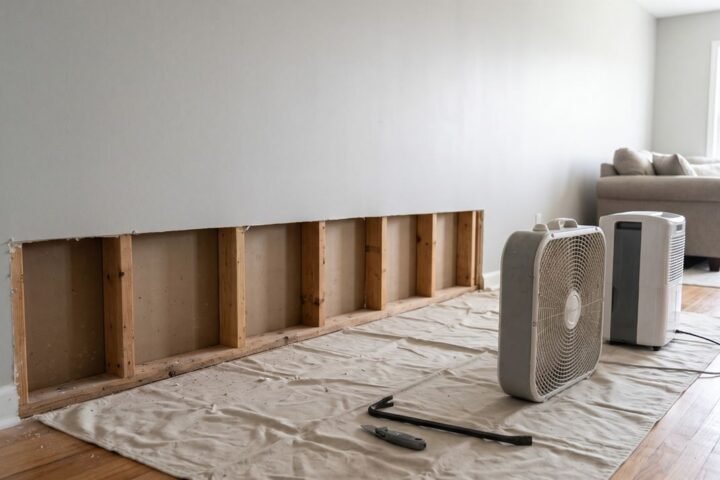
Drywall that stays wet longer than that, sags, or feels soft should come out rather than be patched. Budget roughly $400 to $800 for one room’s water-damaged section, per Fixr, plus the plumber or roofer. EPA guidance says mold under about 10 square feet is usually a DIY cleanup. Anything larger, or mold that keeps returning, needs a professional.
DIY vs Pro: Where Your Money Goes Further
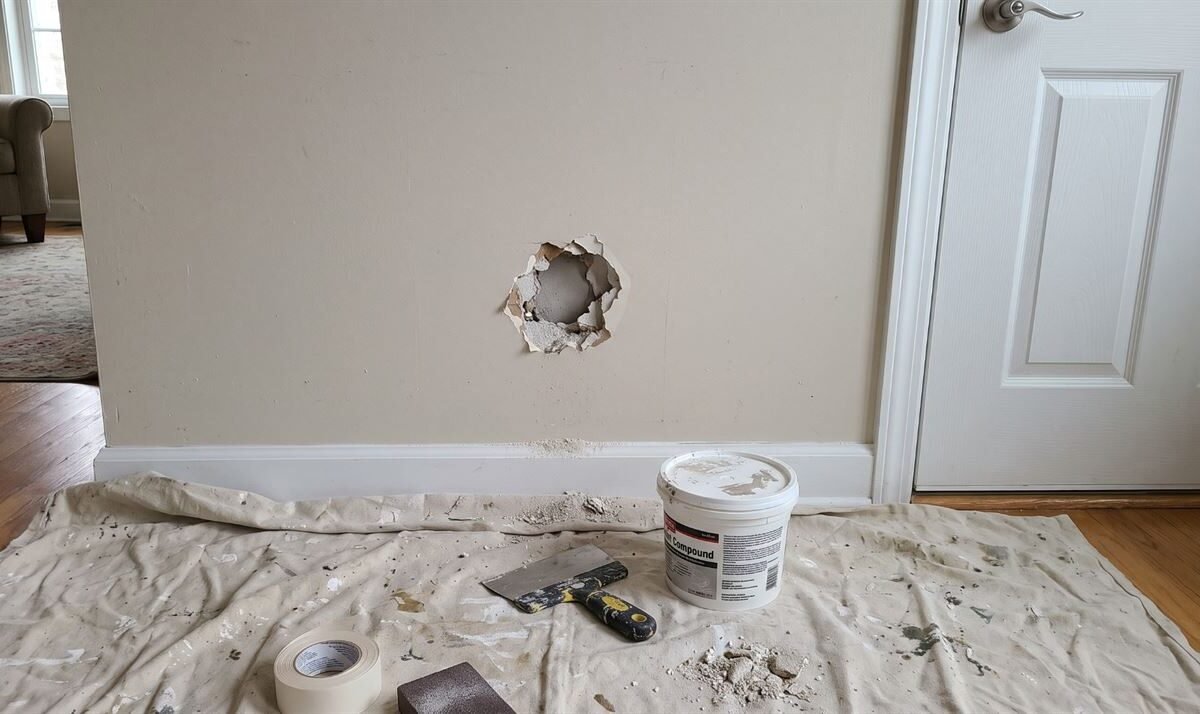
Small damage is where DIY saves the most. This Old House puts a patch kit at $10 to $30. A pro charges $60 to $100 for the same 2-inch hole. Your main DIY drywall repair cost is time spent waiting for compound to dry.
For nail holes and dents, follow our guide on how to spackle a wall. Larger holes are covered in our walkthrough on patching holes in drywall, including mesh patches.
Hire a pro when any of these apply:
- The damage is on a ceiling and bigger than your hand.
- The wall has a texture you can’t match with a spray can.
- More than about 4 square feet needs cutting out and replacing.
- There’s water damage, mold or suspected asbestos.
- The wall faces a window, where low side light will show every ridge.
How to Get a Fair Drywall Repair Quote
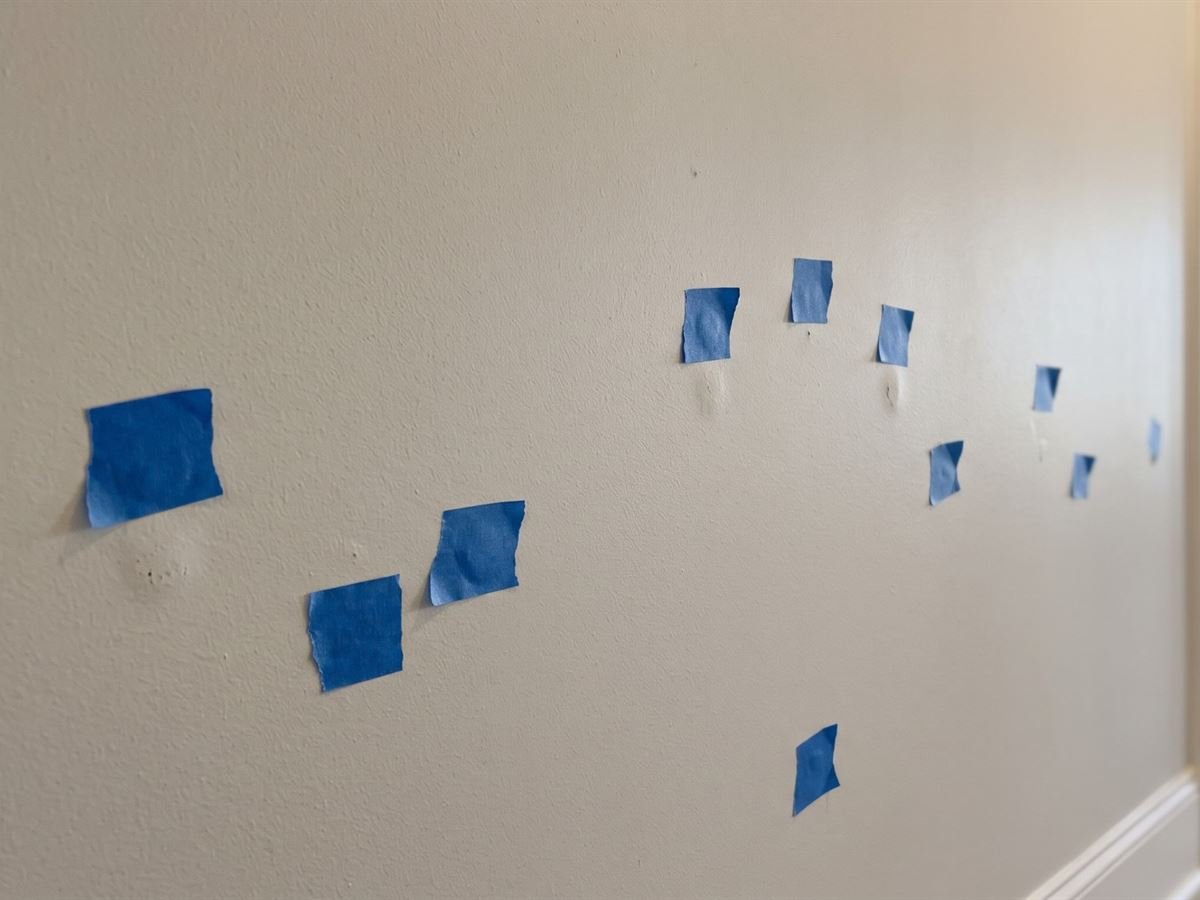
A clear quote protects you from surprise add-ons. Ask each contractor the same questions so the numbers line up:
- Is the price per hour, per square foot or a flat job price?
- Is there a minimum charge or trip fee?
- How many visits will it take, and does the price cover all of them?
- Does the quote include priming and painting, or only the repair?
- Will you match the existing texture, and how do you test it?
- How do you handle dust and cleanup?
Get two or three quotes, and send photos with a tape measure in the frame. Many contractors can price a small repair from photos, which saves you a visit charge.
Save on the Paint Afterward
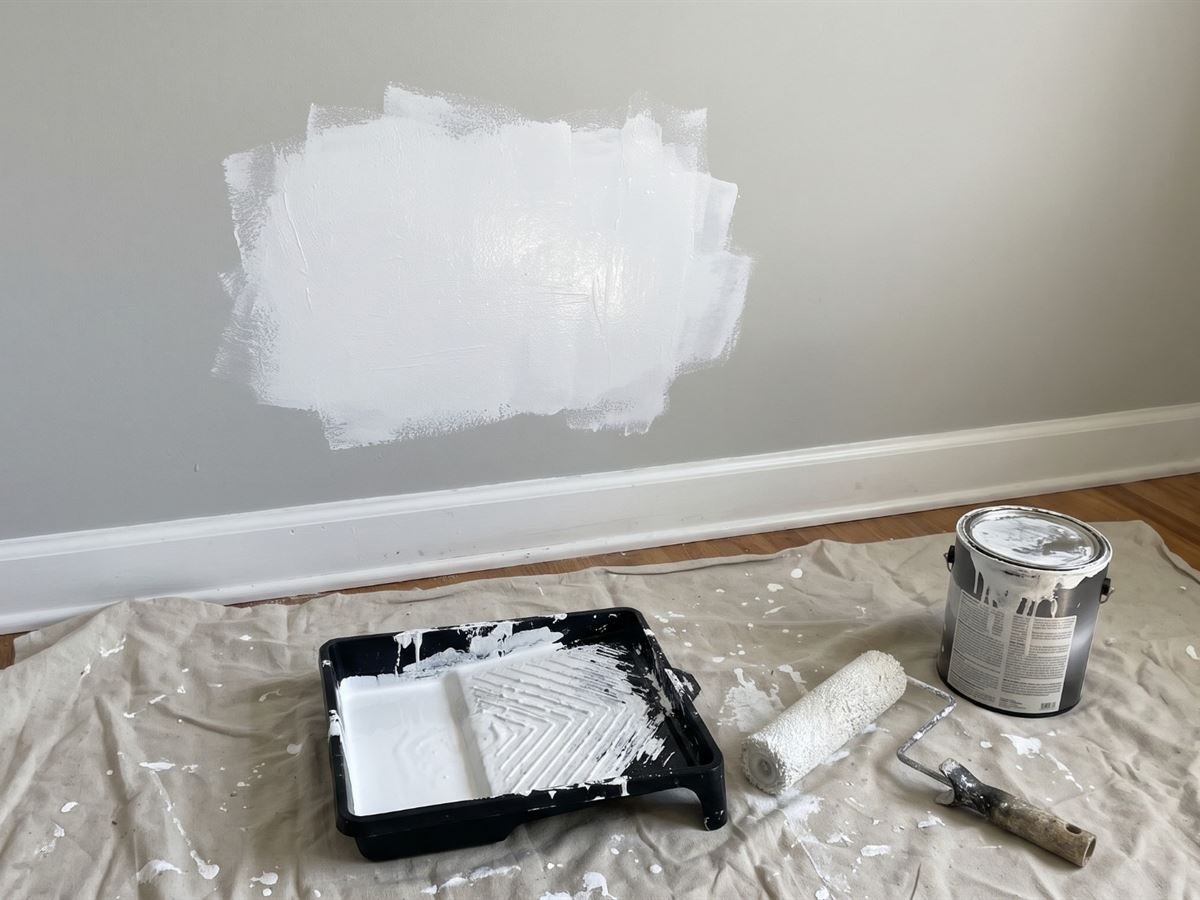
The repair isn’t finished until the patch disappears. Prime the dried compound before painting, or the patch will flash (look duller or shinier than the wall around it).
No leftover paint? Plan to repaint the whole wall from corner to corner instead of dabbing the patch. Our paint calculator tells you how much to buy. Cut in at the corners first, then roll the full wall so the new coat blends.
Drywall Repair Cost FAQ
How much does it cost to patch a hole in drywall?
A small hole under about 4 inches costs $60 to $200 for a professional repair. Doing it yourself with a patch kit costs $10 to $30. Larger holes are usually priced at $50 to $80 per square foot.
Is it better to repair or replace drywall?
Repair is cheaper for holes, cracks and small water stains. Replace the section when the board is soft, sagging, moldy or damaged across more than a few square feet. Fixr lists section repair at $200 to $550 and replacement at $400 to $800.
Do painters repair drywall?
Many painters handle small patches, cracks and nail pops as part of a paint job. For large holes, ceiling damage or full sheet replacement, a drywall contractor or handyman is usually the better hire.
How much does it cost to repair water-damaged drywall?
Expect about $400 to $800 for a water-damaged section in one room. That doesn’t include the plumber or roofer who fixes the leak. Ceilings with sagging board can run higher.
Why is drywall repair so expensive for a small hole?
Most of the price is the visit, not the material. Many pros charge a one-hour minimum. Joint compound also needs drying time between coats, which can mean a second trip.
Budget for the Finish, Not Just the Hole
The hole is the cheap part of any drywall repair cost. Real money goes to minimum charges, return visits, texture and paint. Batch your small repairs into one visit, and fix any leak before you touch the wall.
Handle nail holes and small patches yourself if you have a free weekend. Call a pro for ceilings, textured walls, water damage and old paint in a pre-1978 home. Bookmark this page for when the quotes come in, so you can check each one against real national ranges.