Knowing how to match paint color on a wall you did not paint, or painted years ago, is mostly a sampling problem. You have a scuff, a repaired patch or a new section of wall. The can with the name on it is long gone. This guide goes from the easiest free fix to a chip cut out of the wall itself.
The catch most guides skip: a store scan matches the paint as it looks today. Even a correct match shows if you only dab the spot. Where you stop painting matters as much as the formula. Plan on 1 to 2 hours of work, plus drying time between steps.
How to Match Paint Color: What You’ll Need
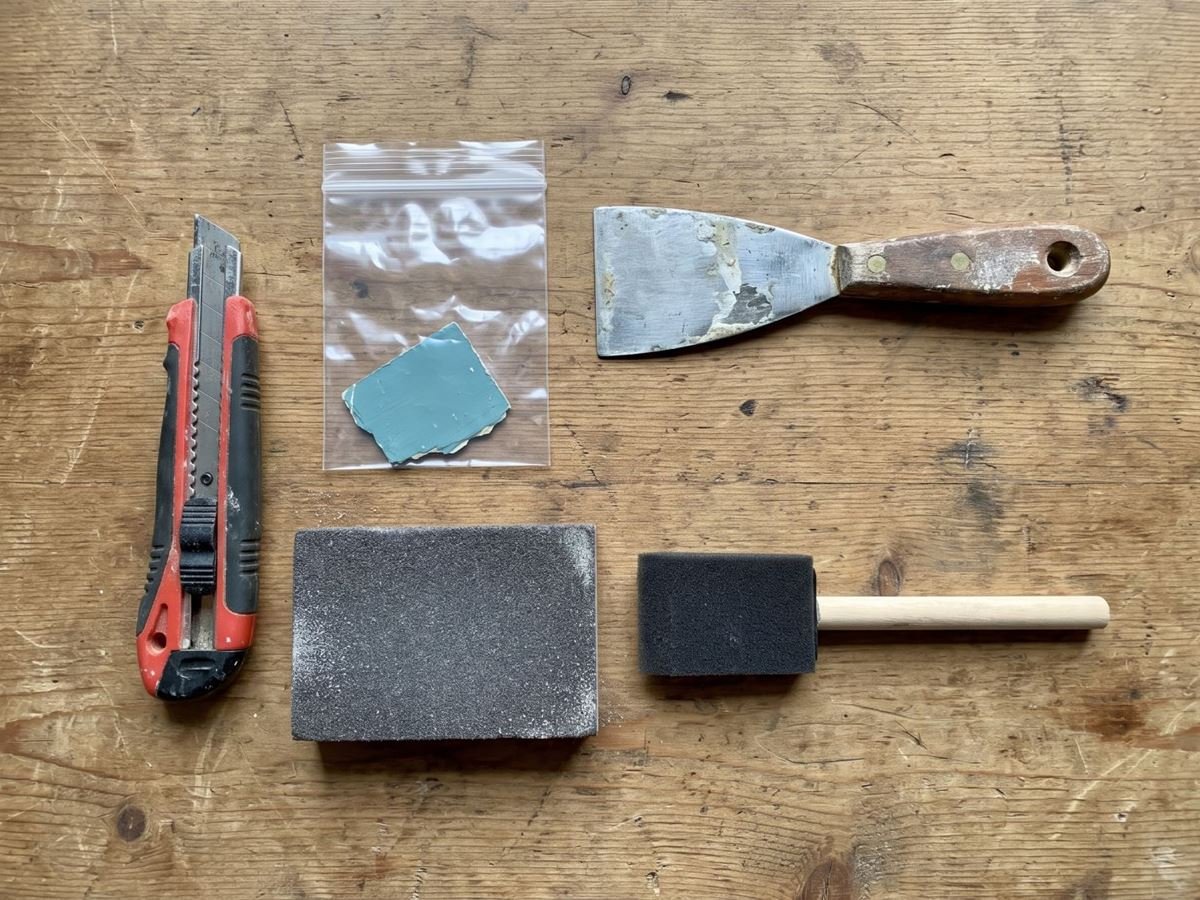
Most of this is already in a kit drawer. The only purchase is a sample pot or a small custom batch.
- Utility knife with a fresh blade
- Small putty knife and lightweight spackle
- Fine sanding sponge (220 grit)
- Spot primer
- Foam brush and a 4-inch mini roller
- Small zip bag or envelope for the chip
- Sample pot of the matched color
- Phone, for notes and photos of the wall
Pick Your Method Before You Start
Your starting point decides the method. Use this table to skip steps you don’t need.
| Your situation | Best method | What to bring |
|---|---|---|
| You found the original can | Buy the same color and sheen | The can or the lid |
| You know the name, not the sheen | Match the sheen by sight | A hidden strip of wall |
| Nothing is known, wall can be cut | Chip and store scan | A chip, quarter size or larger |
| Renter or no cutting allowed | Photo tool, then test samples | Photos in daylight |
| Wall is faded or the paint is old | Repaint the whole wall | Corner-to-corner coverage |
How to Match Paint Color in Six Steps
Step 1: Hunt for the Original Can
Check the attic, basement, garage and any utility closet. The color name or number is usually on the lid or the side of the can. Some builders also leave a sticker inside a closet or on the back of a cabinet door.
A can that has sat for years may have separated, so stir it well before you judge the color. If it smells sour or looks lumpy after stirring, don’t use it.
Step 2: Write Down What You Know
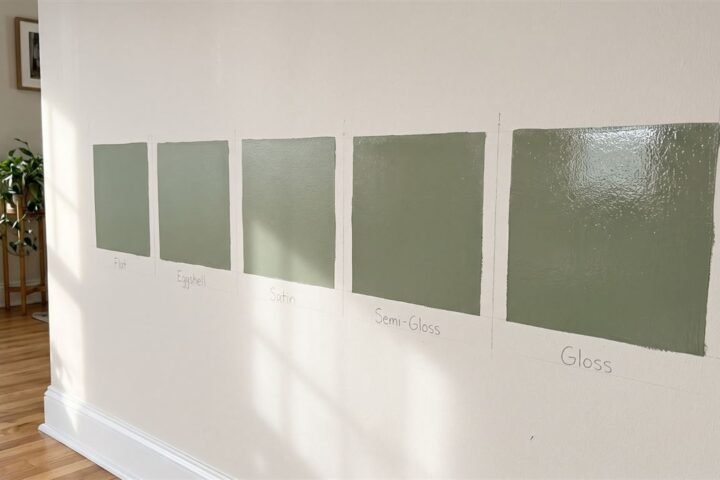
Collect the brand, the color name or number and the sheen. Sheen is flat, eggshell, satin, semi-gloss or gloss. Can’t tell by looking? Our guide to paint finishes and which sheen for which room shows how each one catches light.
Take a few phone photos of the wall in daylight too. They won’t give you an exact match, but they help the person at the counter.
Step 3: Decide if a Patch Is Worth Matching
Some walls are better repainted from corner to corner. Dark colors are hard to match, and so is paint that is more than a few years old or faded by sun. If you have several repair spots, one fresh coat across the wall looks cleaner than many small matches.
If the wall passes that test, keep going. If not, skip ahead to the faded-wall section below.
Step 4: Cut a Chip to Match Paint Color
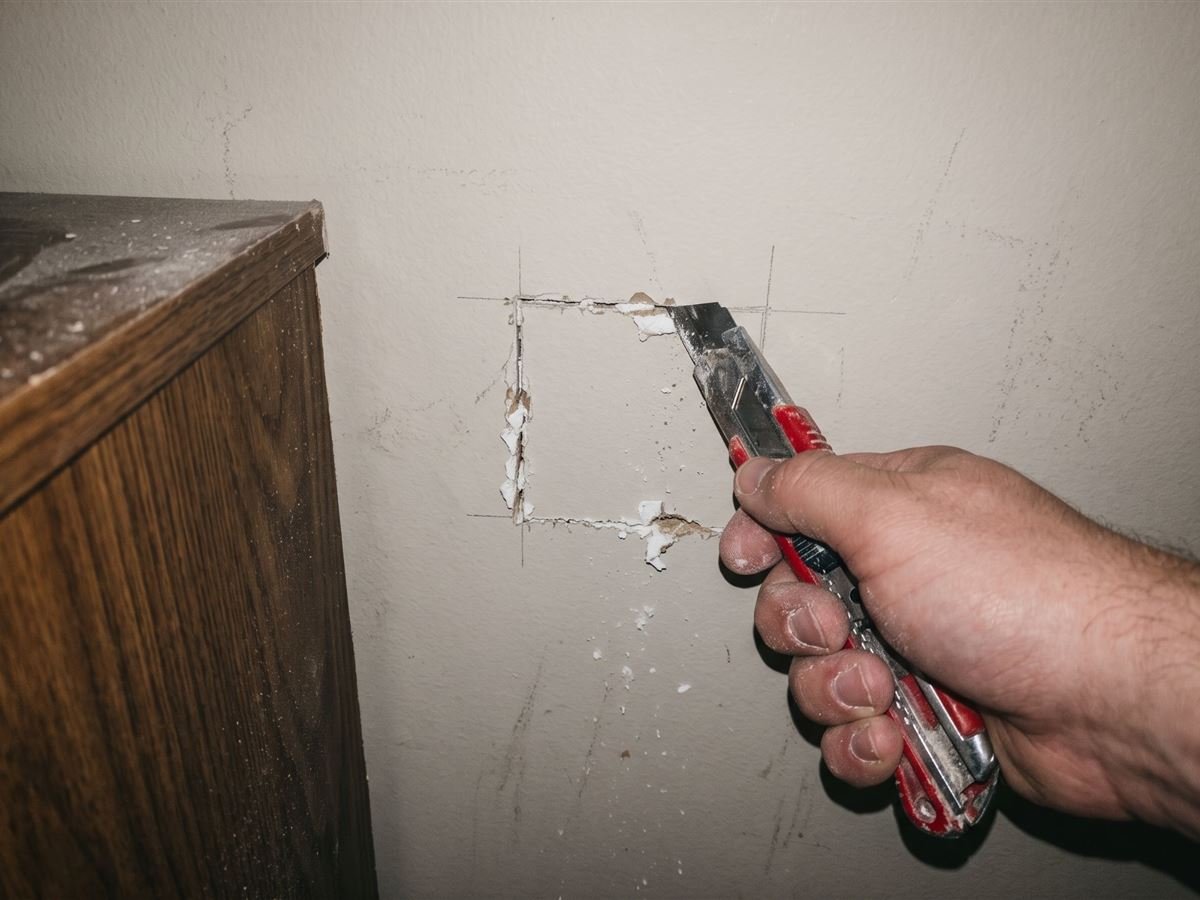
Pick a hidden spot, such as behind furniture or near an outlet. Paint in sun-exposed areas fades, so a covered spot stays closer to the original shade. Cut a small square through the paint and drywall paper with a utility knife. Peel it off gently.
Stores state different minimums. Sherwin-Williams asks for a sample the size of a quarter or larger, and This Old House says about 1 inch square. Cut 2 inches if the spot allows it, because a bigger flat chip is easier to scan. Slide it into a bag so the surface stays clean.
Then repair the hole. Fill it with spackle, sand it smooth once dry, prime it and paint over it. Our walkthrough on how to spackle a wall covers that repair in detail.
Step 5: Get It Scanned and Test It
Take the chip to a paint counter. The store reads it with a spectrophotometer, which produces a formula, and then mixes the paint. Ask for a sample size first, even if you plan to buy a gallon.
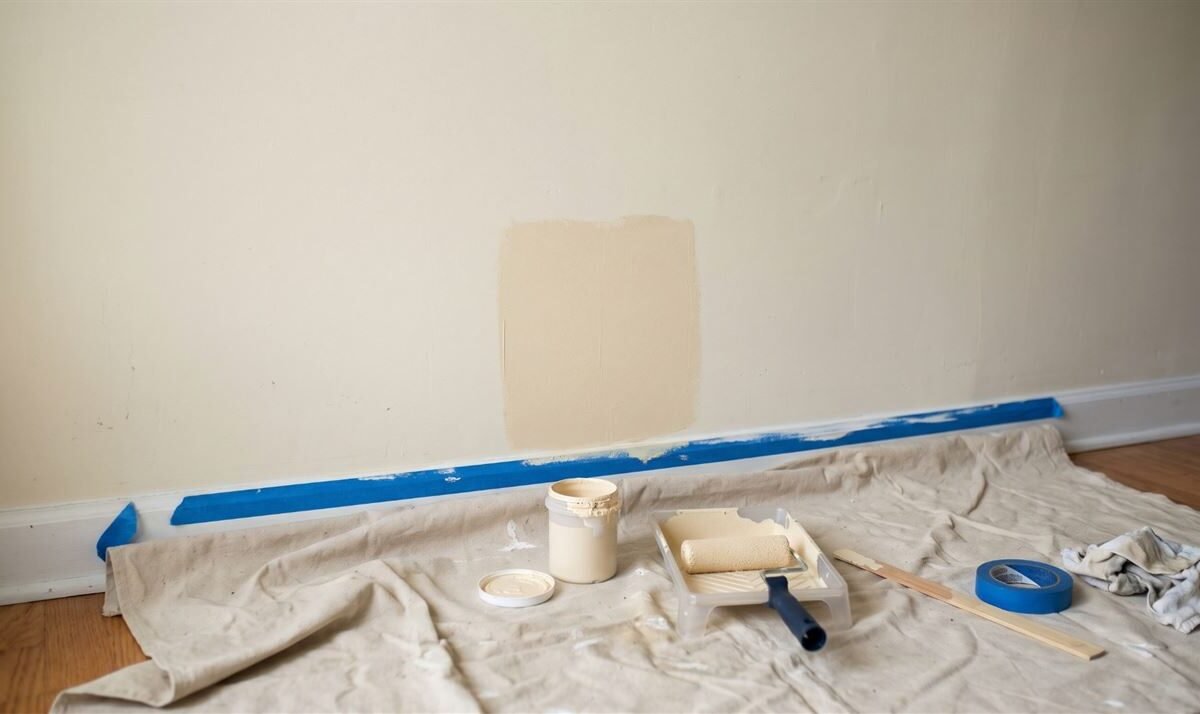
Brush the sample on a patch of the wall and let it dry fully. Look at it in morning light and again in the evening. Check it from the side too, because angle shows sheen differences that straight-on viewing hides.
Step 6: Apply and Blend the Edges
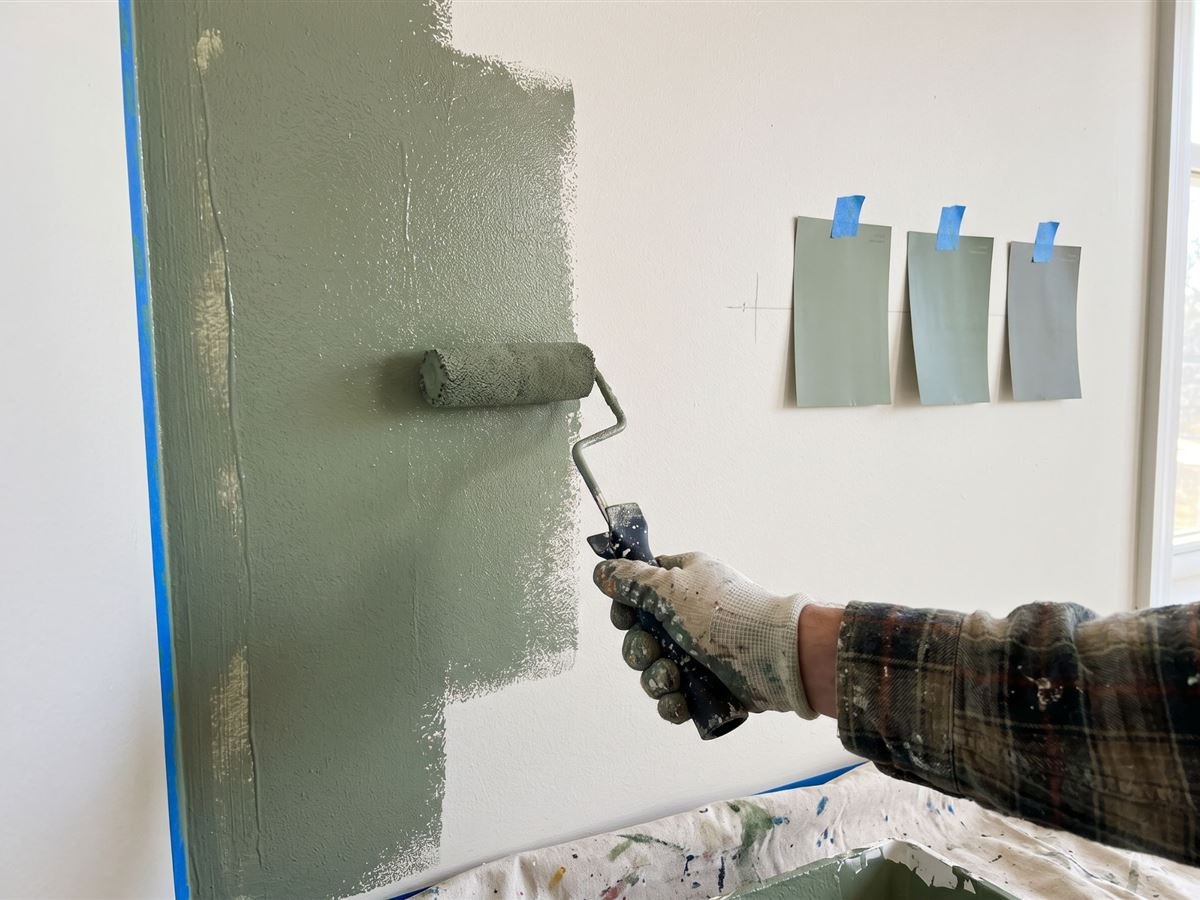
For a small spot, use a foam brush. Dab on the paint, then feather the edges outward so there’s no hard line. For a bigger patch, use a mini roller with thin, even coats.
Here’s where most people go wrong: they stop at the edge of the patch. Roll the final coat out to a corner, a door frame or a natural break in the wall. A tiny shade difference is hard to see across one continuous surface, and easy to see as a square.
How to Match Paint Color Without a Chip
Renters and anyone who can’t cut the wall still have options. Sherwin-Williams offers a Color Visualizer where you upload a photo and it suggests matching colors. The same page describes ColorSnap Match Pro, a handheld scanner that connects to your phone and uses its own controlled light.
Photos have limits. Phone cameras adjust white balance on their own, so the same wall can photograph differently at noon and at dusk. Treat a photo result as a short list, then test two or three physical samples on the wall.
If you only have store chip cards, hold them against the wall in different light. Narrow the pile to the closest two or three. Buy a sample of each and compare them on the wall, not on the card.
Why Your Match Still Looks Off
The color can be right and the patch can still show. These are the usual causes:
- Wrong sheen. A flat patch on a satin wall catches light differently, especially from the side.
- Faded original. A scan reads the wall as it looks now. A fresh batch can still read slightly different from untouched paint nearby.
- Different texture. A foam brush leaves a smooth finish, while a roller leaves a slight stipple. Use the same tool the original painter used.
- Judged wet. Wet paint looks different from dry paint, so wait before you decide.
- Thin coat. One light coat over primer shows the patch. Two thin coats usually cover it.
How to Match Paint Color on a Faded Wall
Sun is the biggest problem. A wall that gets afternoon light for years drifts lighter and duller. A fresh patch of the original formula will look darker than the wall next to it.
You have two choices. Cut your chip from the faded area itself, so the scan reads the aged color, or repaint the whole wall. This Old House recommends repainting the entire wall if the paint has faded significantly. When the wall is a main focal wall, that’s usually the better call. Our guide on how to prep walls for painting covers cleaning and priming before the new coat.
When to Call a Pro
Hire a painter if the home is pre-1978 and you suspect lead. Call one too for textured plaster you can’t reproduce, or a specialty finish such as limewash or metallic paint. A pro can also match a whole room so the repair isn’t visible at all. Ask them how they handle the blend before you agree to a price.
FAQ: How to Match Paint Color
Can a paint store match a color from a chip?
Yes. Stores scan a chip with a spectrophotometer and produce a mixing formula. Sherwin-Williams asks for a sample the size of a quarter or larger.
How do I match paint color if I don’t know the brand?
Cut a chip from a hidden spot and bring it to any paint counter. The scan doesn’t need the brand name, because it reads the color of the paint itself.
Can I match paint color from a photo?
You can get a short list of close colors, but not a reliable match. Lighting and phone white balance change how the wall looks. Always test a physical sample before buying a gallon.
Will the new paint match exactly?
Not always. Sheen, fading and the way you apply the paint all change how a patch looks. Blending to a corner hides small differences.
How to Match Paint Color Next Time: Keep a Record
The best time to solve this problem is right after you paint. Write the brand, color name, sheen and room on masking tape. Stick it inside a closet door. Keep a small, nearly full jar of leftover paint with a tight lid, labeled the same way.
That ten-minute habit turns a scan, a chip and a guess into one trip to the counter. Bookmark this page for the next scuff, and read our guide on choosing a paint sheen before you pick the next color.