You pushed a screw into the wall, hung the mirror, and an hour later it was on the floor with a crater behind it. Learning how to use drywall anchors fixes that, and it takes about ten minutes per anchor once you know which type fits the job. Plain drywall is just gypsum between two sheets of paper, so a bare screw has almost nothing to grip. An anchor spreads the load across a wider patch of board.
The angle here is simple: most failures come from the wrong anchor for the load, not a bad install. So this guide starts with the choice, then walks through the install for the three types you will actually use.
How to Use Drywall Anchors: Check for a Stud First
Studs are the wood or metal framing behind the board, and in most houses they sit 16 inches apart, center to center. A screw straight into a stud holds far more than any anchor, so look for one first. A stud finder works, or you can knock along the wall and listen for the dull spots between the hollow ones.
Anchors are for the spots where no stud lines up with what you want to hang. Do not slide the item sideways to chase a stud if that wrecks the layout. That is exactly the situation anchors exist for.
How to Use Drywall Anchors by Load Type
Package ratings vary a lot between brands and are measured on new, dry 1/2 inch board in lab conditions. Treat them as a ceiling, not a promise. A decent rule of thumb is to buy an anchor rated for at least double your load, and to use more anchors for anything that sticks out from the wall, because a shelf pries outward instead of just pulling down.
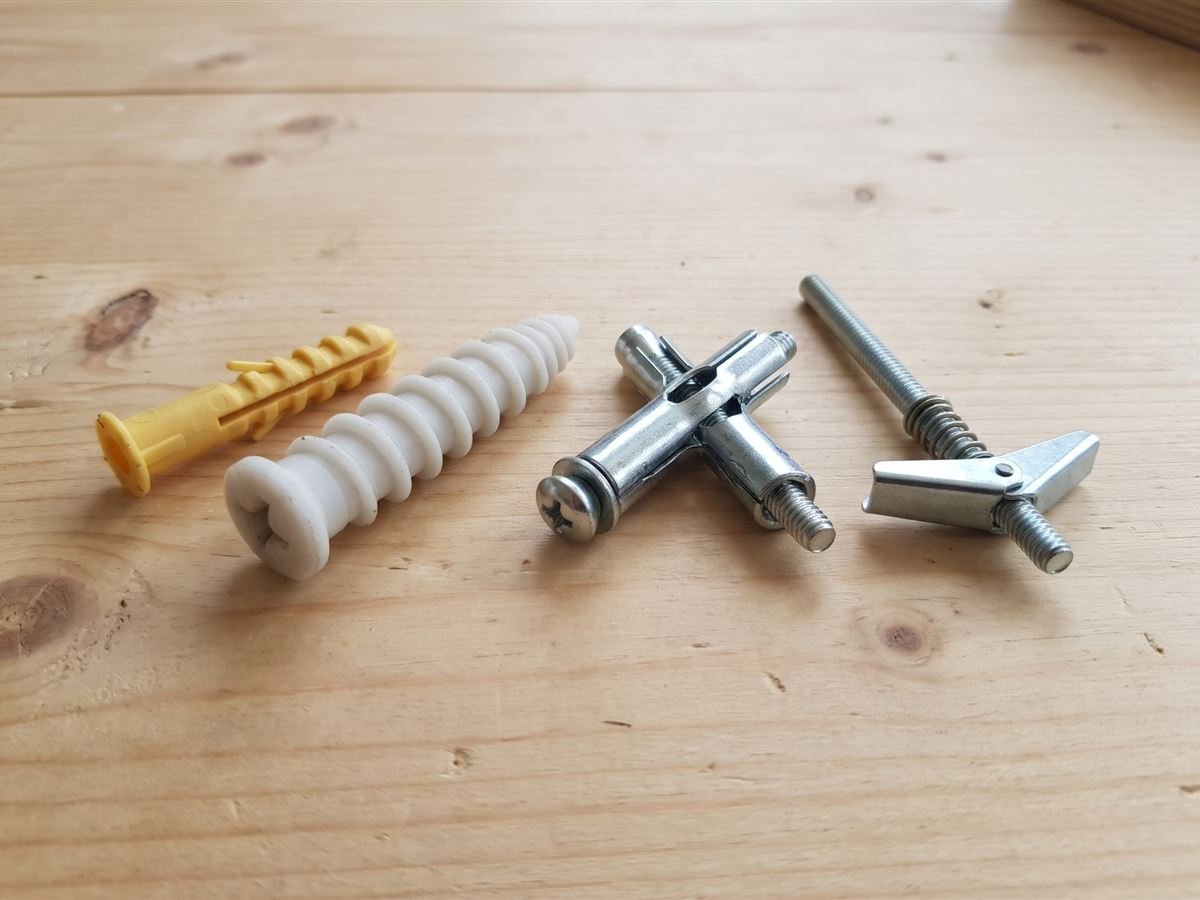
| Anchor type | Best for | Pilot hole? | Weak spot |
|---|---|---|---|
| Plastic ribbed (expansion) | Small frames, light decor | Yes | Spins in the hole if it is too big |
| Self-drilling (threaded) | Frames, mirrors, towel hooks | No | Plastic ones crack when overtightened |
| Sleeve or molly (metal) | Shelves, curtain rods | Yes | Hard to remove cleanly |
| Toggle bolt (spring wings) | Heavy mirrors, wall cabinets | Yes, large | Bolt is lost if you remove it |
A Note on Weight Numbers
Different retailers list different ratings for what looks like the same anchor, so read the box on the one you actually buy. If the rating assumes 1/2 inch board and your wall is 5/8 inch, you are fine. If it assumes 5/8 and your wall is 3/8 inch, as in some older homes, drop down a size.
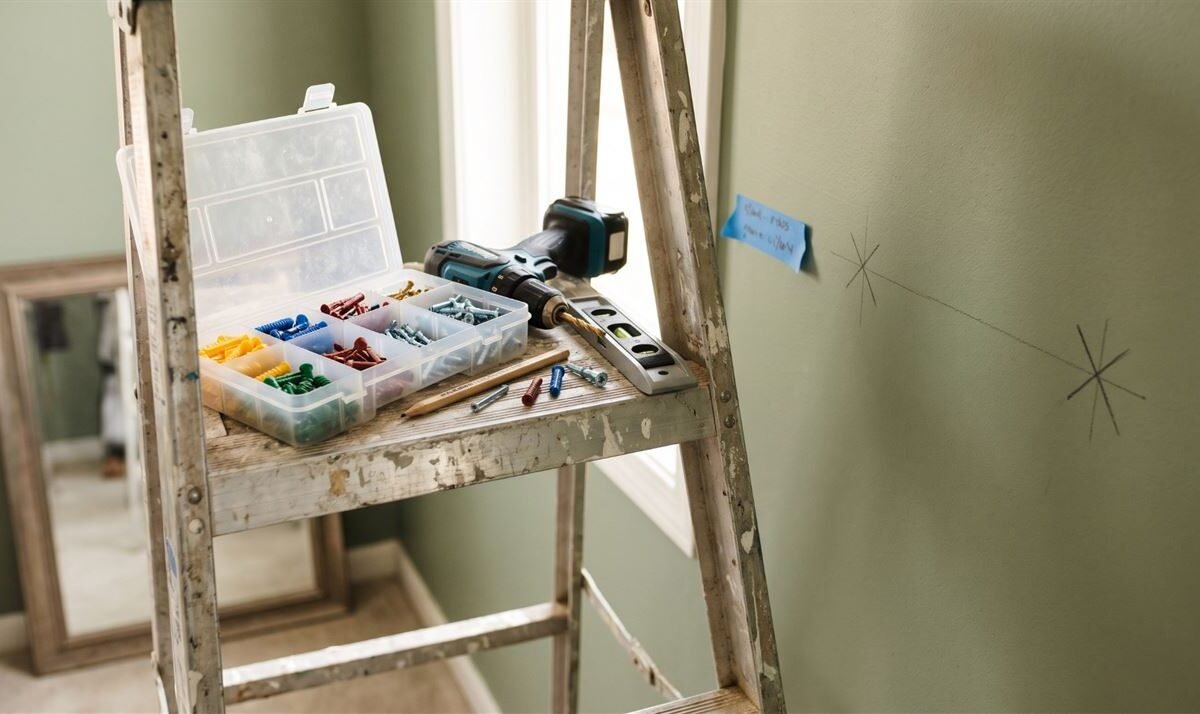
What You’ll Need
- Drywall anchors in the type you chose, plus the screws that come with them
- Drill and drill bits (or a #2 Phillips screwdriver for self-drilling types)
- Stud finder, pencil and a 2 foot level
- Painter’s tape and a small vacuum or paper cup for dust
- Hammer or rubber mallet for ribbed plastic anchors
How to Use Drywall Anchors Step by Step
Step 1: Mark the Spot and Level It
Hold the item up, level it, and mark the screw positions with a pencil. For anything with two or more mounting holes, use a level across the marks, not your eye. Press a small square of painter’s tape over each mark. It keeps the paper face from tearing when the bit bites in.
The common mistake is marking where the wire hangs slack. Pull the wire taut and measure from its peak, since that is where the screw will sit.
Step 2: How to Use Drywall Anchors Without Drilling
Self-drilling anchors have a pointed, threaded tip that cuts its own hole. Set the tip on your mark, push in lightly, and turn it clockwise with a #2 Phillips screwdriver until the flange sits flush with the wall. Go slowly. A power drill spins plastic anchors fast enough to strip the threads, and metal ones can chew the paper face.
Stop when the head is flush. If it keeps turning with no resistance, the hole is stripped. Pull it out, move over an inch, and start again.
Step 3: How to Use Drywall Anchors With a Pilot Hole
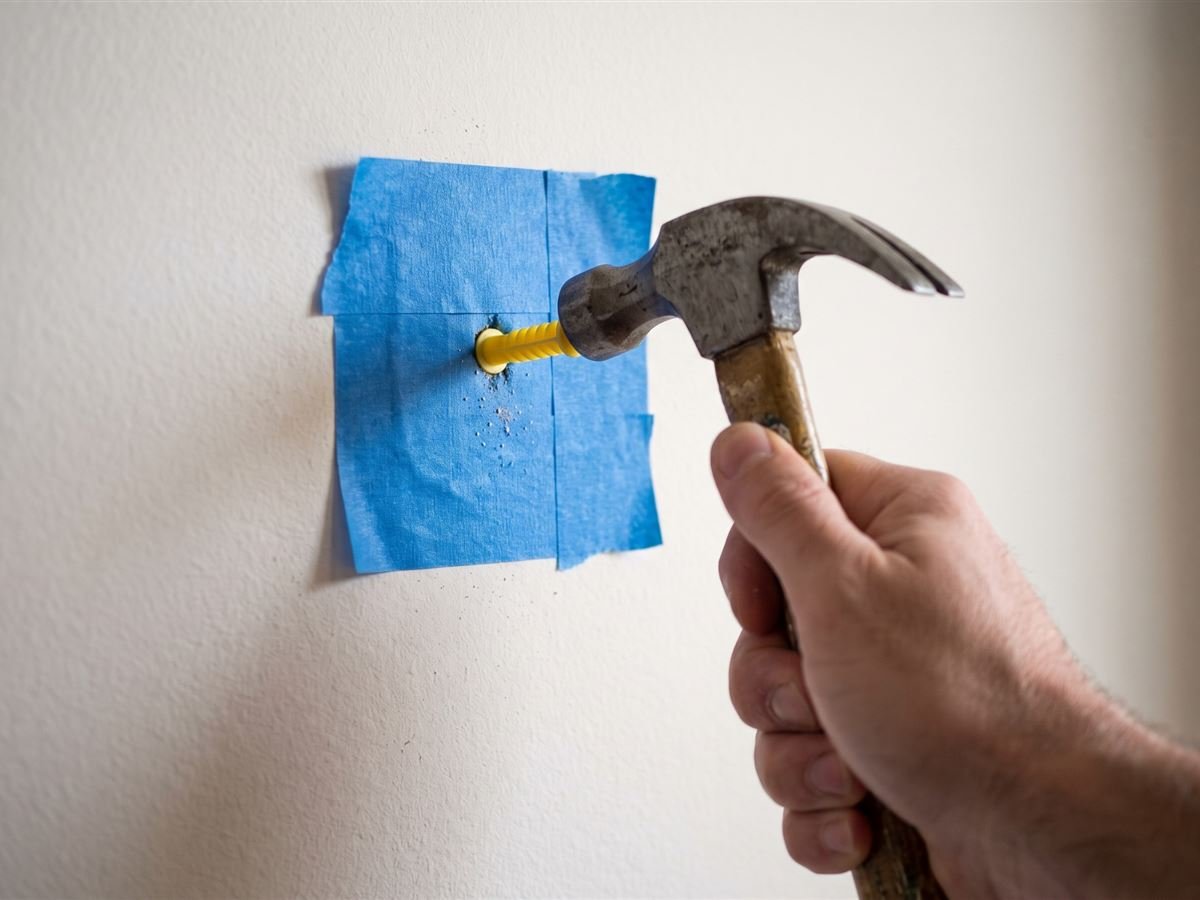
Check the package for the drill bit size, because it matches the anchor body, not the screw. Drill straight, with the bit square to the wall. Tap the anchor in with a hammer until the rim is flush, then drive the screw through your item and into the anchor.
The common error is drilling too big a hole. If the anchor spins or slides in by hand, it is too loose, and the fix is a new hole an inch away, not a bigger anchor.
Step 4: Install a Toggle Bolt for Heavy Loads
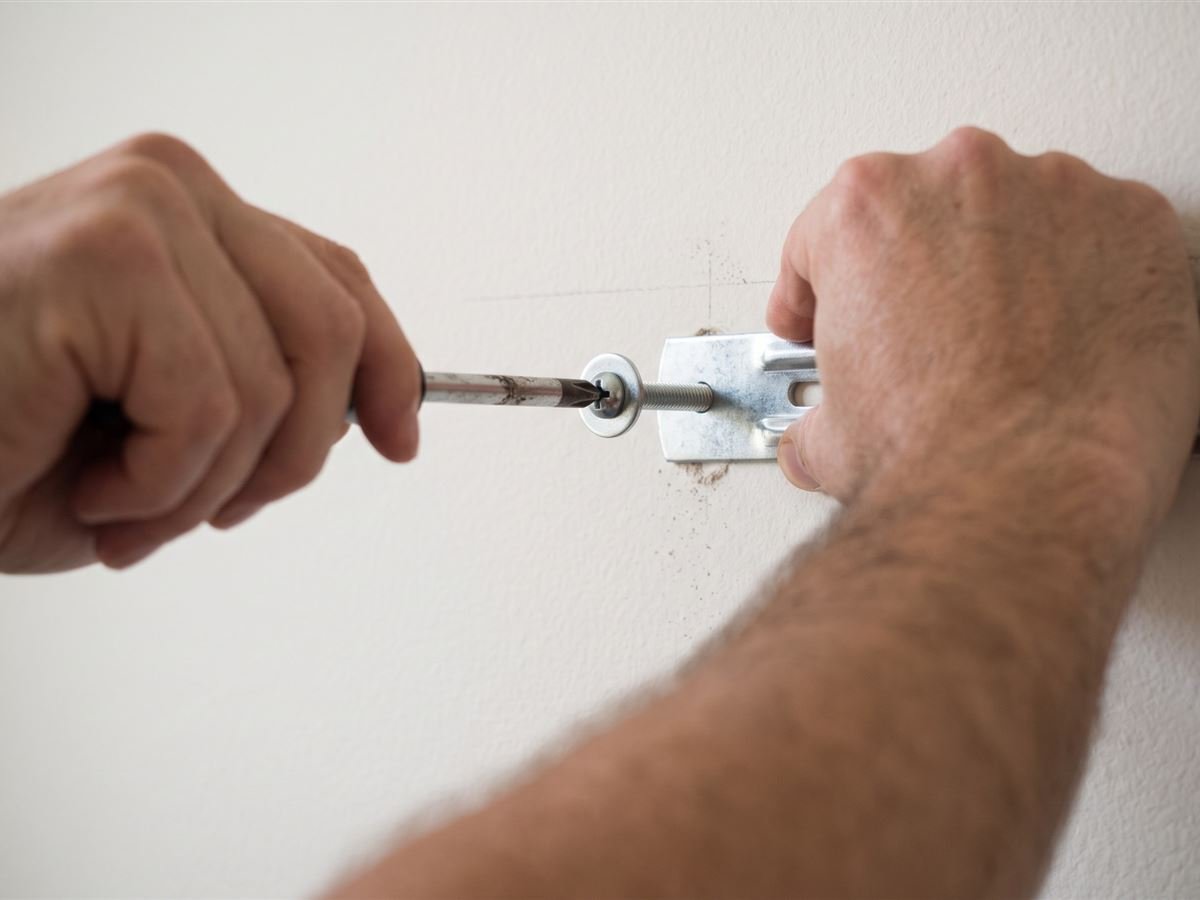
Toggle bolts need a larger hole, because the folded wings have to fit through it. Slip the bolt through the item’s mounting hole first, then thread the wings on, pinch them flat, and push them through the hole. Once they are inside, pull the item toward you so the wings open and press against the back of the board.
Tighten with a screwdriver while pulling gently outward on the item. Stop when snug. Overtightening crushes the paper and pulls the wings through. Keep in mind the wings stay behind the wall, so if you ever unscrew the bolt completely, they fall into the cavity.
Step 5: Test the Anchor Before You Hang Anything
Give it a firm tug with your hand, outward and downward. The CPSC Anchor It campaign recommends the same reality check for furniture straps: tug the strap and make sure it feels secure before you trust it. Hang the item, then press down on it with a steady load for a few seconds.
How to Use Drywall Anchors: Common Mistakes
- Ignoring the thickness of the board. A 3/8 inch wall holds less than a 5/8 inch one, so step up to a toggle.
- Overtightening. The screw stops feeling tight and starts crushing the gypsum. Back off a quarter turn.
- Reusing an old anchor hole. Once a hole is stripped, a new anchor in the same spot will spin. Patch it or move over.
- Hanging a shelf on one anchor. Prying force multiplies the pull. Use two or more, spaced across the width.
- Using drywall anchors on plaster, tile or brick. Those need masonry or plaster-specific anchors.
Anchoring Furniture and TVs to the Wall
This is the job where an anchor failure matters most. Dressers, bookcases and TVs can tip onto children. The CPSC’s Anchor It campaign says to anchor all furniture with drawers, doors or shelves, and its kit instructions list a stud finder, drill and screwdriver as the tools. Whenever you can, screw the strap bracket into a stud, not into an anchor.
If the only spot available is bare drywall, use a rated heavy-duty anchor such as a toggle, and tug-test it hard. When you are unsure, leave the furniture strap for a pro or a handy friend who has done it before.
Fixing a Drywall Anchor That Pulled Out
If the anchor tore out or spun loose, remove it, then fill the hole. Our guide on spackling nail and anchor holes covers the patch. Once the patch cures, either re-mark an inch away or install a larger toggle in the repaired spot.
When to Call a Pro
- You hit something solid that is not a stud, or the drill pulls toward a wire or pipe.
- The wall is plaster, lath or an old textured surface that crumbles.
- You are hanging something heavy and expensive, such as a large TV or a cabinet full of dishes.
FAQ
How much weight can a drywall anchor hold?
It depends on the type, the board thickness and the direction of the load. Plastic ribbed anchors hold the least, metal self-drilling and sleeve anchors hold more, and toggle bolts hold the most. Always check the rating on the package, and stay well under it.
Do you need a stud to hang something on drywall?
No, but a stud holds far more than any anchor. Use a stud when one lines up, and use an anchor rated for the load when it does not.
Do you need to drill a hole for drywall anchors?
Plastic ribbed, sleeve and toggle anchors need a pilot hole. Self-drilling anchors cut their own, so you only need a screwdriver.
Can you reuse a drywall anchor hole?
Not once the hole is stripped. Patch it with spackle and move at least an inch over, or step up to a toggle bolt.
Hang It Once, Hang It Right
Pick the anchor by the load and the wall, mark and level first, and stop tightening the moment the screw feels snug. For a heavy or outward-reaching item, use a toggle bolt or two anchors and give it a tug before you trust it. If you are putting up shelves next, see our guide to installing floating shelves, and for smaller jobs, our guide to installing wall hooks. Bookmark this page for the next time a screw spins in the wall.